


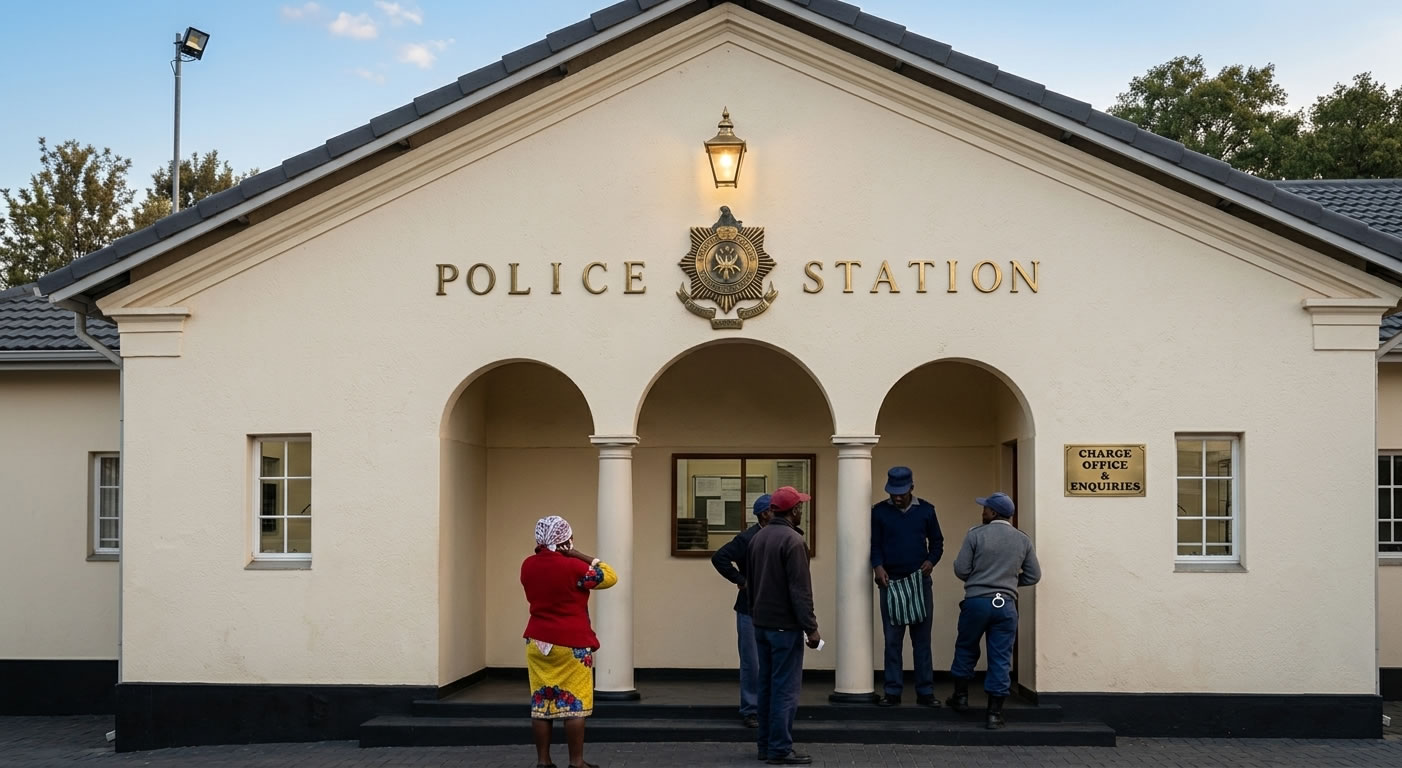
The ‘Fake’ Release Fees: How Corrupt Police Officers are Turning Police Stations into Ransom Centres
Harare – A disturbing trend has emerged within Zimbabwe’s law enforcement, painting a grim picture of police stations transforming into what many are now calling “ransom centres.” The recent conviction of a special constabulary police officer and three accomplices for extorting money from citizens under the guise of “fake release fees” has brought this deeply troubling issue to the forefront. This investigative report delves into the mechanics of this “Bail Scam,” exposing how some officers are allegedly abusing their power, fabricating charges, and demanding cash for freedom, turning a trip to the police station into a financial nightmare for the average Zimbabwean.
The Anatomy of a Bail Scam: A Case Study from Headlands
The case that has ignited public outrage involves Jacob Mahomwa, a 35-year-old special constabulary police officer stationed at ZRP Macheke, his 21-year-old wife Tanyaradzwa Magudhu, 24-year-old taxi driver Praystone Malenguka, and Malenguka’s girlfriend, Lisa Magumanika, also 24. This quartet was brought before Rusape provincial magistrate Tendai Mahwe, facing two counts of extortion. Their modus operandi, as detailed by prosecutor Faith Mutukwa, involved posing as legitimate law enforcement officers to extract money from unsuspecting individuals.
In one particularly egregious incident, the group targeted Anna Mukoma of Makudo Farm in Headlands. They accused her of dealing in dagga, a charge she vehemently denied. According to court testimonies, Mahomwa, leveraging his position, produced a police identification card to lend credibility to their false claims. Despite Mukoma’s offer to allow them to search her premises, the group opted for a more sinister approach. Instead of conducting a legitimate search, they allegedly arrested her and escorted her to their vehicle. It was there, away from public view, that a plastic bag containing dagga was produced, falsely claimed to have been recovered from her residence. This act of planting evidence is a chilling illustration of the lengths to which these corrupt individuals would go.
The intimidation continued as they drove towards Macheke, demanding US$500 for her release. Mukoma, unable to produce the full amount, initially handed over US$100. The accused then drove her back home, where her husband, Isaac Tembo, was coerced into paying the remaining US$400. Once the money was received, Mukoma was released, and the perpetrators vanished with the illicit gains. The court heard that in another instance, a firearm was allegedly used to threaten a complainant, highlighting the dangerous and coercive nature of these extortion schemes.
Another victim, a suspected illegal fuel dealer, was also targeted. He was taken to Macheke Police Station, only to be released after paying US$160 to the accused. These incidents underscore a systemic vulnerability where individuals, often caught off guard and unaware of their rights, become easy prey for those who exploit the power of their uniform.
The Verdict and Its Implications
Despite pleading not guilty, all four accused were convicted after a full trial. Each was initially sentenced to five years in prison for extortion. However, six months of each sentence were suspended for five years on condition of not committing a similar offence. An additional six months were suspended on condition that they compensate the complainants. Mahomwa also faced a separate charge, pleading guilty and being fined US$300 or four months’ imprisonment in default of payment. His three co-accused received 12-month sentences, with part suspended, leaving them to serve an effective six months behind bars. While these convictions offer a glimmer of justice, they also expose a deeper malaise within the system.
Beyond the Bail Scam: A Wider Web of Corruption
This case is not an isolated incident but rather a symptom of a broader “conspiracy of corruption” that threatens the integrity of Zimbabwe’s law enforcement. The notion of “peace officers” turning into “predators” is a betrayal of public trust and a direct assault on the rule of law. The transformation of police stations into “ransom centres” suggests a disturbing normalisation of illicit practices, where justice becomes a commodity for sale to the highest bidder.
Further evidence of corruption within security forces emerged from a separate incident involving a Zimbabwe National Army (ZNA) member and a civilian. Corporal Alison Maredza of the Presidential Guard and Norest Jingura, a civilian taxi driver, were arrested at a National Task Force on Anti-Smuggling roadblock near Bubi. They were found in possession of 600 kilograms of marijuana, with an estimated street value of US$96,000. Jingura was even clad in a Zimbabwe Republic Police (ZRP) uniform, masquerading as an Assistant Inspector, a uniform he claimed was provided by a ZRP officer. This incident reveals a sophisticated network where security forces are allegedly used to traffic drugs, bypassing roadblocks and exploiting their positions to facilitate criminal activities. The accused were reportedly promised US$25 for each kilogramme delivered, totalling US$3,000 for the consignment.
The methods employed by these drug traffickers are alarming: using security forces to avoid searches, impersonating police officers, and utilising high-powered vehicles similar to those used by government officials to create a false impression of official business. The tightly sealed packaging of the marijuana, designed to evade sniffer dogs, further illustrates the calculated nature of these operations. While distinct from the “fake release fees” scam, this case highlights a pervasive issue of corruption and abuse of power within the very institutions tasked with upholding the law.
Understanding Your Legal Rights: Protecting Yourself from Uniformed Extortion
For the average Zimbabwean, navigating the legal system can be daunting, especially when confronted by corrupt officials. It is crucial to understand that there is no such thing as a “release fee” paid to an individual officer. Bail is a formal legal process determined by a court of law, not a transaction conducted in a police station with an officer. Any demand for cash payment for release by an officer is illegal and constitutes extortion.
Citizens have fundamental rights when interacting with law enforcement. These include:
- The right to know the reason for your arrest: Officers must inform you of the charges against you.
- The right to remain silent: You are not obliged to answer questions without legal counsel present.
- The right to legal representation: You have the right to contact a lawyer immediately upon arrest.
- The right to appear before a court within 48 hours: This is a constitutional right designed to prevent arbitrary detention.
- The right to apply for bail: If eligible, bail is set by a court, not by individual officers.
If you find yourself in a situation where an officer demands money for your release, it is imperative to:
- Refuse to pay: Do not succumb to the pressure. Paying only perpetuates the cycle of corruption.
- Demand a formal charge sheet: Insist on official documentation outlining the charges.
- Request to speak to a superior officer: Ask to speak to the officer-in-charge or a senior official.
- Note down details: Record the officer’s name, badge number, and any vehicle registration numbers. Note the time, date, and location of the incident.
- Contact legal counsel or human rights organisations: Seek immediate assistance from a lawyer or organisations dedicated to human rights and anti-corruption.
- Report the incident: File a formal complaint with the Zimbabwe Anti-Corruption Commission (ZACC) or other relevant oversight bodies. While challenging, reporting is crucial for accountability.
The Collapse of the Rule of Law: A Market for the Corrupt
The incidents of “fake release fees” and the involvement of security personnel in drug trafficking paint a stark picture of a justice system under siege. When those entrusted with upholding the law become its primary transgressors, the very fabric of society begins to unravel. The unspoken rules of the holding cells, where freedom can be bought, transform the police station from a place of protection into a marketplace for the corrupt.
This erosion of trust has profound implications for public safety and national security. How can citizens trust the police to catch criminals when the police themselves are committing crimes? The “hidden machinery” of this corrupted system operates with impunity, often with the alleged knowledge or complicity of superiors, creating an environment where accountability is elusive.
Moving Forward: Rebuilding Trust and Upholding Justice
Addressing this deep-seated corruption requires a multi-faceted approach. Beyond individual arrests and convictions, there is a pressing need for systemic reforms within the police force and other security agencies. This includes rigorous vetting processes, enhanced oversight mechanisms, transparent reporting channels for corruption, and severe penalties for those found guilty of abusing their power.
Furthermore, public awareness campaigns are vital to educate citizens about their rights and empower them to resist and report extortion attempts. Organisations working on legal aid and human rights play a critical role in supporting victims and advocating for justice. The fight against corruption within law enforcement is not merely about punishing wrongdoers; it is about restoring faith in the institutions that are meant to protect and serve all citizens equally. Only then can Zimbabwe begin to dismantle these “ransom centres” and rebuild a justice system founded on integrity and the true rule of law.