


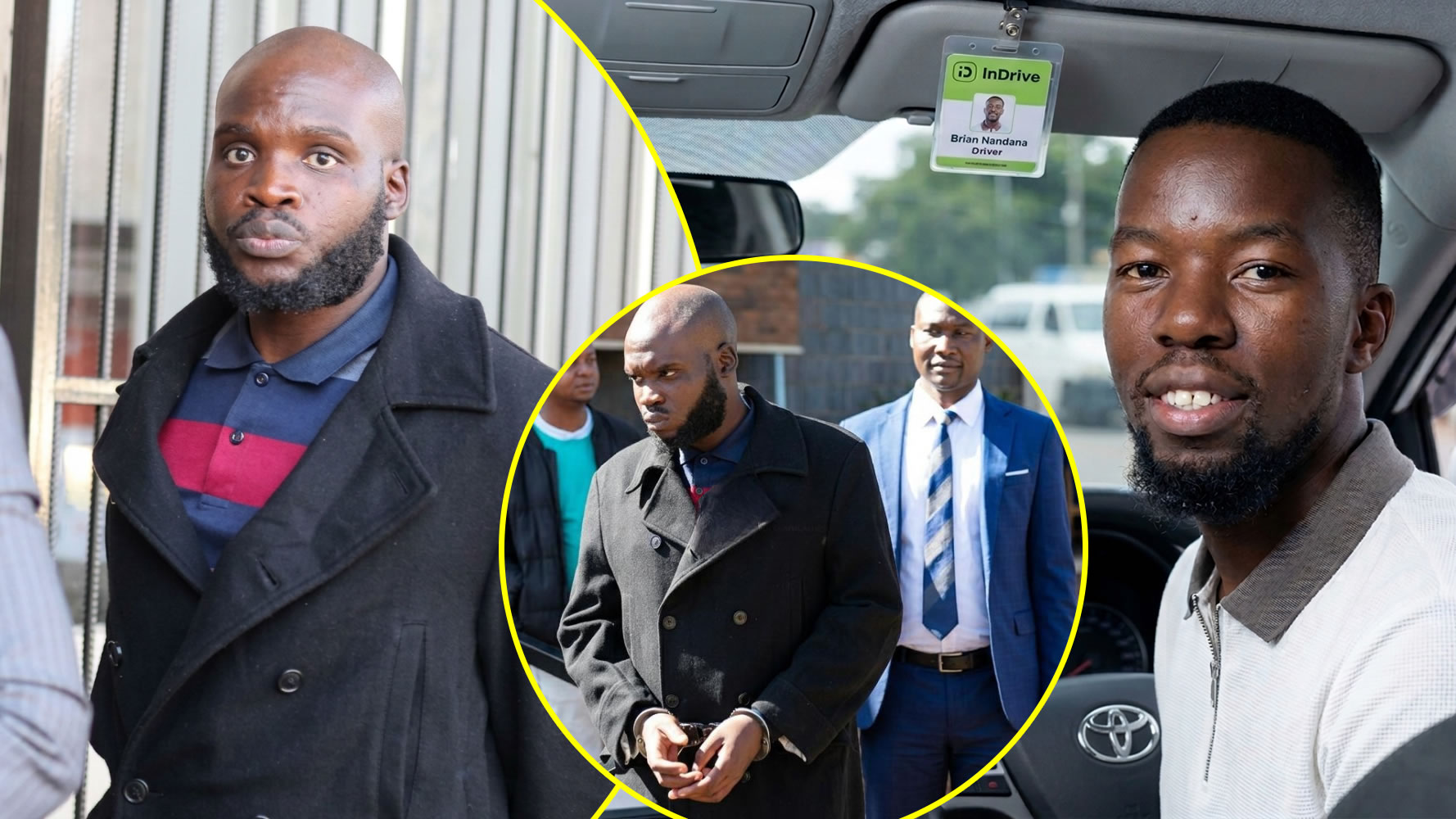
Harare – The tranquil veneer of Warren Park D, a suburb typically defined by its tight-knit community and bustling local trade, has been shattered by a crime so grotesque it has invoked ancient fears and cast a long, dark shadow over the entire nation. The case of Shepherd Severa, dubbed the ‘Vampire Killer’ by a horrified public, has not only exposed the chilling depths of human depravity but also reignited urgent, painful conversations about ritualistic killings and the pervasive influence of superstition in modern-day Zimbabwe. This investigative report delves deep into the harrowing details of the Warren Park murder, scrutinises the police investigation, and draws unsettling parallels with other recent, equally shocking cases that have plagued the country over the last decade.
At the heart of this macabre tale is the brutal murder of 29-year-old Brian Nandana, a man whose life was a testament to hard work and spiritual devotion. Nandana was a vibrant member of his community, a beloved inDrive driver who navigated the streets of Harare with a smile, and a gifted pianist at the Centre of Hope church. His life was tragically cut short in the early hours of 19 May 2026, allegedly by his close friend, Shepherd Severa. The motive, according to initial police reports, stemmed from a debt of US$2,800 that Nandana owed to Severa. However, the sheer barbarity of the act – the alleged slitting of Nandana’s throat, the purported sucking of his blood, and the subsequent burial in a shallow grave – has led many residents of Warren Park D to suspect a more sinister, ritualistic motive that goes far beyond a simple financial dispute.
The horrific events unfolded around 3:31 AM, when Severa allegedly lured Nandana to Pfukwa Shopping Centre in Warren Park D under the guise of finally settling the outstanding debt. What transpired next was a scene of unimaginable violence that seems more suited to a horror novel than the streets of a peaceful suburb. Police allege that Severa forcibly grabbed Nandana, strangled him within the confines of a vehicle, and then used a kitchen knife to inflict a fatal wound to his throat. Following this, in an act that has sent shivers down the spines of many, Severa reportedly sucked blood from Nandana’s body. The lifeless form was then placed in the back passenger seats of a white Toyota Aqua, registration number AGO 2804, and driven to the secluded Warren Hills Cemetery, a place usually associated with solemn remembrance and the quiet rest of the departed.
At the cemetery, Severa allegedly carried Nandana’s body on his shoulders, a grim burden in the pre-dawn darkness, before depositing it into a hastily dug shallow grave in a gravel pit, which he then covered with stones. The initial breakthrough in the case came when a security guard at the cemetery, Ronnie Tumbare, spotted Severa abandoning the blood-stained vehicle. This crucial sighting, coupled with the discovery of Nandana’s dropped iPhone 12 at the scene, provided law enforcement with the vital clues they needed.
Detectives, tracing text messages on the phone that showed Severa luring Nandana to the shopping centre just moments before the murder, swiftly apprehended the suspect. National police spokesperson Commissioner Paul Nyathi confirmed Severa’s arrest, stating, “Zimbabwe Republic Police confirms the arrest of Shepherd Severa (28) in connection with a murder case which occurred in Warren Park D, Harare, in which Brian Nandana was killed.” Commissioner Nyathi further elaborated that Severa allegedly confessed to the killing, including the disturbing detail of cutting Nandana’s throat and sucking his blood, and subsequently led police to the shallow grave where the victim’s body was recovered, bearing a deep cut on the neck and a scar on the back of the head.
Adding another layer of calculated deceit to the already grim narrative, Severa allegedly attempted to cover up his crime by creating and circulating fabricated audio recordings. These fake messages were designed to mislead Nandana’s relatives and friends, who were desperately searching for him after his disappearance. This deception reportedly complicated initial search efforts, delaying the discovery of the truth and prolonging the agony for Nandana’s loved ones. It was only through diligent police investigation and Severa’s eventual apprehension that the full extent of the horror began to unravel. The arrest itself was a high-stakes operation, as police were reportedly forced to fire warning shots when Severa attempted to evade capture, highlighting the desperation of a man who knew the gravity of his alleged actions.
Brian Nandana was more than just a victim in a police report; he was a man of deep faith and academic achievement. A proud alumnus of Solusi University, class of 2024, his musical contributions as a pianist brought joy and inspiration to many in his congregation. The Centre of Hope released a heartfelt statement mourning his loss: “We are deeply saddened by the loss of Bryan Nandana, our beloved pianist and a key figure in the Intentional 2026 launch programme. Bryan’s dedication, humility, and passion for ministry touched many lives and brought warmth and inspiration to every gathering he served.” His friends and colleagues described him as a religious and humble individual whose untimely death has left a profound void in the lives of those who knew him. The contrast between his peaceful life and the violent nature of his death has only added to the community’s collective trauma.
The alleged motive of a US$2,800 debt paints a stark picture of how financial disputes can tragically escalate in a country where economic stability is often elusive. However, the community’s persistent belief in a ritualistic motive cannot be easily dismissed as mere superstition. Zimbabwe has unfortunately witnessed a disturbing surge in ritual murders in recent years, a trend that has even drawn sharp concern from the highest echelons of government. In October 2025, President Emmerson Mnangagwa publicly expressed his disquiet over the growing cases of ritual killings and other heinous crimes across the country, calling for a return to traditional values of sanctity for human life. This societal backdrop lends significant credence to the Warren Park D residents’ suspicions, suggesting that Nandana’s murder might be another grim manifestation of deeply entrenched beliefs that human blood or body parts can be used to acquire wealth or power.
The alleged ritualistic aspect of Nandana’s murder resonates with other high-profile cases that have horrified Zimbabwe over the last decade. To understand the gravity of the current situation, one must look at the pattern of extreme violence that has occasionally surfaced in the nation’s criminal history.
|
Case Name
|
Year
|
Location
|
Key Details
|
|
Shepherd Severa
|
2026
|
Warren Park, Harare
|
Allegedly slit friend’s throat and sucked his blood over a debt.
|
|
Anymore Zvitsva
|
2025-26
|
Guruve
|
Accused of up to 25 murders involving rape and ritualistic motives.
|
|
Thandolwenkosi Ndlovu
|
2023
|
Harare & Bulawayo
|
Targeted homeless men; allegedly boiled and ate the flesh of victims.
|
|
Tapiwa Makore
|
2020
|
Murewa
|
7-year-old murdered by his uncle for ritual purposes; body dismembered.
|
|
Norton Mutilations
|
2025
|
Norton
|
Two mutilated bodies found with missing organs, suspected ritual.
|
One of the most chilling parallels is the case of Thandolwenkosi Ndlovu, a serial killer who terrorised Harare and Bulawayo in 2023. Ndlovu targeted the most vulnerable members of society – homeless men sleeping on the streets. In a truly barbaric twist that mirrored the depravity of the ‘Vampire Killer’, Ndlovu was accused of boiling and eating the flesh of his victims. His capture by a dedicated CID Women crack team brought a temporary reprieve from the fear he instilled, but the memory of his cannibalistic acts continues to haunt the nation’s collective psyche. Like Severa, Ndlovu’s crimes defied conventional logic, pointing to a psychological landscape where the boundaries of humanity had been completely erased.
Another deeply disturbing case that underscored the prevalence of ritual killings was the murder of seven-year-old Tapiwa Makore in Murewa in 2020. This case, perhaps more than any other, brought the issue of ritual murder to the forefront of national consciousness. Tapiwa was brutally murdered for ritual purposes by his own uncle, Tapiwa Makore Senior, and a herdsman, Tafadzwa Shamba. His body was dismembered, with parts such as the head and arms removed for ‘muti’ – traditional medicine believed to bring wealth or power to the uncle’s business ventures. The perpetrators were eventually brought to justice, with both men sentenced to death in July 2023, a verdict that was met with widespread approval from a nation gripped by the horror of the crime. The Makore case serves as a grim reminder that in some parts of society, the belief in the supernatural power of human remains is still potent enough to drive individuals to commit the unthinkable against their own kin.
More recently, the nation has grappled with the case of Anymore Zvitsva, the alleged Guruve serial killer, whose reign of terror spanned 2025 and 2026. Zvitsva was accused of a staggering number of murders, with reports varying from 12 to 25 victims. His modus operandi often involved murder, rape, and robbery, with suspected ritualistic motives underlying many of his heinous acts. He was eventually sentenced to 89 years in prison, though some trials are reportedly ongoing. These cases, alongside the discovery of two mutilated bodies in Norton in August 2025 and the arrest of Veronica Mudzipuri in Chegutu for the murder of a four-year-old, highlight a disturbing pattern of violence often linked to superstitious beliefs and the pursuit of illicit gains through dark practices.
The psychological profile of individuals capable of such acts is complex and deeply unsettling. In the case of Shepherd Severa, the betrayal of a long-standing friendship is perhaps the most jarring element. How does a person transition from being a trusted companion to a cold-blooded killer who allegedly engages in the macabre act of blood-sucking? Criminologists and social commentators in Zimbabwe have often highlighted the socio-economic factors that can contribute to such crimes. Poverty, desperation, and the allure of quick wealth can create a fertile ground for the influence of unscrupulous traditional healers or ‘prophets’ who demand human body parts or blood for their rituals. The belief in ‘zvidhoma’ or goblins, and other supernatural entities, can also play a role in shaping the narratives and justifications for these horrific acts. Some experts suggest that such individuals may suffer from severe personality disorders, where they lack empathy and view others merely as tools for their own advancement or as sacrifices to appease unseen forces.
The police investigation into the Warren Park case, while leading to a swift arrest and confession, has also raised questions that warrant further scrutiny. Were there missed clues that could have prevented Nandana’s death? The fact that Severa was able to lure his victim so easily suggests a high level of premeditated planning. Furthermore, the broader issue of law enforcement’s capacity to tackle ritualistic crimes, which often involve intricate networks and deeply held cultural secrets, remains a significant challenge. Statistics suggest that a substantial percentage of murders in Zimbabwe, possibly around 40 per cent, may have ritualistic undertones. This high figure highlights the need for specialized investigative units that understand the cultural and psychological nuances of these crimes. The community’s mistrust in law enforcement often stems from a perception that the ‘big fish’ – the wealthy individuals who often commission these ritual killings – are rarely brought to justice, while the ‘runners’ like Severa are the only ones who face the consequences.
The societal implications of such heinous crimes are far-reaching. They erode the fabric of trust within communities, making people suspicious of their neighbours and even their friends. The fear of ‘vampires’ or ritual killers can lead to a form of collective hysteria, where innocent individuals might be targeted based on unfounded suspicions. Moreover, these crimes tarnish the image of the nation, casting it in a light of primitive superstition rather than a modern, developing society. The impact on community safety is immediate, with residents in areas like Warren Park D now hesitant to walk the streets at night or engage with strangers. Public trust in law enforcement is also at stake; if the police are seen as only scratching the surface of these crimes, the underlying causes will continue to fester.
The narrative surrounding ‘vampirism’ in Zimbabwe is a complex blend of traditional beliefs, modern urban legends, and the influence of global pop culture. While the ‘Count Dracula’ comparisons in the media are sensationalist, they tap into a very real and ancient fear of blood-stealing entities. In Zimbabwean folklore, the concept of a ‘vampire’ is often linked to witchcraft and the use of blood to sustain or empower supernatural familiars. When a crime like Severa’s occurs, these latent fears are brought to the surface, and the line between myth and reality becomes dangerously blurred. Scrutinising the legal proceedings will be crucial in the coming months. Will the court consider the psychological state of the accused? Will there be revelations of others involved in a potential ritualistic network? These are questions that the public is desperate to have answered.
The Warren Park murder case, with its disturbing echoes of folklore and the stark reality of a life tragically cut short, serves as a grim reminder of the complex challenges facing Zimbabwean society. It underscores the urgent need for communities to address the underlying issues that contribute to such horrific acts, whether they be financial desperation, deeply entrenched superstitious beliefs, or a combination of both. The pursuit of truth and justice in this case is paramount, not only for Nandana’s grieving family but for the collective conscience of a nation grappling with such profound loss and brutality.
998As the legal proceedings against Shepherd Severa continue, the hope remains that they will shed more light on the full circumstances surrounding this deeply unsettling event and contribute to a broader understanding of how to combat such heinous crimes. The memory of Brian Nandana, the talented pianist and dedicated friend, must not be forgotten; his story is a call to action for a society to protect its most vulnerable and to confront the darkness that still lingers in its shadows.