


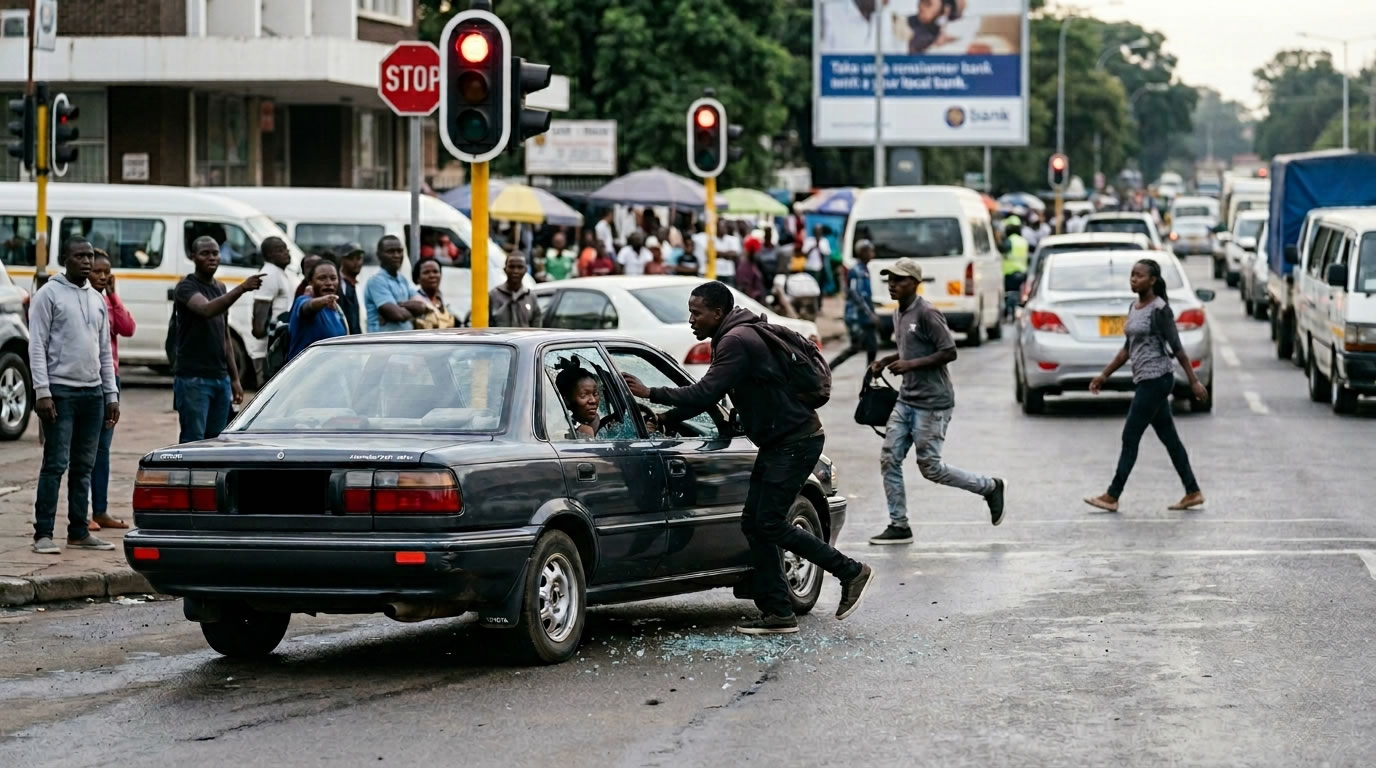
Harare, the country’s bustling capital, is grappling with a burgeoning crisis that has transformed its once vibrant streets into a theatre of fear. A “silent epidemic” of smash-and-grab robberies is tightening its grip, with audacious syndicates turning traffic lights and intersections into their hunting grounds. This investigation delves into the alarming surge of these violent crimes, exposing the sophisticated tactics employed by these gangs and the profound psychological toll inflicted upon their victims. The situation has prompted urgent questions about the effectiveness of current policing strategies and the deeper socio-economic factors that compel individuals towards such desperate acts.
The Escalating Threat: A City Under Siege
The statistics paint a grim picture of a city under siege. Zimbabwe recorded a staggering 1,282 armed robbery cases in 2025, averaging 106 incidents per month, according to figures released by Zimbabwe Republic Police (ZRP) Commissioner-General Stephen Mutamba. Harare alone registered the country’s highest crime rate, with 6,195 offences per 100,000 people. These are not merely opportunistic thefts; they are often meticulously planned operations.
Victims recount harrowing experiences. In one instance, a 45-year-old Chinese national, Guo Bina, lost US$90,000 in cash from his Borrowdale home after five robbers, brandishing pistols, overpowered security guards. This incident, among others, highlights the gangs’ increasing boldness and their willingness to target affluent areas previously considered safe. Marlborough, Westgate, Mabelreign, and Avondale, once tranquil middle-class neighbourhoods, now frequently feature in police crime bulletins and neighbourhood security alerts. Residents report suspicious vehicles, armed intruders scaling walls, and gangs allegedly monitoring business premises for days before striking.
The modus operandi often involves smashing vehicle windows at busy intersections, particularly at traffic lights, to snatch valuables from unsuspecting motorists. In April 2025, two suspects, Norbert Mhazvi (24) and Trymore Majamafuku (30), were arrested in connection with a series of smash-and-grab cases at the High Glen Roundabout in Harare, where they habitually targeted vehicles and stole valuables. These incidents underscore the brazen nature of these criminals, who operate with little regard for public safety or the rule of law.
Perhaps the clearest sign of the gangs’ growing boldness came last month when armed robbers attacked police officers on patrol in Mabelreign. According to police reports, the suspects ambushed officers near Divaris Makaharis School shortly after midnight, overpowered them, and stole a G3 rifle, a patrol vehicle, and mobile phones. This direct confrontation with law enforcement signals a dangerous escalation in the criminal landscape.
Systemic Failures and a Struggling Police Force
The Zimbabwe Republic Police (ZRP) finds itself in a challenging position, battling a rising tide of crime with what appears to be limited resources and systemic hurdles. The U.S. Department of State has assessed Harare as a CRITICAL-threat location for crime, noting that local law enforcement may have limited ability to respond to serious crimes. The ZRP is reportedly underfunded and poorly trained, with varying levels of competence among officers. The recent devaluation of the Zimbabwean currency has also led to an increase in reports of ZRP officers requesting bribes or engaging in criminal activity to supplement rapidly diminishing official salaries.
Commissioner Nyathi has acknowledged the challenges, stating that police are intensifying operations against armed gangs and relying heavily on public cooperation. He urged businesses, schools, and churches to avoid storing large sums of cash on premises, as criminals specifically target institutions perceived to be handling foreign currency. Despite arrests and police operations, public anxiety continues to deepen.
However, the effectiveness of these strategies is often hampered by a severe shortage of essential resources. Reports indicate a significant lack of police vehicles, particularly in rural areas, which impedes rapid response times and effective patrolling. This resource deficit, coupled with an acute shortage of accommodation for officers, further strains the ZRP’s capacity to maintain law and order. The ZRP’s efforts in community policing, while lauded in some areas like Borrowdale and Avondale for showing positive results, face an uphill battle against these pervasive systemic issues.
The Economic Undercurrent: Desperation and Opportunity
Economists and criminologists point to deep-seated economic pressures as a primary driver behind the surge in robberies. The allure of the United States dollar, with its global reserve currency status, exacerbates the situation. With fragile confidence in formal banking systems, many businesses and households continue to store large sums of US dollars at homes, offices, and informal business premises. Money transfer agencies, fuel stations, churches, hardware shops, and cross-border traders have become attractive targets for criminals seeking quick cash.
Professor Erasmus Muradziki, an economist and university lecturer, succinctly states, “When huge amounts of money circulate outside the banking sector, organised criminal networks inevitably follow the money”. The country’s expanding informal economy further increases the movement of untraceable cash, making armed robbery an increasingly lucrative criminal enterprise. Criminals are specifically targeting institutions perceived to be handling foreign currency, often striking shortly before salaries are paid, cash deliveries are made, or business proceeds are collected.
This economic desperation is a significant factor in youth gang membership, particularly in low-income settings. Studies indicate that low socio-economic status, extreme economic deprivation, and family management problems are strongly associated with individuals joining gangs. In Zimbabwe, where unemployment remains high and economic opportunities are scarce for a significant portion of the population, the temptation of quick illicit gains can be overwhelming.
Organised Crime and Cross-Border Connections
The sophistication of many recent robberies suggests the involvement of increasingly organised criminal syndicates. Police spokesperson Commissioner Paul Nyathi admitted suspicions of insider involvement in some cases, noting that robberies often appear pre-planned with criminals having detailed prior knowledge of premises’ internal systems. These gangs often arrive heavily armed, disable CCTV systems, confiscate phones from victims, and complete raids within minutes before disappearing into surrounding suburbs or nearby highways.
Security analysts believe some criminals may be importing tactics commonly associated with South African cash-in-transit gangs and robbery syndicates. Although official confirmation of links to foreign syndicates is scarce, some police sources privately acknowledge growing concern over firearm smuggling routes and organised gangs operating across borders, particularly between Zimbabwe, South Africa, and Mozambique. The violence associated with these robberies is also intensifying, as evidenced by incidents where detectives investigating armed robbery cases were shot dead, and suspected armed robbers were killed during gun battles with police. These incidents highlight the scale of firepower now circulating within criminal networks.
Broader Implications: A Threat to National Stability
The unchecked rise of smash-and-grab gangs poses a significant threat to Zimbabwe’s public safety, tourism, and foreign investment. The U.S. Department of State’s travel advisory for Zimbabwe urges increased caution due to crime and official harassment, with Harare assessed as a CRITICAL-threat location. Such advisories deter potential tourists and investors, who prioritise safety and stability.
While the Zimbabwe Investment and Development Agency (ZIDA) reported a 438 percent surge in tourism sector investments during the first quarter of 2026, attracting over US$60 million, and an overall increase in foreign direct investment in 2023, the pervasive fear of crime can undermine these positive trends. The ZIDA Q1 2026 report highlights efforts to improve the investment environment through regulatory reforms and fee reductions. However, these efforts could be negated if the security situation continues to deteriorate, as investor confidence is intrinsically linked to perceived stability and safety.
The social consequences are becoming increasingly visible. Demand for electric fences, CCTV systems, razor wire, and armed response services has surged across Harare and Bulawayo. Residents’ associations are organising neighbourhood patrols, while churches and businesses are hiring additional guards. The constant fear reshapes daily life, with parents panicking at night, families exchanging “safe arrival” messages, and security gates remaining locked even during daylight hours. This pervasive anxiety erodes the quality of life and creates an environment unconducive to economic growth and social cohesion.
Reclaiming the Streets: A Call for Decisive Action
Addressing this urban menace requires a comprehensive and multi-faceted approach that tackles both the symptoms and the root causes. Expert opinions on crime prevention strategies emphasise the importance of community policing initiatives, which foster collaboration between law enforcement and the public. The ZRP’s own “ZRP CRIME AND ROAD SAFETY WATCH” broadcasts highlight their pursuit of innovative policing for safe communities. However, these initiatives must be adequately resourced and supported to be truly effective.
Beyond policing, there is an urgent need to address the underlying socio-economic factors that drive individuals to crime. This includes creating sustainable economic opportunities, particularly for the youth, and strengthening formal financial systems to reduce reliance on cash transactions. Furthermore, a concerted effort is required to curb the proliferation of illegal firearms and dismantle organised criminal networks, potentially through enhanced regional cooperation with neighbouring countries like South Africa and Mozambique.
Commissioner Nyathi’s appeal to residents to report suspicious activities and individuals carrying firearms is crucial, as tip-offs have already aided detectives in intercepting suspects and recovering stolen property. However, public trust in law enforcement must be rebuilt and sustained through consistent, transparent, and effective action.
Harare’s deteriorating security situation demands decisive action. Reclaiming the city’s streets from the grip of these criminal elements is not merely a matter of law enforcement; it is a critical imperative for public safety, economic stability, and the nation’s reputation on the global stage. Without a comprehensive and sustained effort, Zimbabwe risks allowing this silent epidemic to inflict irreparable damage on its urban fabric and its future.