


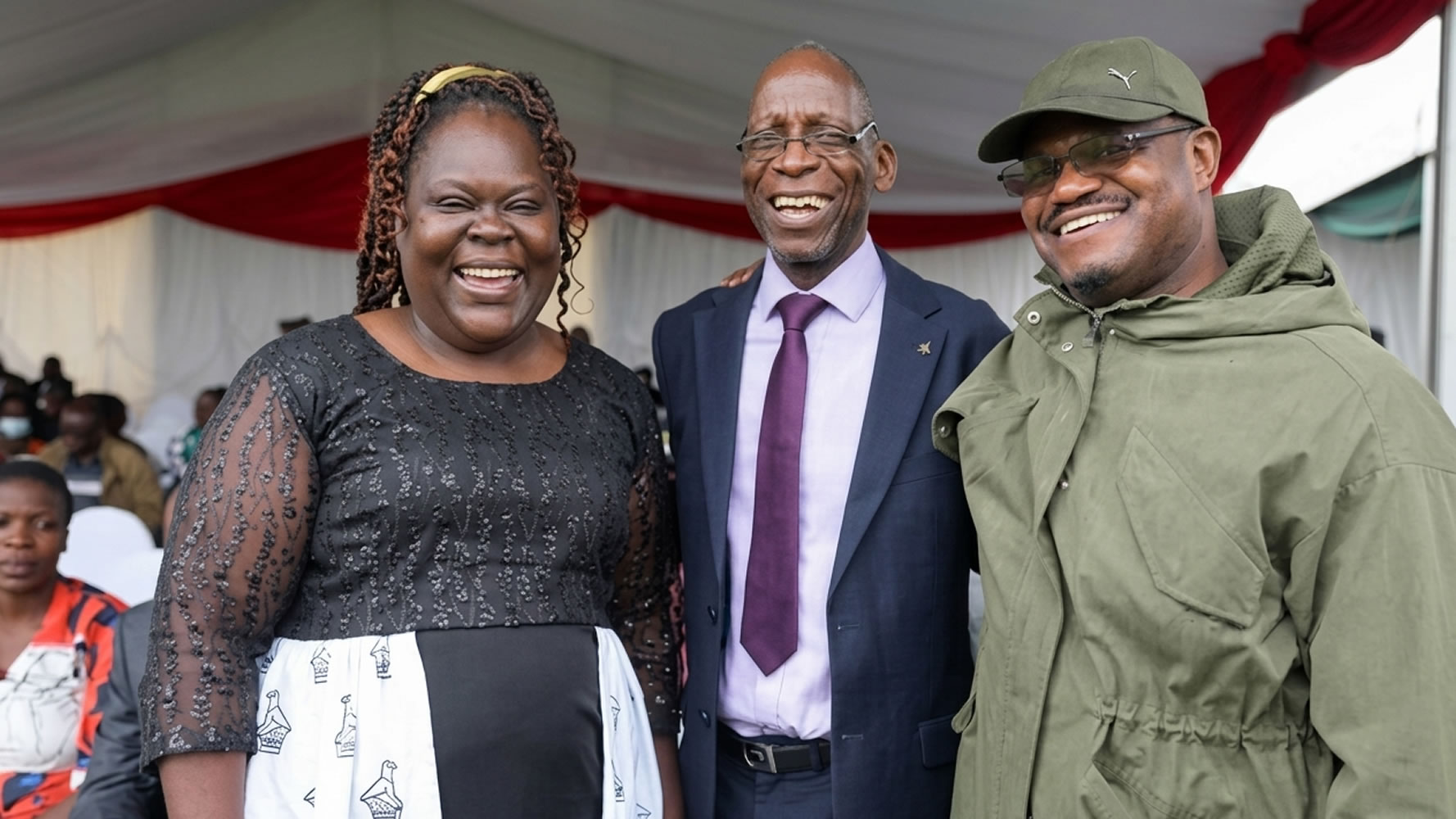
HARARE – The death of Linda Tsungirirai Masarira at the age of 43 has left a strange and uncomfortable silence over Zimbabwe. In a country where the passing of a political figure usually prompts a predictable outpouring of grief or a unified celebration of their legacy, Masarira’s departure on Sunday, 24 May 2026, has instead triggered a chillingly divided response. While some remember her as a fearless fighter for the downtrodden, a large and vocal section of the opposition has reacted with a cold indifference that borderlines on celebration. The “sell-out” tag, a label she carried like a heavy cross for the last seven years of her life, seems to have followed her even into the grave.
Masarira, the founder and president of the Labour Economists and African Democrats (LEAD) party, died in Harare after a long and exhausting battle with health complications. Her friend and close associate, Abigale Mupambi, confirmed the news with a heavy heart. “It is with deep sorrow and a heavy heart to announce the passing on of a close friend and associate, a comrade to many, LEAD president Linda Tsungirirai Masarira, today, Sunday, 24 May 2026,” Mupambi stated. She noted that although Masarira had been unwell, there was a glimmer of hope just days before she died. “I was with her on Friday and we spent several hours together at my office. She was fine and there was no sign that something like this would happen.”
However, the medical reality was much more grim. According to other associates like Rutendo Matinyarare, Masarira had been struggling with a cocktail of illnesses including respiratory issues, diabetes, and heart complications since the COVID-19 pandemic. Matinyarare’s tribute was pointed, suggesting that Masarira was “let down by those she served.” He claimed that “she constantly needed assistance to pay very costly health bills and government never helped, despite the huge role she played for them.” This lack of support, both from the state she was accused of serving and the opposition she once led, paints a picture of a woman who died in a state of profound political and personal isolation.
LET DOWN BY THOSE SHE SERVED.
She was my friend and confident. She loved Zimbabwe and did so much in the national interest. She did even more for the second republic but the system never recognized her love in return.
In the last few years after Covid she struggled with… pic.twitter.com/U1fzKYaHLi
— Rutendo Matinyarare (@matinyarare) May 24, 2026
To understand how a woman who was once the darling of the Zimbabwean opposition became its most hated “traitor,” one must look back to 2016. At that time, Linda Masarira was a firebrand activist, a widow with five children who had been thrust into the spotlight by her refusal to be silenced by the regime of the late Robert Mugabe. She spent 89 days in the notorious Chikurubi Maximum Prison, often in solitary confinement, for her role in the “Tajamuka” protests. Back then, she was a hero. She was the face of resistance, a woman who had sacrificed her freedom for the “struggle.”
The shift began around 2018. Following the death of the MDC’s founding leader, Morgan Tsvangirai, the opposition split into bitter factions. Masarira found herself aligned with Thokozani Khupe’s MDC-T, serving as its spokesperson. It was during this period that the first seeds of the “sell-out” narrative were sown. The breaking point for many was her increasing criticism of Western sanctions on Zimbabwe and her willingness to engage in dialogue with the ZANU-PF government through the Political Actors Dialogue (POLAD). In the eyes of the mainstream opposition, led by Nelson Chamisa, any form of engagement with the ruling party was tantamount to treason.
The allegations that she was a Central Intelligence Organisation (CIO) plant became a persistent drumbeat on social media. Every move she made was scrutinised through the lens of betrayal. When she was pictured wearing regalia that appeared to have ZANU-PF colours, the internet exploded. She was fired from the MDC-T over the incident, but the damage was permanent. She went on to form LEAD in 2019, but she was never able to shake off the “regime enabler” label.
Hanzvadzi yangu Nick, Linda got recruited by the system when she worked for that NGO. All you have to say is that we have lost one of our own not zvekuti Ms Masarira wat wat. How could you all use Linda motadza kumubhadharira ma medical bills ake? Musadaro, u tell Paul Chikawa…
— Susan Mutami (@mutami_susan) May 24, 2026
In an interview given just months before her death, Masarira reflected on the toll this took on her. “One of the biggest challenges that I faced as a woman in Zimbabwe, is misogyny,” she told a researcher from the Nordic Africa Institute. “And the minute a woman wants to be opinionated, she stops being a person and is portrayed as a creature. Someone who wants to be a man, someone who is wayward and uncontrollable. What then happens is that time, effort and money are spent to denigrate and discipline you. Gendered misinformation is spread about you.”
She was acutely aware of how her gender made her a softer target for the “sell-out” tag. “There is a persistent sexualisation of women in politics, where everyone wants to know your sexual affairs… This hardly ever happens to male candidates,” she noted. The abuse was not just political; it was personal, visceral, and relentless. In the toxic world of Zimbabwean digital politics, she was often the most abused person online. Her every post was met with a barrage of insults, many of them too graphic to repeat.
This environment of constant hostility creates what some observers call the “Trust Me Bro” crisis in the opposition. Anyone who dares to question the strategy of the main opposition leadership or suggests a different path to reform is immediately branded a ZANU-PF agent. This culture of intolerance leaves no room for the “middle ground” Masarira claimed to be seeking. As one social media commentator noted during the fallout of her death, “Zimbabwe has the most poisonous opposition mindset in the whole world… This is not the foundation of democratic culture. This is the reproduction of authoritarianism under opposition branding.”
Was the “sell-out” tag a death sentence? While her official cause of death relates to her long-term health struggles, the psychological impact of being ostracised by her former comrades cannot be ignored. Political isolation in Zimbabwe is not just about losing votes; it is about losing your support system, your community, and your sense of safety. For a woman who had already lost so much, the weight of being a national pariah must have been crushing.
Matinyarare’s claim that she was “let down” by the very system she was accused of serving adds another layer of tragedy to the story. If she was indeed a “pawn” or a “plant,” she was one that was discarded when she was no longer useful. “Now watch them spoil her in death but yet they never looked after her in life,” Matinyarare remarked, referring to the government officials who began tweeting their condolences as soon as her death was announced. Nick Mangwana, the Permanent Secretary in the Ministry of Information, was among the first, calling her death a “national loss.”
To her supporters, Masarira was a misunderstood patriot who believed that the only way to save Zimbabwe was through dialogue and economic pragmatism rather than perpetual protest. She argued that sanctions were hurting the ordinary worker more than the political elite she was accused of protecting. “As LEAD we see the imposition of sanctions by the west on Zimbabwe as a direct attack on the very worker they are purported to have been instituted to benefit,” she once said.
But in the high-stakes chess game of Zimbabwean politics, nuance is a luxury few can afford. You are either with the “struggle” or you are against it. By attempting to walk a middle path, Linda Masarira ended up in a political no-man’s-land. She died as she lived in her final years: surrounded by controversy, haunted by accusations, and deeply, profoundly alone.
As the dust settles on her passing, the question remains: what does it say about the state of Zimbabwean democracy when a woman who spent months in a maximum-security prison for her beliefs can be so easily discarded and demonised? Whether she was a sell-out or a scapegoat may never be fully settled, but the chilling reaction to her death serves as a stark reminder of the toxic nature of the country’s political landscape. For Linda Masarira, the “sell-out” tag was perhaps not the cause of her death, but it certainly ensured that her final days were spent in a cold, unforgiving shadow.