


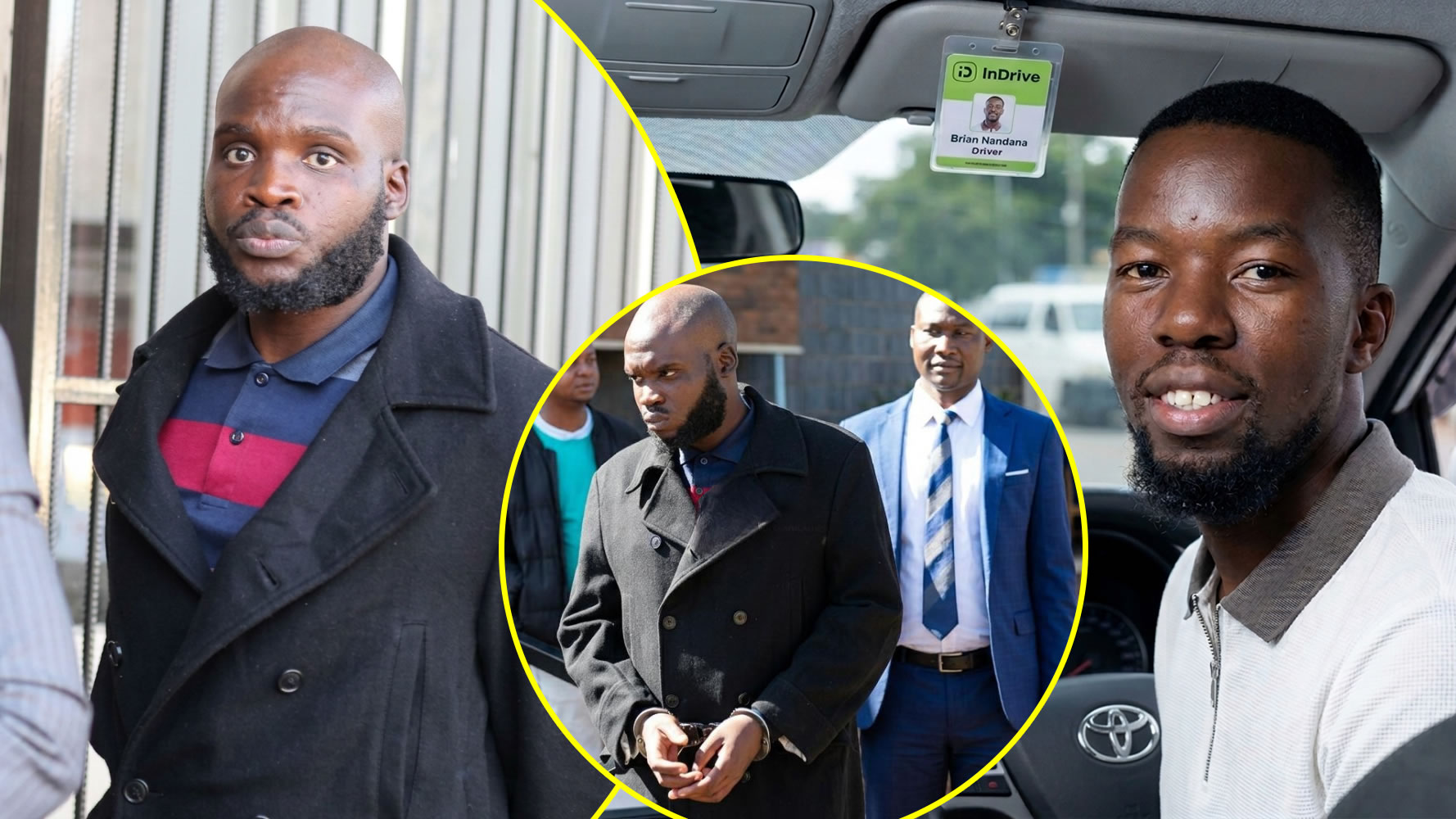
The Warren Park Vampire: A Tale of Faith, Betrayal, and the Occult
HARARE – In the quiet suburbs of Harare, where faith often serves as the bedrock of community life, a story of unimaginable cruelty has emerged, leaving a trail of grief and unanswered questions. The brutal murder of Brian Nandana, a 29-year-old inDrive driver and a gifted church pianist, has gripped the nation, not just for its violence, but for the chilling details of the alleged perpetrator’s actions. Shepherd Severa, a man once revered as a “prayer warrior” within his circles, now stands accused of a crime that sounds more like a dark folklore than a modern-day tragedy.
Brian Nandana was a man of many talents and deep convictions. A graduate of Solusi University, he was a respected figure within the Seventh-day Adventist community. To many, he was the soul of the Centre of Hope church, where his fingers danced across the piano keys, leading the congregation in worship. His life was a testament to the struggles and resilience of Zimbabwe’s educated youth. Despite his academic qualifications, the harsh economic realities of the country led him to seek a living as an e-hailing driver for inDrive. It was a choice born of necessity, yet he approached it with the same diligence he applied to his music and his faith. He was a key figure in the church’s Intentional 2026 launch programme, and his loss is felt deeply by all who knew him.
The man now linked to his demise was no stranger to him. Shepherd Severa, 28, was described by those who knew him as a close friend and a confidant. The two were often seen together, and Severa frequently accompanied Nandana on his driving trips. This bond, seemingly forged in shared faith and mutual trust, makes the subsequent events all the more harrowing. According to police reports and court documents, it was this very intimacy that allowed Severa to orchestrate a plan that would end in a blood-soaked betrayal.
The catalyst for this horrific act, investigators suggest, was a sum of US$2,800 that Nandana had painstakingly saved. In a country where such an amount represents a significant fortune, the allure of the money allegedly proved too much for Severa. However, as the details of the confession emerged, it became clear that this was not a simple case of robbery gone wrong. There was a darker, more ritualistic element that has left the public in a state of disbelief.
On the morning of 19 May 2026, the grim discovery of a blood-stained Toyota Aqua, registration AGO 2804, at Warren Hills Cemetery signalled the start of a nightmare for the Nandana family. The vehicle, which belonged to Brian, was found abandoned, its interior telling a silent story of a struggle. National police spokesperson Commissioner Paul Nyathi soon confirmed the arrest of Severa, but it was the nature of his alleged confession that truly horrified the public.
Severa reportedly admitted to slitting his friend’s throat and, in a detail that has led the media to label him the “vampire killer,” sucking his blood. This ritualistic aspect has sparked intense debate across Zimbabwe about the prevalence of occult practices and get-rich-quick schemes in a society grappling with economic hardship. The juxtaposition of Severa’s reputation as a “prayer warrior” with such a barbaric act has forced many to re-evaluate the people they trust within their own spiritual circles.
The timeline of the crime, as presented in court, paints a picture of cold-blooded calculation. At approximately 3:31 AM on the night of the murder, Severa allegedly lured Nandana to the Pfukwa Shopping Centre in Warren Park D. The pretext was simple: Severa claimed he had money to give to his friend. Trusting his companion, Nandana arrived, only to be met with a lethal ambush. Once inside the vehicle, Severa allegedly strangled Nandana before using a knife to carry out the ritualistic killing. This was a premeditated act; the presence of a knife in an e-hailing vehicle suggests a carefully plotted execution, timed to use the shadows of the night as cover.
After the act, Severa reportedly drove the vehicle to a secluded area near Warren Hills Cemetery. There, he attempted to hide the evidence of his crime by burying Nandana’s body in a shallow grave—a gravel pit—and covering it with stones. His plan for a clean escape was interrupted when he encountered Ronnie Tumbare and security guards who were monitoring earth-moving equipment nearby. Fearing discovery, Severa fled the scene, likely dropping the deceased’s iPhone 12 in his haste.
The investigation that followed was swift. Detectives recovered the phone at the scene, which provided a digital trail of the final moments of Nandana’s life. Text messages between the two men clearly showed the lure used by Severa. Upon his arrest, Severa allegedly led the police to the shallow grave and later to his own residence, where the car keys were found discarded in a rubbish bin.
However, it is in the domestic sphere of the accused that the most poignant and revealing details of this tragedy reside. For the past two months, Severa had been staying with his uncle in a rented room in Warren Park. The uncle, who is the primary tenant and roughly the same age as Severa, has found himself thrust into a nightmare he never anticipated. Speaking on the condition of anonymity for fear of victimisation, the uncle shared the harrowing details of the moment the facade crumbled.
The uncle, who is not yet married, is currently on sick leave from his job. He suffers from a persistent leg injury that causes him significant pain and mobility issues, particularly during the cold winter months or whenever the weather turns chilly. This physical vulnerability has only added to his sense of helplessness as the community turns its suspicion toward him.
“Some people have already begun linking me to my nephew’s murder incident simply because we were staying together,” he said. “They think because we shared a roof, I must have known something. But I was as blind to his true nature as everyone else.”
The uncle revealed that he only learned of the incident when the police arrived at their residence for indications — a session where a suspect narrates at the crime scene how the incident really took place. The scene that unfolded at the house was one of stark, cinematic tension. The landlady, upon seeing Severa in handcuffs and surrounded by CID officers, confronted him directly. She demanded to know why he had been arrested.
During the indications, Severa offered a jarringly weak motive, claiming he killed Brian because of an outstanding debt. This explanation has been met with widespread scepticism; as many have noted, killing a debtor ensures the money is never recovered. It is far more likely, as suggested by the uncle’s observations, that the motive was to make the US$2,800 ‘permanently go away’ by eliminating the only person who could demand its return.
The contrast between the two men living in that room could not have been more stark. While the uncle struggled with his health and the responsibilities of his tenancy, Severa was reportedly unemployed, spending his days under the guise of a devout man of prayer. Neither man was married, and their quiet existence gave no hint of the darkness that Severa was harbouring. The uncle recalled the last words his nephew spoke to him before being whisked away by officers: “Sorry sekuru.” It was a brief, haunting apology for a crime that had caught everyone by surprise.
The social and psychological impact of this case cannot be overstated. Zimbabwe is a nation where the lines between the physical and spiritual worlds are often blurred. The idea that a “prayer warrior” could be a “vampire” in disguise has struck a chord with a public already weary of economic hardship and social decay. It raises uncomfortable questions about the nature of evil and the masks people wear to hide their true intentions.
As the legal process begins, the nation watches with bated breath. Severa appeared before Harare magistrate Ruth Moyo on 23 May 2026, where he was remanded in custody. The evidence against him, including the digital trail and his own admissions, appears substantial. Yet, for the family and friends of Brian Nandana, no court verdict can truly bring back the man they lost.
The burial of Brian Nandana at Glen Forest Cemetery was a scene of profound sorrow. Hundreds gathered to say their final goodbyes to a man who had touched so many lives through his music and his kindness. The Centre of Hope church, where he had been such a vital part of the community, led the tributes. There were no words that could adequately express the sense of loss felt by those who had seen him grow from a promising student at Solusi University to a respected leader in his church.
In the end, the story of Brian Nandana is a reminder of the fragility of life and the complexity of the human heart. It is a tale of a man who lived his life with grace and a man who allegedly chose a path of darkness. As the community of Warren Park and the wider nation of Zimbabwe grapple with the aftermath, they are left to wonder how such a profound betrayal could occur in their midst.
The uncle’s plea for anonymity and his fear of victimisation serve as a final, poignant note to this tragedy. His struggle with his leg injury, the confrontation with the landlady, and the sudden, brutal confession of his nephew have left him a broken man, living in fear of a community that no longer trusts him. It highlights the collateral damage of such crimes—the innocent lives that are upended and the fear that lingers long after the headlines fade. For now, the “vampire killer” remains behind bars, but the shivers he has sent through the heart of Zimbabwe will not soon be forgotten.