


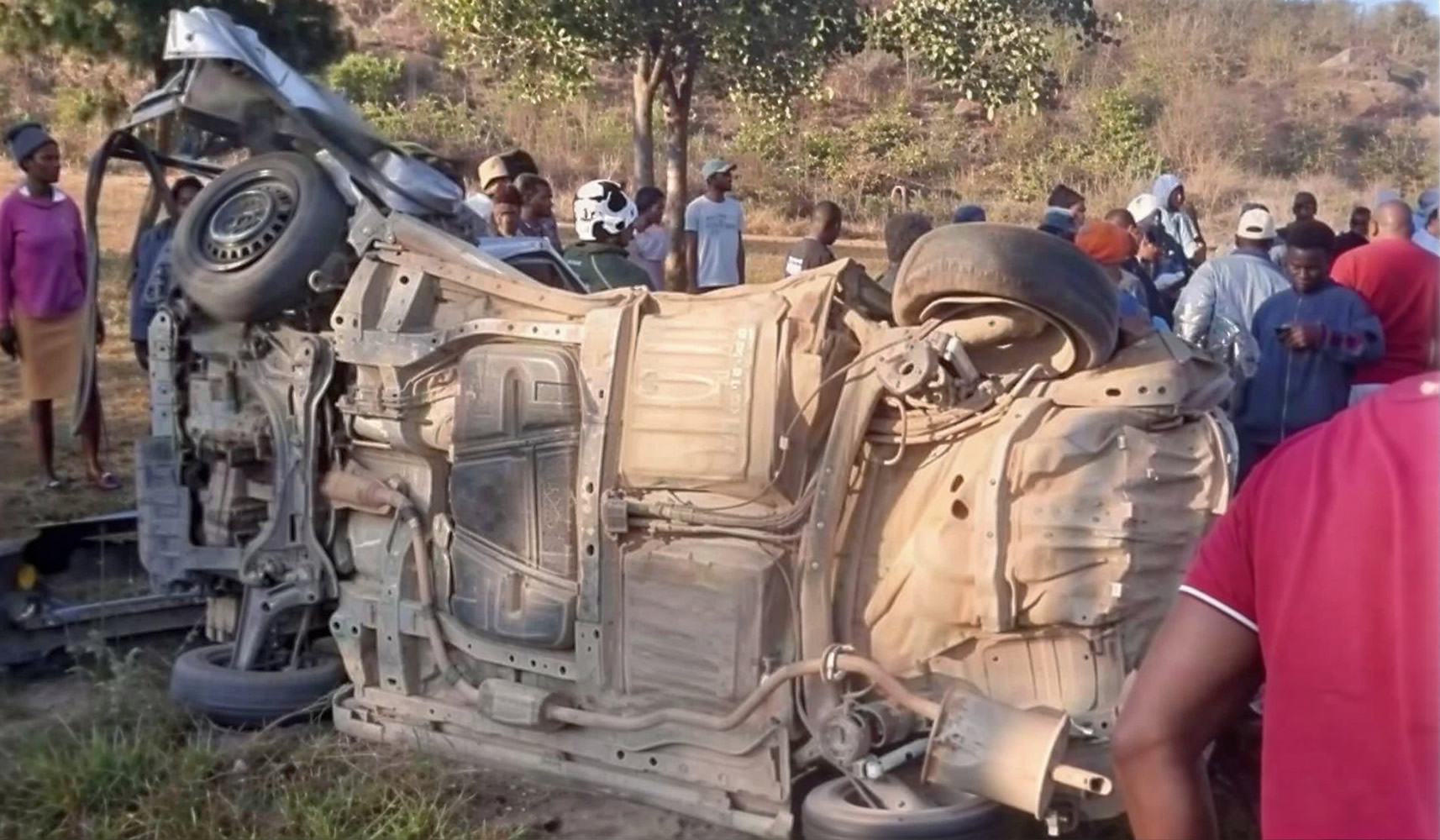
The evening of May 25, 2026, brought a familiar and grim scene to the Harare–Bulawayo highway. At approximately 17:45 hours, the fading light at the 223-kilometre peg near the Redcliff turn-off was obscured by the twisted metal and shattered glass of yet another fatal collision. This time, six lives were cut short in an instant when a Honda Fit and a massive haulage truck collided with such force that there was little hope for those inside the smaller vehicle. The Zimbabwe Republic Police (ZRP) confirmed the tragedy shortly after, noting that the incident added another dark chapter to the country’s ongoing struggle with road safety.
For many Zimbabweans, the news of a Honda Fit involved in a fatal accident with a heavy goods vehicle is no longer a surprise, but rather a recurring nightmare. These small, Japanese-imported hatchbacks have become the backbone of the country’s informal transport system, known locally as “mushikashika.” While they offer a cheap and quick way to travel, they are frequently overloaded far beyond their intended capacity. It is not uncommon to see a five-seater Honda Fit carrying ten or even twelve passengers, crammed into the boot and squeezed onto the laps of others. When such a vehicle meets the uncompromising mass of a haulage truck, the results are almost inevitably catastrophic.
The Redcliff accident is part of a broader, more disturbing trend that investigative journalists and road safety advocates have been tracking for years. Just two days prior to this latest horror, another fatal incident occurred at the 3-kilometre peg along the Cross Dete–Binga Road. In that case, a 28-year-old man was killed in a hit-and-run accident at around 05:00 hours. The ZRP later confirmed the arrest of 21-year-old Mike Ndlovu, who was allegedly driving a blue Nissan X-Trail. Unlike the Redcliff collision, where the drivers often remain at the scene due to the sheer scale of the wreckage, Ndlovu reportedly sped off, leaving his victim lying on the road.
The frequency of these accidents has reached a level that many describe as a national crisis. Statistics from the Traffic Safety Council of Zimbabwe (TSCZ) paint a bleak picture of the country’s highways. On average, five people die every single day on Zimbabwean roads, and a crash occurs every fifteen minutes. Between January and May 2024, the TSCZ recorded over 21,000 accidents and 860 deaths. In 2026, those numbers have shown little sign of meaningful decline, with the total number of reported traffic accidents for the year expected to exceed 40,000.
|
Date
|
Location
|
Incident Type
|
Fatalities
|
|
May 26, 2026
|
Redcliff, Harare-Bulawayo Rd
|
Honda Fit vs Haulage Truck
|
6
|
|
May 24, 2026
|
Cross Dete-Binga Rd
|
Hit-and-Run (Nissan X-Trail)
|
1
|
|
Dec 17, 2025
|
Harare-Nyamapanda Rd
|
Overloaded Honda Fit vs Truck
|
10
|
|
Aug 11, 2025
|
Plumtree Road
|
Honda Fit vs Haulage Truck
|
2 (Feared)
|
|
July 22, 2025
|
Seke road
|
Minibus vs Haulage Truck
|
17
|
|
June 23, 2025
|
Harare-Mutare Rd
|
Honda Fit vs Truck
|
6
|
|
Feb 13, 2025
|
Matabeleland South
|
Bus vs Haulage Truck
|
24
|
One of the most harrowing examples of this ongoing carnage took place on December 17, 2025, on the Harare–Nyamapanda Road. In that instance, a Honda Fit carrying ten occupants—double its legal limit—was travelling from Mutoko to Kotwa when it was involved in a head-on collision with a haulage truck heading towards Harare. All ten people in the small car were killed. The scene was described by witnesses as a “theatre of blood,” with personal belongings and car parts strewn across the tarmac for hundreds of metres.
The investigative lens must also focus on the haulage trucks themselves. These vehicles, often carrying bulk goods across the Southern African Development Community (SADC) region, are frequently operated by drivers who are under immense pressure to meet tight deadlines. Driver fatigue is a significant, yet often overlooked, factor in these collisions. A recent study titled “Unearthing the Contribution of Driver Fatigue to the High Rate of Road Accidents in Zimbabwe” highlighted that human error is attributed to 90% of accidents in the country. Long hours behind the wheel, combined with the poor state of the roads and the unpredictable behaviour of “mushikashika” drivers, create a lethal environment.
The state of the infrastructure only adds to the danger. Many of Zimbabwe’s major highways, including the Harare–Chirundu and Harare–Bulawayo roads, have sections that are severely dilapidated. Narrow lanes, deep potholes, and a lack of clear road markings make night driving particularly hazardous. When a small car like a Honda Fit attempts to overtake on these narrow stretches, it often finds itself in the path of an oncoming haulage truck with nowhere to go. The 223-kilometre peg near Redcliff is one such area where the combination of speed and road conditions has proven fatal time and again.
Public sentiment is reaching a breaking point. Families of victims often find themselves with little recourse, as many “mushikashika” vehicles operate without proper insurance or valid passenger permits. The ZRP has repeatedly expressed concern over the surge in motorists fleeing accident scenes, a trend that suggests a breakdown in social responsibility and a fear of the legal consequences. Assistant Commissioner Paul Nyathi, the national police spokesperson, has frequently called for greater caution, yet the message seems to go unheeded as the economic necessity of cheap transport outweighs the perceived risk.
In another recent incident in December 2025, twelve people died when three vehicles, including a Honda Fit, collided near the Sebakwe River along the same Harare–Bulawayo road. The tragedy was yet another reminder that even when multiple vehicles are involved, the smallest and most vulnerable cars bear the brunt of the impact. The Sebakwe River bridge area has long been known as a black spot, yet the structural improvements needed to make the crossing safer have been slow to materialise.
The “mushikashika” phenomenon is not just a transport issue; it is a symptom of a larger economic struggle. With the formal bus system often unable to meet the demand, especially in rural and peri-urban areas, these pirate taxis fill the gap. However, the cost of this convenience is being paid in human lives. The Honda Fit, originally designed as a compact city car in Japan, was never intended to serve as a high-speed, long-distance passenger carrier on rugged African highways. Its lightweight frame offers almost no protection when pitted against a 30-tonne articulated lorry.
As the sun rose on the morning after the Redcliff accident, the wreckage was cleared, but the questions remained. How many more families must receive that devastating phone call from the police? When will the authorities move beyond issuing statements and begin enforcing the laws that prevent overloading and ensure vehicle roadworthiness? For now, the Harare–Bulawayo road remains a silent witness to a cycle of tragedy that shows no sign of ending.
The Zimbabwe Republic Police have stated that “More information will be released in due course” regarding the identities of the six victims from the Redcliff crash. For the families waiting for news, the silence is deafening. They are the latest victims of a system that seems to value speed and profit over the safety of its citizens. Until there is a fundamental shift in how road safety is managed and how the transport sector is regulated, the headlines will continue to tell the same sad story: another Honda Fit, another haulage truck, and more lives lost to the tarmac.
“The Zimbabwe Republic Police (ZRP) has reported a fatal road traffic collision at 223 kilometre peg along the Harare–Bulawayo road near Redcliff turn-off at 1745 hours this evening. Six people died when a Honda Fit and a Haulage Truck collided. This is a developing story.”
These few lines from the official police report barely scratch the surface of the human tragedy that unfolded near Redcliff. Behind the statistics are mothers, fathers, and children whose futures were erased in a single moment of impact. As an investigative journalist, one cannot help but wonder if the next headline is already being written on some other stretch of Zimbabwean highway, waiting for the next overloaded car to meet its fate. The cycle of carnage continues, and the cost is simply too high to ignore.