


The Price of a Life: How Cost-Cutting and Security Failures Turned a Football Match into a Battlefield
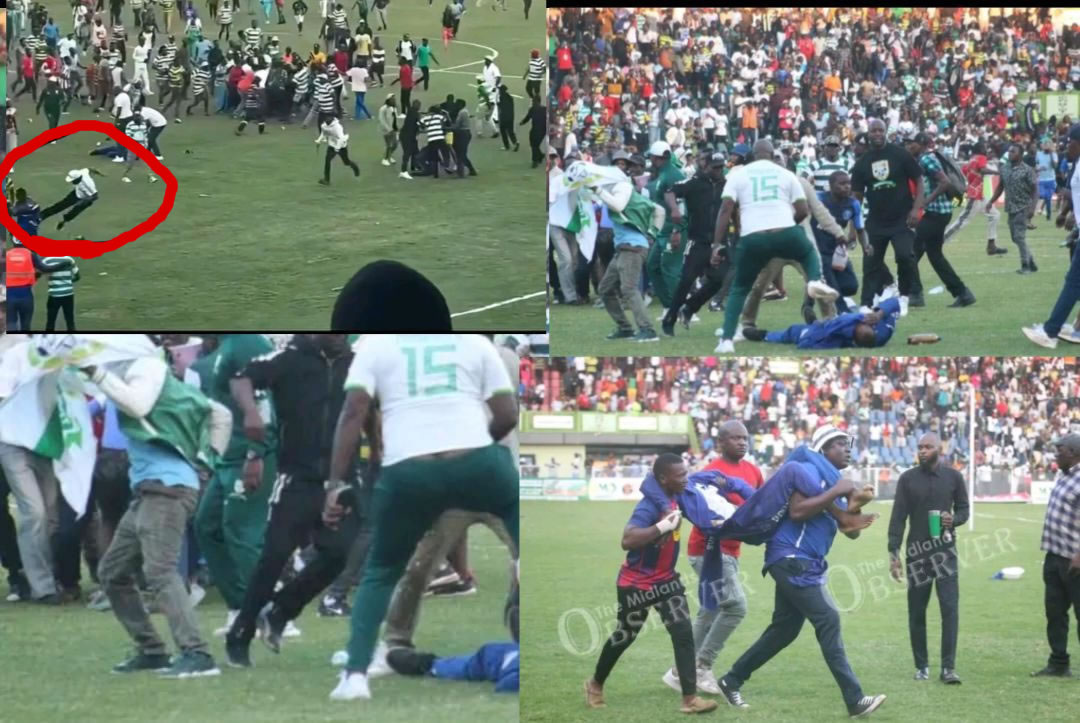
KWEKWE — The sun was beginning to set over Chahwanda Stadium on Sunday, casting long shadows across a pitch that, only moments earlier, had been a stage for the beautiful game. Now, it was a scene of utter devastation. Broken banners lay trampled in the dust, the air was thick with the acrid scent of sweat and fear, and the rhythmic thud of police batons against shields replaced the cheers of the crowd. In the centre of this chaos, a young ball boy sat huddled near the touchline, clutching his head after being struck by a missile launched from the terraces.
This was not the spectacle the Premier Soccer League (PSL) had promised. It was a systemic failure of security, a breakdown of order, and, most damningly, a tragedy that many saw coming. At the heart of the scandal is a staggering discrepancy in numbers: a shortfall of sixty police officers that turned a high-profile match into a deathtrap.
The showdown between the newly-promoted Hardrock FC and the perennial giants Dynamos FC was always going to be a volatile affair. Kwekwe had not seen an occasion of this magnitude in years. Yet, as thousands of fans descended upon the stadium, the thin blue line intended to keep them safe was virtually non-existent.
“We are also engaging police to hear their side of the story. Eighty was the agreed number because it was a high-profile game,” stated PSL Chief Executive Officer Rodwell Thabe, his voice carrying the weight of a man seeking answers in a sea of accusations. “For such games like the Harare Derby between CAPS and Dynamos we had 80, which is a norm, but at Barbourfields Stadium, for such a game, we go up to 100.”
But as the Zimpapers Sports Hub arrived at the stadium twenty minutes before the scheduled kick-off, the reality on the ground bore no resemblance to the official deployment plan. Thousands of supporters were trapped in sluggish queues, the heat and frustration mounting with every passing minute. The marshals, who were supposed to manage the flow of people, were nowhere to be found. Instead, fans took turns taunting each other, some even entering the field from the terraces before the match had even begun—a blatant violation of stadium rules that went entirely unchallenged.
The police presence was so sparse that it was almost invisible. While the PSL had mandated 80 officers, eyewitnesses and insiders suggest that fewer than 20 were actually on duty. Some reports from the turnstiles indicated as few as seven officers were seen roaming the perimeter. The reason for this dangerous gamble? Allegations of cost-cutting by the home club, Hardrock FC, who were reportedly looking to shave off expenses at the cost of public safety.
The match itself was a tense, gritty encounter. Dynamos had taken the lead through a Leeroy Mavunga strike, and for much of the game, they seemed destined to take all three points back to Harare. But the atmosphere was a ticking time bomb. In the 68th minute, the match reached its breaking point. Referee Mhaka Magara pointed to the penalty spot after adjudging that Dynamos captain Shadreck Nyahwa had handled the ball inside the area.
The decision was met with immediate and furious protest from the Dynamos players and supporters. From the terraces, it appeared Nyahwa had been hit by the ball as he fell to the ground—a movement many argued was natural and unavoidable. But Magara was unmoved. Wilfred Madzungu stepped up and calmly converted the penalty, drawing Hardrock level at 1-1.
The equaliser did not bring joy; it brought an explosion. The home supporters’ celebrations were met with a surge from the Dynamos end. Security barriers, brittle and poorly guarded, stood no chance. Fans breached the pitch, and within seconds, the stadium transformed into a battlefield. Rival factions exchanged blows in the centre circle, players scrambled for the safety of the dressing rooms, and officials were forced to run for their lives.
“The match has been abandoned,” confirmed match commissioner Ruzive Ruzive, standing amidst the debris of what should have been a sporting triumph.
The fallout from the Chahwanda chaos has been swift and unforgiving. Twelve fans were treated and discharged from local medical facilities, while one remains in a private ward. Hardrock chairman Wellington Mpandare and Dynamos leaders have both spent time visiting the injured in hospital, but the gesture does little to mask the underlying negligence.
“Hospital authorities said 12 fans were treated and discharged with one left in a private ward and being attended to. His life is not in danger from what we were told,” Thabe remarked during a briefing.
This incident is not an isolated case of bad luck. It is part of a worrying pattern of security lapses that have plagued Zimbabwean football in recent years. Only months ago, similar challenges were experienced when Scottland FC visited Chahwanda for the season opener. On that day, many fans were forced to return home in frustration as the stadium infrastructure failed to cope with the crowd. It appears that nothing was learnt from that experience.
The ghost of the September 2023 violence at Barbourfields Stadium, which forced the league to suspend all matches after a clash between Highlanders and Dynamos, still haunts the domestic game. That incident led to promises of “stringent security measures” and “mandatory stadium sweeps,” yet the events in Kwekwe suggest these protocols are often nothing more than ink on paper.
The pre-match meeting for the Hardrock-Dynamos clash, held just twenty-four hours before kick-off, had laid out a comprehensive plan. In attendance were representatives from the PSL, the police, the Hardrock chief security officer, the club treasurer, the club administrator, and chief cashiers.
“The pre-match meeting was held, which is a routine thing for all our members ahead of matches,” Thabe explained. “A number of recommendations were adapted for the Sunday match. The deployment plan was as follows – 80 police details were to be at the stadium, 22 cashiers and gates in place, 35 private security guards, 90 marshals, two compliance officers, four chief cashiers.”
The discrepancy between this plan and the actual deployment is now the subject of an intensive investigation. If it is proven that Hardrock FC deliberately reduced the number of police officers to save money, the consequences could be catastrophic for the club. Beyond heavy fines and the prospect of playing matches behind closed doors, there is the moral question of whether a club that prioritises its balance sheet over the lives of its supporters deserves a place in the top flight.
The financial pressure on Zimbabwean clubs is undeniable. With the “rest of ground” tickets priced at US$5, grandstand seats at US$10, and VIP spots reaching up to US$50, the revenue from a big match is significant. However, the costs of hiring police details and private security can eat into these profits. In a league where many clubs struggle to stay afloat, the temptation to “cut corners” is ever-present. But as Sunday proved, the price of that saving is paid in blood and broken bones.
“We have been made to believe that some arrests have been made and police will make more arrests through video and photographic evidence,” Thabe said, promising that accountability would be sought. “We are going to review all available footage and ensure the matter is resolved as soon as possible.”
The Zimbabwe Republic Police (ZRP) has already confirmed the arrest of four men in connection with the violence, but the anger of the fans is directed as much at the authorities as it is at the hooligans. Many are questioning why the match commissioner allowed the game to proceed when it was clear that the security requirements had not been met.
The fans’ perspective is one of deep frustration. “Smooth entry is a must… more gates opened… more cashiers,” wrote one supporter, Danai Chitakasha, in a widely shared social media post. “80 police officers cannot stop fans who are determined to cause violence. We have seen it before… police can even be overwhelmed.”
Another fan, Arnold George Tinevimbo Gwaze, was more direct about the failure on the day: “We had less than 16 police officers @ that ground, we saw 7 officers roaming around the turnstiles. On-field security was nowhere to be seen.”
As the PSL prepares to sit down with security officials, club representatives, and the ZRP, the future of football at Chahwanda Stadium hangs in the balance. There are calls for the stadium to be banned from hosting high-profile matches until significant upgrades are made to its perimeter fencing and entry systems.
For the people of Kwekwe, the dream of top-flight football has been soured by the reality of incompetence. The beautiful game is supposed to be a refuge, a place of community and passion. Instead, it has become a place where a ball boy can be struck by a missile and where the simple act of cheering for your team can land you in a hospital ward.
The investigation continues, and the footballing world waits to see if the PSL will have the courage to punish those who traded safety for silver. Until then, the empty terraces of Chahwanda Stadium serve as a silent, grim reminder of what happens when the gatekeepers of the game look the other way.
The question remains: We agreed on 80 police officers, but did we have them? The answer, written in the debris of Sunday’s riot, is a resounding and tragic NO!