


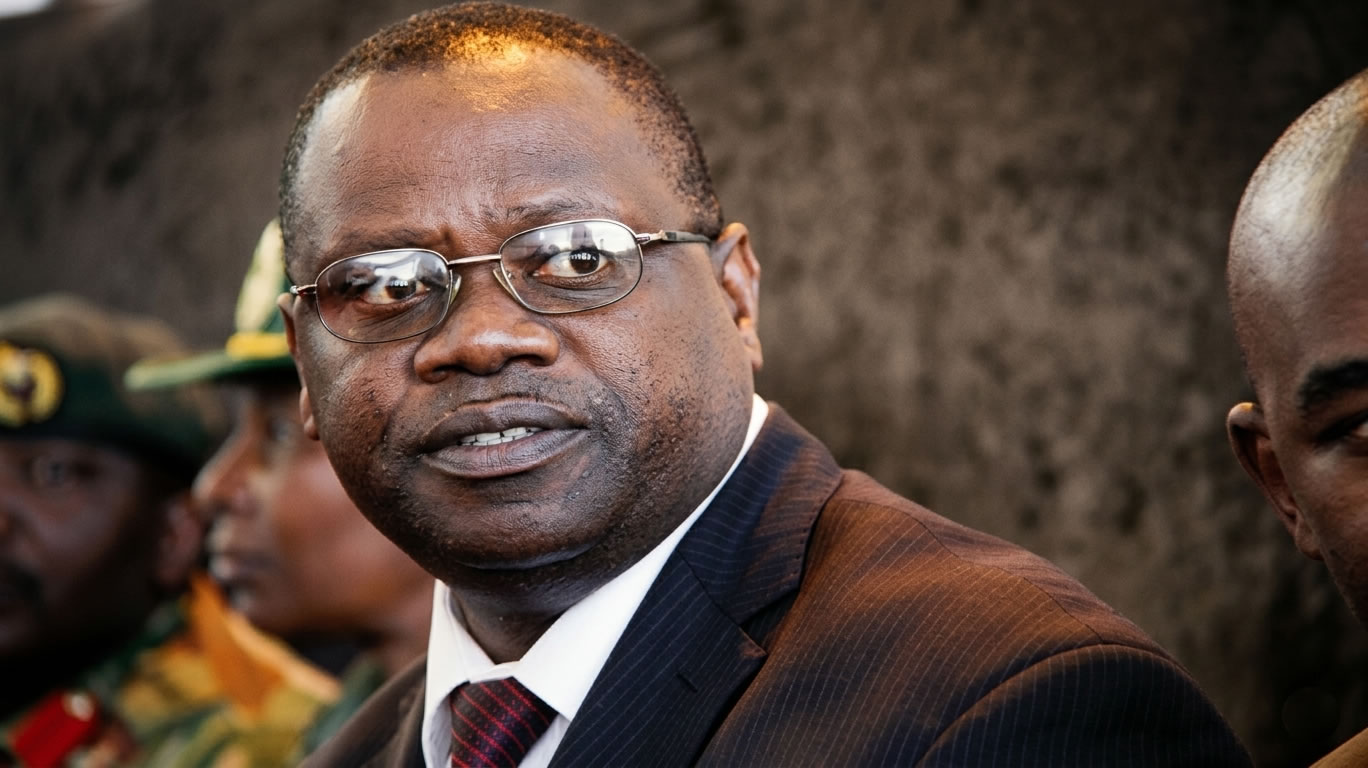
Zimbabwe’s ambitious economic blueprint, Vision 2030, has recently been thrust under an intense spotlight, with a former government minister boldly dismissing it as a ‘politically-driven fantasy’. This scathing critique, emanating from a prominent voice within the nation’s political landscape, has ignited a fervent debate about the true feasibility and underlying intentions behind President Emmerson Mnangagwa’s grand developmental agenda. The ex-minister’s assertions suggest a profound disillusionment regarding the practicality and genuine commitment to economic transformation for the average Zimbabwean citizen, challenging the government’s narrative of progress and raising critical questions about the foundational assumptions and implementation strategies of Vision 2030.
At the heart of the controversy lies the stark disparity between the lofty aspirations of Vision 2030 and the prevailing socio-economic realities confronting Zimbabwe. Critics frequently point to persistent challenges such as alarmingly high unemployment rates, chronic currency instability, and woefully inadequate infrastructure development as irrefutable evidence that the vision remains largely an abstract ideal rather than a tangible, achievable roadmap. The core of the former Minister of State in the Prime Minister’s Office, Gorden Moyo’s, argument, articulated during the Local Governance Conference in Bulawayo, revolves around this perceived disconnect. He contended that while the National Development Strategy 2 (NDS2), which underpins Vision 2030, possesses inherent merit as a policy framework, its targets are fundamentally unrealistic given the country’s precarious economic situation.
“It will be easier for a camel to pass through the eye of the needle than for Zimbabwe to become an upper-middle-income society or economy by 2030,” Moyo declared, underscoring the immense chasm between ambition and reality. He further elaborated, stating, “But the NDS2 is a good document and having a vision is good; there is nothing wrong with that. But achievement is a different story”. Moyo’s assessment challenges the official classification of Zimbabwe as a lower-middle-income economy, arguing that by all objective indicators and economic parameters, the nation remains firmly within the low-income bracket. He alleged that this misclassification, which he claims originated in the early 2000s, was politically motivated and has inadvertently cost Zimbabwe access to crucial concessional funding from international bodies.
The financial demands of NDS2 are staggering, requiring an estimated US$44 billion in funding. However, Moyo highlighted the significant hurdles in securing this capital, noting the persistent weakness in domestic resource mobilisation and severely limited prospects for external financing. “Right now, we need about US$44 billion to finance this NDS2. But thinking you will get funding from external sources is difficult,” he observed, painting a grim picture of the financial viability of the ambitious plan. He also cautioned that political rhetoric frequently undermines the credibility of sound economic planning, creating a confusing and often contradictory environment for policy implementation. “The confusion between the economic side of NDS2 and political rhetoric constitutes some of the challenges,” Moyo stated.
Indeed, Zimbabwe’s economic landscape continues to present formidable obstacles to achieving the lofty goals of Vision 2030. While the World Bank projected a robust 6.6% GDP growth for Zimbabwe in 2025, driven by agriculture and services, the nation’s debt situation remains a significant impediment. The gross debt position of the general government for Zimbabwe stood at 44.99772% of GDP in 2025, with projections indicating a slight decrease to 41.59262% in 2026. However, the public and publicly guaranteed (PPG) debt reached a staggering US$21.5 billion by March 2025, with external debt accounting for US$12.6 billion of this figure. This substantial debt burden severely constrains access to further concessional funding and stifles economic development. While there have been reports of single-digit inflation in early 2026, a significant improvement from previous years, the underlying structural issues persist.
The investigative lens must also scrutinise the political motivations underpinning such a grand vision. Is Vision 2030 primarily a genuine roadmap for national prosperity, or does it serve as a strategic tool for maintaining political legitimacy and consolidating power? The ex-minister’s assertion of a ‘politically-driven fantasy’ resonates with a broader public cynicism, fuelled by a history of unfulfilled promises and a perceived lack of accountability within government. Moyo’s call for Zimbabwe to emulate nations like Botswana and Mauritius, which have successfully pursued both democracy and economic development, highlights a critical deficiency in the current approach.
Further compounding public distrust are recent incidents of alleged corruption and opaque dealings that cast a long shadow over the government’s commitment to transparent governance, a cornerstone for any successful national development plan. A particularly egregious example is the nearly half-a-billion-dollar cancer treatment equipment contract awarded to a South African company, TTM Global Medical Exports (Pty) Ltd, owned by controversial businessman Wicknell Chivayo. This deal, valued at approximately US$437.28 million over four years, reportedly bypassed public tendering processes, raising serious questions about procurement integrity. The contract, signed in March 2025 between the Office of the President and Cabinet and TTM Global Medical Exports, committed the Government of Zimbabwe to annual payments of US$109,320,600.00, including an initial deposit of US$52,500,000.00.
Former Mt Pleasant MP Fadzayi Mahere publicly questioned the government spokesperson, Nick Mangwana, regarding the selection of Chivayo’s company and the absence of a public tender process. Her company research revealed Chivayo as the registered director/shareholder of TTM Global Medical Exports. Political commentator Jealousy Mawarire branded the deal a “scam” and a “heist,” directly implicating Chief Secretary Martin Rushwaya and President Mnangagwa in orchestrating the alleged corrupt scheme. Mnangagwa’s unannounced visit to central hospitals two months after the contract signing was dismissed by Mawarire as a “poor window dressing gimmick” and by development economist Chenayi Mutambasere as “disingenuous,” given the country’s collapsing healthcare system and the government’s failure to meet the Abuja target for health budget allocation.
This is not an isolated incident for Chivayo. A bombshell report from South Africa’s Financial Intelligence Centre (FIC) recently exposed a significant financial transaction where Chivayo received over R800 million (approximately US$41.9 million) from a R1.1 billion (US$61.1 million) payment made by Zimbabwe’s Ministry of Finance to Ren-Form CC for election supplies ahead of the 2023 general elections. The report indicated that Ren-Form subsequently transferred the majority of these funds to Chivayo’s companies, Intratrek Holdings and Dolintel Trading Enterprise. Such revelations, coupled with Chivayo’s US$1 million donation to Mnangagwa’s foundation as a Father’s Day gift, fuel public perception of deep-seated corruption and cronyism within the corridors of power.
Another flagship project under Vision 2030, the Mt Hampden New City, also faces scrutiny. While the Cabinet asserts progress, reports indicate significant delays and issues, including inadequate compensation for affected properties and ongoing land acquisition challenges. These issues highlight the practical difficulties and potential for mismanagement in large-scale developmental projects, further eroding public confidence in the government’s ability to deliver on its promises.
The public’s perception of Vision 2030 is therefore critical. Is there a widespread belief in its attainability, or is there a growing sense of cynicism among citizens who have witnessed numerous unfulfilled promises over the years? Moyo emphasised the importance of a social contract, advocating for broad public consultation and citizen ownership of developmental blueprints, rather than their creation in isolated government offices. Without genuine engagement and transparency, any grand vision risks being perceived as merely a political manoeuvre rather than a collective national endeavour.
In conclusion, while Vision 2030 articulates laudable goals for Zimbabwe’s future, the path to achieving upper-middle-income status by 2030 appears fraught with significant economic, political, and governance challenges. The critique from former minister Gorden Moyo, supported by a critical examination of economic indicators and recent corruption scandals, suggests that without fundamental shifts towards transparency, accountability, and genuine public participation, Vision 2030 risks remaining an elusive fantasy rather than a transformative reality for the people of Zimbabwe.