


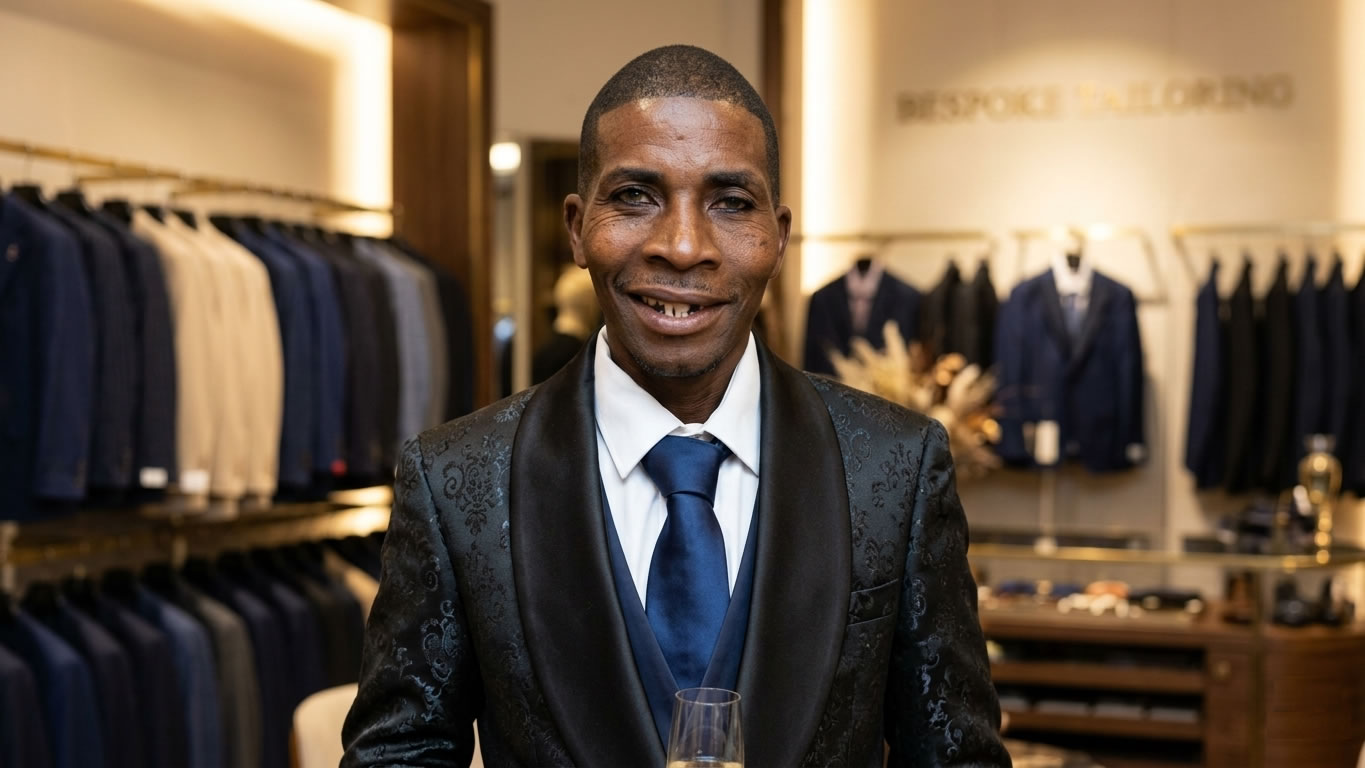
Bulawayo – The family of popular Bulawayo social media figure, Talent Masuku, 30, is demanding urgent answers following his sudden death while in prison. Masuku, a well-known personality in the city centre, passed away at Mpilo Central Hospital on 28 May, having been admitted just two days prior on 22 May. His death has cast a shadow of grief and confusion over his loved ones, who allege a lack of communication and proper care from prison authorities.
Vivian Masuku, Talent’s aunt, expressed the family’s profound pain and bewilderment. “We are deeply hurt because when his uncle last visited him in prison, he was fine and talking well. We never expected to hear that he had died,” she stated. Nora Masuku, another aunt, added to the family’s distress, revealing, “We only found out through another person. Nobody from the prison contacted us to tell us that he was in hospital.” Upon reaching the hospital, the family was informed that Talent had not eaten for days and was in urgent need of feeding tubes (IV Drip) and medication. They were later told that Talent had developed a blood clot in the brain.
The family has vehemently dismissed claims that Talent was mentally unstable. Vivian Masuku clarified his medical history, explaining, “He was born HIV-positive but started taking medication when he was in Form 2. He reacted badly and we had to take him for a mental examination. One day he came back from school with a serious skin reaction after taking the medication and that is when all his problems started.” Despite being taken to Ingutsheni Central Hospital for medical examination, doctors reportedly found his condition to be normal.
Talent Masuku had garnered significant popularity on various social media platforms. Last year, he made headlines after being convicted of stealing US$150 from a woman in Bulawayo’s central business district.
The Tragic Case of Gift Mbowa: Sudden Death in Cell C
The case of Talent Masuku is mirrored by the harrowing details emerging from Chikurubi Farm Prison, where 18-year-old Gift Mbowa (Inmate Number 185/26) mysteriously died on 20 March 2026. While the official statement from the Zimbabwe Prisons and Correctional Service (ZPCS) cited “sudden chest pains” as the preliminary cause of death at 3:00 am, witnesses within the prison walls tell a far more sinister story.
Mbowa, who was serving a 12-month sentence and had no known history of heart issues, was reportedly involved in a heated altercation with high-ranking guards just 48 hours before his body was discovered in Cell C. Fellow inmates have come forward, risking their own safety to describe a night of terror. One individual in a neighbouring cell recounted hearing desperate calls for medical assistance. “Mbowa’s cellmates spent hours attempting to alert guards, requesting a medic as the young man appeared to be in distress,” the source revealed. These pleas were reportedly met with a chilling lack of response, or worse, warnings from the night shift guards to stay quiet.
Despite ZPCS promises of a “full and independent investigation,” the family has yet to receive an independent autopsy report. Whispers from whistle-blowers suggest that guards involved in the earlier altercation were quickly transferred, and duty logs for that fateful night have mysteriously become difficult to trace. This pattern of secrecy raises grave concerns about the transparency of internal investigations within Zimbabwe’s correctional system.
A Systemic Crisis: Mysterious Deaths and Unclear Circumstances
The deaths of Masuku and Mbowa are part of a broader, troubling context of fatalities within Zimbabwe’s prisons. In February 2026, just weeks before Mbowa’s passing, four members of the ZPCS were charged with murder following an alleged assault on a visitor. This incident underscores a culture where physical violence is often the first resort.
Historical records further illustrate this grim reality. In June 2015, a family in Bulawayo was left furious after their relative – 52-year-old inmate Seedman Mxoli Dlamini – died at Khami Maximum Prison after being denied medical treatment. The deceased was reported to have lost an eye under unclear circumstances before his passing. More recently, in early 2026, reports emerged of another inmate at Chikurubi Farm Prison dying under “unclear circumstances,” prompting yet another “independent investigation” that has yielded few public answers.
|
Comparison of Prison Conditions (2024 vs 2026)
|
2024 Estimates
|
2026 Estimates
|
|
National Prison Population
|
~22,000
|
~26,000
|
|
Overcrowding Rate
|
35%
|
50%
|
|
Reported Inmate Deaths (Annual)
|
~150
|
~210
|
|
Medical Staff to Inmate Ratio
|
1:500
|
1:750
|
The data above highlights the escalating pressure on the system. Overcrowding at Chikurubi has reached critical levels, with the population nearly doubling its intended capacity of 1,300. This chronic congestion breeds an environment where sanitation is non-existent, water is scarce, and nutrition is a luxury—conditions that inevitably lead to a spike in inmate mortality.
The Fight for Accountability
The recurring nature of these incidents has led to persistent calls for independent investigations that are truly separate from the ZPCS. Human rights advocates argue that as long as the “independent” investigators are internal personnel, the truth will remain buried. The families of the deceased are often left in a vacuum of information, forced to rely on unofficial channels to learn the fate of their loved ones.
“The ZPCS maintained that any conduct found to be inconsistent with human rights and professional standards will be dealt with in accordance with the law,” an official statement read in March 2026. However, the lack of independent autopsy reports and the difficulty in tracing duty logs suggest otherwise. The absence of specialised medical facilities means that forensic psychiatric patients are often housed with the general population, further complicating the safety and well-being of all inmates.
A Plea for Justice and Reform
The families of Talent Masuku and Gift Mbowa are not just mourning; they are fighting for the dignity of their sons. Their demand for transparency is a call for a fundamental shift in how the state treats those in its custody. The “sudden chest pains” and “mysterious blood clots” must be investigated with the rigour they deserve.
Comprehensive reforms are no longer a suggestion but a necessity. This must include:
- Independent Oversight: Establishing a truly autonomous body to investigate all prison deaths.
- Medical Transparency: Ensuring that all inmates have access to timely medical care and that families are notified immediately of any hospitalisation.
- Accountability for Abuse: Rigorous prosecution of any prison staff involved in physical assaults or negligence.
- Decentralised Postmortems: Allowing families to seek independent forensic examinations without interference from prison authorities.
As Zimbabwe continues to navigate a complex political and social landscape, the treatment of its most vulnerable—those behind bars—remains a litmus test for its commitment to human rights. The echoes of the desperate pleas for help from Cell C and the silent grief of a family in Bulawayo must not be ignored. The quest for justice for Talent Masuku and Gift Mbowa is a quest for the soul of the nation’s justice system. Only through truth and accountability can the cycle of mysterious deaths be broken, ensuring that “prison” does not become a synonym for a “death sentence” delivered under unclear circumstances.