


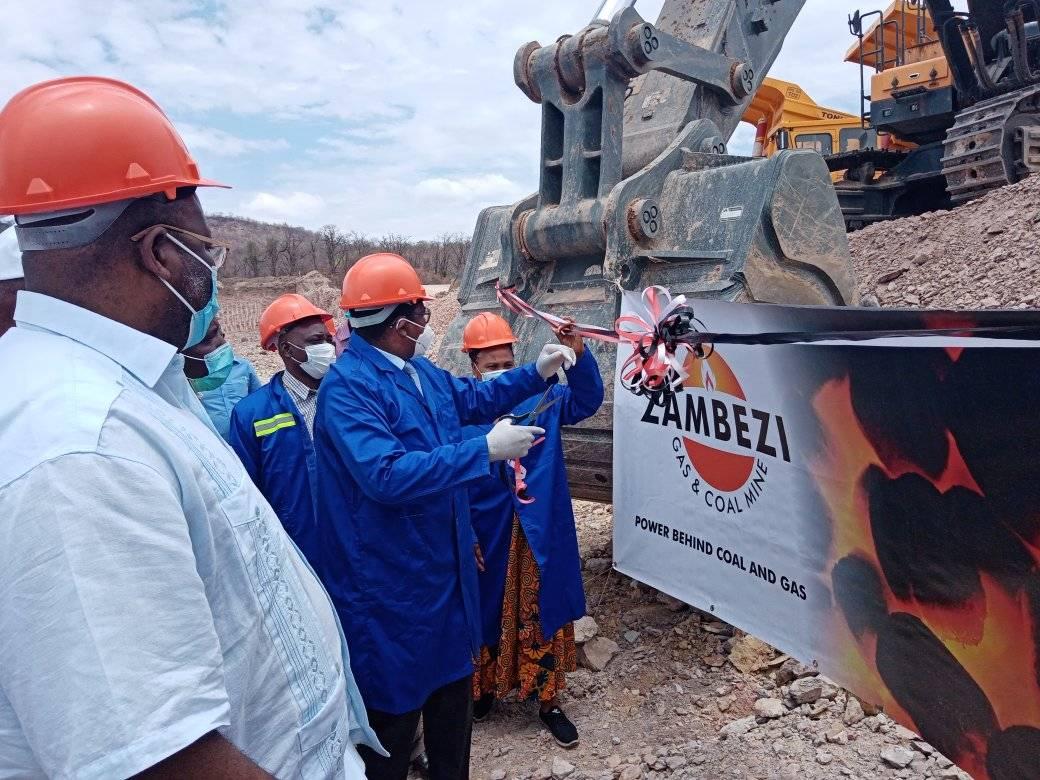
Blood on the Coal: How State-Sponsored Violence and Corporate Greed Stifle Labour Rights at Zambezi Gas Zimbabwe
The coalfields of Hwange, in Matabeleland North, have long been the beating heart of Zimbabwe’s energy sector. However, behind the massive open-cast pits and the rising plumes of industrial dust lies a darker reality of systemic exploitation, state-sponsored violence, and corporate impunity. On the night of 27 May 2026, a horrific incident occurred at the coal fields of Zambezi Gas Zimbabwe in Hwange, which has brought the toxic relationship between private capital and state security apparatuses into sharp focus. Instead of calling the Zimbabwe Republic Police (ZRP) to investigate allegations of diesel theft from machinery, the company’s management reportedly took the law into their own hands and summoned state security agents. These agents proceeded to brutally assault, beat, and torture several workers, leaving two security guards with life-threatening injuries and hospitalised.
This is not an isolated incident; last year, another worker suffered a broken leg under similar circumstances. But what is really going on behind the scenes at this wholly owned Zimbabwean mining giant? Our investigative piece will peel back the layers of this corporate-state collusion to show how private entities are using state-funded violence to suppress labour rights and cover up massive internal inefficiencies.
The Night of Terror: Corporate Punishment and State Security
On the night of 27 May 2026, the quiet operations at Zambezi Gas Zimbabwe’s Hwange concession were shattered. According to joint reports from the Zimbabwe Diamond and Allied Minerals Workers Union (ZDAMWU) and the Centre for Natural Resource Governance (CNRG), several low-grade workers—including drivers and security guards—were suddenly rounded up. The company’s management accused them of siphoning diesel from heavy mining machinery.
Rather than following standard legal procedures by involving the Zimbabwe Republic Police (ZRP) to conduct an impartial investigation, the management bypassed local law enforcement. Instead, they summoned agents from the state security services, suspected to be members of the notorious Central Intelligence Organisation (CIO). What followed was hours of systematic brutality. The agents subjected the workers to severe physical beatings and psychological torture in an attempt to force confessions. At least two security guards sustained life-threatening injuries, and several truck drivers were severely beaten.
The table below outlines the timeline and key details of the violence recorded at the Hwange operations over the past year:
|
Date of Incident
|
Target of Violence
|
Alleged Infraction
|
Nature of Violence / Injuries
|
Involved Parties
|
|
Mid-2025
|
Ordinary Mine Worker
|
Suspected Internal Theft
|
Brutal assault resulting in a broken leg
|
Management & State Security Agents
|
|
27 May 2026
|
Multiple Drivers and Security Guards
|
Alleged diesel siphoning from machinery
|
Severe beatings, torture, two security guards hospitalised with life-threatening injuries
|
Management & Suspected CIO Agents
|
The use of state security agents as private corporate enforcers represents a dangerous escalation in Zimbabwe’s mining sector. By bypassing the police, Zambezi Gas management avoided the legal scrutiny, documentation, and human rights safeguards that are supposed to accompany formal police investigations.
The Squalor Behind the Wealth: A Study in Contrasts
The violence meted out on the night of 27 May is only the most visible symptom of a deeply entrenched system of exploitation. Our investigation reveals a shocking contrast between the living conditions of ordinary workers and the senior executives at Zambezi Gas Zimbabwe.
Low-grade workers, who perform the backbreaking and dangerous labour of extracting coal from the earth, are forced to live in squalor. They reside in overcrowded, poorly maintained compounds that lack clean drinking water, proper sanitation, or basic hygienic facilities. Despite the hazardous nature of coal mining—which exposes workers to toxic coal dust and severe respiratory risks—ordinary labourers frequently complain of a lack of basic personal protective equipment (PPE) and poor occupational safety standards.
In stark contrast, senior management and executives enjoy lavish benefits, high-end housing, and substantial financial packages. This sharp division has created a highly stratified corporate structure where the wealth generated by the nation’s natural resources is siphoned off to enrich a tiny elite, whilst the local workforce is treated as expendable.
The table below compares the stark disparities in working and living conditions at the mining concession:
|
Feature
|
Low-Grade Workers
|
Senior Management & Executives
|
|
Housing
|
Overcrowded, unhygienic compounds
|
High-end luxury housing
|
|
Sanitation
|
Squalid, shared facilities; no clean drinking water
|
Modern, private sanitation and treated water
|
|
Safety & PPE
|
Inadequate protective gear; high exposure to coal dust
|
Safe, air-conditioned administrative offices
|
|
Legal Protection
|
Subject to arbitrary violence and state-sponsored torture
|
Protected by state security and corporate immunity
|
|
Representation
|
Imposed “dummy union” to block genuine bargaining
|
Direct access to political and state power
|
Weaponising National Security to Silence Labour
By framing simple allegations of diesel theft as national security issues, the management of Zambezi Gas has successfully weaponised the state machinery to silence anyone demanding better working conditions. In Zimbabwe, the mining of strategic resources like coal and coalbed methane is often classified under national security interests. This classification gives corporate managers a powerful tool: they can bypass standard labour laws and call upon military or intelligence operatives to “maintain order.”
This state-corporate collusion has been heavily condemned by civic and labour organisations. In a joint press statement released on 28 May 2026, ZDAMWU and CNRG stated:
“Workers should never be subjected to violence, torture, or degrading treatment under any circumstances. Allegations of misconduct must be handled through proper legal and labour procedures that respect the rule of law and human rights.”
The organisations further noted:
“These developments are deeply disturbing and point to an emerging culture of fear, intimidation, and abuse within the company.”
By using state security agents to terrorise the workforce, the management has created a climate of fear where workers are too intimidated to report safety violations, demand fair wages, or protest against their squalid living conditions.
The Destruction of Freedom of Association
To ensure that the workforce remains fragmented and unable to organise, the management of Zambezi Gas has recently taken steps to dismantle genuine collective bargaining. Our investigation reveals how management has recently imposed a dummy union on the workers to bypass genuine collective bargaining and destroy freedom of association.
This move was specifically designed to silence the Zimbabwe Diamond and Allied Minerals Workers Union (ZDAMWU) and the Centre for Natural Resource Governance (CNRG), who have been actively fighting for the workers’ basic dignity. By creating and funding a puppet union, the company’s executive team has sought to bypass the genuine representatives chosen by the workers. This is a deliberate tactic to fragment the workforce, prevent them from organising any legal strikes, and stop them from demanding fair wages in accordance with Zimbabwe’s labour laws.
As ZDAMWU and CNRG warned in their joint statement:
“A union must exist to defend workers, not to shield abusive employers. Any organisation that sides with exploitation and intimidation betrays the very workers it claims to represent.”
This corporate strategy directly undermines the progressive reforms introduced under Statutory Instrument 71 of 2026, which was supposed to modernise labour relations in the mining sector and protect contract workers from exploitation. Instead of embracing these legal standards, Zambezi Gas has chosen to operate in the shadows of corporate lawlessness.
Operating Above the Law: The Betrayal of the Working Class
This story explains how a local mining giant is allowed to operate above the law, using national security agents as private enforcers. Despite clear evidence of human rights abuses and illegal labour practices, regulatory bodies have remained conspicuously silent. We must expose how the Ministry of Labour and Social Welfare and the National Social Security Authority (NSSA) have turned a blind eye to these human rights abuses.
This corporate-state alliance allows Zambezi Gas to bypass the regulatory oversight that governs other sectors of the economy. While NSSA is quick to penalise smaller businesses for minor safety infractions, it has failed to intervene at the Hwange coalfields, where workers are routinely beaten and hospitalized.
The coal we burn to power our nation is stained with the blood of underpaid, abused local workers. It is a classic tale of corporate greed, state-sponsored violence, and the ultimate betrayal of the Zimbabwean working class. By simplifying the complex network of political connections that protect Zambezi Gas, we reveal a grim reality: local workers are treated like modern-day slaves in their own country, whilst the political and corporate elites siphon the country’s natural wealth.
As the country continues to grapple with energy shortages and economic instability, the exploitation of the Hwange miners serves as a stark reminder of the human cost of our electricity. The struggle at Zambezi Gas Zimbabwe is not just about a single night of violence or a few litres of stolen diesel; it is a battle for the very soul of Zimbabwe’s labour movement and the basic human dignity of those who power the nation.