


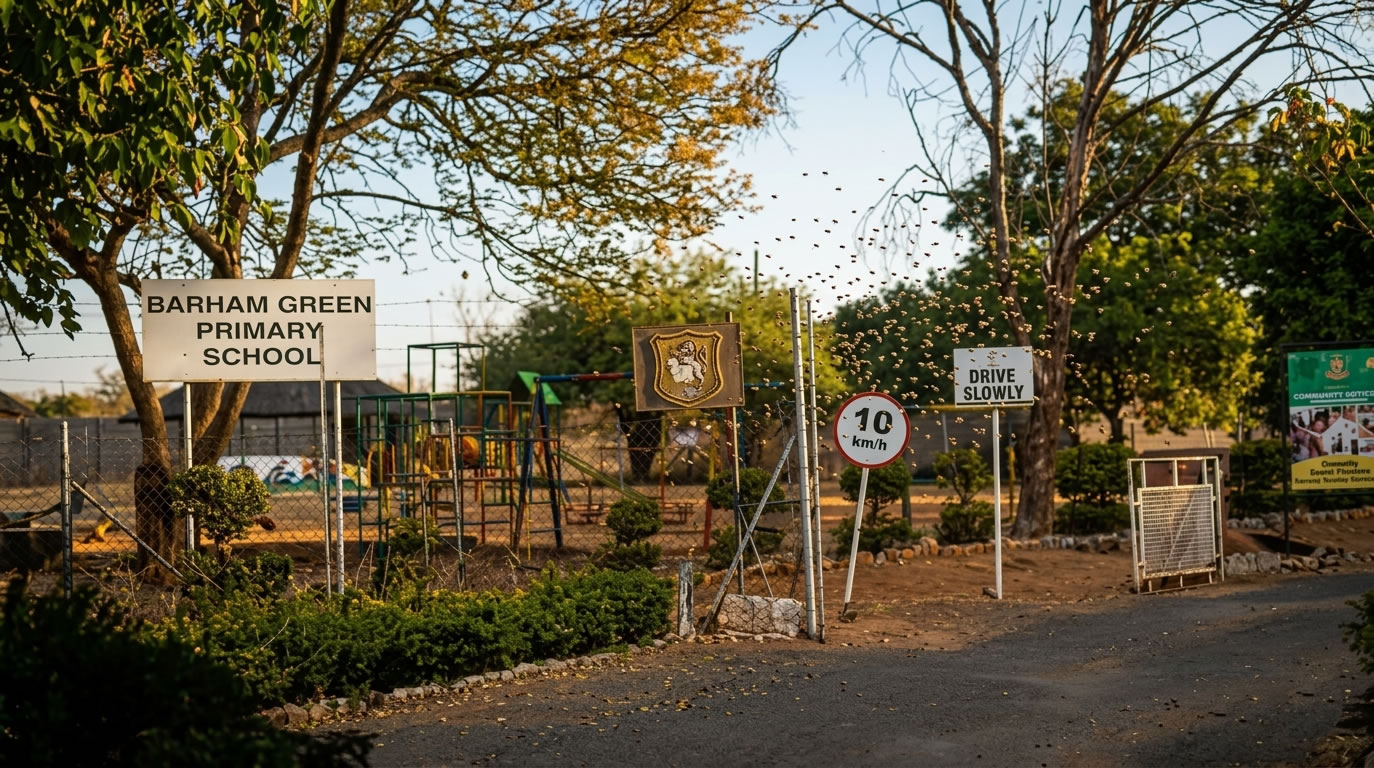
Bulawayo – A scene of utter pandemonium unfolded at Barham Green Primary School in Bulawayo on Friday afternoon, May 29, 2026, as a ferocious swarm of bees descended upon the school grounds, leaving 51 pupils and a female passerby injured and requiring urgent medical attention. The unexpected assault transformed a routine school day into a desperate scramble for safety, highlighting the escalating challenges faced by urban communities in managing wildlife encounters.
The attack, which occurred during school hours, saw children screaming and running in every direction, desperately trying to escape the relentless stinging insects. Teachers and school staff, caught in the sudden chaos, bravely attempted to shield the vulnerable pupils, guiding them away from the epicentre of the swarm. The air was thick with the buzzing of agitated bees and the cries of distressed children, creating a harrowing spectacle for all present.
Emergency services were immediately mobilised, with the Bulawayo Fire Brigade leading the response. Chief Fire Officer Mhlangano Moyo confirmed the severity of the incident, stating, “Fifty-one schoolchildren were attacked by a swarm of bees. It was really bad — some were vomiting.” The fire brigade’s swift action was crucial in containing the situation. Firefighters deployed hose reels, strategically using water to disperse the aggressive swarm and create a safe passage for rescue personnel. This tactical approach allowed paramedics to access the injured and begin administering first aid.
Four ambulances were rapidly dispatched to the scene, with their sirens piercing the afternoon quiet as they raced to transport the victims to United Bulawayo Hospitals (UBH). The sheer number of casualties, 52 individuals in total, overwhelmed the initial response, necessitating a coordinated effort to ensure everyone received prompt medical care. Chief Moyo further elaborated on the emergency measures taken: “We had to temporarily close the road and the school for about an hour” to facilitate the movement of emergency vehicles and secure the area. The sight of so many young children being rushed to hospital, some visibly suffering from severe reactions, underscored the traumatic nature of the event.
Upon arrival at UBH, medical staff were prepared for the influx of patients. The pupils, ranging in age, presented with multiple bee stings, and some exhibited more severe systemic reactions, including vomiting, a common symptom of allergic response or a high number of stings. While authorities have not yet released detailed information on the condition of all those injured, the immediate medical intervention was vital in stabilising the children and the adult passerby. The incident has undoubtedly left a lasting impression on the young victims and the entire school community.
Investigations into the precise trigger of the attack revealed that some learners had inadvertently disturbed a beehive located within the school premises. This seemingly innocuous act unleashed the fury of African honey bees (Apis mellifera scutellata), a subspecies renowned for its highly defensive nature. Unlike their European counterparts, African honey bees are known to be far more aggressive, reacting with extreme vigilance to perceived threats. They can pursue intruders for considerable distances, delivering numerous stings, which can be particularly dangerous for individuals with allergies or those who receive a large dose of venom.
This incident at Barham Green Primary School is not an isolated occurrence but rather a stark reminder of the increasing frequency of human-wildlife conflicts in urban environments across Zimbabwe and the wider region. As urbanisation expands, encroaching upon natural habitats, wildlife, including bees, are often displaced, leading to more frequent encounters with human populations. This phenomenon is exacerbated by climate change, which can alter bee behaviour and migratory patterns. Research indicates that higher temperatures can increase bee aggression, making such encounters potentially more hazardous.
The presence of beehives in and around school premises poses a significant safety risk. Experts suggest that regular inspections of school grounds and surrounding areas are crucial for identifying and safely removing potential bee colonies before they become a threat. The country’s legal framework, specifically the Bees Act [Chapter 19:02], provides regulations for beekeeping and the control of bee-related issues, but its application to wild, unmanaged colonies in urban settings often presents practical challenges. There are also initiatives like the “Beekeeping in Schools Initiative,” supported by organisations such as FAO and Apimondia, which aim to educate students about bees and promote sustainable beekeeping practices. However, these programmes primarily focus on managed hives and do not directly address the risks posed by wild, aggressive colonies.
The aftermath of the Barham Green attack calls for a comprehensive review of school safety protocols concerning wildlife. While the immediate focus remains on the recovery of the injured pupils, the incident serves as a critical wake-up call for educational authorities and urban planners. The need for proactive measures, including community awareness campaigns on bee behaviour, safe removal strategies for wild hives, and enhanced emergency preparedness in schools, is paramount. Ensuring the safety and well-being of children in learning environments requires a multi-faceted approach that considers both the immediate response to emergencies and long-term preventative strategies.
As normal operations gradually resume at Barham Green Primary School, the memory of that chaotic Friday afternoon will undoubtedly linger. The incident underscores the delicate balance between human development and the natural world, urging communities to adapt and implement robust safety measures to mitigate such unforeseen dangers. The Bulawayo community, and indeed the nation, will be watching closely to see what lessons are learned and what actions are taken to prevent a recurrence of such a distressing event. The safety of pupils must always remain a top priority, demanding vigilance and preparedness from all stakeholders.