


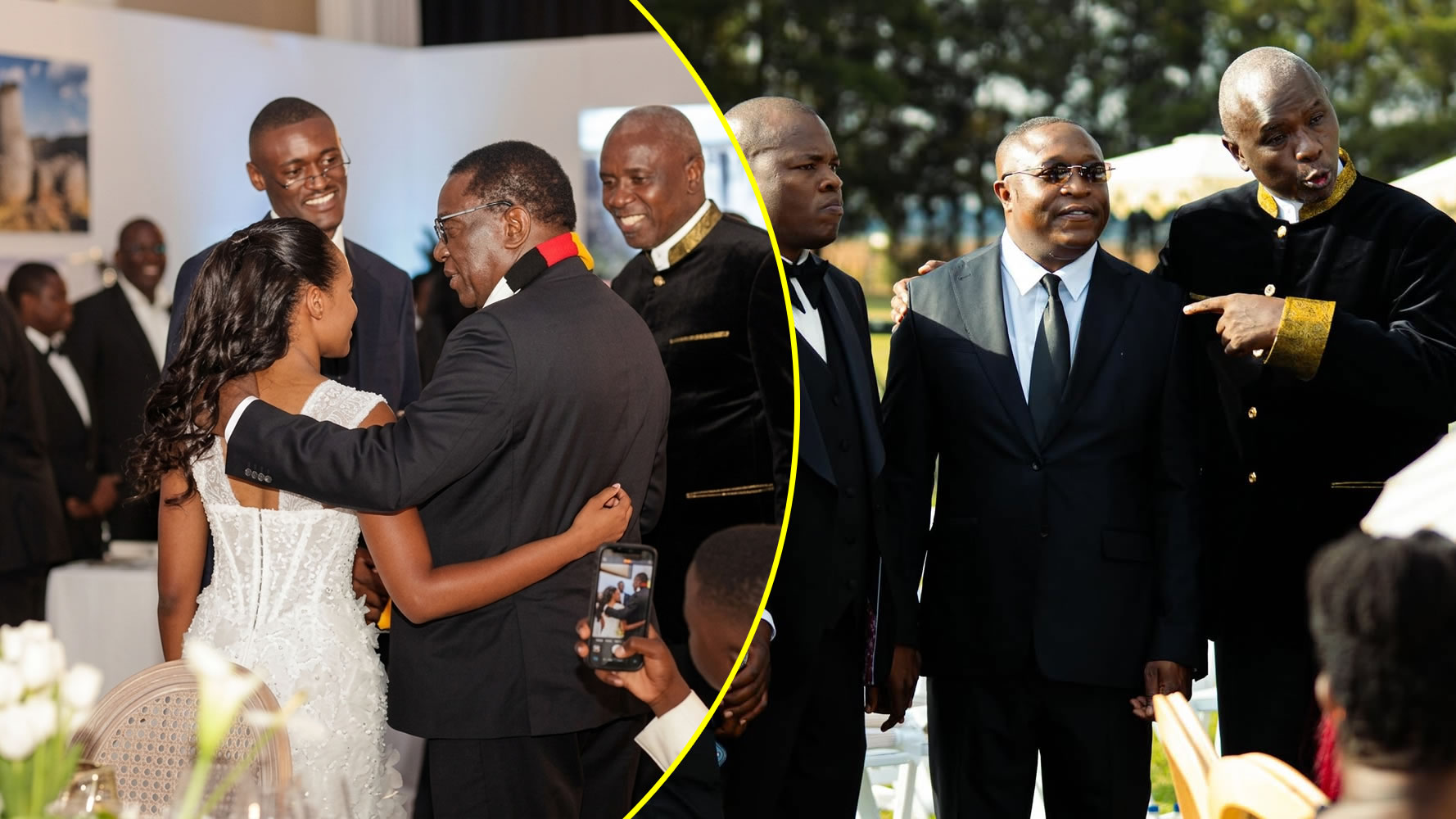
Harare – In a nation grappling with the relentless squeeze of a rising cost of living, a recent spectacle of opulence has ignited a fierce national debate, laying bare the deep chasm between Zimbabwe’s elite and its struggling populace. The lavish wedding celebrations involving prominent figures Kudakwashe Tagwirei and Wicknell Chivayo have become a potent symbol of this divide, drawing widespread condemnation and sparking questions about the source of immense wealth in a country where many can barely afford daily bread.
The controversy centres around two distinct, yet interconnected, events that unfolded recently: the wedding of Taonanyasha John Tagwirei, son of the influential businessman Kudakwashe Tagwirei, and Poneso Tinomuda Janda, and the equally extravagant nuptials of Glendour Chivayo, sister to the flamboyant entrepreneur Wicknell Chivayo. While separate, the sheer scale of luxury displayed at both events, coupled with the intertwining of key personalities, has led the public to view them as a singular, jarring exhibition of wealth. It is this
extravagant display of luxury, particularly at Glendour Chivayo’s wedding, that has become a lightning rod for national anger.
Reports from the Tagwirei wedding painted a picture of unimaginable generosity. Kudakwashe Tagwirei, often referred to as the “Queen Bee” of Zimbabwe’s economy due to his perceived influence, and his wife Sandra, reportedly gifted the newlyweds a staggering US$2.5 million in cash, alongside 33 hectares of prime land in Umwinsidale, valued at approximately US$15 million. This alone would be a headline-grabbing sum in any economy, but in Zimbabwe, where the average citizen struggles with daily survival, it has been met with outrage.
The guest list at the Tagwirei celebration read like a who’s who of Zimbabwe’s powerful elite, including prominent businesspeople and senior government officials. Many of these attendees reportedly arrived with their own substantial contributions. Controversial tenderpreneur Wicknell Chivayo, for instance, reportedly presented US$250,000 and a luxury designer handbag. Gold dealer Scott Sakupwanya contributed a hefty US$500,000. Youth Minister Tinotenda Machakaire’s gift was a Defender Octa luxury vehicle, estimated to be worth nearly US$470,000. Even senior government official George Guvamatanga and his wife reportedly donated 25 pregnant pedigree Beefmaster heifers and an additional US$250,000. Award-winning gospel musician Everton Mlalazi also reportedly contributed US$150,000. The total value of reported gifts at this single event soared past US$20 million, a figure that dwarfs the annual incomes of countless Zimbabwean families.
However, it was the wedding of Wicknell Chivayo’s sister, Glendour, that truly captured the public’s imagination and ire, primarily due to Chivayo’s own well-documented history of ostentatious displays of wealth. At Glendour’s wedding, Chivayo himself reportedly gifted his sister and her husband, Tendai, US$500,000 in cash and two brand-new Range Rovers. This particular act of generosity, widely publicised on social media, further fuelled the public’s indignation, drawing sharp contrasts with the economic realities faced by the majority of the population.
These lavish celebrations have not gone unnoticed by political figures. Opposition leader Nelson Chamisa articulated the widespread sentiment, stating unequivocally that this “looted wealth stinks to high heaven. It stands in painful contrast to the widespread poverty endured by us ordinary Zimbabweans”. Chamisa’s stinging comment resonated deeply across the nation, encapsulating the frustration and anger felt by many who view such displays as a direct affront to their daily struggles. The timing of these extravagant events, amidst a severe economic crisis, rising inflation, and a volatile currency market where the newly introduced ZiG struggles against the US dollar, only amplified the public’s sense of injustice.
The term “tenderpreneur” has become synonymous with individuals like Tagwirei and Chivayo – those who have amassed vast fortunes not through conventional business acumen or innovation, but through political connections and lucrative government contracts, or “tenders”. This culture, often linked to allegations of state capture, suggests a system where private interests exert undue influence over state decision-making for personal gain. Kudakwashe Tagwirei, for instance, was sanctioned by the US Treasury’s Office of Foreign Assets Control (OFAC) in August 2020, labelled a “notoriously corrupt” businessman for allegedly providing material support to the Zimbabwean government’s leadership. His name has been associated with the controversial “Command Agriculture” programme and monopolies in the fuel sector. An explosive audio recording, widely circulated, even allegedly features Tagwirei claiming significant influence over President Emmerson Mnangagwa and national affairs.
Wicknell Chivayo, another prominent figure in this tenderpreneur landscape, is no stranger to controversy. His company, Intratrek Zimbabwe, was involved in the Gwanda Solar Project, where it received a US$5.6 million advance from the Zimbabwe Power Company (ZPC) but faced accusations of failing to deliver on the project. Despite legal battles, Chivayo was eventually acquitted. His penchant for flaunting wealth, including private jets and luxury vehicles, and his recent acts of gifting expensive cars to musicians and ZANU-PF supporters, further solidify his image as a symbol of this contentious class.
The stark contrast between the millions flaunted at these weddings and the grim realities faced by ordinary Zimbabweans is impossible to ignore. Public hospitals across the country often lack basic medicines, including painkillers. Communities in areas like Glen View and Budiriro endure chronic water shortages. Unemployment remains rampant, driving a continuous exodus of young Zimbabweans seeking opportunities abroad. The lavishness of Borrowdale Brooke and Umwinsidale, where the elite reside, stands in stark opposition to the impoverished conditions in places like Epworth, where residents battle inadequate infrastructure and sanitation. This economic disparity fuels the perception that the wealth displayed at these weddings is not a product of legitimate enterprise but rather the spoils of a system rigged against the common citizen.
Adding another layer of intrigue to the narrative are the subtle, yet significant, political nuances surrounding the Tagwirei wedding. The reported absence of First Lady Auxillia Mnangagwa from the event, despite its high profile, has been interpreted by many as a deliberate snub, perhaps indicating internal friction within the ruling elite or a strategic move to distance herself from the perceived “stink” of such ostentatious wealth. President Emmerson Mnangagwa’s own appearance was described as “reluctant and brief,” reportedly requiring persuasion from Youth Minister Tino Machakaire. This suggests complex power dynamics at play and hints at underlying tensions within the highest echelons of power, where even the President’s attendance at such a significant event is not a given but a negotiated act.
The “conspiracy of the elite” extends beyond mere displays of wealth; these events often serve as crucial mechanisms for cementing power networks and, some argue, for “washing” reputations. Weddings and parties become stages where alliances are reinforced, influence is demonstrated, and social standing within the privileged circle is reaffirmed. The presence of key political figures and business magnates at these gatherings underscores the symbiotic relationship between political power and economic might in Zimbabwe. For those whose wealth is often questioned, such public displays, attended by the powerful, can inadvertently lend a veneer of legitimacy, normalising fortunes that might otherwise be scrutinised more closely.
This entire saga has sparked a profound conversation about identity, culture, and social justice in Zimbabwe. It forces a national introspection into what constitutes legitimate success, the role of political patronage in wealth accumulation, and the moral implications of extreme wealth in the face of widespread poverty. The image of the “haves” throwing diamonds while the “have-nots” search for bread is not merely a metaphor; it is a stark reality that continues to fuel discontent and demand for greater accountability and equitable distribution of national resources. The Tagwirei-Chivayo wedding gala, therefore, is more than just a social event; it is a powerful symbol of the great divide in Zimbabwe, a mirror reflecting the nation’s deepest economic and social anxieties.