


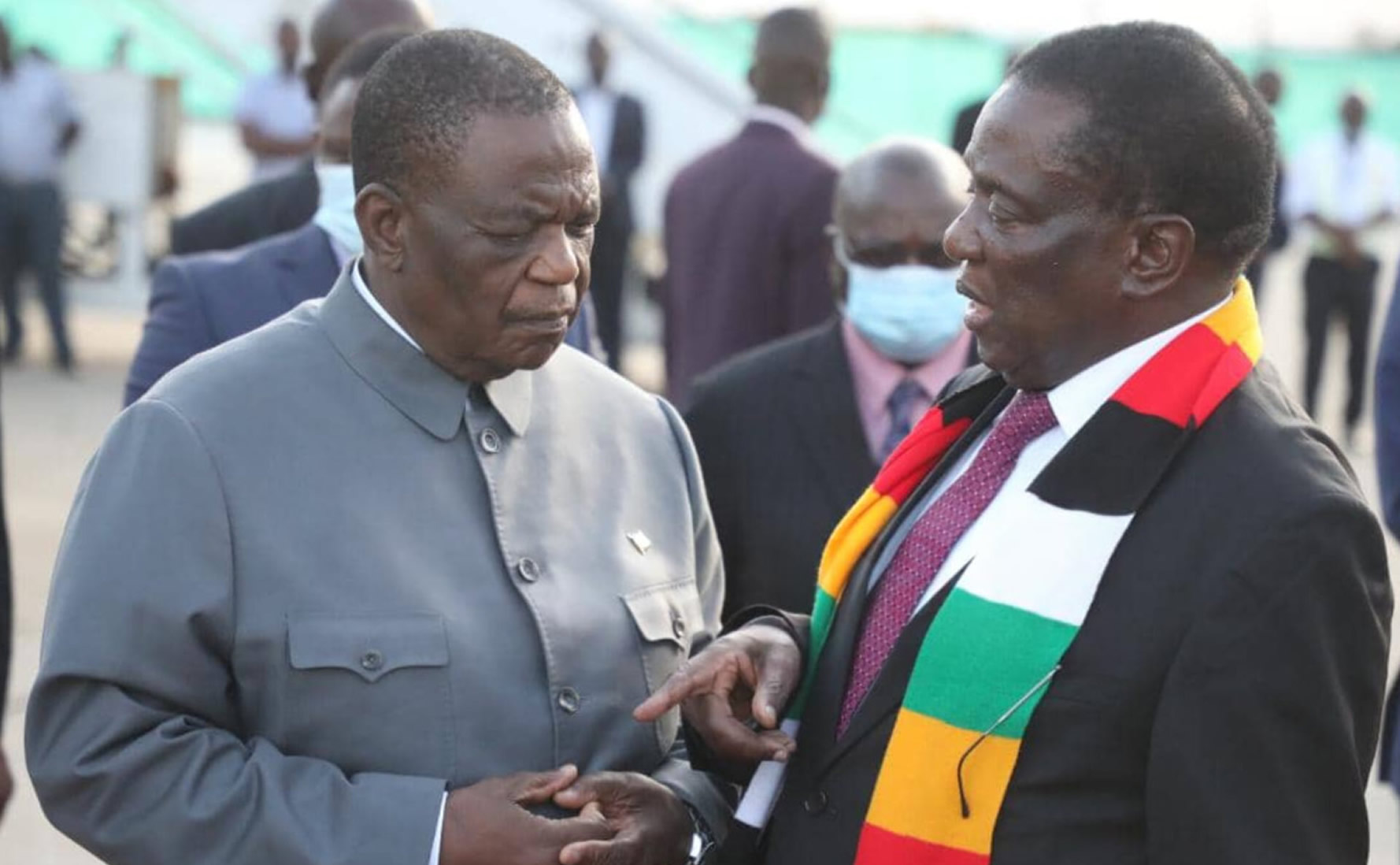
Harare – A seismic political tremor has hit Zimbabwe as the Zambezia Economic Movement (ZEM) chairman, Devine Mafa, publicly demanded Vice President Constantino Chiwenga’s resignation through a scathing open letter. This bold move has ignited a fierce debate across the nation, sparking intense speculation about the underlying power struggles within the ruling Zanu PF party and the country’s constitutional trajectory.
Our investigation delves into the precise accusations levelled against Chiwenga, examining how these allegations intersect with the ongoing discussions surrounding presidential succession and the contentious Constitutional Amendment Bill No. 3. Is this a genuine call for accountability, or a calculated manoeuvre by a rival faction seeking to destabilise the political landscape? We unpack the implications of such a high-profile challenge, exploring the potential ripple effects on Zimbabwe’s governance, economic stability, and the delicate balance of power within the ruling elite.
The Letter That Shook the Presidium
The strongly worded open letter by Devine Mafa has ignited a political storm, particularly concerning the unresolved succession question and the proposed constitutional amendments. In the letter released on Monday, Mafa accused Vice President Chiwenga of being the central force behind ongoing constitutional manoeuvres allegedly aimed at extending President Emmerson Mnangagwa’s rule beyond 2028.
“The time for subtlety is over,” Mafa wrote with a bluntness that has become rare in Zimbabwean political discourse. “Your continued tenure is treason, and it’s turning Zimbabwe into a barracks.”
Mafa’s argument is that Chiwenga’s continued presence in government has fuelled fears of a military-backed succession struggle within Zanu PF. This struggle, according to Mafa, provides the very justification that Mnangagwa’s loyalists need to push for the Constitutional Amendment Bill No. 3 (CAB3), which critics believe is a vehicle for the President to secure a third term or extend his current one.
According to the letter, Chiwenga allegedly declined to assume the presidency during the 2017 military intervention due to pressure from regional leaders, opting instead to become vice president with the expectation of eventually succeeding Mnangagwa. However, Mafa claims the political landscape has since shifted dramatically.
“You entered government expecting succession. Mnangagwa entered government planning permanence,” the letter reads. This single sentence encapsulates the perceived betrayal at the heart of the Zanu PF leadership. Mafa further alleged that the President has consolidated power through loyalists in state and party structures, leaving Chiwenga politically isolated and without a viable strategy.
“The people of Zimbabwe deserve a clear message: you will not seek the presidency. Resign, and remove the rationale for CAB3,” Mafa urged. The letter quickly generated heated reactions, with some seeing it as a bold challenge to military influence in politics, while others dismissed it as political grandstanding.
The Politburo Powder Keg: Corruption and ‘Zvigananda’
While Mafa’s letter attacks from the outside, the internal fissures within Zanu PF have reached a breaking point. Our investigation has uncovered details of a searing 17-page dossier that Vice President Chiwenga tabled before the Zanu PF politburo on September 17, 2025. In this document, Chiwenga accused President Mnangagwa of presiding over “corruption, capture, and betrayal” of the ideals that sparked the 2017 coup.
Chiwenga’s dossier invoked the memory of “Operation Restore Legacy,” the military intervention that ousted the late Robert Mugabe. “Comrade President, we undertook Operation Restore Legacy with a sacred mandate: to reclaim our nation from the jaws of corruption and to restore the dignity, prosperity, and sovereignty of Zimbabwe,” Chiwenga wrote.
However, the Vice President’s words were not merely nostalgic; they were a direct assault on the President’s inner circle. Chiwenga specifically named businessmen Kudakwashe Tagwirei, Wicknell Chivhayo, Scott Sakupwanya, and Delish Nguwaya, accusing them of “stealing more than US$3.2 billion of government funds.” He further charged that these individuals had “corrupted party structures” and turned the President’s private office into a place where key government decisions are made, effectively bypassing formal state institutions.
“These criminals have brazenly looted our state coffers with impunity,” Chiwenga charged. “We cannot fold our hands and watch these criminals like Kudakwashe Tagwirei, Wicknell Chivayo, Scott Sakupwanya, and Delish Nguwaya corrupt and bribe our structures and destroy our party.”
It was during such heated exchanges that Chiwenga reportedly coined or popularised the term ‘zvigananda’ – a Shona word referring to the nouveau riche or those who have acquired sudden, often ill-gotten wealth. While the term was used generally, it was widely interpreted as an indirect attack on President Mnangagwa and the tycoons who bankroll his administration.
Mnangagwa Hits Back: The ‘Treasonous’ Label
The President’s response was swift and equally uncompromising. In a rebuttal authored by Zanu PF’s legal secretary and Justice Minister Ziyambi Ziyambi, the Mnangagwa camp branded Chiwenga’s dossier as “fundamentally flawed, treasonous, and lacking appreciation of party procedures and the national constitution.”
Ziyambi’s response, presented to the Politburo on October 14, 2025, accused Chiwenga of attempting to “undermine a constitutionally elected government” and “incite despondency.” The use of the word “treasonous” is particularly significant in the Zimbabwean context, as it carries the weight of potential criminal prosecution and reflects the absolute breakdown of trust between the two leaders.
“At its core, the document advocates for the unlawful removal of a constitutionally elected President,” Ziyambi wrote. “Any attempt to destabilise or subvert a constitutionally elected government is treasonous.”
The Mnangagwa camp also sought to dismantle Chiwenga’s narrative of being the sole hero of the 2017 coup. “It is denied that only a few individuals, particularly the writers of this document, sacrificed their lives for Operation Restore Legacy,” Ziyambi responded. “Zimbabweans from all walks of life rose and participated. Let us acknowledge the collective effort and desist from claiming heroism for work done by many.”
In a move designed to humiliate the Vice President, Ziyambi even revealed that Kudakwashe Tagwirei, one of the men Chiwenga accused of state capture, had actually bankrolled the 2017 operation. “For the record, Mr. Kudakwashe Tagwirei put in a total of five million litres of fuel, food and other provisions for soldiers as requested by the then CDF, General Chiwenga. Furthermore, he put in one million litres of fuel and US$1.6 million to the party,” the response stated.
The “Appointing Authority” and the Power Struggle
The tension has not been limited to formal documents. In another explosive politburo meeting, President Mnangagwa reportedly reached a point of frustration where he felt the need to remind his deputy of the hierarchy of power. Sources within the meeting suggest that Mnangagwa told Chiwenga in no uncertain terms that he (Mnangagwa) is the “appointing authority.”
This reminder was a clear signal that the President has the constitutional right to appoint – and by extension, dismiss – whoever he wants, including his vice presidents. It was a direct challenge to the notion that Chiwenga is a co-leader or an “equal partner” in the presidency, a perception that has persisted since the 2017 coup.
Those linked to Mnangagwa have accused Chiwenga of disrespecting his superior and attempting to run a “parallel government” within the state. They argue that Chiwenga’s public and private attacks on the President’s allies are a thinly veiled attempt to destabilise the administration and pave the way for his own ascension to the presidency.
The Shadow of Constitutional Amendment Bill No. 3
At the heart of this political storm is the Constitutional Amendment Bill No. 3 (CAB3). While the government argues that the bill is necessary for administrative efficiency and to address various legal gaps, critics and rival factions within Zanu PF see it as a “poisonous” manoeuvre.
Chrispen Nyoni, spokesperson for the Mthwakazi Liberation Front (MLF), described the bill as “one drop of poison” proposed by “Zanu PF’s criminals around Mnangagwa” to keep him in power for an extended period. He argued that the push for CAB3 is being driven by individuals seeking to protect their political and economic interests, specifically the continued “looting of the country’s resources.”
The suspicion is that CAB3 will alter the presidential term limits or change the way the president is elected, effectively allowing Mnangagwa to stay in power beyond the current constitutional limit of 2028. For the Chiwenga faction, this is the ultimate betrayal of the 2017 agreement, which they believe stipulated a transition of power to the General after Mnangagwa’s tenure.
Economic Implications and the Future of Zimbabwe
The political instability at the top of the Zimbabwean government has profound implications for the country’s economy. Investors, both domestic and international, are wary of a nation where the two most powerful men are openly accusing each other of treason and corruption. The uncertainty surrounding the 2028 elections and the potential for a constitutional crisis further dampen economic prospects.
The allegations of “state capture” by tycoons like Tagwirei and Chivhayo suggest that key economic decisions are being made based on political patronage rather than sound economic policy. This has led to concerns about the transparency of government contracts, the management of the country’s vast mineral wealth, and the overall stability of the financial system.
Chiwenga himself has warned that future generations will “spit on our graves” if the current plunder of minerals and state resources continues. This rhetoric, while powerful, is seen by some as hypocritical given his own role in the government and the military’s historical involvement in the economy.
Conclusion: A Nation at a Crossroads
Zimbabwe stands at a critical juncture. The demand for Vice President Chiwenga’s resignation by Devine Mafa and the Zambezia Economic Movement is more than just a letter; it is a symptom of a much deeper malaise within the ruling elite. The open warfare between Mnangagwa and Chiwenga has moved beyond the shadows of the Central Intelligence Organisation (CIO) and into the public eye.
Is this the beginning of the end for the “New Dispensation”? Or is it a necessary, albeit painful, process of accountability within a party that has ruled Zimbabwe since independence? The answer likely lies in how the succession question is resolved and whether the constitutional integrity of the nation is upheld.
As the 2028 elections approach, the “zvigananda” will continue to exert their influence, the “appointing authority” will continue to consolidate power, and the “treasonous” dossiers will likely continue to circulate. For the ordinary Zimbabwean, the hope remains that the “seismic political tremor” does not lead to a total collapse, but rather to a more transparent and accountable leadership that truly serves the people.
The “hidden agendas” and “unspoken truths” are slowly coming to light, and the picture they paint is one of a nation whose future is being gambled in the high-stakes game of Zanu PF succession. Whether Chiwenga resigns or Mnangagwa succeeds in his “permanence” plan, the ripples of this storm will be felt for years to come. Zimbabwe deserves better, and the world is watching to see if it will finally get it.