


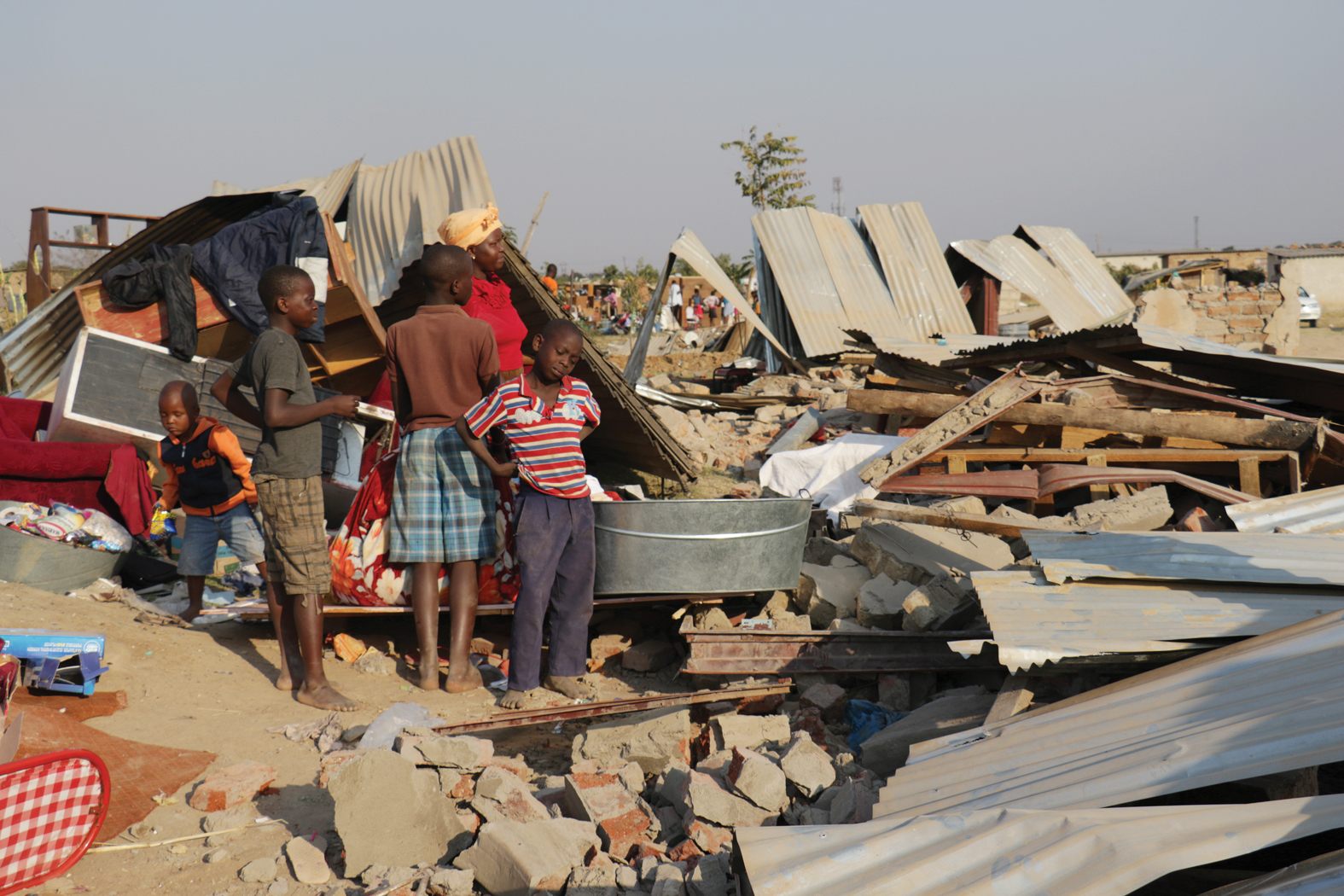
A devastating new wave of demolitions has swept across Zimbabwe, leaving hundreds of families homeless and reigniting painful memories of Operation Murambatsvina. As authorities continue their drive to remove “illegal” structures and restore order to urban areas, this investigative report delves into the human cost of these actions and the systemic failures that lead to such widespread displacement.
We examine the circumstances under which these homes were built, the persistent lack of affordable housing options, and the apparent lack of empathy from the officials carrying out these drastic measures. Is this a necessary step towards better urban planning, or a heartless exercise of power that disproportionately targets the most vulnerable members of society?
This article provides a clear and simple explanation of the complex issues surrounding land use and housing in Zimbabwe, giving a voice to the families who have lost everything and demanding accountability and a more compassionate approach to urban development.
A Resurgent Crisis: Echoes of Murambatsvina
The current wave of demolitions bears an unsettling resemblance to Operation Murambatsvina (meaning “Drive Out Rubbish” or “Restore Order”) of 2005, which saw the destruction of homes and informal businesses across the country. While the scale may differ, the impact on affected communities remains equally devastating. Recent incidents in Stoneridge, Marondera, Ridgeview, and Belvedere highlight a recurring pattern of displacement and hardship, raising critical questions about urban planning, land tenure, and social justice in Zimbabwe.
Marondera: Traders Left Stranded Along the Railway Line
In Marondera, scores of small-scale traders were left counting their losses after the Municipality of Marondera demolished illegal structures erected along the National Railways of Zimbabwe (NRZ) rail line. These structures, often steel-framed tuckshops, were allegedly controlled by politically connected individuals who collected monthly rentals ranging from US$200 to US$400 per unit.
The demolitions, which occurred on Tuesday, June 2, 2026, were deemed long overdue by Marondera Central legislator Caston Matewu, who stated, “The demolitions were long overdue. At least common sense has finally prevailed. These structures were erected along the railway line, endangering lives and turning parts of Marondera into an eyesore”.
However, the demolitions have sparked outrage among residents and accusations of policy inconsistency. Mr Tapiwa Chengeta, Director of the Marondera Residents’ Association Forum, condemned the actions, stating, “It’s very unfortunate to see demolition on people who are trying to make ends meet. The council saw these people build structures and operate for some time, only to wake up and demolish them. We expected council to first create space for small to medium enterprises before removing these ones”.
Many affected traders had invested significant sums, between US$200-US$400, in rental payments and cabin construction, viewing the demolitions as a collapse of their livelihoods. One lamenting trader expressed, “We were trying to make ends meet, and the council was collecting rates and licensing us. Now they say we were illegal”.
Marondera Municipality spokesperson Mr Kudakwashe Tapfumanei defended the demolitions, asserting that traders had been warned but chose to ignore the notices, leaving the council with “no option but to demolish the makeshifts”. This dispute highlights a deeper rift between the Marondera Municipality and the NRZ, with each entity blaming the other for the proliferation of structures on railway land. The NRZ claims only 10 official tenants with leases were recognised, while the municipality accuses the NRZ of allocating spaces without proper approval.
Harare’s Ridgeview and Belvedere: A Cycle of Displacement
Harare has also witnessed a fresh wave of demolitions, particularly in Ridgeview, Belvedere. The Harare City Council demolished close to 20 houses in the area, citing that the land had been illegally acquired from “barons”. This was not the first time, as displaced residents had previously returned and rebuilt without council approval, insisting they had acquired the land from the State.
Acting Director of Planning, Samuel Nyabeza, articulated the council’s position: “We have to restore order in the city and we will not tolerate a situation where people just build houses without approvals and permission from council. A settlement has to be planned with all amenities in place before people start building. You cannot build a house without council-approved plans; you cannot build where there are no sewer and water facilities. We urge residents to check with the City of Harare before buying land. Even when building a structure, every stage should have council approvals”.
However, affected residents claimed they received no prior notification to vacate. Owen Kuchata, a victim whose family of five was rendered homeless, stated, “When city council thinks of destroying people’s homes, firstly they should give people notices and if they think of destroying they shouldn’t target the rainy season because it will seem as if they are now torturing us or it’s some form of punishment. This is the second time, and that first time we were told to carry on building the houses as they had given us the green light saying the papers were in order and we proceeded. No normal person would build in a place that wasn’t approved”.
Another resident, Itai Zinabwa, expressed his despair, “I have a 2-roomed house that I had built and the fence was destroyed also, I don’t even have a plan here as you can see those six children are mine and I have no idea where we will go in this rainy season”.
Philip Chivaka described the demolitions as “painful,” adding, “We were not informed that that’s what they are going to do today, we were never given any warning we just saw them starting to do as they like, and the way they did it was painful”.
Adding another layer of complexity, the Local Government Minister, Daniel Garwe, has expressed strong disapproval of these demolitions. He “fumed over demolitions of properties deemed illegal by local councils, which ironically would have inspected and certified construction of same”. Minister Garwe questioned the timing and morality of such actions, stating, “Stop it as it emerges. Why wait for someone to build and then demolish? Let us be morally correct. No 5,000 houses are going to be demolished by the city (Harare) and to make matters worse, who gave them those pieces of land? Is it not the corrupt council officials?”. He further criticised the authorities, asking, “We are against demolishing. Where were you as a City Father when this piece of land was being sold? We cannot be more stupid than that. Definitely, we cannot”.
Stoneridge and Churu Farm: Thousands Face Eviction
The situation in Stoneridge has also reached a critical point, with reports indicating that thousands of families are facing immediate eviction as demolition crews dismantle their homes. Some residents in Stoneridge have been occupying their homes for seven years, only to face demolition now. Similarly, Churu Farm in Harare has seen houses demolished, leaving over 40 families without shelter. These incidents underscore the widespread nature of the problem and the significant number of people affected.
The Legal Landscape and the Human Cost
The legal framework surrounding these demolitions is contentious. A recent High Court ruling stated that demolitions by local authorities using outdated laws violate constitutional protections, including freedom from arbitrary eviction. Justice Never Katiyo deemed sections 32 and 37 of the Regional, Town and Country Planning Act unconstitutional after a challenge by the Chitungwiza Residents Trust. This ruling suggests that many of the demolitions might be legally questionable, further exacerbating the plight of those affected.
The human cost of these demolitions is immeasurable. Families are left without shelter, often during the rainy season, losing their belongings and livelihoods. The psychological trauma of losing one’s home, coupled with the uncertainty of the future, creates a profound sense of despair. The lack of affordable housing options forces many into informal settlements, where they remain vulnerable to such actions. The cycle of building, displacement, and rebuilding perpetuates a state of insecurity for a significant portion of the population.
The Way Forward: Towards Humane Urban Development
The recurring pattern of demolitions in Zimbabwe demands a more humane and sustainable approach to urban development. While the need for organised urban planning is undeniable, it must not come at the expense of the most vulnerable members of society. There is an urgent need for:
- Transparent Land Allocation: Clear and transparent processes for land allocation are crucial to prevent the emergence of
illegal settlements and the exploitation by land barons. Residents must have clear avenues to verify the legality of land purchases and building permits. - Affordable Housing Solutions: The government and local authorities must invest in and facilitate the development of adequate and affordable housing options for all citizens. This would reduce the reliance on informal settlements and provide a dignified living environment.
- Community Engagement and Consultation: Before any demolition exercises, genuine engagement and consultation with affected communities are essential. This includes providing ample notice, exploring alternative solutions, and offering relocation assistance where necessary.
- Accountability for Corruption: The issue of corrupt officials and land barons who illegally sell land must be addressed decisively. Those responsible for defrauding citizens and creating these precarious living situations must be held accountable.
- Adherence to Legal Processes: All actions by local authorities must strictly adhere to legal processes and constitutional protections. The High Court’s ruling against demolitions based on outdated laws should serve as a guiding principle.
The current approach to urban planning, characterised by reactive demolitions, is not only inhumane but also unsustainable. It creates a perpetual cycle of poverty and displacement, undermining the social fabric of communities. Zimbabwe’s urban challenges require comprehensive, forward-thinking solutions that prioritise the well-being and dignity of its citizens. The voices of the displaced families, who have lost everything in the name of ‘order,’ must be heard, and their plight must serve as a catalyst for a more compassionate and equitable approach to urban development.