


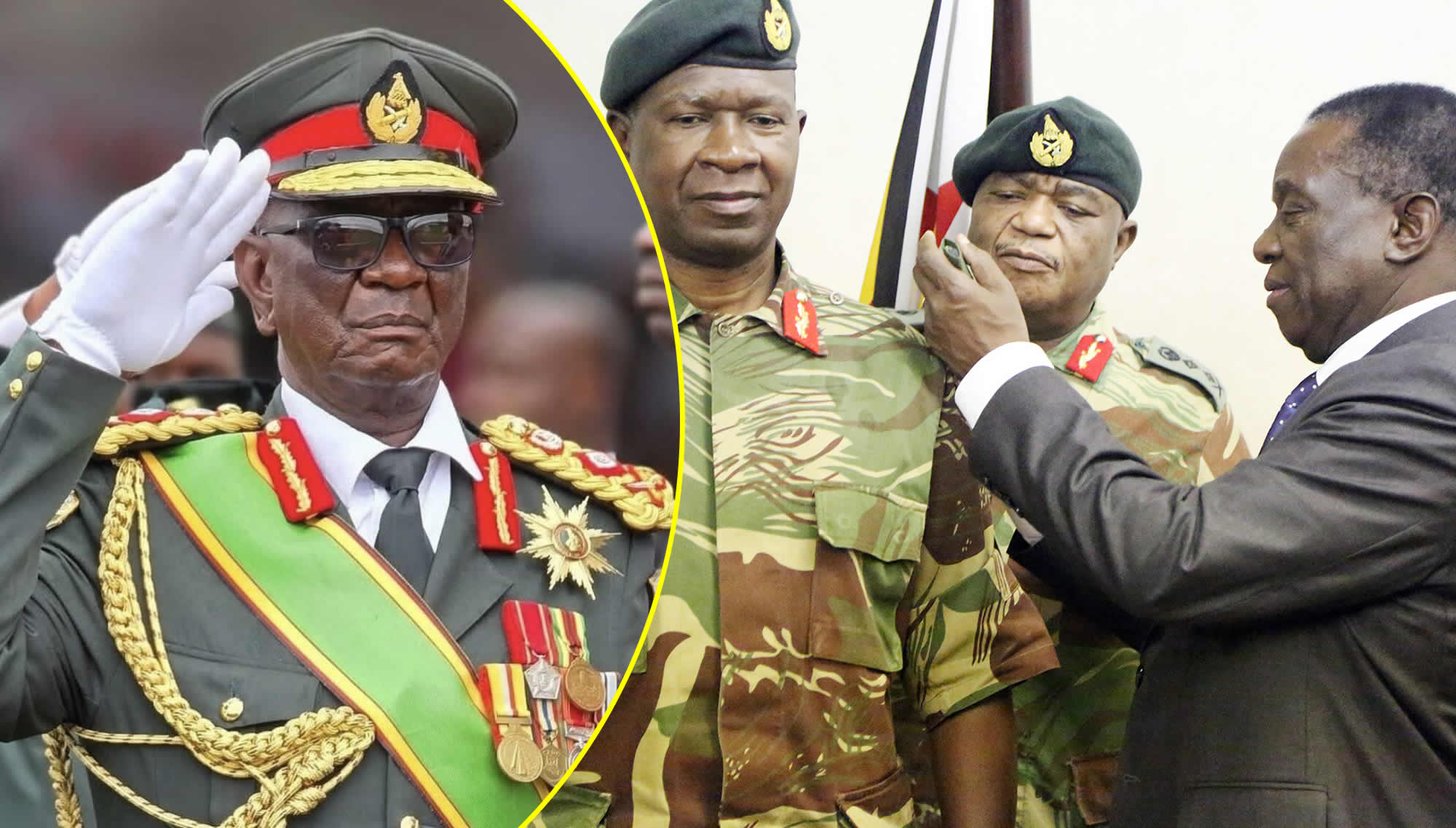
The political corridors of Harare are currently buzzing with a tension that feels all too familiar to those who remember the seismic events of November 2017. While the official narrative from ZANU-PF’s 2025 Mutare conference suggests a unified front behind the “ED2030” slogan, reports reveal a deepening chasm within the nation’s security architecture. The move to extend President Emmerson Mnangagwa’s tenure beyond the constitutional two-term limit is not just a legal hurdle; it is a direct challenge to the “gentleman’s agreement” that allegedly exists between the President and his powerful deputy, Constantino Chiwenga. Sources suggest that the military, which was the midwife of the current administration, is increasingly uncomfortable with the blatant dismantling of constitutional safeguards.
For months, the “ED2030” campaign has grown from a whispered slogan in the corridors of the Midlands to a deafening roar at the 21st National People’s Conference in Mutare. Following this party resolution was the Constitutional Amendment Bill number 3 (CAB3) – a legal manoeuvre a faction within the ruling party is employing to extend Mnangagwa’s rule to 2030 or potentially beyond. The strategy being used to bring this plan to fruition is one of “patronage and purging.” By gifting luxury vehicles to celebrities, social media influencers, Central Committee members and provincial heads, a faction linked to the President is effectively buying loyalty at a time when the economy is in a tailspin. However, this “car-for-votes” scheme has reportedly backfired amongst the rank-and-file soldiers who are struggling with the same hyperinflation as the rest of the country. We explore the hidden details of how Chiwenga loyalists are being systematically removed from key positions in the police and intelligence services to pave the way for a constitutional amendment. This article will simplify the complex legal ruse being planned: a ruse that involves postponing the 2028 elections until 2030 to bypass the need for a direct referendum on term limits.
The Ruse of 2030 and Constitutional Safeguards
The legal ruse being planned is as complex as it is daring. It involves a calculated attempt to postpone the 2028 elections until 2030, thereby bypassing the need for a direct referendum on term limits. Under the current 2013 Constitution, specifically Section 328, any amendment to extend a term limit cannot benefit the incumbent. To get around this, Mnangagwa’s legal advisors, reportedly led by Justice Minister Ziyambi Ziyambi and legal hawk Patrick Chinamasa, are exploring a “postponement” strategy. The argument is that the country needs more time to achieve “Vision 2030” and that an election in 2028 would be “distractive” to the developmental milestones already achieved.
However, multiple constitutional experts warn that this is a dangerous game. Bulawayo mayor David Coltart, a lawyer who helped draft the 2013 Constitution, has been vocal about the safeguards in place. He notes that “there is layer upon layer of constitutional safeguards to protect” term limits. He further explains that section 328, sub-section 7 of the constitution was worded in such a way that if the effect of any constitutional amendment were to extend a term limit, “then you need a referendum. It doesn’t matter how you couch it, what language you use, if the effect of that is to extend a term limit, it needs a referendum.”
This “constitutional war” is arguably the biggest threat to Zimbabwe’s stability since independence. The 2013 Constitution was specifically designed to prevent the “President-for-Life” syndrome that plagued the Robert Mugabe era. By attempting to amend Section 328, the ruling party is playing a high-stakes gamble with the nation’s foundational laws. We reveal how the “ED2030” faction is reportedly using state resources to fund a nationwide campaign, while the “Chiwenga faction” remains strategically silent, waiting for the right moment to invoke the “spirit of the revolution.” This is not just a political debate; it is a high-stakes gamble for the soul of Zimbabwe. We explain the hidden role of war veterans and how their sudden “disenchantment” with the current leadership is a signal of a much larger storm brewing.
The Silent General and the Billionaire Patron
At the heart of this power struggle is the relationship between Mnangagwa and his powerful Vice-President, Constantino Chiwenga. The retired general, who led the 2017 military intervention, is said to be “bitterly opposed” to the extension of Mnangagwa’s term. Insiders claim that the 2017 deal included a promise that Mnangagwa would serve only one or two terms before handing over the reins to Chiwenga. The emergence of the “ED2030” slogan is seen by the Chiwenga camp as a betrayal of that pact. Chiwenga, who was instrumental in the 2017 military intervention that brought Mnangagwa to power, is now cautioning the president against the move.
Adding another layer to this complex drama is the role of Kudakwashe Tagwirei, the billionaire business magnate often referred to as “Queen Bee.” Tagwirei is widely seen as the financial backbone of the “ED2030” project. His influence over the fuel, mining, and banking sectors has allowed him to bankroll the patronage network that keeps the Mnangagwa administration afloat. However, his growing political ambitions have alarmed the traditionalists within ZANU-PF. Earlier this year, Chiwenga reportedly blocked Tagwirei’s attempt to be appointed to the party’s Central Committee, though the businessman was later co-opted in August.
Chiwenga’s rhetoric in recent months has been strikingly defiant. Without naming names, he has repeatedly warned against “money changers and briefcase politicians” corrupting the party from within. Those close to him say these remarks are aimed squarely at Tagwirei and the new class of “comprador bourgeoisie” that uses money to manipulate political power. The struggle between these two men, and the rival power blocs they represent, could ultimately determine not only who rules Zimbabwe after 2028 but whether ZANU-PF can survive the transition intact.
Purges in the Security Sector and Barrack Resentment
To secure his position, Mnangagwa has moved aggressively to neutralise Chiwenga’s influence within the security forces. In March 2025, the President retired the Zimbabwe National Army (ZNA) chief, Lieutenant General Anselem Sanyatwe, a move that sent ripples through the barracks. Sanyatwe, a close ally of Chiwenga, was the commander of the Presidential Guard during the 2017 coup and is seen as a key figure in the military’s political involvement.
The purge did not stop there. Former Police Commissioner-General Godwin Matanga and the former head of the Central Intelligence Organisation (CIO), Isaac Moyo, have also purged as Mnangagwa replaces Chiwenga loyalists with his own trusted lieutenants. This “systematic removal” was intended to ensure that as the constitutional amendment is finally being tabled, the security apparatus should be too fractured to mount a unified resistance. Intelligence Analysis suggests that Mnangagwa ‘fired’ Army Chief Sanyatwe after removing Spy Boss Moyo and Police Head Matanga in a deep security shake-up. Sanyatwe is now the Minister of Sports – a less powerful position than the one he held in army, as far as the security of the nation is concerned.
Yet, this strategy is not without its risks. The rank-and-file soldiers are reportedly “disenchanted.” While the top brass receives luxury Land Cruisers, the average soldier struggles to buy basic groceries. The “car-for-votes” scheme, intended to buy loyalty at the top, has only deepened the resentment at the bottom. We have heard reports of secret meetings held in the dead of night by junior officers who feel abandoned by a leadership more interested in self-preservation than the welfare of the troops. The military, which was the midwife of the current administration, is increasingly uncomfortable with the blatant dismantling of constitutional safeguards.
The Role of War Veterans and Foreign Interests
The sudden “disenchantment” of the war veterans is another signal of the storm brewing. Historically the foot soldiers of ZANU-PF, the veterans are now divided. Some have been co-opted into the “ED2030” campaign with promises of land and pensions, but others, particularly those aligned with the “spirit of the revolution,” see the third-term bid as a betrayal of the liberation struggle. One veteran, speaking on condition of anonymity, stated: “We did not fight to replace one dictator with another. The constitution must be respected.”
Behind the scenes, foreign interests are also playing a role. Allegations have surfaced that the “Third Term” project is being bankrolled by interests from Belarus and China. Belarus, led by Alexander Lukashenko, has formed a close relationship with the Mnangagwa family. China, meanwhile, remains the dominant economic force in the country, with its eyes firmly on Zimbabwe’s vast lithium reserves. These foreign partners value “stability” above all else, and many fear they are willing to fund Mnangagwa’s stay in power to protect their investments.
Historical Context: The Gun and the Vote
To understand the current crisis, one must look at the history of ZANU-PF’s relationship with the military. In 1976, Robert Mugabe declared: “Our votes must go together with our guns. After all, any votes we shall have shall have been the product of the gun. The gun that produces the vote should remain its security officer — its guarantor.” This philosophy has underpinned the party’s rule for over four decades. From the Gukurahundi massacres of the 1980s to the violent 2008 election run-off, the military has always been the ultimate arbiter of power in Zimbabwe.
The 2017 “military-assisted transition” was merely the latest chapter in this saga. When Chiwenga led the military takeover against Mugabe and installed Mnangagwa, the two agreed that Mnangagwa would serve one term and then hand over power. The current attempt to bypass this agreement is seen by many in the military as a violation of the “revolutionary code.” As one retired general put it, “The party and the military are joined at the hip until donkeys grow horns.” If that bond is severed, the consequences for the country could be catastrophic.
Economic Turmoil and Social Unrest
While the elites battle for power, the ordinary Zimbabwean is left to face the harsh reality of an economy in freefall. Hyperinflation has returned, and the new currency, the ZiG, has struggled to maintain its value. The extreme poverty rate now stands at over 42%, a staggering figure that highlights the failure of the government’s economic policies. The former Zimbabwe Council of Churches General Secretary Kenneth Mtata once warned that Mnangagwa’s bid to extend his term would undermine all his efforts to re-engage the world and bring Zimbabwe in from the cold. It would also jeopardise negotiations to restructure Zimbabwe’s international debt.
The disconnect between the “ED2030” rhetoric and the reality on the ground is stark. While the President’s supporters chant about “developmental milestones,” the people are struggling to find clean water, electricity, and affordable healthcare. The “car-for-votes” scheme is seen as a slap in the face to a population that can barely afford a loaf of bread. This resentment is a tinderbox waiting for a spark, and the army rift could provide exactly that.
A Nation at the Crossroads
The 2025 Mutare conference may have projected an image of unity, but the reality is far more precarious. The “ED2030” project is not just a political debate; it is a high-stakes gamble for the soul of Zimbabwe. If Mnangagwa succeeds in amending the constitution, he risks a total collapse of the “gentleman’s agreement” with the military, potentially leading to a repeat of the 2017 intervention—or worse.
The 2013 Constitution was meant to be the “guarantor” of peace and democracy. By treating it as a mere hurdle to be bypassed, the ruling party is treading on thin ice. As the economy continues its downward spiral and the rift within the army widens, the question is no longer if a storm is coming, but when it will break. Zimbabwe’s governing party moves to extend Mnangagwa presidency to 2030, but the cost of this move may be the very peace they claim to protect.
Zimbabweans watch with a mixture of fatigue and dread. They have seen this play before. The names change, but the script remains the same: a struggle for power that ignores the suffering of the people. What lies beneath is a nation teetering on the edge of a precipice, its future held hostage by the ambitions of a few. The “constitutional war” is here. Whether it results in the birth of a new era or the shattering of a fragile peace remains to be seen. But one thing is certain: the “spirit of the revolution” is not dead, and those who ignore it do so at their own peril. Regionally, a destabilised Zimbabwe would unsettle the Southern African Development Community (SADC), forcing neighbours to confront a renewed political crisis in Harare. For ZANU-PF itself, the danger is existential. If the party becomes little more than an arena for competing oligarchs, it may lose the revolutionary mystique that has anchored its legitimacy since 1980.
The choice facing the ruling elite is stark: to reassert constitutionalism and collective leadership, or to plunge deeper into the politics of personal rule and plutocratic patronage. If Mnangagwa uses the Constitutional Amendment Bill number 3 (CAB3) to consolidate power through legal manipulation and financial leverage, he may win the battle but lose the war, for every such victory accelerates the party’s internal decay.