


A Web of Acquittals and Secret Diplomacy: Unravelling Justice in Zimbabwe
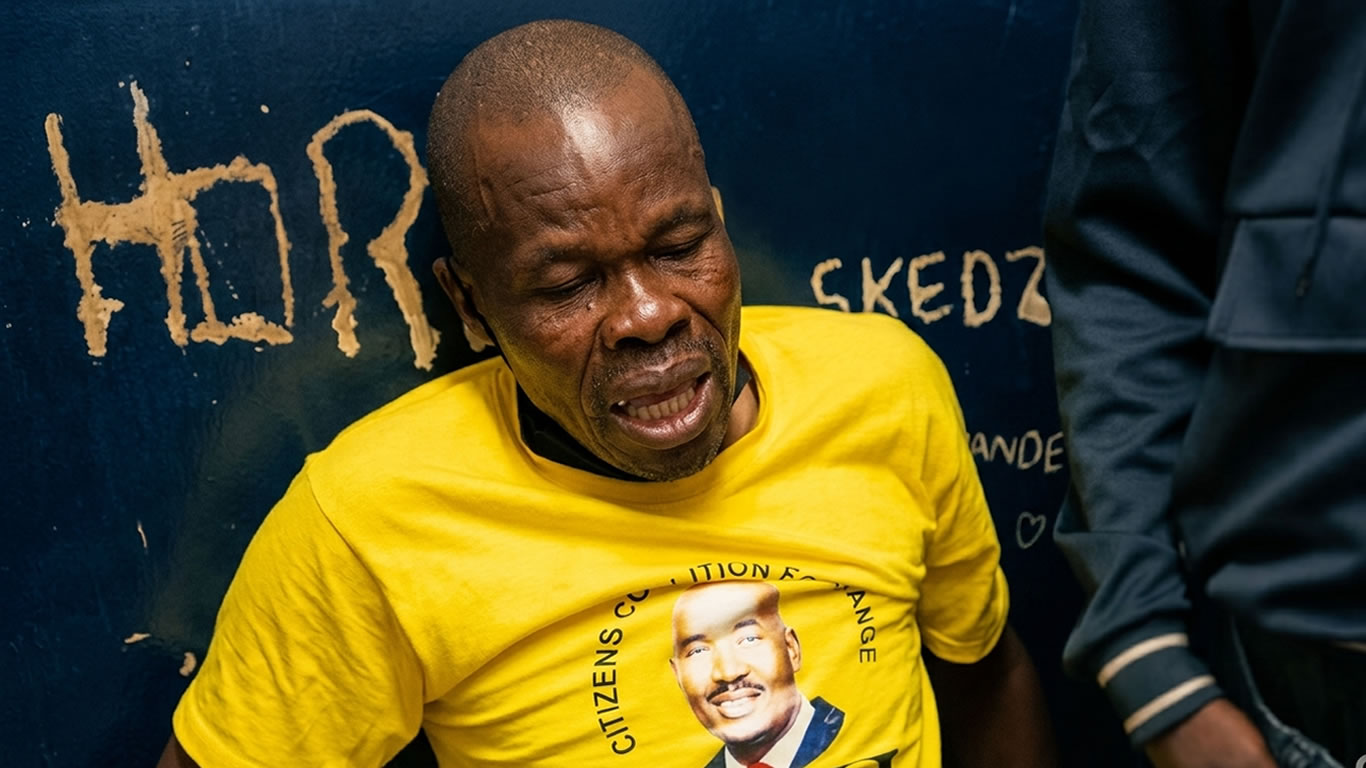
Harare – In a series of events that have captivated and confounded observers, Zimbabwe’s political and legal landscape has recently witnessed a confluence of high-profile acquittals and clandestine diplomatic manoeuvres. The release of prominent opposition activists Godfrey “Madzibaba Veshanduko” Karembera and Jim Kunaka, following an arduous eight-month detention, has reignited intense debate surrounding the impartiality of the nation’s justice system.
This development, closely preceded by the acquittal of former cabinet minister Walter Mzembi, unfolds against the backdrop of a controversial, unannounced meeting between South African President Cyril Ramaphosa and Zimbabwean President Emmerson Mnangagwa at the latter’s private farm, raising profound questions about the interplay between political influence and judicial outcomes.
The Long Road to Freedom: Madzibaba Veshanduko and Jim Kunaka’s Ordeal
The recent discharge of Godfrey Karembera, widely known as Madzibaba Veshanduko, and Jim Kunaka, alongside Jestere Malcom Masarira, by a Harare Magistrate, marks a significant moment for human rights advocates in Zimbabwe. The trio had languished in pre-trial detention for eight months, facing charges of incitement to public violence. Their arrests stemmed from allegations of mobilising citizens for anti-government protests, an accusation they vehemently denied, asserting their actions were within the bounds of peaceful political expression.
The Zimbabwe Lawyers for Human Rights (ZLHR), representing the activists, consistently argued against the legitimacy of the charges. Their perseverance ultimately paid off when Magistrate Lisa Mutendereki ruled that the prosecution had failed to establish a compelling case, discharging the accused at the close of the State’s evidence. This ruling, while a victory for justice, casts a long shadow over the prolonged detention itself. As ZLHR articulated, the acquittal marked the end of what they described as a “prolonged persecution” of Karembera.
Journalist Hopewell Chin’ono, himself a victim of politically motivated charges, underscored the gravity of such protracted incarcerations. He remarked that the outcome “raises serious questions about the cost of wrongful political incarceration, the impact on the lives of those accused, and the importance of ensuring that justice is not only done but is seen to be done.” The eight months spent behind bars, particularly for Karembera, highlight the punitive nature of the legal process when political opponents are involved, prompting scrutiny into whether the justice system operates independently or is susceptible to external pressures.
Walter Mzembi’s Acquittal: A Timely Release
Just weeks prior to the release of Madzibaba Veshanduko and Kunaka, former Tourism and Foreign Affairs Minister Walter Mzembi also walked free. Mzembi had been facing charges of criminal abuse of office, relating to the distribution of public-viewing television sets during his tenure as Tourism Minister. His case had dragged on for an extended period, with Mzembi spending close to a year in remand prison before eventually being granted bail.
High Court judge Justice Benjamin Chikowero ultimately acquitted Mzembi, ruling that the State had failed to prove the essential elements of the offence. The judge was critical of the prosecution’s investigation and its handling of witnesses, suggesting significant shortcomings in the case brought against the former minister.
The timing of Mzembi’s acquittal, occurring shortly after he was granted bail and preceding the high-stakes diplomatic encounter, has not gone unnoticed by political analysts and the public alike.
The Enigmatic Farm Meeting: Ramaphosa, Mnangagwa, and Unofficial Guests
The plot thickened considerably with the revelation of a discreet meeting on 3rd May 2026, between South African President Cyril Ramaphosa and Zimbabwean President Emmerson Mnangagwa. The encounter took place at Mnangagwa’s private Precabe Farm in Kwekwe, a detail that immediately raised eyebrows. What made this meeting particularly controversial was its clandestine nature; neither the South African nor the Zimbabwean government offered any official explanation or details regarding the exact discussions that took place at the farm.
Further fuelling speculation was the presence of individuals who hold no official government positions but are known for their significant influence in Zimbabwean business and political circles: Kuda Tagwirei and Wicknell Chivayo. Wicknell Chivayo, a businessman with a notable social media presence, even posted about the “rare yet most profound opportunity” to be part of a “distinguished delegation of businessmen” that received President Ramaphosa. He described the visit as a reaffirmation of “historic bonds” and “bilateral ties” between the two nations, highlighting a tour of agricultural enterprises and the world-renowned Ankole cattle breed at Mnangagwa’s farm.
However, the lack of transparency surrounding the meeting, coupled with the attendance of such influential non-state actors, sparked widespread concern. The Africa Report suggested that Ramaphosa’s low-key visit might have been intended to dissuade Mnangagwa from seeking power beyond 2028, hinting at deeper political negotiations. The presence of Tagwirei and Chivayo, often associated with lucrative government contracts and perceived political patronage, only amplified questions about the true agenda of the meeting and the potential for undue influence on state affairs.
A Shared Cell and Subsequent Freedom: Mzembi’s Prison Visit to Madzibaba Veshanduko
In a poignant turn of events that underscored the interconnectedness of these narratives, Walter Mzembi, fresh from his own acquittal, made a notable visit to Harare Remand Prison. His purpose: to see Madzibaba Veshanduko, who was still incarcerated at the time. Mzembi later shared his reflections on their shared time in detention, revealing that Karembera had joined him in a prison cell he had affectionately rebranded as “Bethel,” transforming it into a place of prayer and worship.
Mzembi described Karembera as a deeply prayerful inmate who often led praise and worship sessions, and spoke of the hardships they both endured. He noted that prison life had imparted valuable lessons about faith, friendship, and national unity, suggesting that despite political differences, Zimbabweans shared common aspirations for a better country.
Remarkably, shortly after Mzembi’s visit and public reflections, Madzibaba Veshanduko was also acquitted and released. This sequence of events – Mzembi’s bail and acquittal, the secret Ramaphosa-Mnangagwa meeting, Mzembi’s visit to Madzibaba Veshanduko, and then Madzibaba Veshanduko’s own acquittal – has led many to ponder whether these occurrences are merely coincidental or indicative of a more intricate, perhaps politically orchestrated, chain of events.
The Unseen Hand of Influence: Questions of Justice and Political Manoeuvring
The rapid succession of these acquittals, particularly after prolonged detentions and in the context of a highly secretive diplomatic engagement, has inevitably led to speculation about the integrity of Zimbabwe’s judicial processes. Critics argue that the timing and circumstances suggest a potential weaponisation of the law against political opponents, followed by strategic releases when political calculations shift. The presence of powerful, non-governmental figures like Kuda Tagwirei and Wicknell Chivayo at a high-level presidential meeting further fuels concerns about opaque governance and the blurring lines between state affairs and private interests.
While the ZLHR and other human rights organisations celebrate the acquittals as victories for justice, they simultaneously highlight the systemic issues of pre-trial detention and the burden placed on individuals who are ultimately found innocent. The question remains: how many others endure similar prolonged incarcerations without the same level of public scrutiny or the fortuitous timing of political shifts? The cases of Madzibaba Veshanduko, Jim Kunaka, and Walter Mzembi serve as potent reminders of the delicate balance between maintaining public order and safeguarding fundamental freedoms in a nation grappling with its political identity and the pursuit of genuine rule of law.