


Conjugal Rights in Prison: A Privilege for the Few, a Cover-Up for the Many?
BULAWAYO – Within the imposing grey concrete walls of Khami Maximum Prison, a high-security facility on the outskirts of Zimbabwe’s second-largest city, the air is thick with the scent of overcrowding and the heavy silence of thousands of men whose lives have been paused. For most, the only connection to the outside world is a brief, supervised visit behind a glass partition or a shouted conversation across a crowded visitor’s room. However, a recent announcement from the prison’s leadership has laid bare a stark divide in how the state views the basic human needs of those it incarcerates.
In a statement that has sparked a fierce debate across the country’s legal and human rights landscapes, the Khami prison chief revealed that a select group of inmates are now being permitted to exercise their conjugal rights – but only if they are lucky enough to be held in the nation’s “open prisons.” This policy, framed by officials as a progressive step towards rehabilitation, has instead highlighted a deep-seated inequality that critics say punishes the many while rewarding a tiny, privileged minority.
“As an organisation, not all inmates are enjoying this privilege,” stated Assistant Commissioner Nelson Chemugarira, the officer-in-charge at Khami. His words, though delivered with the clinical detachment of a career correctional officer, have pulled back the curtain on a system where intimacy and the maintenance of family bonds are treated not as rights, but as rewards for good behaviour.
A Tale of Two Prisons
To understand the weight of this policy, one must look at the chasm between Zimbabwe’s maximum-security facilities and its experimental open prison system. At Connemara Open Prison for men and the newly established Marondera Open Prison for women, inmates live in conditions that more closely resemble a boarding school than a traditional jail. They wear their own clothes, work in the fields without armed guards, and – most significantly – are granted home leave to visit their families.
It is during these home visits that conjugal rights are exercised. The state does not provide private rooms within the prisons; instead, it allows qualifying inmates to return to the “comfort of their homes” for short periods. For the Zimbabwe Prisons and Correctional Service (ZPCS), this is the pinnacle of their rehabilitation efforts. The logic is simple: if an inmate is trusted to return home and behave, they are more likely to successfully reintegrate into society upon their release.
However, for the vast majority of Zimbabwe’s 27,000 inmates, this remains a distant, impossible dream. Most are held in facilities like Khami or the notorious Harare Central Prison, where overcrowding has reached breaking point. Recent reports from the National Prosecuting Authority and human rights monitors indicate that the country’s prisons are operating at nearly double their intended capacity of 17,000. In these cramped cells, where dozens of men often share a space designed for ten, the concept of a private, intimate moment with a spouse is laughably out of reach.
The Human Cost of Deprivation
The psychological and social impact of this deprivation is profound. Investigative research into the conditions within Zimbabwe’s correctional facilities reveals a pattern of family disintegration that many experts believe fuels the very recidivism the state claims to be fighting. According to data from the Ministry of Justice, an estimated 58% of families of incarcerated individuals struggle to reintegrate after the inmate’s release, often due to the total breakdown of the marital bond during years of separation.
A 2023 report in the Zimbabwe Medical Journal further highlighted the physical health risks associated with the long-term denial of conjugal rights. The study linked the deprivation to an 18% higher incidence of prostate cancer among long-term inmates and noted that the “abominable alternatives” – a euphemism for same-sex activity within the all-male maximum-security wards – have led to heightened risks of HIV and other sexually transmitted infections.
At Khami, where approximately 28% of the 2,500 inmates were reported to be HIV-positive in recent years, the lack of a safe, legal outlet for sexual intimacy is more than just a matter of comfort; it is a public health crisis. Human rights advocates argue that by restricting conjugal rights to the open prison system, the government is effectively creating a two-tiered system of justice where the health and marital stability of maximum-security inmates are deemed expendable.
The Official Stance: A Reality Check
Despite the growing calls for broader reform, the Zimbabwean government remains cautious. Vimbai Nyemba, the Permanent Secretary in the Ministry of Justice, recently provided what many saw as a blunt reality check for those advocating for universal conjugal rights. She told reporters that the country is not yet in a position – legally, physically, or socially – to implement such a policy across all prisons.
The “physical” constraints are perhaps the most obvious. In a system where inmates often lack basic necessities like soap, clean water, and adequate food, the construction of private “conjugal suites” is seen by many as a luxury the state cannot afford. There is also the issue of security. Prison authorities fear that allowing private visits in maximum-security settings could lead to the smuggling of contraband or provide opportunities for escape.
Yet, the official narrative that this is a “reward for good behaviour” is increasingly being challenged. Critics ask: who decides who gets into an open prison? The criteria for placement are often opaque, involving a combination of the severity of the crime, the length of the sentence remaining, and a subjective assessment of “risk” by prison boards. For many inmates, the path to an open prison is blocked by the very nature of their original conviction, regardless of how much they have reformed behind bars.
Hidden Truths and Broken Bonds
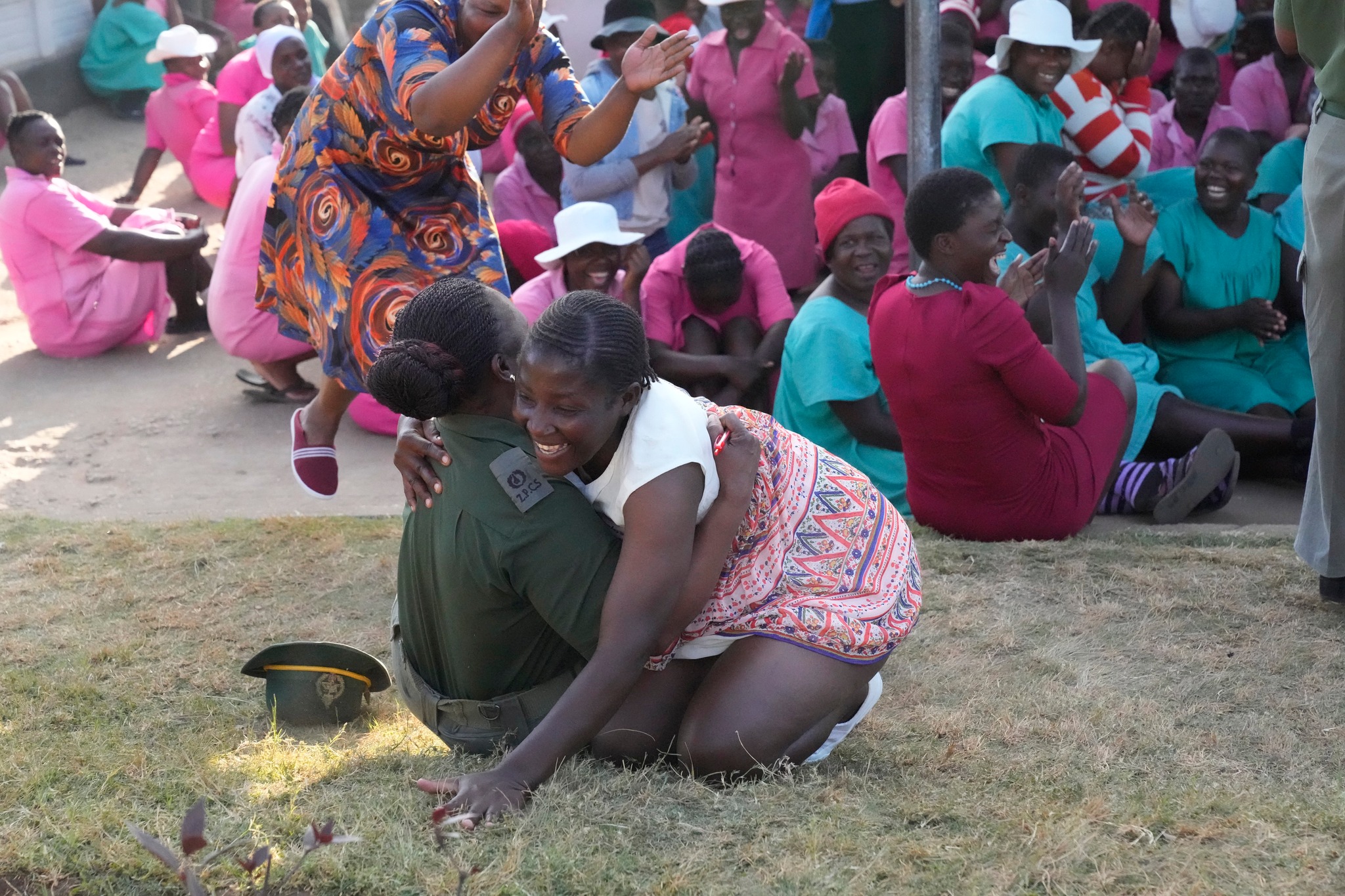
The reality of life for those left behind was poignantly illustrated during a recent “Family Week” event at Khami. These events are rare occasions where families are allowed into the prison grounds to share a meal and spend time with their loved ones. In May 2025, a convict named Muchengeti Sibindi, who is serving a 21-year sentence, made headlines when he used the occasion to propose to his long-time partner, Nozipho Moyo.
While the ZPCS used the event to showcase its “humanitarian” side, the underlying tragedy was clear. Sibindi, despite his obvious commitment to his partner and his record of good behaviour, remains ineligible for the open prison system due to the length of his sentence. For him and Nozipho, the proposal was a beautiful gesture in a place of deep ugliness, but it did nothing to change the fact that they may not be able to share a private, intimate moment for another decade.
This story of “redemption and love” is often used by officials to deflect from more pressing issues. While the public debates the merits of conjugal rights, the prison system continues to groan under the weight of systemic neglect. In January 2026, reports emerged of severe food shortages at several major facilities, and the Zimbabwe Human Rights Commission has repeatedly warned of “harsh and life-threatening” conditions due to inadequate healthcare and sanitation.
The Path Forward: Rehabilitation or Retribution?
The debate over conjugal rights in Zimbabwe is, at its heart, a debate over the purpose of prison. Is it a place of pure punishment, where every human need must be stripped away to pay a debt to society? Or is it a place of correction, where the goal is to return a functional, stable individual to their community?
As one legal expert put it, “The concept of conjugal rights is progressive, but when it is used as a carrot to be dangled only before a select few, it loses its power as a tool for genuine reform. It becomes just another way to manage a population that is already feeling the sting of injustice.”
For the men at Khami Maximum Prison, the announcement has changed very little. They will continue to wake up in their crowded cells, continue to wait for the rare visits from their wives, and continue to wonder why the “privilege” of maintaining their marriages is a right they are not yet deemed worthy to hold. The walls of the prison remain high, and for most, the “comfort of their homes” is a world away.
The challenge for Zimbabwe in the coming years will be to move beyond the headlines and address the systemic issues that make the denial of these rights so damaging. Until the state can provide a humane environment for all its inmates, the talk of “rehabilitation” will remain, for many, nothing more than a smokescreen for a system that has forgotten the human beings within its care.