


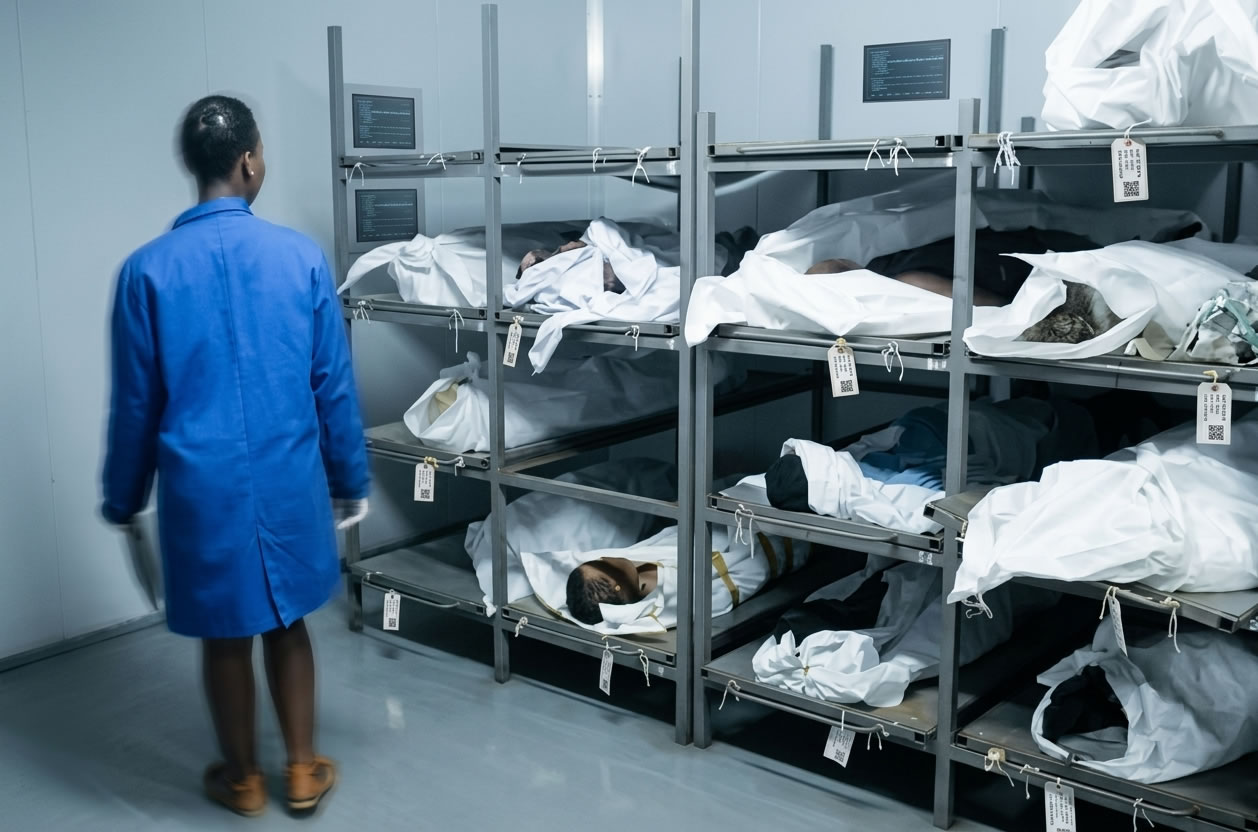
Lupane – A grim discovery at St Luke’s Hospital mortuary in Lupane, in Matabeleland North Province, has brought to light a deeply troubling issue within Zimbabwe’s healthcare and social welfare systems. Sixteen unclaimed bodies, including those of four infants, have been held at the facility for an indeterminate number of years, prompting a public appeal from the Zimbabwe Republic Police (ZRP) for assistance in identification. This unsettling situation not only highlights the profound human tragedy of forgotten lives but also exposes a complex web of systemic failures, poverty, and potentially darker narratives that demand urgent attention.
On 5 June 2026, Inspector Glory Banda, the Matabeleland North Police Spokesperson, issued a plea to the public, stating, “The remains, which include those of four babies, have been in the mortuary for many years as they were brought in dead (BID) on different dates and without identifying particulars”. This statement underscores the core of the mystery: who are these individuals, how did they come to be at St Luke’s, and why have they remained unidentified and unclaimed for so long? The District Social Development Officer for Lupane, Mrs Chaparira, has been designated as a key contact for anyone with information that could help trace relatives, reachable on 0773 242 691.
The plight of the Lupane sixteen is not an isolated incident but rather a stark symptom of a broader crisis plaguing Zimbabwe’s public mortuaries. Facilities across the nation, many constructed before 1980 when the population was significantly smaller, are now severely over capacity. In Harare, the capital, hospitals such as Parirenyatwa Group of Hospitals and Sally Mugabe Central Hospital have reported holding bodies at four times their intended capacity. Dr Christopher Pasi, CEO of Sally Mugabe Central Hospital, candidly explained the infrastructural challenge: “Remember the infrastructure was built a long time ago for a smaller Harare and now the city has grown exponentially… We are usually almost always above holding capacity”. This overcrowding leads to unsanitary conditions and a profound lack of dignity for the deceased.
The issue is further compounded by Zimbabwe’s persistent economic hardships. Widespread poverty means many families simply cannot afford the costs associated with funerals, including transportation of bodies, burial fees, and traditional ceremonies. This financial burden often results in bodies remaining in mortuaries for extended periods, sometimes for years, as relatives struggle to gather the necessary funds. Cultural complexities also play a role; in some instances, disputes over customary payments, such as lobola (bride price), can delay or prevent families from claiming their deceased loved ones. These socioeconomic factors create a heartbreaking cycle where the dead are left in limbo, their final rites postponed indefinitely.
Adding to the crisis are critical infrastructure deficiencies, particularly concerning power supply. Zimbabwe Electricity Supply Authority (ZESA) load-shedding, which can last up to 16 hours daily, severely impacts the functionality of mortuary refrigeration units. This intermittent power supply leads to bodies decomposing prematurely, creating unbearable odours and further compromising the dignity of the deceased. Prosper ‘Comic Pastor’ Ngomashi, a popular comedian, recounted his experience at Harare Hospital Mortuary, stating he was “choked by the smell of rotting bodies… I didn’t realise that they were dead bodies on the premises”. An undertaker with over a decade of experience, Albert Rugare, echoed this sentiment, describing the “terrible smell” that greets visitors and the archaic technology and chemicals used for embalming as contributing factors.
The identification of deceased individuals is also hampered by a severe shortage of forensic pathologists and the frequent absence of identifying documents for those brought in dead (BID). This lack of proper documentation makes tracing next of kin an arduous, often impossible, task for authorities. The absence of a robust system for identifying unknown individuals leaves these cases unresolved, contributing to the growing number of unclaimed bodies.
The presence of 16 unknown bodies, including infants, at Lupane raises unsettling questions beyond mere systemic neglect. Matabeleland North, where Lupane is located, is a region known to be a transit zone for migrants travelling to South Africa. This geographical reality opens the possibility that some of the unidentified individuals could be undocumented migrants who perished during their journey, far from their homes and families. Furthermore, the region has seen incidents of violent crime, such as the recent arrest of Sibongiseni Mfanaso Mpofu for allegedly killing Christine Ncube and burning her body in Lupane, and the drowning of Constable Joseph Masvora in the Bubi-Lupane Dam in August 2025. While these specific incidents may not be directly linked to the Lupane mortuary cases, they highlight the potential for unidentified bodies to be victims of crime or other illicit activities, including human trafficking. The lack of identification makes it difficult to rule out such sinister possibilities, leaving a dark cloud of speculation over the mortuary’s contents.
The government’s response to this ongoing crisis has drawn sharp criticism. Political scientist Rashweat Mukundu observed, “In life and death, the Zimbabwean government has failed to offer dignity to its people and this has left many families in distress”. This sentiment reflects a broader public frustration with the perceived neglect of essential public services. While pauper burials are meant to provide a final resting place for unclaimed bodies, hospitals often lack the funds to conduct these burials with appropriate dignity, leading to further delays and an accumulation of remains.
The mystery of the Lupane mortuary is a microcosm of Zimbabwe’s wider challenges. It is a poignant reminder of the human cost of economic hardship, infrastructural decay, and systemic inefficiencies. The call for public assistance to identify the Lupane sixteen is not just about finding names for the deceased; it is about restoring dignity, providing closure to potentially grieving families, and confronting the uncomfortable truths about a society grappling with profound social and economic pressures. A more compassionate and transparent approach, coupled with significant investment in healthcare infrastructure and social welfare, is desperately needed to ensure that no more lives, even in death, are forgotten. The silent stories held within the Lupane mortuary demand answers, and a commitment to preventing such tragedies from recurring.