


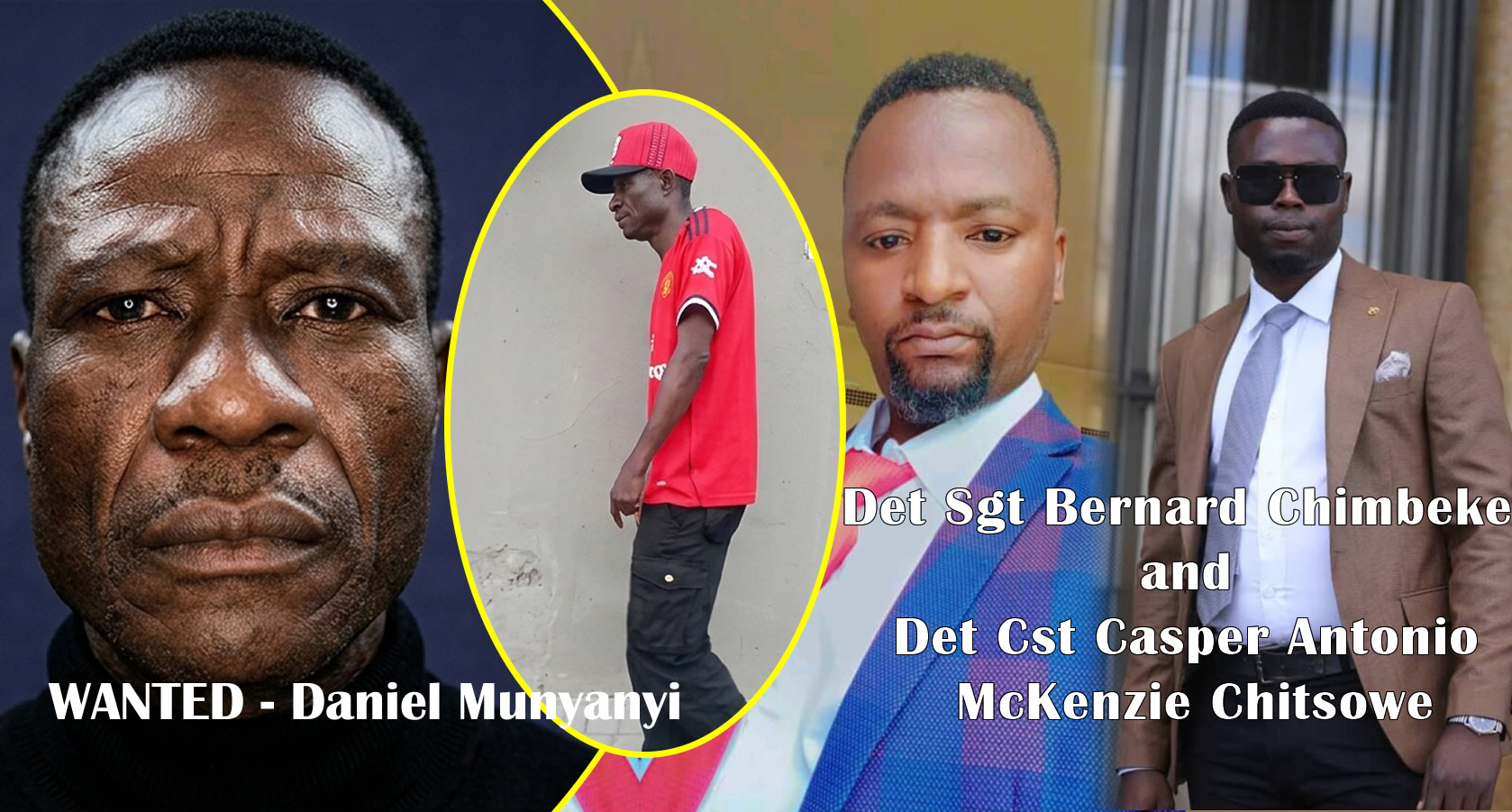
In the sterile, echoing chamber of the Masvingo High Court, a man whose name has become a dark legend across Zimbabwe sat hunched, his eyes darting to corners of the room that only he seemed to see. Daniel Munyanyi, 50, a convicted armed robber already facing a lifetime behind bars, was not there to offer a standard legal defence. Instead, he presented a narrative that blurred the lines between the criminal and the supernatural, claiming a torment that no prison wall could keep out.
“Ndikurumwa ne nyuchi nekuti ndakauraya vanhu,” Munyanyi told Justice Christopher Dube-Banda, with a low voice tremor that forced the courtroom into a strained silence. “Pese pandinovhura muromo kuti nditaure nezve nyaya iyi nyuchi dzinondiruma dzichindiudza kuti ndinyarare uye kuti dzichandisiya ndakabvuma mhosva yekuuraya vanhu.”
Translated from Shona, his admission was chilling: “I didn’t give my lawyer instructions because bees are stinging me every time I open my mouth to talk about the murder. The bees told me that I would be free only if I confessed to the murder.”
The courtroom, accustomed to the gritty realities of ballistics and bloodstains, was suddenly confronted with a man who claimed to be under a spiritual siege. Munyanyi’s bizarre testimony was the latest chapter in a saga of violence that has gripped the Masvingo province, a tale of a ruthless predator who, after months of terrorising the innocent, now claims to be the prey of an invisible swarm.
The Swarm in the Courtroom
Munyanyi’s appearance on Thursday was intended to address new charges related to the brutal slaying of two high-ranking detectives. However, the proceedings were quickly derailed. His pro-deo lawyer, Tatenda Nyoka, informed the court of a total breakdown in communication. When Nyoka had visited his client at Mutimurefu Prison, Munyanyi had remained stubbornly silent, refusing to offer any instructions or insights into his defence.
When Justice Dube-Banda pressed for an explanation, the defendant’s response was as unexpected as it was vivid. Munyanyi claimed that the bees were not merely a metaphor for guilt but a physical presence that dictated his every move. He warned the judge that if he continued to answer questions, the bees would not restrict their punishment to him alone.
“The bees would invade the courtroom and sting everyone,” Munyanyi warned, his gaze fixed on the empty air above the gallery. He insisted that the insects had issued a singular command: plead guilty to the murders of Police detectives Bernard Chindeke and McKenzie Chitowe, or suffer the consequences of their stings.
Confronted with this display, Justice Dube-Banda ordered a psychiatric evaluation. The judge noted that while Munyanyi could correctly identify his name, age, and marital status, he claimed total ignorance of the circumstances of his arrest or his presence in court. The application for evaluation, made by Nyoka and unopposed by the State’s lead prosecutor, Mukai Mutumhe, has pushed the next hearing to June 25.
A Trail of Blood in Ndanga
To understand the weight of Munyanyi’s claims, one must look back to the early hours of March 1, 2026. The setting was Ndume Village, under Chief Ndanga in Zaka — a rural landscape that would soon be transformed into a battlefield.
What followed was a catastrophic failure of a high-stakes arrest. As the officers moved to secure the perimeter, Munyanyi allegedly unleashed a hail of gunfire. The results were devastating. Detective Sergeant Bernard Chindeke, 38, and Detective Constable McKenzie Chitowe, 42, were killed in the line of duty.
The violence was not limited to the fatalities. Three other detectives were caught in the crossfire. One officer was shot in the thigh, another in both legs, and a third sustained injuries so severe that surgeons were later forced to amputate one of his legs. Despite the carnage, Munyanyi managed to vanish into the thick surrounding bush, sparking one of the most intensive manhunts in the region’s history.
The Commissioner-General of Police, Stephen Mutamba, personally reached out to the bereaved families, expressing a grief that was shared by the entire force. The deaths of Chindeke and Chitowe were more than just statistics; they were a stark reminder of the increasing lethality of Zimbabwe’s criminal underworld.
The Record-Breaking Sentence
Munyanyi’s flight from justice was short-lived. On March 2, 2026, he was cornered at Nyika Growth Point in Bikita. When he was apprehended, he was still in possession of a firearm—the same tool he had used to carve a path of destruction through the province.
The legal hammer fell swiftly. In the Masvingo Magistrates Court, Regional Magistrate Innocent Bepura presided over a litany of crimes that painted Munyanyi as a calculated, cold-blooded operative. Already serving a 72-year sentence for six counts of robbery handed down just a week prior, Munyanyi was convicted on a further 19 counts, including armed robbery, attempted murder, theft, and unlawful entry.
Magistrate Bepura added another 77 years to the tally, bringing the total to a record-breaking 149 years. It is a sentence designed to ensure that Daniel Munyanyi never again breathes the air of a free man.
“It is ruled that the six robberies were committed under aggravating circumstances through the use of firearms,” Bepura stated during sentencing. “The offender used violence, stole cash, cellphones and other valuables. His conduct shows that he is a danger to the public and society.”
The details of his spree, revealed in court, showed a man who targeted the vulnerable with surgical precision:
- July 23, 2025: In Mushandike, he robbed Trybest Mahlazi of US$300 at gunpoint.
- August 2, 2025: In Mucheke A, he assaulted Shepherd Mtetwa, making off with US$5,300, a laptop, and airtime vouchers.
- December 26, 2025: While others celebrated Boxing Day, he robbed Forgiveness Chinyoka in Chivi of US$6,000.
- February 13, 2026: In Rujeko C, he stole high-end gadgets from Richard Musekiwa. Five days later, he returned and shot Musekiwa in the abdomen.
Perhaps most telling of his character was an incident in June 2025. Munyanyi targeted the homestead of Chief Nhema, a traditional leader. He used shoelaces to bind the Chief before ransacking the home for valuables. It was an act of profound disrespect that resonated deeply in a society that still holds traditional authority in high regard.
The Spectre of Gun Crime
Munyanyi’s case does not exist in a vacuum. It is the most extreme symptom of a growing malaise in Zimbabwe. Recent data suggests a worrying trend; while overall crime rates in some sectors have seen a slight dip, violent firearm-related robberies are on a sharp incline. In May 2026 alone, police reported a surge where over US$1.2 million was stolen in various heists across the country in just 48 hours.
The Xikolokolo Lobby Group recently petitioned Parliament to tighten firearm regulations, citing a “worrying trend of rising armed robbery cases.” The ease with which criminals like Munyanyi obtain and use high-calibre weapons has put the Zimbabwe Republic Police on a permanent war footing.
For the survivors of Munyanyi’s raids, the psychological scars are as deep as any bullet wound. The terror of being held at gunpoint, often in the sanctuary of one’s own home, leaves a residue of fear that no court sentence can fully wash away.
Evil Spirits or Calculated Deceit?
Before the “bees” made their appearance in the High Court, Munyanyi had offered a different supernatural excuse. During his initial appearances before Magistrate Bepura, he claimed he had been “possessed by evil spirits” during his crime spree.
It is a common refrain in Zimbabwean courts—the “ngozi” or “shavi” (avenging or alien spirits) defence. In a culture where the spiritual world is often seen as intertwined with the physical, such claims can sometimes find a sympathetic ear. However, the prosecution, led by Liberty Hove, remained unmoved. They argued that Munyanyi’s actions were not those of a man out of control, but of a professional who knew exactly how to maximise his gains and minimise his risks.
The transition from “evil spirits” to “tormenting bees” suggests a desperate attempt to find a narrative that might lead to a finding of mental instability. Whether the bees are a genuine manifestation of a fractured mind or a clever ploy to avoid the finality of a murder conviction remains to be seen.
The Road to June 25
As Munyanyi awaits his psychiatric evaluation at Mutimurefu Prison, the families of Detective Sergeant Chimbeke and Detective Constable Chitsowe are left with a void that no amount of legal maneuvering can fill. Their deaths have sparked a national conversation about the safety of those who stand between the public and the gunmen.
The upcoming trial for the two counts of murder is expected to be the most emotionally charged yet. If convicted, Munyanyi’s sentence will likely climb past the 200-year mark, further cementing his place as the recipient of the longest prison term in the nation’s history.
For now, the man who once held a province in his grip claims to be held in the grip of a swarm. Whether the bees are real in his mind or a fabrication of his tongue, they have become the final, bizarre chapter in the life of Zimbabwe’s most notorious modern criminal. The corridors of the Masvingo High Court will wait until June 25 to see if the “bees” will allow Daniel Munyanyi to finally speak, or if the silence of the swarm will continue to haunt the halls of justice.