


Harare – Amidst a simmering cauldron of political intrigue and escalating tensions, President Emmerson Mnangagwa has once again asserted his dominance, sending a clear message to his rival, Vice-President Constantino Chiwenga, that he remains firmly in control of Zimbabwe’s political landscape. The defiant stance comes as retired army commanders and war veterans express growing anger over what they perceive as a betrayal of the November 2017 coup mission, which saw the ousting of the late former president Robert Mugabe.
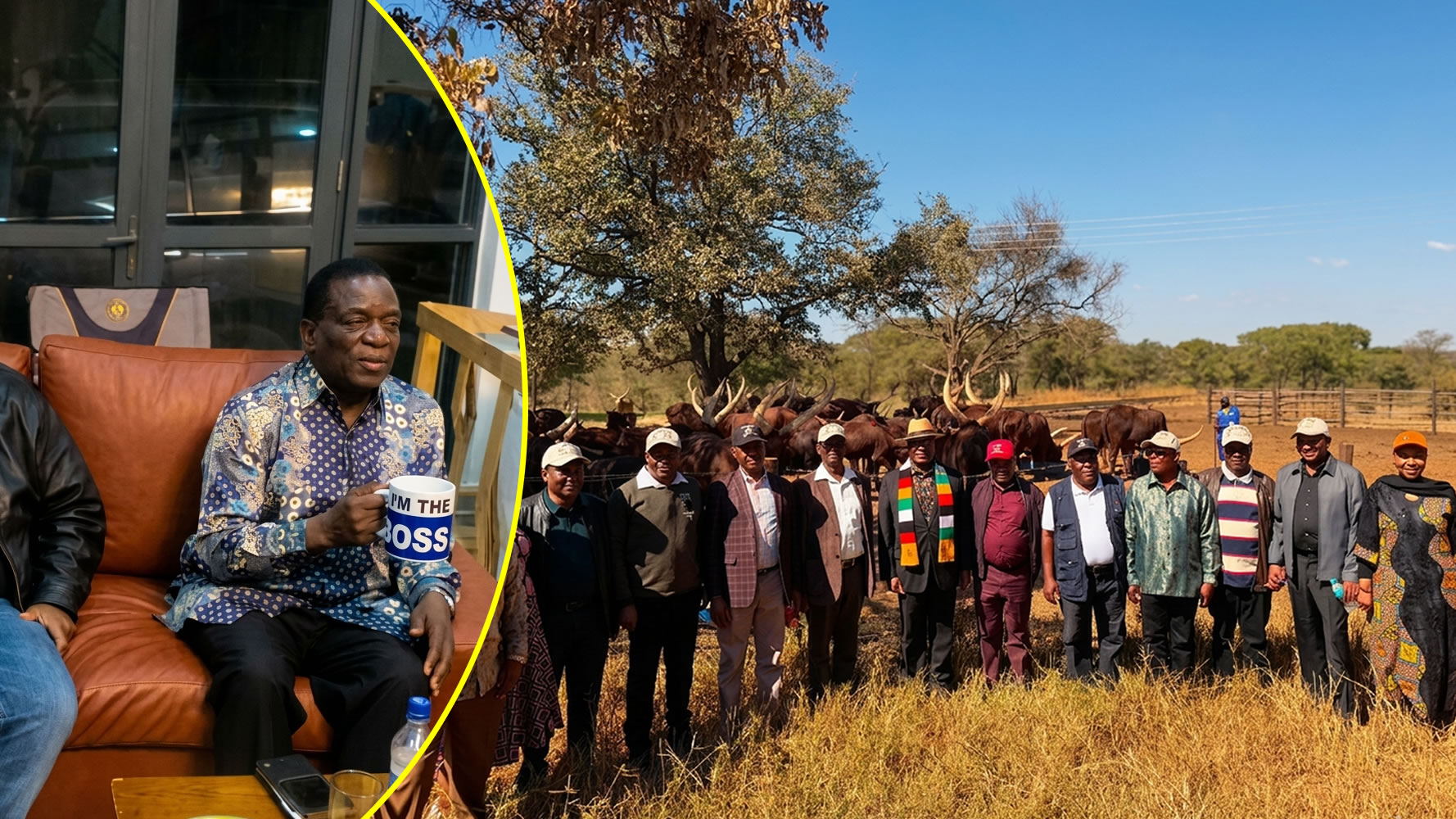
Recent developments underscore the deepening chasm between the two most powerful figures in Zimbabwean politics. Over the past weekend, President Mnangagwa convened a crucial meeting with security ministers and top service chiefs under the Joint Operations Command (JOC) rubric. This gathering, held at his Precabe Farm in Kwekwe, in Midlands province – a location known for significant political deliberations – was ostensibly to review agricultural activities and Zimbabwe’s drive towards food security. However, sources within the JOC, speaking on condition of anonymity, revealed the true agenda: to restore shaken confidence within his ranks and unequivocally demonstrate to his rivals, particularly General Chiwenga, that he commands the unwavering loyalty of the military. The army, it must be noted, continues to be the primary arbiter and power broker in Zimbabwe, despite ongoing efforts to diminish its influence through constitutional amendments.
The meeting at Precabe Farm transpired amidst palpable agitation among retired army commanders and war veterans. This influential group, largely aligned with Chiwenga, has vociferously protested Mnangagwa’s 2030 political project and their perceived exclusion from the spoils of the 2017 coup. Their discontent is further fuelled by the proposed constitutional changes, which they have heavily resisted, even leveraging litigation to challenge the legality of an incumbent president benefiting from a term extension. A recent Constitutional Court hearing on an application by war veterans challenging Mnangagwa’s 2030 agenda concluded with a reserved judgment, with more legal challenges anticipated.
Beyond the perceived betrayal, many of these generals, some of whom were allies of the late former army commander Solomon Mujuru, are now rallying behind Chiwenga, hoping for a second opportunity to secure their interests. The JOC member who attended the Kwekwe meeting elaborated on its dual nature: “Officially, the President was hosting ministers and top state security service chiefs for a farm tour to see ongoing agricultural activities and review Zimbabwe’s drive towards food security. It was presented as a normal farm visit, just like many others before it, but our intelligence clearly shows that it was a political gathering.” The source added, “Unofficially, it was a major and critical meeting to show solidarity, power, force and send a message to our former colleagues led by retired Air Marshal Henry Muchena.” The attendees included key figures such as Defence Minister Oppah Muchinguri-Kashiri, State Security Minister Lovemore Matuke, Home Affairs Minister Kazembe Kazembe, Zimbabwe Defence Forces Commander General Emmanuel Matatu, Zimbabwe National Army Commander Lieutenant-General Walter Tapfumaneyi, and Air Force of Zimbabwe Air Marshal Jacob John Nzvede.
At the heart of Mnangagwa’s current vulnerability lies the ongoing succession infighting, internal strife, and factionalism within the ruling ZANU-PF party. While Chiwenga’s influence has been strategically curtailed, he still commands immense historical and current loyalties among the mid-to-lower ranks of the military and retains critical support from liberation war veterans. His deep military roots remain a significant source of leverage. However, Mnangagwa has systematically neutralised this influence through a combination of changing the army command element and employing patronage, offering incentives such as houses, cars, and money to commanders. Despite these setbacks, Chiwenga’s presidential ambition has not been entirely extinguished, with his political fate now intricately linked to the intense succession battle within ZANU-PF.
The political landscape has been significantly reshaped by Mnangagwa’s relentless efforts to consolidate power and extend his tenure through a series of political, electoral, and governance changes. He has meticulously coup-proofed his administration by systematically demoting Chiwenga-aligned army chiefs and reorganising army, police, and intelligence directorates. Patronage, too, has become a potent weapon in Mnangagwa’s arsenal to neutralise Chiwenga, with the President distributing hundreds of vehicles and other state benefits directly to military commanders to secure their loyalty.
Since his transition from ZDF commander to the civilianised political post of Vice-President, Chiwenga has been subjected to party strictures, effectively losing his direct, day-to-day command over the troops – a power he wielded to oust Mugabe in 2017 and install Mnangagwa. Mnangagwa’s strategy has involved targeted military purges, constitutional amendments, and strategic patronage appointments. Since the 2017 coup, Mnangagwa has deliberately shifted Zimbabwe’s power structure away from military dominance, marginalising Chiwenga’s influence and solidifying the presidency.
The November 2017 military intervention, codenamed Operation Restore Legacy, was initially presented as a bloodless coup to remove the long-time dictator, Mugabe. However, the fundamental question of leadership remained unresolved. Chiwenga, then ZDF commander, spearheaded the intervention, paving the way for Mnangagwa’s ascendancy. At the time, an understanding was reportedly in place: Mnangagwa would serve a single term before handing power to Chiwenga. This fragile alliance, however, quickly deteriorated as Mnangagwa moved to consolidate his authority and secure the presidency for two terms, now with a proposed two-year extension, a move that has further alarmed and angered Chiwenga.
The escalating power struggle has manifested in deadly attacks and counter-attacks, as both Mnangagwa and Chiwenga vie for supremacy. Notable incidents include the June 2018 grenade attack at White City Stadium in Bulawayo, which targeted the President, the January 2019 foiled coup plot, and the subsequent poisoning of the Vice-President. Recognising the military’s pivotal role as a power broker, Mnangagwa’s initial major move was to dismantle Chiwenga’s institutional support base. He forced the retirement of several key Chiwenga loyalists and strategically reassigned other influential military figures, instrumental in the coup, to diplomatic posts abroad. The deaths of prominent military veterans, due to illness and other factors, further diminished Chiwenga’s core group of allies. Additionally, Mnangagwa removed Chiwenga’s direct oversight of the Ministry of Defence, reassigning him to a less strategic role.
Mnangagwa has also adeptly utilised constitutional and political reforms to secure his position. He introduced constitutional amendments that altered the presidential running mate clause, effectively preventing Chiwenga from becoming his automatic successor. The current constitutional amendments are designed to ensure his prolonged stay in power, allowing him to manage his succession and effectively block Chiwenga’s ambitions. Loyalists have been promoted within both state and ZANU-PF party decision-making bodies. The political landscape is now dominated by a highly contested push by Mnangagwa’s supporters to amend the constitution and extend his rule until 2030, a move fiercely opposed by Chiwenga’s faction.
Beyond structural changes, Mnangagwa has diligently strengthened his own patronage network. He has elevated civilian business elites aligned with his faction, bypassing the traditional military establishment. Chiwenga has publicly and privately pushed back against this, citing rampant corruption linked to Mnangagwa’s allies. This intensifying internal struggle has severely fractured the ruling party. However, through tactical appointments and restructuring of party organs, Mnangagwa has consistently placed loyalists in positions designed to counter Chiwenga’s influence.
The trajectory of Zimbabwe’s politics since 2017 is unequivocally defined by an ongoing power struggle between Mnangagwa and his deputy, Chiwenga. While Chiwenga was the kingmaker who brought Mnangagwa to power, the President has systematically outmanoeuvred him by neutralising his military allies, reshaping the constitution, and expanding a civilian patronage network. While Chiwenga maintains residual support, Mnangagwa’s tactical consolidation has effectively relegated the military faction to a defensive position, ensuring his political supremacy, dominance over his rival, and deeper entrenchment in power, although the succession battle’s ultimate outcome remains uncertain.
Recent reports from Al Jazeera highlight the public’s fear that the planned constitutional changes will stifle political choice. Heated debates have erupted as Zimbabwe conducted four days of public hearings to discuss the Constitution of Zimbabwe Amendment (No.3) Bill, or CAB3, which seeks to extend presidential term limits. If approved, CAB3 would extend President Mnangagwa’s term to 2030 and change presidential and legislative terms from five to seven years, while also giving parliament the power to elect the president. Currently, the president is chosen through a popular vote and can only serve two terms. Critics fear that with ZANU-PF’s firm majority in parliament, the amendments could make it even harder for anyone outside the ruling party to become president.
Public hearings for CAB3 have been marred by chaos and accusations of unfair collection of views. In Chitungwiza, a combative woman heckled speakers championing the amendment, while in Epworth, a participant representing the Constitution Defenders Forum (CDF) had his microphone snatched away when he attempted to speak against the bill. Former mayor of Epworth Local Board, Annah Sande, also reported similar treatment. Opposition figures, including former finance minister Tendai Biti, have been arrested while mobilising against the bill. Three organisations – the National Constitutional Assembly (NCA), Defend the Constitution Platform (DCP), and the CDF – have joined forces to oppose CAB3, withdrawing from the hearings due to their perceived flaws.
Justice Mavedzenge, a Zimbabwean constitutional expert and political analyst, views CAB3 as an attempt by Mnangagwa to cling to power and potentially roll out dynastic plans for the country. This concern echoes sentiments from the late Robert Mugabe’s era, where it was widely believed he intended for his wife, Grace Mugabe, to succeed him. Mavedzenge also highlighted that Mnangagwa chaired the cabinet meeting that approved this bill, despite denying aspirations to stay in office beyond his current term.
Public concerns extend beyond the content of CAB3. Citizens question why hearings are limited to a few venues, held during working hours, and confined to just four days. Many believe the bill should be put to a referendum, rather than being passed by a ZANU-PF dominated parliament. Mavedzenge argues that the motivations behind CAB3 do not make sense in an environment of extreme poverty, a sentiment echoed by former opposition MP Gift Siziba, who points to Zimbabwe’s struggling economy. Siziba dismisses the argument that successful leaders should have their terms extended, stating, “Term limits are not meant for people who fail. They are meant for people who succeed because they must lead and leave.” He further contends that electoral toxicity is addressed by changing attitudes, particularly within ZANU-PF, towards political differences.
Adding to the complexity, a recent report from The Africa Report details a clash between Vice President Chiwenga and businessman Kudakwashe Tagwirei, who is reportedly being groomed as Mnangagwa’s preferred successor. Chiwenga ejected Tagwirei from a central committee meeting in Harare, humiliating him in front of party supporters. Tagwirei, who lacks liberation credentials, has been attempting to gain influence by distributing cars to central committee members. This incident highlights Chiwenga’s continued influence within party ranks, particularly among those who fear the erosion of ZANU-PF’s liberation war legacy. Chiwenga has also been vocal against corruption, a message widely interpreted as directed at Mnangagwa’s business and political allies, including Tagwirei.
Political analysts suggest that while Mnangagwa is firmly behind Tagwirei, this move has inadvertently created a temporary tactical alliance between Chiwenga and other ZANU-PF figures, such as Christopher Mutsvangwa, who also harbour presidential ambitions. This alliance is born out of a mutual interest in blocking a political outsider like Tagwirei. The public display of Mnangagwa chanting Chiwenga’s slogan, ‘Pasi ne Zvigananda’ (Down with corrupt businessmen and tenderpreneurs), is seen by some as an attempt to distance himself rhetorically from controversial figures, despite his association with them.
The trajectory of Zimbabwe’s politics since 2017 is unequivocally defined by an ongoing power struggle between Mnangagwa and his deputy, Chiwenga. While Chiwenga was the kingmaker who brought Mnangagwa to power, the President has systematically outmanoeuvred him by neutralising his military allies, reshaping the constitution, and expanding a civilian patronage network. While Chiwenga maintains residual support, Mnangagwa’s tactical consolidation has effectively relegated the military faction to a defensive position, ensuring his political supremacy, dominance over his rival, and deeper entrenchment in power, although the succession battle’s ultimate outcome remains uncertain.
In a recent development, President Emmerson Mnangagwa has directly challenged disgruntled, retired military generals and former senior civil servants, telling them “whoever wins, wins” regarding the ongoing Constitutional Amendment Bill No. 3 contestations. This statement came after two formal meetings between Mnangagwa and the retired generals, represented by retired Air Marshal Henry Muchena, failed to yield any results. Muchena revealed that when they presented their concerns about CAB3, particularly the alienation of citizens from the constitutional order, Mnangagwa’s response was dismissive. Muchena asserted that the President is both the principal architect and beneficiary of CAB3, and that the welfare of the party and the people are no longer the primary considerations. He further alleged that over US$31 million had been set aside to purchase loyalty from legislators for the voting process in Parliament.
The Constitutional Amendment Bill No. 3 was read in Parliament recently by Justice Minister Ziyambi Ziyambi, with fast-tracked first and second readings paving the way for debate. If passed, future Zimbabwean Presidents will be voted for by Parliamentarians, similar to South Africa, and the delimitation of wards and constituencies will be handled by a separate commission, not the Zimbabwe Electoral Commission (ZEC). Muchena criticised Mnangagwa, stating, “We wish to put it on the record that the President has not conducted himself as a constitutionalist. Zimbabweans, should not be deceived. CAB3 is a personal and political project of a cabal. Its passage serves narrow individual interests, not the national interest.”
The coming weeks and months are poised to be critical for Zimbabwe. The intensifying power struggle, coupled with widespread public discontent over constitutional changes and economic hardship, paints a picture of a nation at a crossroads. The outcome of this high-stakes political chess match between Mnangagwa and Chiwenga will undoubtedly shape the future trajectory of the southern African nation, determining whether it moves towards further consolidation of power or a more inclusive political landscape. The world watches on, as the drama unfolds in Harare and around Harare, with the fate of millions hanging in the balance.