


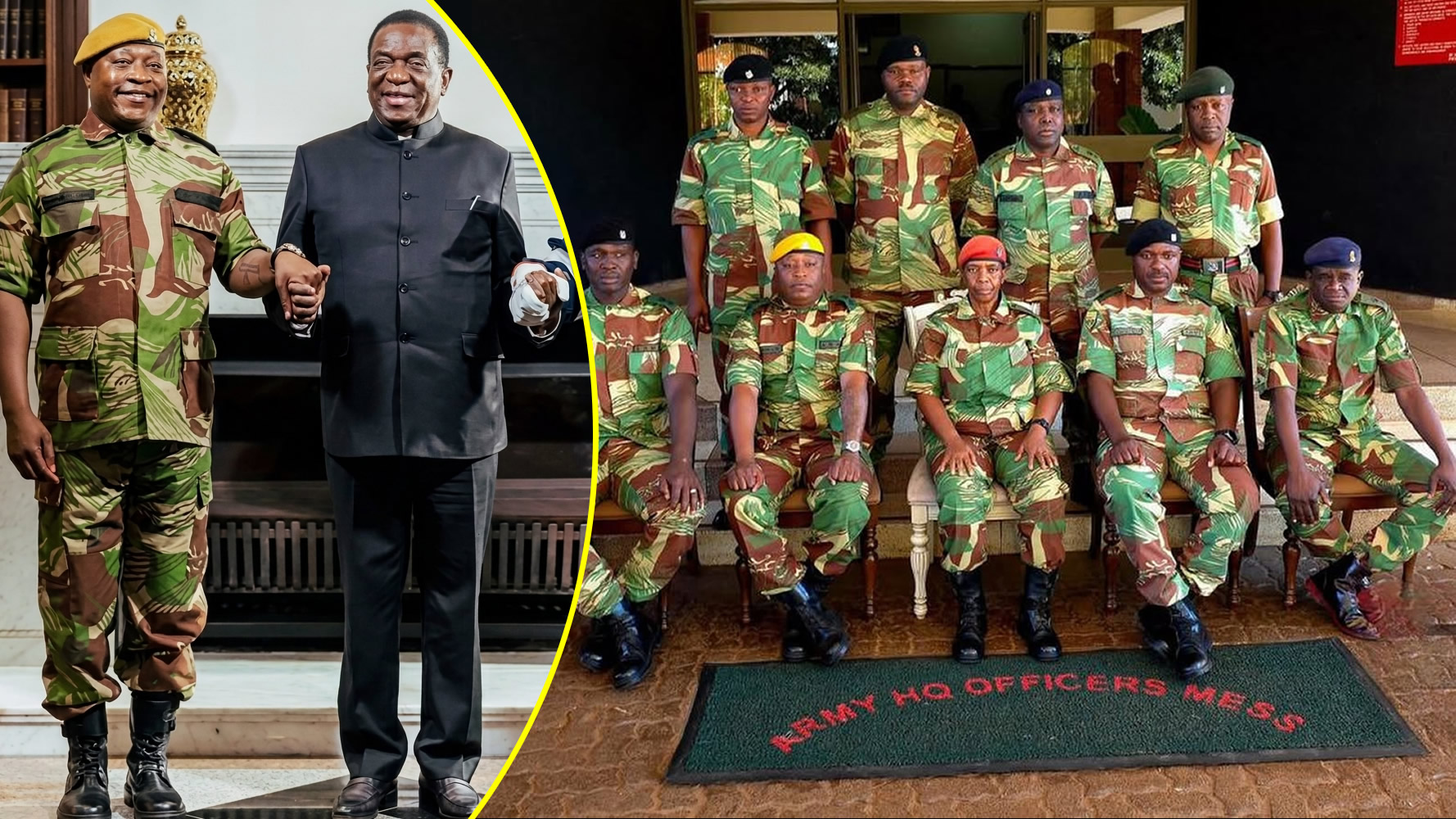
Zimbabwe on Edge: Military Discontent Brews Amidst Constitutional Overhaul and Power Plays
Harare – A palpable tension grips Zimbabwe as the nation grapples with a confluence of political manoeuvres, military discontent, and constitutional reforms. The recent scattering of incendiary pamphlets across military cantonment areas in Harare has brought to the fore deep-seated frustrations within the Zimbabwe Defence Forces (ZDF), sparking fears of instability reminiscent of past political upheavals. This comes amidst controversial constitutional amendments, a contentious military promotion, and opposition leader Nelson Chamisa’s public disavowal of any military intervention.
The Whispers of Discontent: ‘The People’s Army’ Pamphlets
The morning of Wednesday, 10 June 2026, saw an unprecedented incident unfold across several key military installations in Harare. Pamphlets bearing the code name “THE PEOPLE’S ARMY” were found scattered at 1 Commando Regiment, 2 Brigade, Josiah Magama Tongogara Barracks (formerly KG6), Dzivaresekwa Barracks (2 Infantry Battalion), Manyame Air Base, and the Air Force Headquarters. This act of defiance has been met with swift and severe repercussions within the military ranks.
Retired Lieutenant General Winston Sigauke Mapuranga, a vocal critic of President Emmerson Mnangagwa’s administration, took to X (formerly Twitter) under the handle @SajeniMapuranga to shed light on the unfolding crisis. In a series of posts, General Mapuranga revealed the alarming scale of the crackdown:
“Fellow Zimbabweans, Comrades in the Zimbabwe Defence Forces, It is with deep sadness that I address the nation and our leadership today. Around 65 officers, men and women of the Zimbabwe National Army have been arrested and taken for investigation by Intelligence Field Security personnel from the Military Intelligence Directorate (MID). Among these brave soldiers are the Guard Commander and the sentries on duty that day Corporals, Lance Corporals and Privates. They have become victims of the deepening institutional decay within the ZNA. As I speak, they are being held at 2 Brigade Headquarters, Cranborne Barracks. They are undergoing interrogation and, reports indicate, torture in an attempt to force confessions regarding the distribution of leaflets bearing the code name THE PEOPLE’S ARMY.
These leaflets were found scattered across cantonment areas in Harare on the morning of Wednesday, 10 June 2026, at the following locations: 1 Commando Regiment, 2 Brigade, Josiah Magama Tongogara Barracks (KG6), Dzivaresekwa Barracks (2 Infantry Battalion), Manyame Air Base, Air Force Headquarters. This incident has left the rank and file of the Defence Forces deeply angry. Let me be very clear Every struggle has its casualties. No amount of intimidation, harassment or torture will force the soldiers of this country to support CAB3 madness or any faction that has lost the confidence of the people. You will never identify the individuals responsible through these methods because this was not the work of outsiders – it was an inside operation carried out by serving personnel to warn you. It is a well-coordinated message from within the barracks. Stop wasting time and national resources chasing shadows.
“The men and women you have arrested are innocent. Release them immediately and end this madness of persecuting soldiers for expressing the frustrations of the entire institution. The Zimbabwe National Army is not private property. It is a national institution composed of patriotic men and women sworn to defend the sovereignty, territorial integrity and the people of this country not to protect individuals or factions. We remind you once more, and make no mistake about it This is the People’s ARMY. Be warned. Retired Lieutenant General Winston Sigauke Mapuranga.”
General Mapuranga’s stark warning underscores the gravity of the situation, suggesting that the distribution of the pamphlets was an internal operation, a direct message from within the barracks, rather than an external plot.
CAB3: A Coup-Proofing Mechanism or a Constitutional Crisis?
At the heart of the military’s discontent lies the proposed Constitutional Amendment Bill No. 3 (CAB3). This legislative initiative, currently undergoing parliamentary debate, is widely perceived as President Mnangagwa’s attempt to consolidate power and
coup-proof his presidency against future military interventions.
One of the most contentious aspects of CAB3 is its proposed amendment to Section 212 of the Constitution, which defines the functions and responsibilities of the Defence Forces. The current Section 212 mandates the Defence Forces to defend Zimbabwe, protect its territorial integrity and sovereignty, and crucially, to uphold the Constitution itself. However, Clause 16 of CAB3 seeks to remove the explicit obligation of the military to uphold the Constitution. Citizens Coalition for Change (CCC) Ruwa MP Thomas Muwodzeri has vehemently criticised this proposed change, describing it as the “most constitutionally dangerous provision in the entire Bill”.
Muwodzeri argues that removing this constitutional obligation would transform the Defence Forces into an institution whose loyalty runs “not to the Constitution of Zimbabwe, but to whoever issues the command”. This, he contends, is a dangerous move that could weaken the balance between civilian authority and military accountability, effectively disempowering the military from resisting unconstitutional conduct by the Executive.
This proposed amendment is particularly significant given the events of November 2017, when the military, under the command of then-General Constantino Chiwenga, intervened to remove Robert Mugabe from power. That intervention, dubbed “Operation Restore Legacy,” was justified by the military as an effort to restore constitutional order and prevent the erosion of revolutionary values. The military’s actions were widely seen as leveraging their constitutional mandate to uphold the Constitution. By removing this specific clause, critics argue that Mnangagwa is attempting to strip the military of the very legal basis they used to intervene in 2017, thereby making any future military intervention against his rule unconstitutional and illegal.
A Divided Army: Echoes of 2017 and New Factions
Unlike the relatively unified military stance during the 2017 intervention, reports suggest that the Zimbabwean army is now deeply divided. While a faction of generals, including Vice President Constantino Chiwenga, and General Henry Muchena, are believed to be against Mnangagwa’s administration and its constitutional changes.
General Henry Muchena, a retired Air Marshal, has been a prominent figure in the debate surrounding CAB3. In March 2026, Muchena, representing a group of retired generals and senior civil servants who are ex-combatants, submitted a lengthy petition to parliament. In this submission, he warned that the proposed amendments could betray the ideals of the liberation struggle and threaten the principle that power belongs to the people. He argued that any attempt to amend the constitution without direct public approval would undermine democratic legitimacy, drawing parallels to the 2000 constitutional referendum where voters rejected a government-backed draft. This suggests a complex and potentially fractured loyalty even among those perceived to be aligned with the establishment.
Adding another layer of complexity to the military’s internal dynamics is the recent promotion of President Mnangagwa’s son, Sean Mnangagwa. In April 2026, Sean Mnangagwa was promoted from Major to Lieutenant Colonel, the sixth-highest rank in the Zimbabwe National Army. This promotion, which saw him elevated alongside eight other officers, has been met with criticism, with constitutional lawyer Professor Lovemore Madhuku stating that President Mnangagwa acted improperly and violated constitutional principles due to a clear conflict of interest. Sean Mnangagwa currently serves in the Presidential Guard and is part of his father’s close security team, further fuelling speculation that President Mnangagwa is seeking to tighten his security amidst rising political tensions. Rumours suggest that a certain faction of the army is reportedly aligned with Sean Mnangagwa, potentially creating new power centres and further fragmenting military loyalties.
Mota hombe dzamudhara 🔥🔥 pic.twitter.com/tG6eBLx9ct
— Zimbabwe Today (@ZimbabweNhasi) June 11, 2026
Chamisa’s Stance: No Support for a Coup
The political landscape is further complicated by the pronouncements of opposition leader Nelson Chamisa. In light of the swirling rumours of a possible coup, Chamisa has publicly stated on his social media accounts that he will not support any military intervention. This is a significant departure from the past, where opposition figures have sometimes been perceived as tacitly or openly welcoming military interventions that could lead to a change in leadership. His clear stance aims to distance the opposition from any unconstitutional means of power transfer and reinforces a commitment to democratic processes.
Chamisa’s statement is particularly pertinent given the historical context of Zimbabwe’s political transitions. The 2017 military intervention, while initially welcomed by many as a means to end Mugabe’s long rule, ultimately ushered in a new era of military influence in politics. By explicitly rejecting a coup, Chamisa is likely attempting to avoid legitimising any future military takeovers and to position himself as a champion of constitutionalism and democratic governance.
The Road Ahead: Uncertainty and Volatility
The convergence of these factors – a disgruntled military, controversial constitutional amendments, internal power struggles, and a cautious opposition – paints a picture of a nation on the brink. The distribution of the “THE PEOPLE’S ARMY” pamphlets serves as a stark reminder of the deep-seated grievances within the military, while CAB3’s attempts to redefine the military’s constitutional role are likely to exacerbate these tensions. The promotions within the army, particularly that of Sean Mnangagwa, further highlight the intricate web of power and patronage at play.