


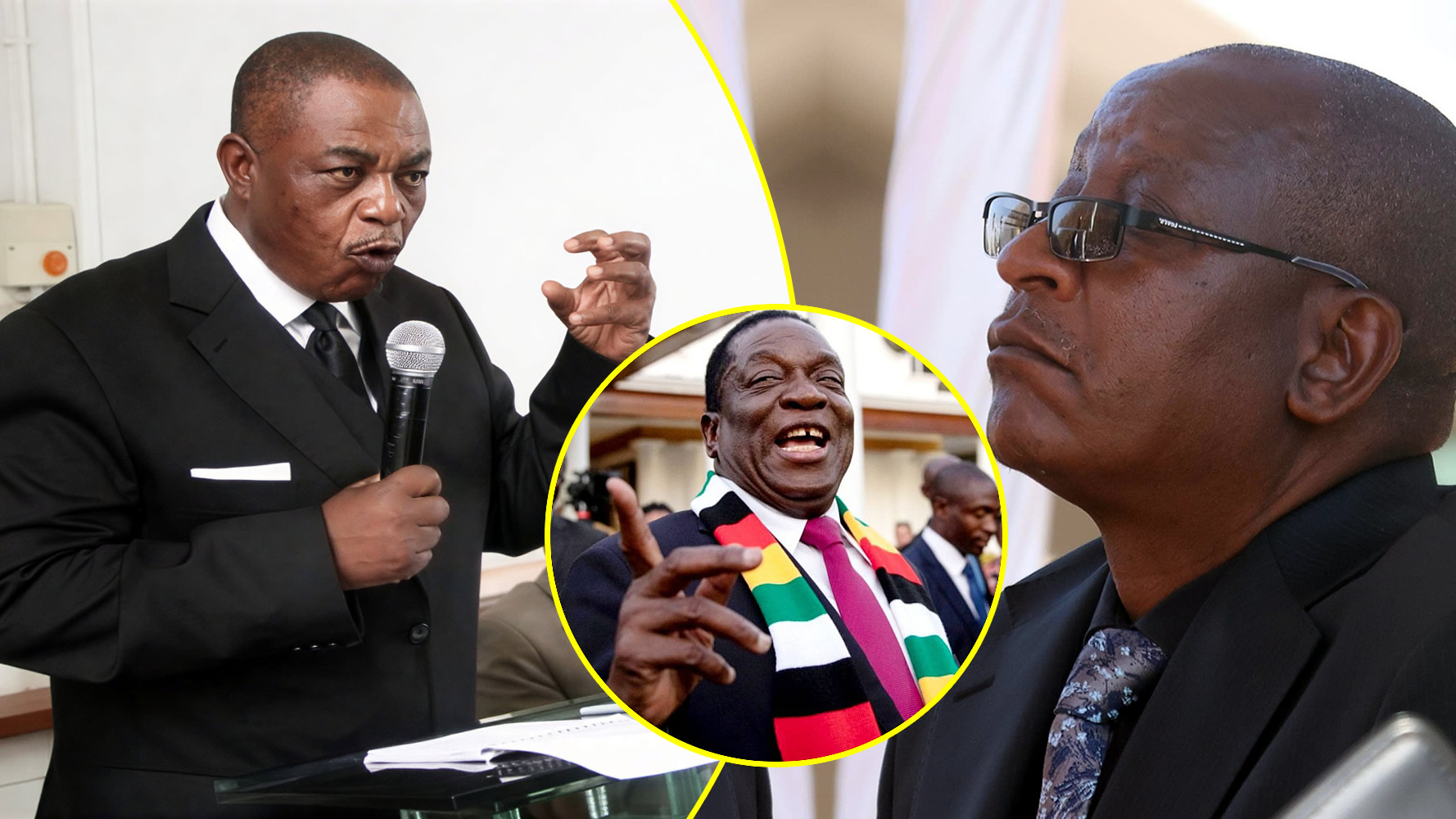
Zimbabwe finds itself at a precarious crossroads, with a chilling statement attributed to a source close to Vice President Constantino Chiwenga suggesting the nation has ‘never been this close to a civil war’. This alarming pronouncement, emerging amidst the contentious Constitutional Amendment Bill No. 3 (CAB3) and persistent rumours of a deepening rift between President Emmerson Mnangagwa and his deputy, cannot be dismissed lightly. It hints at profound internal strife and political instability that transcends mere political rhetoric, touching the very fabric of the nation’s security and governance structures.
The context of this stark warning is critical. It surfaces as the ‘Team Mnangagwa’ faction within the ruling ZANU-PF party vigorously pushes for CAB3, a legislative manoeuvre widely seen as an attempt to extend President Mnangagwa’s tenure beyond his constitutionally mandated two terms. This proposed amendment, currently under debate in the House of Assembly, would not only prolong the presidential term but also extend the life of Parliament, effectively paving the way for Mnangagwa to remain in power until 2030. The source close to Chiwenga was unequivocal, stating, “We have never been this close to a civil war because of this bill and those within Mnangagwa’s faction within Zanu PF know it”.
The Coded Warnings of Vice President Chiwenga
Vice President Chiwenga, a former military general who played a pivotal role in the 2017 events that brought Mnangagwa to power, has not openly opposed CAB3. However, his recent public utterances have been laden with thinly veiled criticisms and allegorical warnings, interpreted by many as direct challenges to the proposed constitutional changes. His speeches have consistently invoked themes of historical fidelity, democratic principles, and divine justice, often contrasting sharply with the political trajectory being pursued by the Mnangagwa camp.
One of the most notable instances occurred in April 2026, when Chiwenga delivered a sermon at a Roman Catholic gathering in Murewa. He recounted the biblical story of King Hezekiah, who, facing imminent death, pleaded with God for more years to live. Chiwenga pointedly remarked, “Hezekiah in the Bible never asked for more years to rule, but to live”. This sermon was widely interpreted as an allegorical warning against attempts to extend political power through constitutional amendments, sparking considerable debate and concern within political circles and among the populace.
Further reinforcing his stance, Chiwenga, speaking at the burial of Callista Chimhini in Honde Valley, urged Zimbabweans not to lose sight of their history. He cautioned against complacency and overconfidence, stating, “Let sleep not make us forget where we are coming from, because the future is unknown. Let us never think that we can know everything better than God”. He also used a vivid metaphor to warn against actions detached from wisdom and truth: “We will be beating a drum with an axe while sitting on a spear; nothing will come out of that. Let us always stand with the truth; God will reward us”. These remarks, delivered with a solemn tone, underscored his belief in adhering to foundational principles and divine guidance in national leadership.
Chiwenga has also consistently reminded the nation of the core tenets of Zimbabwe’s liberation struggle, emphasising that it was fought for land and the principle of “one-man, one-vote”. These historical references serve as a powerful counter-narrative to any attempts to dilute democratic processes or extend presidential terms without popular mandate, implicitly criticising the spirit behind CAB3.
The Controversial Constitutional Amendment Bill No. 3 (CAB3)
CAB3 has become the epicentre of Zimbabwe’s current political maelstrom. The bill proposes significant alterations to the constitution, most notably extending the presidential and parliamentary terms from five to seven years. Proponents argue that this extension is necessary to allow President Mnangagwa to fully implement his ‘Vision 2030’ agenda, which aims to transform Zimbabwe into an upper middle-income economy. However, critics view CAB3 as a blatant power grab, designed to entrench Mnangagwa’s rule and sideline potential rivals, including Chiwenga.
The push for CAB3 has been met with fierce opposition from various quarters. In Parliament, Citizens Coalition for Change (CCC) legislator Lynette Karenyi-Kore vehemently rejected the bill, articulating the frustrations of ordinary Zimbabweans. “When I travel across my constituency, I do not hear people asking for constitutional amendments, I do not hear mothers asking for CAB3, I do not hear unemployed youths demanding CAB3… Mr Speaker, what I hear are cries for jobs… calls for affordable education, pleas for food on the table Mr Speaker,” Karenyi-Kore stated. She further asserted, “Mr Speaker, people want bread, not political engineering, they want opportunities and not constitutional experiments, they want service delivery, not extension of political power”. Her impassioned plea highlighted the disconnect between the political elite’s agenda and the pressing socio-economic realities faced by the majority of the population.
Allegations of corruption and undue influence have also marred the CAB3 debate. Disgruntled retired army generals have accused prominent businessmen Kudakwashe Tagwirei and Wicknell Chivayo of financing the Mnangagwa faction’s efforts to push the bill through. It is alleged that Tagwirei has set aside a US$31 million purse to purchase loyalty from legislators, ensuring CAB3 sails through Parliament without significant hurdles. Such claims, if substantiated, would expose a deeply troubling nexus between political power and economic interests, further eroding public trust in the legislative process.
Military Tensions and the Specter of Intervention
The invocation of a “civil war” warning by a source close to Chiwenga, coupled with reports of military disquiet, paints a grim picture of escalating tensions. On June 9-10, 2026, a video titled “WATCH LIVE: Senior Zimbabwe Soldiers Warn Mnangagwa” emerged, reportedly originating from J M Tongogara Barracks. While the full details of this warning remain somewhat opaque, its very existence suggests a significant level of discontent within the military ranks regarding the current political trajectory and the CAB3 initiative.
This is not the first time Chiwenga has alluded to the potential for unrest if the country veers in the “wrong direction.” A short video clip of the Vice President warning that such a path could lead to “bloodshed” has been circulating, further fuelling anxieties about the stability of the nation. These pronouncements from a figure with a strong military background carry considerable weight, reminding observers of the military’s historical role in Zimbabwean politics, particularly the events of November 2017.
The 2017 military intervention, which led to the ousting of former President Robert Mugabe and the ascension of Mnangagwa, demonstrated the military’s capacity to shape political outcomes. Chiwenga, then commander of the Zimbabwe Defence Forces, was at the forefront of that operation. His current coded warnings and the alleged military disquiet are therefore interpreted as a potent reminder that the armed forces remain a critical, albeit often silent, player in the country’s power dynamics. The fear is that if the political crisis deepens, the military might once again be compelled to intervene, potentially with far more disruptive consequences than in 2017.
The Factional Battle for ZANU-PF’s Soul
The struggle over CAB3 and the veiled warnings from Chiwenga are symptomatic of a deeper, existential battle for power within ZANU-PF. The ruling party has long been characterised by intense factionalism, a legacy that continues to shape its internal politics. The ‘Team Mnangagwa’ faction, often referred to as ‘Lacoste,’ and the ‘Team Chiwenga’ faction, sometimes associated with the ‘G40’ remnants or simply ‘military loyalists,’ are locked in a high-stakes contest for control of the party and, by extension, the country.
Mnangagwa’s efforts to consolidate power since assuming office have reportedly involved sidelining Chiwenga and purging military officers perceived as loyal to the Vice President. This systematic weakening of Chiwenga’s power base has intensified the rivalry, transforming it into a zero-sum game where the stakes are incredibly high for both protagonists. The outcome of the CAB3 debate is thus not merely a legislative matter but a crucial indicator of which faction is gaining ascendancy.
The political manoeuvring extends to provincial resolutions within ZANU-PF, where various provinces have reportedly endorsed Mnangagwa’s continued leadership until 2030. These resolutions, often presented as expressions of grassroots support, are widely seen as orchestrated efforts to legitimise the CAB3 agenda and create an impression of party unity behind Mnangagwa’s extended rule. However, the underlying tensions and dissent, as evidenced by Chiwenga’s warnings and the parliamentary opposition, suggest that this unity is fragile and potentially superficial.
A Nation on Edge
Zimbabweans are left to grapple with the uncertainty and anxiety generated by these escalating political tensions. The invocation of “civil war” by a high-level source, even an anonymous one, evokes painful memories of past conflicts and the fragility of peace. The lack of official clarification from the government only serves to amplify speculation, leaving the populace in a state of unease.
The debate around CAB3 is not just about constitutional amendments; it is about the future of Zimbabwe’s democracy, the rule of law, and the aspirations of its people for stability and economic prosperity. The calls for “bread, not CAB3” from opposition figures resonate deeply with a population struggling with high unemployment, poverty, and inadequate public services. The perception that political elites are prioritising power consolidation over the welfare of citizens further exacerbates public disillusionment.
As the nation watches the unfolding drama, an investigative deep dive is indeed urgently needed to unmask the forces behind this dire prophecy, to ascertain the veracity of the claims, and to explore the hidden agendas that could be driving Zimbabwe towards such a perilous precipice. The nation deserves to know the truth behind these alarming statements and the real threats to its peace and stability. The coming weeks and months will undoubtedly be crucial in determining whether Zimbabwe navigates these turbulent waters towards a more stable future or succumbs to the internal pressures threatening to tear it apart.