


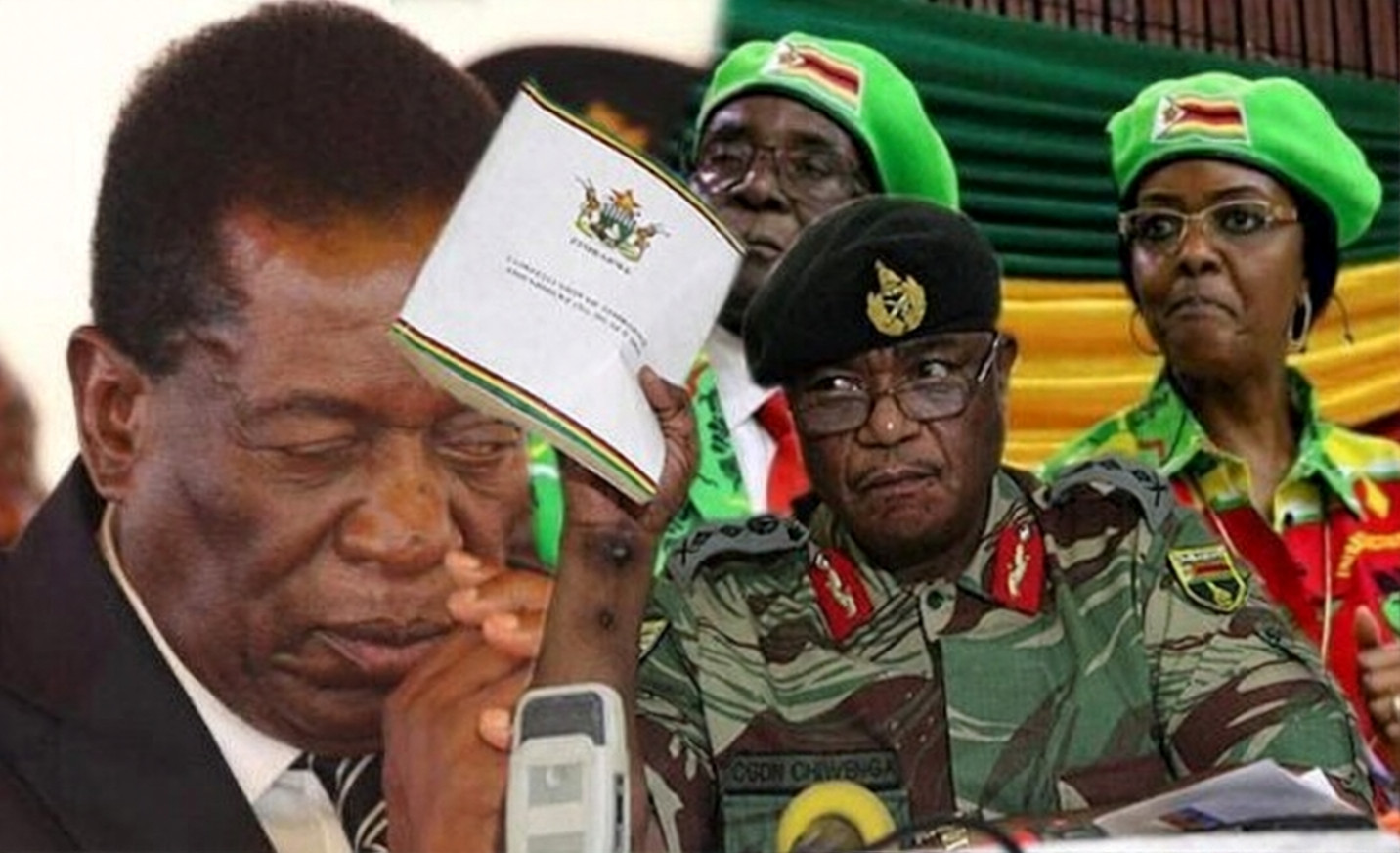
The current political climate in Zimbabwe is fraught with tension, as President Emmerson Mnangagwa, once hailed as a pragmatist after the 2017 coup that unseated Robert Mugabe, now faces a formidable challenge from within his own ruling establishment. His ambition to extend his tenure beyond the constitutionally mandated term has ignited a fierce internal struggle, drawing comparisons to the very strongman tactics that led to his predecessor’s downfall.
When President Mnangagwa, known by his moniker “The Crocodile,” ascended to power, his arrival was met with a mixture of street celebrations in Harare and cautious optimism in international chancelleries, from London to Beijing. Despite a past shrouded in controversy, he was perceived as a leader capable of steering Zimbabwe towards a new era of stability and economic reform. However, nearly eight years into his presidency, these hopes have largely dissipated. His efforts to re-engage with Western nations have comprehensively failed, and instead, he has dedicated his time to consolidating power with ruthless efficiency.
The epicentre of this escalating crisis is the proposed constitutional overhaul, specifically the Constitution of Zimbabwe Amendment (No. 3) Bill, or CAB3. This contentious legislation seeks to extend the presidential term, theoretically allowing Mnangagwa, who is 83, to remain in office until he is 101 years old. The audacity of this proposal has not only alarmed the general populace but has also caused significant disquiet among elements of the military hierarchy that were instrumental in his rise to power. Whispers and now open warnings suggest that Mnangagwa could suffer the same fate as Mugabe, a chilling echo of recent history, the Newsday has reported.
CAB3, which has already passed the lower house of Zimbabwe’s Parliament, the National Assembly, on 18 June 2026, is poised to move to the upper house, where the ruling Zanu PF party commands a two-thirds majority, ensuring its likely passage. The bill initially aims to extend Mnangagwa’s second, and supposedly final, term to 2030. However, the proposed reforms go further, seeking to replace direct presidential elections with a parliamentary vote and extending both presidential and parliamentary terms from five to seven years. Critics fear this two-year extension is merely a precursor, with some Zimbabweans suspecting that Mnangagwa is not just seeking an additional two years, but potentially an additional 16, effectively making him a president for life.
This move has been met with significant resistance, most notably from a dissident security faction within the Zanu PF ruling party. This group is led by Air Marshal (Retired) Henry Muchena, a senior air force officer and liberation war veteran, also known by his birth name, Jabulani Mahlangu. His largely anonymous members, comprising retired generals, civil servants, and self-styled veterans of the liberation war, have submitted a petition demanding a referendum on the proposals to extend the president’s rule beyond 2028. Muchena, employing language strikingly similar to that used against Mugabe, insists his loyalty lies with the Zimbabwean people rather than the president.
In a stark warning to the president, Muchena told The Telegraph: “The electorate is watching. History is watching. Every Zimbabwean will remember those who chose personal enrichment over constitutional duty. We warn: do not betray the people”. The rarity and inherent danger of such criticism from within the regime underscore the gravity of the situation. Mnangagwa has reportedly been forced into two crisis talks with Muchena in recent weeks, both of which, according to Muchena, “failed to produce any results,” with the president treating his concerns with “contempt”.
The parallels to the 2017 coup are undeniable. The generals who orchestrated Mugabe’s ousting maintained they were not executing a coup but rather defending the constitution and purging a “corrupt elite.” Muchena’s group has similarly directed its criticism at a trio of influential tycoons surrounding the president, accusing them of bankrolling attempts to prolong his rule. These tycoons allegedly provide cash payouts and luxury vehicles to Members of Parliament in exchange for their support, claims that Zanu PF leaders have dismissed as “factional malice”. While the specific identities of this trio remain somewhat shrouded, prominent figures often linked to Mnangagwa’s inner circle and alleged financial backing of his political manoeuvres include Kudakwashe Tagwirei of Sakunda Holdings, and Zunaid Moti. Tagwirei, in particular, has been frequently cited in connection with bankrolling the “2030” campaign, further fuelling accusations of undue influence and corruption within the ruling elite.
The current showdown also carries clear echoes of the internal power struggles that preceded Mugabe’s downfall. Jealousy Mawarire, an activist with close ties to Mugabe loyalists who fled Zimbabwe after the 2017 coup and now advises Muchena’s group, articulated this sentiment: “We have seen this kind of intransigence before from a sitting president whose colleagues are warning him against being captured by people whose chief interest is to loot the national coffers. So, there is a strong possibility that history repeats itself. If it does, President Mnangagwa will have no one to blame but himself”.
Beyond the constitutional amendments, the political landscape is further complicated by a simmering rivalry between President Mnangagwa and his Vice-President, Constantino Chiwenga. Chiwenga, as the chief of the armed forces in 2017, was widely regarded as the principal instigator of the coup against Mugabe. However, he was reportedly unable to seize power directly, partly to maintain the facade that the intervention was not a coup and to avoid Zimbabwe’s exclusion from regional bodies like the African Union. Instead, he became Vice-President, allegedly with an understanding that he would eventually succeed Mnangagwa. This prospect now appears increasingly remote, transforming Chiwenga into an ardent constitutionalist, seemingly aligning with Muchena’s group.
Over the past eight years, President Mnangagwa has systematically worked to dismantle Chiwenga’s military network, which was crucial to the 2017 coup. Senior officers loyal to Chiwenga have been retired or dispatched to distant embassies, effectively neutralising their influence. Furthermore, Mnangagwa has sidelined members of Chiwenga’s family while promoting his own relatives, a clear indication of his efforts to consolidate dynastic power. A recent military reshuffle in April 2026 saw the promotion of Mnangagwa’s son to a senior role, further solidifying this trend. This calculated weakening of his deputy suggests a final showdown between the two powerful figures is inevitable, though it remains unclear whether Chiwenga still commands significant support within the armed forces or is relying on a handful of retired officers. For now, Chiwenga has avoided direct confrontation, opting instead to deliver sermons in church, using biblical parables, such as the story of King Hezekiah, who persuaded God to extend his life by 15 years only to bring disaster upon Judah, as a veiled warning to the President.
The democratic opposition, already weakened by years of suppression, faces an uphill battle against CAB3. Veteran opposition leader Tendai Biti has been a vocal critic, describing the bill as “a coup against the people and constitution of Zimbabwe.” He warned that it “will push our country to the precipice of a violent implosion”. Biti himself was arrested in Mutare in March 2026 while mobilising people against the bill, highlighting the risks faced by those who dare to challenge the ruling party.
The 2023 elections, which saw Zanu PF secure a narrow victory, were widely criticised by international observers for being marred by intimidation and widespread irregularities. Despite this, the party now commands an effective two-thirds majority in Parliament, enough to rewrite the constitution. This was largely facilitated by the actions of an obscure political operative, Sengezo Tshabangu, who, with judicial backing, seized control of the main opposition party, the Citizens Coalition for Change (CCC). Tshabangu then expelled Members of Parliament who resisted his authority, replacing them with loyalists after a series of controversial by-elections where genuine opposition figures were barred from standing. This manipulation of the political landscape has effectively silenced much of the parliamentary opposition, paving the way for CAB3’s passage.
Public hearings on CAB3, held in April 2026, were characterised by chaos and accusations of unfairness. Reports indicate that moderators, often members of the ruling party, snatched microphones from individuals attempting to speak against the bill. Annah Sande, former mayor of Epworth Local Board, recounted her microphone being taken when she tried to oppose the bill, expressing disappointment but not shock at the process. Similarly, a representative from the Constitution Defenders Forum (CDF) had his microphone abruptly removed during a hearing in Epworth. These incidents underscore the government’s apparent unwillingness to genuinely engage with dissenting voices. Critics argue that the process cannot be neutral, as the public hearings are spearheaded by MPs whose own terms of office would be extended if the bill passes, creating a clear conflict of interest.
In response to these perceived threats to democracy, several organisations, including the National Constitutional Assembly (NCA), Defend the Constitution Platform (DCP), and the CDF, have joined forces to oppose CAB3. Jameson Timba, leader of DCP, stated that these organisations would establish a coordinated framework to collectively defend the Constitution, and have ceased participating in the hearings, deeming them “fundamentally flawed, exclusionary and inconsistent with the spirit and letter of the constitution”.
The suppression of dissent extends beyond political figures. Student leaders Emmanuel Sitima and Takunda Mhuka were arrested in April 2026 for their involvement with anti-amendment materials. Human Rights Watch has also reported on violence and intimidation against opponents of the presidential term extension, with scores of people arrested for protesting against Mnangagwa’s rule. While one prominent opposition activist was acquitted and released in June 2026 after seven months in detention, such arrests serve as a stark reminder of the shrinking space for political opposition and freedom of expression in Zimbabwe.
President Mnangagwa’s allies, for their part, insist that CAB3 is a necessary structural reform aimed at countering populism and ethnic division. Mnangagwa has also moved against the once-powerful coterie surrounding Grace Mugabe, the former president’s widow. Saviour Kasukuwere, Zanu PF’s former political commissar and de facto leader of the G40 faction, now denounces the president from exile in South Africa, warning of “very tragic consequences” if Mnangagwa is not careful. However, Kasukuwere appears to be a lonely figure, as Grace Mugabe has largely retreated into seclusion, reportedly having struck a deal with the president to protect her wealth. Jonathan Moyo, once the intellectual architect of the G40 faction, has even defected to Mnangagwa’s camp, becoming a vocal defender of CAB3.
Despite presenting himself as a defender of constitutional order, Air Marshal (Retired) Muchena, who had never previously spoken out, is not widely regarded as a democrat. Analysts suspect he is acting as the operational face of Vice-President Chiwenga, further highlighting the intricate web of power dynamics at play within the ruling party. The battle for Zimbabwe’s future is thus being fought on multiple fronts: in the halls of Parliament, in the streets where protests are met with force, and within the secretive corridors of power where former allies now stand as rivals. The Crocodile, it seems, is still smiling, but the waters around him are growing increasingly turbulent.