


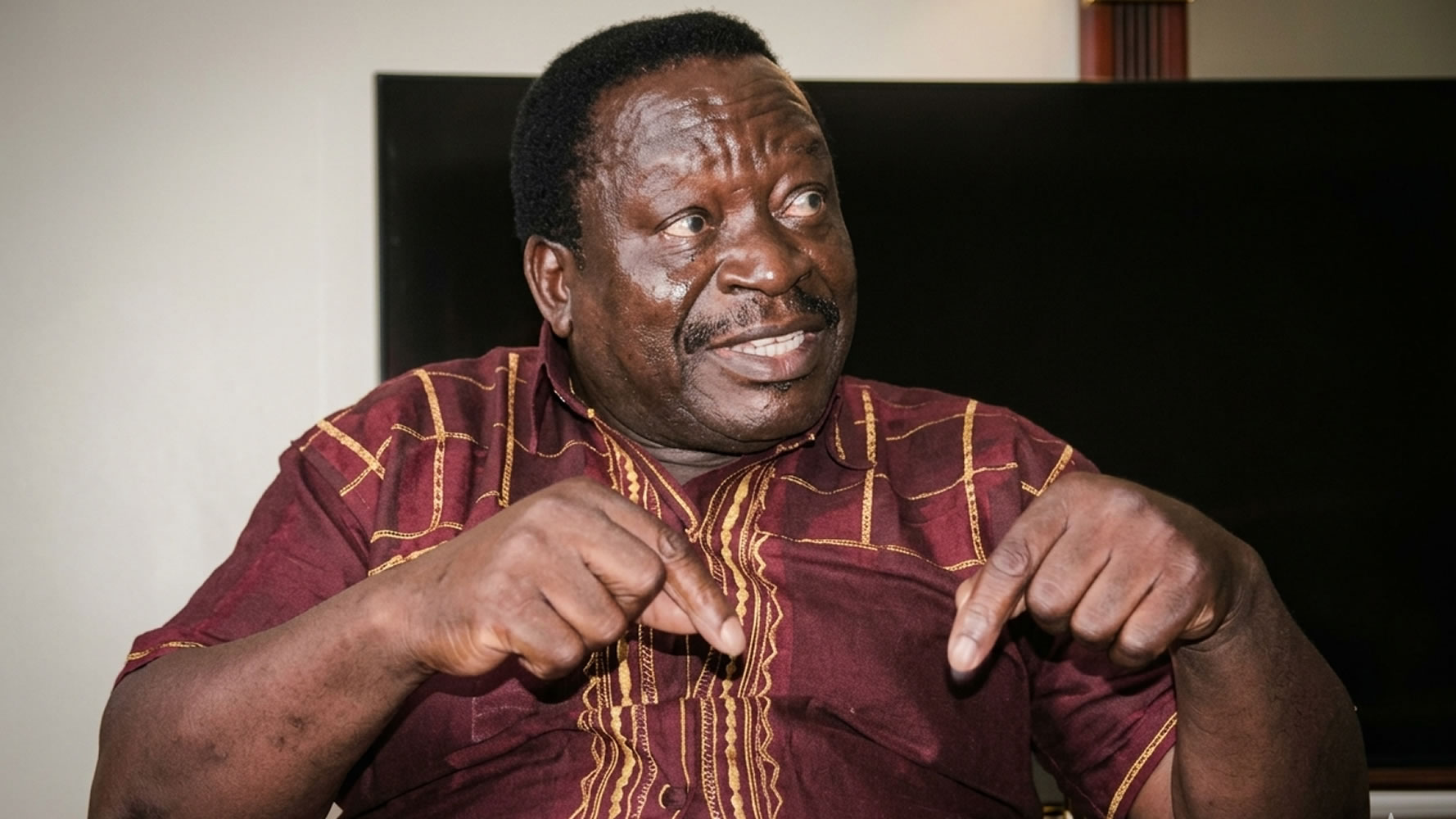
HARARE — The Zimbabwean political landscape has always been a theatre of the unexpected, but even by its own turbulent standards, the sudden departure of Ambassador Victor Matemadanda has left a void filled with more questions than answers. As the nation grapples with the loss of a man who was once the vocal heartbeat of the ruling Zanu PF party, the official narrative of a “brief illness” is being met with a wall of scepticism from a public long accustomed to reading between the lines of government press releases.
Dr Victor Matemadanda, Zimbabwe’s Ambassador to Mozambique and Eswatini, passed away on Saturday night at the age of 66. The news was confirmed on Sunday by the Permanent Secretary for Information, Nick Mangwana, who described the death as a “deeply saddening loss.” Mangwana noted that Matemadanda had served with “dedication” as he represented the President in the neighbouring territories. Yet, it is the nature of his final hours that has captured the imagination of a nation. Initial reports suggest a rapid decline, marked by severe vomiting and diarrhoea following a meal. In a country where food poisoning has frequently been whispered as a tool of political resolution, such symptoms are rarely viewed as merely biological.
Matemadanda was no ordinary diplomat. A decorated war veteran and the former National Political Commissar of Zanu PF, he was a man who spoke his mind with a bluntness that both charmed and alarmed his colleagues. He was a central figure in the 2017 transition that saw the late Robert Mugabe ousted from power, standing shoulder-to-shoulder with the current leadership during those uncertain days. However, his candid nature often saw him walking a fine line. He was known for his capacity to challenge the status quo from within, a trait that made him a formidable ally but also a potential liability in the high-stakes game of succession politics.
The timing of his demise is particularly striking. It comes just days after the Zimbabwean Parliament passed the contentious Constitutional Amendment Bill No. 3 (CAB3). This piece of legislation has become the new frontline in the battle for the soul of the ruling party. CAB3, which was pushed through the National Assembly with 216 votes in favour and 42 against, introduces sweeping changes to how the country is governed. Most notably, it shifts the power to elect the President towards Parliament and allows the President to appoint Members of Parliament directly. Critics, including opposition figure Pashor Sibanda, have labelled it a “dangerous” move designed to benefit the “Zanu PF elites” rather than the citizenry.
“One of the things that we must be honest about is that CAB3 is not for the people, and it is not coming from the people. It is purely for the Zanu PF elites,” Sibanda stated during a recent broadcast. He questioned the concentration of power, asking, “Where else in the world have you seen Parliament elect a President and that President goes on to appoint other Members of Parliament? It’s only in Zimbabwe.”
Within the corridors of power, whispers suggest that Matemadanda’s loyalty to the “2030” project — the movement to extend President Emmerson Mnangagwa’s tenure beyond the constitutional two-term limit — was not as absolute as the leadership required. While he was a staunch supporter of the President, his roots in the war veterans’ movement gave him a different perspective on the party’s future. The war veterans have traditionally been the kingmakers of Zimbabwean politics, and their support is crucial for any leader seeking to maintain a grip on power.
The internal dynamics of Zanu PF are currently defined by an uneasy détente between President Mnangagwa and Vice President Constantino Chiwenga. While they publicly present a united front, the fissures are undeniable. Chiwenga, the former military chief who led the 2017 coup, is widely believed to have his own presidential ambitions. The passage of CAB3 is seen by many analysts as a strategic move by the Mnangagwa faction to consolidate power and potentially bypass the need for a direct popular vote, which could be unpredictable.
The history of high-ranking officials falling ill at sensitive moments is a long and dark one in Zimbabwe. In 2017, during the height of the factional battles within Zanu PF, then-Vice President Mnangagwa himself was airlifted to South Africa after falling ill at a rally in Gwanda, an incident later attributed to poisoning. In 2020, the death of Perence Shiri, the former Air Force commander and Minister of Agriculture, was officially attributed to COVID-19, yet rumours of food poisoning persisted for months. The pattern is so established that the public has developed a reflexive distrust of official medical explanations.
Investigative journalists and political analysts are now looking closely at the events leading up to Matemadanda’s final meal. Who was present? Where was the food prepared? The lack of immediate, comprehensive medical details from official sources has only served to heighten the sense of mystery. In the absence of facts, theories have flourished. Some suggest he was a victim of the very system he helped create, while others argue that at 66, a sudden illness is tragic but not necessarily suspicious.
“Zimbabwe’s future is built through unity, progress, and constitutional development. Constitutional Amendment Bill No. 3 is about strengthening our institutions,” argued Buhera Central MP Samson Matema in support of the bill. However, for many, the “strengthening” of institutions looks more like the fortification of a single faction. If Matemadanda had indeed expressed reservations about the direction of these reforms, his absence would certainly simplify the path for those pushing the CAB3 agenda.
The late ambassador’s career was marked by a series of highs and lows. After his pivotal role in 2017, he was appointed as the Deputy Minister of Defence and War Veterans Affairs. However, in 2021, he was abruptly reassigned to the diplomatic post in Mozambique. At the time, political commentators viewed this as a “lateral move” that was effectively a demotion—a way to move a powerful and outspoken organiser away from the domestic political scene. In Maputo, he was far from the party’s grassroots, yet he remained a man with significant influence among the veterans.
The question of “who benefits” is central to any investigative inquiry. With Matemadanda gone, a vocal and potentially rebellious voice within the war veterans’ ranks has been silenced. The “2030” lobby now faces one less hurdle. Yet, the cost of such a loss may be the further erosion of trust within the party itself. If loyalty can be rewarded with a mysterious illness, then no one is truly safe.
The broader implications for Zimbabwe’s stability are profound. The country is at a constitutional crossroads. As the government prepares for the next phase of its “Second Republic” vision, the ghost of the old ways of doing business continues to haunt the present. The transition from Mugabe was supposed to herald a new era of transparency, yet the circumstances surrounding the deaths of its architects remain as opaque as ever.
As funeral arrangements are being made, the nation waits to see if a full post-mortem report will ever be released to the public. In the past, such documents have remained “state secrets,” further fueling the cycle of speculation. For now, the story of Victor Matemadanda remains a chapter of unanswered questions in the ongoing saga of Zimbabwean power politics.
Was it a tragic, natural end for a public servant who had given his life to his country, or does his demise conceal a more intricate web of political machinations? The truth may be buried with him in the hallowed ground of the National Heroes Acre, but the questions will continue to echo through the streets of Harare and the halls of Parliament. The people of Zimbabwe, long-suffering and politically astute, will continue to look beyond the surface of conventional reporting, seeking the hidden truths that lie beneath the official pronouncements.
The narrative of Matemadanda’s final days is not just about the death of one man; it is a reflection of the state of the nation. It is a story of a revolution that continues to consume its own, of a constitution being rewritten in the shadows, and of a future that remains as uncertain as the cause of a sudden illness after a quiet meal. As the sun sets over the Zambezi, the mystery of the ambassador’s passing remains a stark reminder that in the world of Zimbabwean politics, nothing is ever quite as it seems.