


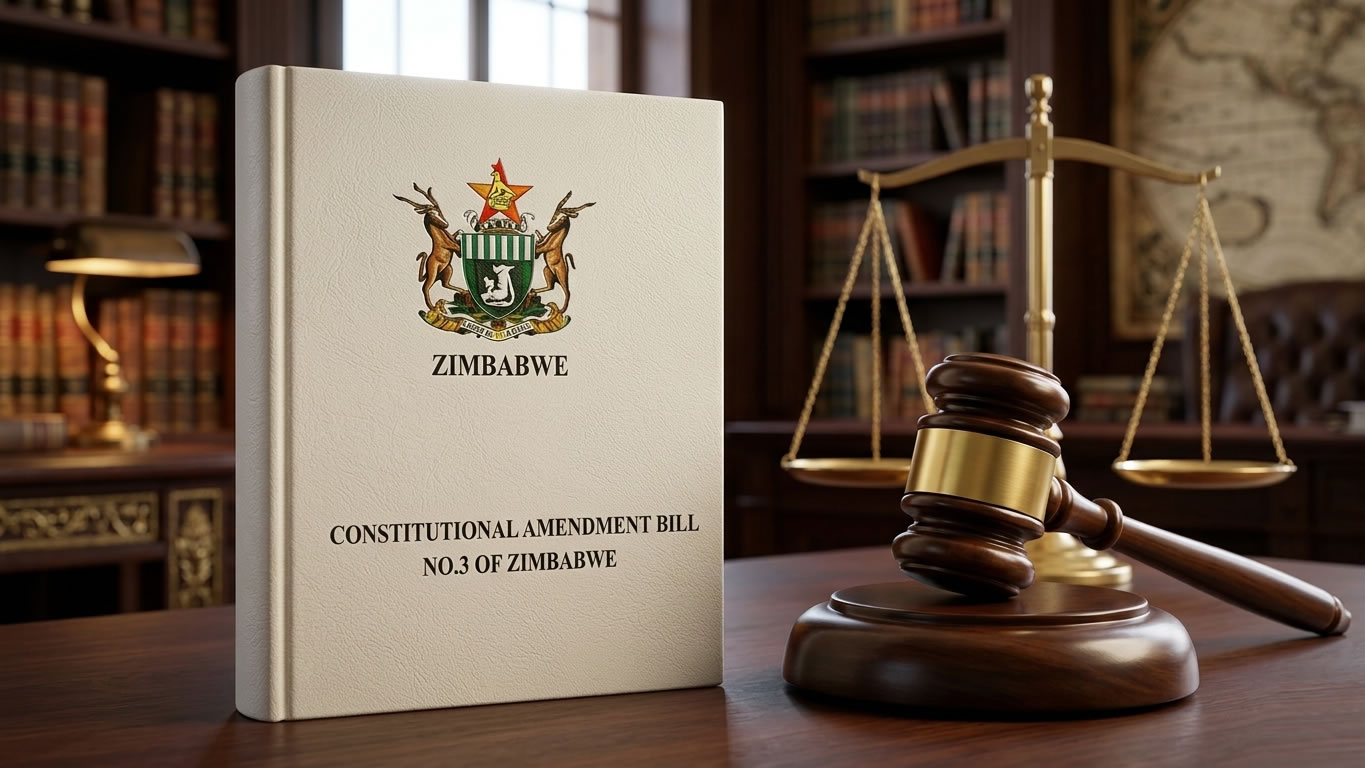
Harare – The political corridors of Harare are currently haunted by the spectre of the Constitutional Amendment Bill Number 3, commonly known as CAB 3. While the official government narrative presents this bill as a necessary administrative update, our investigation reveals a much darker reality brewing within the ruling party itself. Behind the scenes, a significant number of Zanu PF Members of Parliament are reportedly uneasy about the “hidden clauses” that critics claim are designed to dismantle the democratic foundation of the nation. The bill seeks to scrap presidential elections in favour of a system where the president is chosen by Parliament, a move that effectively centralises power and removes the citizens’ direct voice.
Sources suggest that this is not merely an opposition outcry; it is a battle for the soul of the party. Sources close to the parliamentary proceedings indicate that the recent “backlash” survived by Minister Jenfan Muswere, who now runs the little-known Ministry of Skills Audit and Development after being demoted by President Mnangagwa in February this year from the powerful Information Ministry, was just the tip of the iceberg. The bill is being viewed as a “constitutional fraud” that promotes patronage and bribery, allowing an unpopular candidate to ascend to the highest office without the messiness of a popular vote. This documentary-style report will peel back the layers of this legislative manoeuvre, exposing how the proposed changes could permanently alter the Zimbabwean political landscape. We explore the secret meetings where loyalists are being whipped into line and the growing fear among veterans that the revolution is being hijacked by a small clique. By simplifying the complex legal jargon, we show the ordinary Zimbabwean exactly how their right to vote is being traded in the high-stakes game of political survival.
The Controversial Core of CAB 3
At the heart of the current political turmoil is Constitutional Amendment Bill Number 3, a piece of legislation that has ignited fierce debate across Zimbabwe. The bill proposes several significant changes to the nation’s constitution, changes that critics argue are fundamentally undemocratic and designed to consolidate power within the executive branch. One of the most contentious provisions is the proposal to scrap direct presidential elections. Instead, the president would be chosen by Parliament, effectively removing the citizens’ direct right to elect their leader. This move, if enacted, would drastically alter the political landscape, shifting power away from the electorate and towards a parliamentary elite.
Another critical aspect of CAB 3 involves the transfer of voter registration and custody of the voters’ roll from the Zimbabwe Electoral Commission (ZEC) to the Registrar-General. Harare West legislator Joanna Mamombe, a vocal opponent of the bill, highlighted the dangers of this particular clause. She stated, “Whoever controls the voters’ roll controls a critical part of our electoral process. This weakens electoral independence and places it under an office without the same constitutional safeguards”. This shift raises serious concerns about the integrity and fairness of future elections, as the voters’ roll is a cornerstone of any democratic process.
Furthermore, the bill seeks to extend the terms of office for certain positions from five to seven years. Mamombe pointed out that no candidate in the 2023 elections sought a seven-year mandate, arguing that “To extend the term after an election is to alter the people’s mandate after it has been given”. Such retroactive changes are seen by many as a blatant disregard for the democratic will of the people and a move to entrench incumbents without fresh public endorsement. The cumulative effect of these provisions, according to opponents, is a systematic weakening of democratic institutions and an erosion of the sovereignty of the people.
Zanu PF’s Internal Cracks: The Missing MPs and Muswere’s Ordeal
While the public outcry against CAB 3 has been significant, perhaps more telling are the deep fissures appearing within the ruling Zanu PF party itself. The recent parliamentary vote on CAB 3 exposed a quiet rebellion, with 14 Zanu PF Members of Parliament notably absent. This absence was not merely a matter of chance; it signalled a growing unease and dissent among some party members regarding the controversial bill.
Among those who missed the crucial vote was Jenfan Muswere, the Makoni West legislator and Minister of Skills Audit and Development. His absence sparked immediate calls for disciplinary action within the Zanu PF Manicaland provincial executive. However, Muswere managed to escape censure by claiming he was on official government business, a defence that was accepted by the provincial chairperson, Tawanda Mukodza. Mukodza stated, “Muswere and Gata did not manage to vote during CAB 3 because they were on official government business. There are some people who want to abuse social media”. This explanation, however, did little to quell suspicions among those who believe that the absences were deliberate acts of defiance.
Another prominent name among the missing MPs was Angeline Gata, the Deputy Minister of Primary and Secondary Education. While her absence was also attributed to official business, the sheer number of Zanu PF MPs who failed to participate in such a critical vote suggests a deeper malaise within the party. The incident highlights the intense pressure placed on party members to toe the line, with Zanu PF having previously warned dissenting members that constitutional provisions exist to recall lawmakers who fail to vote in line with the party’s position on CAB 3.
The fact that these MPs risked disciplinary action, or at least faced intense scrutiny, underscores the gravity of the situation and the internal struggle within Zanu PF. It indicates that not all members are comfortable with the implications of CAB 3, even if they are not openly rebelling. The party’s swift move to absolve Muswere and Gata, while publicly maintaining a united front, suggests an attempt to manage internal dissent and prevent it from escalating into a more widespread rebellion.
The Chiwenga Factor and Retired Generals’ Warnings
The internal opposition to CAB 3 extends beyond a few absent MPs, reaching into the highest echelons of the military and political establishment. Vice President Constantino Chiwenga, a powerful figure and former army general, has been widely perceived as being at odds with President Emmerson Mnangagwa over the constitutional amendments. While Chiwenga has not openly declared his opposition, his camp and a group of influential retired army generals have voiced strong concerns, hinting at a significant power struggle within the ruling elite.
A group of retired military officers and former senior civil servants has launched a blistering attack on CAB 3, accusing President Mnangagwa and businessman Kudakwashe Tagwirei of orchestrating the bill for personal gain. These retired officials allege that the parliamentary consultations and legislative debate surrounding CAB 3 are being manipulated to achieve a predetermined outcome. Their warnings are not to be taken lightly, given their historical influence in Zimbabwean politics.
Perhaps the most damning allegations from this group involve claims of widespread corruption aimed at securing support for the amendments. They allege that a staggering US$31 million fund has been assembled to influence the constitutional process, with Members of Parliament reportedly promised US$50,000 each in exchange for their votes. Furthermore, provincial party chairpersons are said to have been rewarded with luxurious Toyota Land Cruiser 300 vehicles and cash payments of US$100,000 each. If true, these allegations paint a grim picture of a legislative process tainted by bribery and patronage, where democratic principles are sacrificed for political expediency.
Ezra Chadzamira, the Minister of State for Masvingo Provincial Affairs and Devolution, has openly warned party members opposing CAB 3 of severe repercussions. Speaking at a Zanu PF Provincial Inter-district Meeting, Chadzamira declared that there would be “gnashing of teeth” for those who continued to hold “nocturnal meetings” against the bill. He asserted his knowledge of every MP and councillor’s political activities, stating, “Some of you are like bats. They are here with us by day but at night they are speaking in tongues”. This thinly veiled threat underscores the intense pressure on Zanu PF members to conform and the severe consequences for those who dare to dissent.
The retired generals have also expressed deep concern over ongoing Constitutional Court challenges against CAB 3, urging judges to determine the matter independently and without political interference. They have accused Parliament of being “captured by political and financial interests” and called on Zimbabweans to hold lawmakers accountable for their positions on CAB 3. Their warnings highlight the perceived threat to the judiciary’s independence and the broader constitutional order.
The Erosion of Democracy and Public Outcry
The proposed changes under CAB 3 have been met with widespread condemnation from opposition parties, civil society organisations, and ordinary citizens. The fear is that the bill represents a significant step towards authoritarianism, undermining the very foundations of Zimbabwe’s nascent democracy. The shift from direct presidential elections to parliamentary selection is seen as a direct assault on the principle of popular sovereignty, effectively disenfranchising millions of voters.
Joanna Mamombe, in her powerful rejection of the bill, articulated the sentiments of many Zimbabweans. She argued that the constitution is a social contract between citizens and the state, and that CAB 3 fundamentally weakens this contract by concentrating power in the executive. Her call for a referendum, stating, “The people made this Constitution. The people must decide if it must be fundamentally altered,” resonates with the belief that such profound changes should not be imposed without the direct consent of the populace.
The allegations of corruption and bribery surrounding the bill have further fuelled public anger and distrust. The idea that votes are being bought and sold, and that political support is being secured through financial incentives, undermines faith in the political process. This perception of a “constitutional fraud” where an unpopular candidate could ascend to the highest office without a popular mandate is a source of deep frustration and disillusionment among citizens.
Despite the ConCourt dismissing challenges to CAB 3 on June 17, 2026, the legal battles and public protests are likely to continue. The bill’s passage, aided by the votes of 35 opposition Citizens Coalition for Change (CCC/Tshabangu faction) MPs who sided with Zanu PF, has only intensified the debate and exposed further complexities within Zimbabwe’s political landscape. The struggle over CAB 3 is not just about legal technicalities; it is about the future direction of Zimbabwe, the balance of power, and the fundamental rights of its citizens.
Conclusion
The Constitutional Amendment Bill Number 3 stands as a pivotal moment in Zimbabwe’s political history. Far from being a mere administrative update, it represents a profound attempt to reshape the nation’s governance, centralising power and diminishing the role of the electorate. The quiet rebellion within Zanu PF, evidenced by the missing MPs and the veiled threats from party stalwarts, underscores the deep divisions and anxieties within the ruling party itself. Coupled with the vocal opposition from civil society, opposition figures, and influential retired generals, the passage of CAB 3 highlights a nation grappling with its democratic future.
The allegations of corruption and the perceived manipulation of the legislative process cast a long shadow over the bill’s legitimacy. As the dust settles on the parliamentary vote, the battle for Zimbabwe’s constitutional soul continues. The ordinary Zimbabwean, whose right to vote is being traded in this high-stakes game of political survival, watches on, hoping that the principles of democracy and accountability will ultimately prevail.