


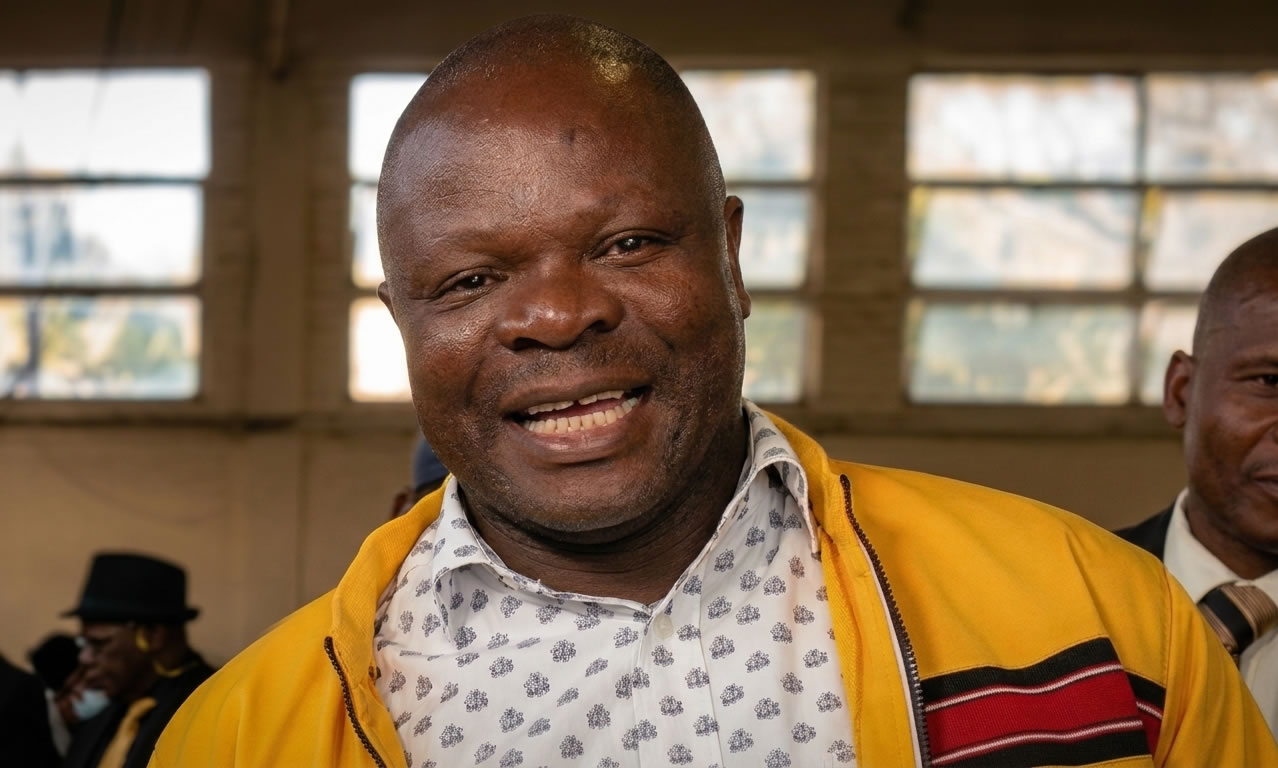
HARARE – In a chilling escalation of political tensions, former opposition legislator Honourable Amos Chibaya has reported receiving a death threat, explicitly warning him against proceeding with a planned political meeting. The ominous message, delivered anonymously, stated: “Chimeeting chamuri kuronga chamangwana chikangoitwa uri kutsvira mumba” – a Shona phrase that translates to, “If the meeting you are planning for tomorrow goes ahead, you will die from arson.” This direct and brutal warning has cast a dark shadow over Zimbabwe’s already fragile political landscape, particularly amidst the contentious debate surrounding the Constitution Amendment No. 3 Bill (CAB3).
Honourable Chibaya, a prominent figure within the opposition Citizens Coalition for Change (CCC) and a former Member of Parliament for Mkoba North Constituency, lodged a formal police report at Milton Park Police Station under Report Received Book (RRB) Number 6797835. Speaking to NewsDay, Chibaya expressed profound fear for his safety, stating, “I am fearing for my life. I have filed a police report and they said they are investigating.” This incident underscores the precarious environment in which opposition figures operate in Zimbabwe, where political activism can carry severe personal risks.
The planned meeting, which triggered the death threat, was intended to facilitate discussions on the country’s prevailing political situation. Such gatherings have become flashpoints in recent months, primarily due to widespread opposition to the government’s proposed constitutional amendments. The Constitution Amendment No. 3 Bill, which recently passed in the National Assembly with 216 votes against 42, has been a source of significant controversy and public outcry.
The Contentious Constitution Amendment No. 3 Bill (CAB3)
CAB3 seeks to introduce wide-ranging changes to the 2013 Constitution of Zimbabwe. Critics argue that these amendments are designed to consolidate executive power and undermine democratic accountability. Key proposals within the bill include extending presidential and parliamentary terms from five to seven years, a move that would effectively prolong President Mnangagwa’s tenure. Furthermore, the bill aims to replace the direct popular election of the Vice President with an appointment by the President, thereby centralising power within the executive.
The debate surrounding CAB3 has been fierce, both within and outside Parliament. Public hearings on the bill have often been marred by disturbances and protests, highlighting the deep divisions within Zimbabwean society regarding its implications. While proponents argue that the amendments will enhance parliamentary oversight and build public confidence, opponents view them as a blatant attempt to subvert the democratic process and entrench the ruling party’s control.
A Pattern of Intimidation and Violence
Chibaya’s death threat is not an isolated incident but rather fits into a disturbing pattern of intimidation, assaults, abductions, and threats targeting individuals who have publicly opposed the constitutional amendment proposals. This climate of fear has been meticulously documented by human rights organisations and news outlets, painting a grim picture of shrinking democratic space in Zimbabwe.
One of the most high-profile incidents involved National Constitutional Assembly (NCA) leader Lovemore Madhuku. In March 2026, Madhuku was brutally assaulted and hospitalised following an attack linked to his opposition to the proposed amendments. Reports indicate that armed, unidentified men forced their way into his Harare offices, violently interrupting a meeting and assaulting several participants. While the Zimbabwe Republic Police (ZRP) denied involvement, eyewitness accounts and human rights reports suggest a coordinated effort to silence dissent.
Several members of Madhuku’s party were also reportedly abducted and assaulted around the same period, further illustrating the risks faced by those who dare to challenge the government’s agenda. Amnesty International and Human Rights Watch have both condemned these acts, calling for thorough investigations and accountability for the perpetrators.
Political Intolerance and Shrinking Democratic Space
The growing concerns over political intolerance and the shrinking democratic space are palpable. The targeting of opposition figures and activists creates an environment where free expression and assembly are stifled, undermining the very foundations of a democratic society. The silence or perceived inaction of law enforcement agencies in thoroughly investigating these incidents only exacerbates public mistrust and fear.
Honourable Chibaya himself has a history of political arrests and legal battles, often related to his activism and participation in public gatherings. In 2025, he and four accomplices had a conviction for conducting an unlawful gathering overturned by the High Court, highlighting the ongoing legal challenges faced by opposition members. His previous arrests, including one in 2023 alongside other Members of Parliament for Mkoba and Budiriro, underscore a consistent pattern of state-led or state-sanctioned harassment against dissenting voices.
The Road Ahead
The death threat against Honourable Amos Chibaya serves as a stark reminder of the dangers inherent in Zimbabwe’s current political climate. As the country grapples with the implications of CAB3, the international community and human rights advocates continue to monitor the situation closely. The ability of opposition figures to freely express their views, organise meetings, and challenge government policies without fear of violence or intimidation is a fundamental pillar of democracy. The failure to protect these rights not only imperils individuals like Chibaya but also threatens the future of democratic governance in Zimbabwe.
The police investigation into Chibaya’s threat will be a critical test of the authorities’ commitment to upholding the rule of law and protecting political freedoms. Until genuine efforts are made to address the root causes of political violence and ensure accountability, the shadow of fear will continue to loom large over those who seek to advocate for change in Zimbabwe.