


HARARE — In the hallowed, wood-panelled chambers of the Zimbabwean Senate this week, the death knell for the country’s 2013 democratic constitution was sounded with a clinical, rhythmic efficiency. As the sun set over Harare on Wednesday, 24 June 2026, seventy-five senators stood one after another to cast their votes in favour of Constitution Amendment No 3 Bill, commonly known as CAB 3. The legislation, which has moved through Parliament with the speed of a runaway train, effectively paves the way for President Emmerson Mnangagwa to extend his tenure beyond the 2028 limit, potentially remaining in power until 2030.
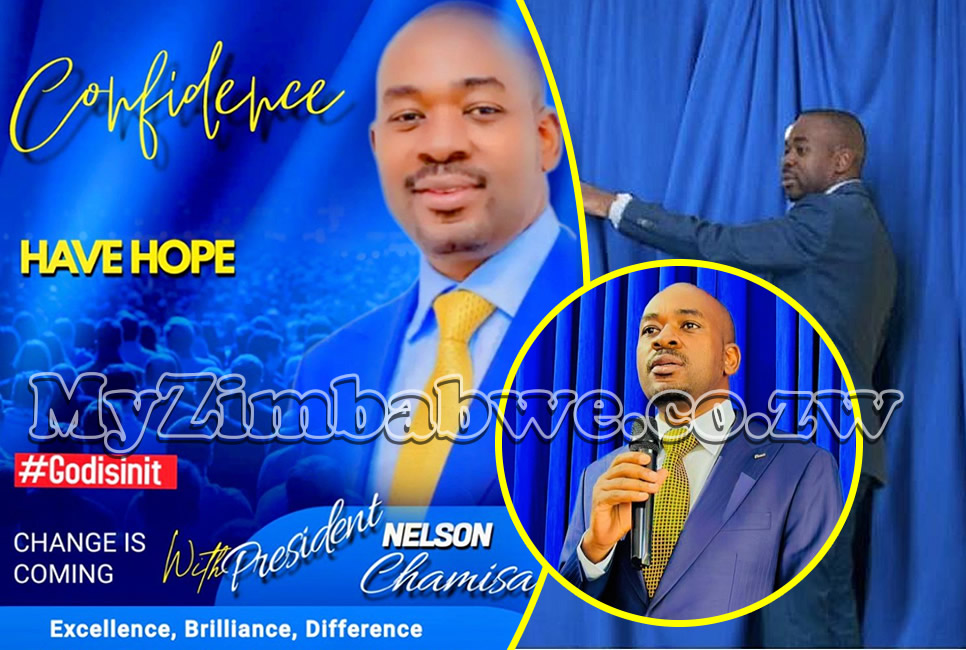
Yet, as the legal framework of the nation was being dismantled, the man who once commanded the hopes of millions was nowhere near the legislative battleground. Instead, Nelson Chamisa, the former leader of the Citizens Coalition for Change (CCC), took to the digital sphere to announce his latest political reincarnation. In a post on X, the platform formerly known as Twitter, Chamisa dangled a vision of a “whole new citizens movement and a new citizens government.”
“The new… new ways, new strategies, new tactics, new voices and new faces. A whole new citizens movement and a new citizens government,” he posted.
To his most ardent supporters, the message was a beacon of hope in a darkening political landscape. But to a growing chorus of analysts, civil society leaders, and weary activists on the ground, the timing of the announcement felt less like a revolutionary spark and more like a carefully timed sedative. The return of the youthful politician has been dismissed by some as a “massive distraction” during a critical moment for Zimbabwe’s constitutional integrity.
The Legislative Coup
The passage of CAB 3 represents a watershed moment in Zimbabwe’s post-independence history. The Bill, which secured a two-thirds majority in the National Assembly before being remitted to the Senate, is seen by legal experts as a consolidation of executive power that reverses the gains made during the 2013 constitutional referendum. Its primary objective—to decouple the presidential term limits from the current constitutional constraints—allows the 83-year-old Mnangagwa to bypass the “two-term” rule that was supposed to see him exit office in 2028.
While the Senate vote was underway, the atmosphere in the capital was one of suppressed tension. Recent months have seen a systematic crackdown on any form of dissent related to the amendment. In April 2026, several students from Midlands State University were detained for distributing flyers that opposed the constitutional changes. More recently, reports from the Zimbabwe Peace Project recorded over 110 human rights violations in a single month, many of which were linked to the suppression of anti-CAB 3 sentiment.
The “partisan police force,” as described by some observers, has been accused of persecuting the opposition while shielding rogue elements of the ruling Zanu PF. This environment of fear has left a vacuum in the streets, one that many expected Chamisa to fill with a clear programme of resistance. Instead, he remained largely silent as the Bill moved through its most critical stages, only emerging to talk about “new faces” once the legislative deed was nearly done.
The Cycle of “Strategic Ambiguity”
Chamisa’s latest proclamation is a familiar refrain that has become something of a cycle for the opposition politician. Since his abrupt departure from the CCC in early 2024—a move prompted by the party being “hijacked” by Sengezo Tshabangu—Chamisa has operated in a shadow land of political waiting. The internal factional battles that followed his exit left the opposition fractured and vulnerable, allowing Zanu PF to secure the two-thirds majority necessary to alter the constitution.
Critics point to a glaring disconnect where his digital declarations rarely translate to tangible political infrastructure. “From his MDC days through to the CCC, his leadership has been characterised by a reliance on personality over institutions,” one observer noted. This reliance on personal charisma over institutional depth has left the movement fragile. When the courts awarded the MDC name and assets to Douglas Mwonzora, and later when Tshabangu began recalling CCC MPs, the lack of a robust, institutionalised defence became fatal.
Analyst Ruben Mbofana has been particularly scathing about this pattern of behaviour. “What we are witnessing is simply a continuation of the same ‘strategic ambiguity’ and endless false starts that have characterised his politics since 2023,” Mbofana said. “We are once again being promised a ground-shaking new direction, yet it remains completely devoid of actionable substance or a clear roadmap.”
Mbofana’s critique goes deeper than mere frustration with the lack of progress. He frames Chamisa’s tactics as inadvertently beneficial to the status quo by keeping the populace docile. “In this context, his return does, indeed, act as a massive distraction. It creates a false sense of hope that someone else is handling the crisis behind closed doors, which neutralises the organic anger of the people and stops them from organising on the ground,” he added.
The Price of Silence
The investigative trail of Zimbabwe’s current crisis leads directly to the prison cells and courtrooms where less famous activists are currently languishing. While the “new citizens government” is discussed in the abstract on social media, the reality for those on the ground is stark. Earlier this year, veteran opposition figure Tendai Biti was reportedly among those facing legal pressure for attempting to organise protests against the constitutional amendments.
Human rights organisations, including Amnesty International and Human Rights Watch, have documented a harrowing array of abuses in their 2026 reports. These include allegations of beatings, electric shocks, and waterboarding used against those who dare to challenge the regime’s narrative. In this brutal context, the “cryptic captions” and Bible verses that frequently adorn Chamisa’s social media feeds are seen by some as a retreat from the harsh realities of the struggle.
“When the opposition’s strategy consists only of social media hashtags and cryptic promises while the regime systematically rewrites the Constitution, they cease to be a resistance and effectively become complicit in maintaining the status quo,” Mbofana argued. He suggested that without a courageous programme of action, Chamisa’s announcements act as nothing more than a safety valve that “blows out the steam of those who are genuinely trying to fight the system.”
A Generational Divide
The tragedy of the current political stalemate is most visible among Zimbabwe’s youth. At least 62% of the population is under the age of 25. These young people have no living memory of or emotional connection with the liberation war of the 1970s, which remains the primary source of legitimacy for the Zanu PF elite. They are frustrated by a lack of opportunities in an economy that continues to stutter under the weight of corruption and mismanagement.
Chamisa, who is over three decades younger than President Mnangagwa, has long been the vessel for these youthful aspirations. His rise to power following the death of Morgan Tsvangirai in 2018 was fueled by this generational energy. However, that energy is now being tested by what analyst Rashweat Mukundu calls “performative” politics.
“Announcements on social media that are not accompanied by action tend to be performative and will soon fizzle out and be forgotten,” Mukundu said. “The opposition base is looking for action and impact on the ground, not another tweet.”
Mukundu acknowledged that while Chamisa retains a residual following and significant name recognition, his influence is “diminished in terms of influence and organisational capacity to be a change agent.” The question remains whether the “new voices and new faces” he promises will be given the institutional power to actually lead, or if they will simply be the latest additions to a personality-driven movement.
The Road to 2028 and Beyond
As CAB 3 moves toward the President’s desk for his signature, the legal path for Mnangagwa’s extended rule is almost clear. The amendment not only addresses term limits but also introduces reforms that critics say further consolidate the President’s control over the judiciary and the electoral commission. This “executive consolidation,” as described by ConstitutionNet, suggests that the 2028 elections may be conducted under even more restrictive conditions than the disputed polls of 2023.
For Nelson Chamisa, the challenge is no longer just about winning an election; it is about proving that he can lead a movement that exists outside of the digital world. His followers have repeatedly accused him of selling false hope, pointing to ambiguous promises that never materialise into coalitions, street movements, or clear political strategies.
Netizens were swift to mock the latest announcement, with many asking for a “roadmap” rather than another “vision.” The scepticism is a far cry from the euphoria of 2018, reflecting a electorate that has grown weary of promises that vanish when the pressure is applied.
The coming months will be the true test of Chamisa’s “bounce back.” If the “new citizens government” remains a series of tweets while the constitution is rewritten and activists are arrested, the distraction will have served its purpose for the ruling party. Zimbabwe’s political temperature continues to rise, but without a clear, courageous, and institutionalised opposition, that heat may have nowhere to go.
As one veteran activist, speaking on condition of anonymity for fear of reprisal, put it: “We don’t need a pastor to tell us it will be okay in the next life. We need a leader to tell us how we survive this one.”
The Senate has spoken, the law has changed, and the clock is ticking toward 2028. Whether Nelson Chamisa is the man to stop that clock, or simply the one telling us what time it is, remains the most pressing question in Zimbabwean politics today.