


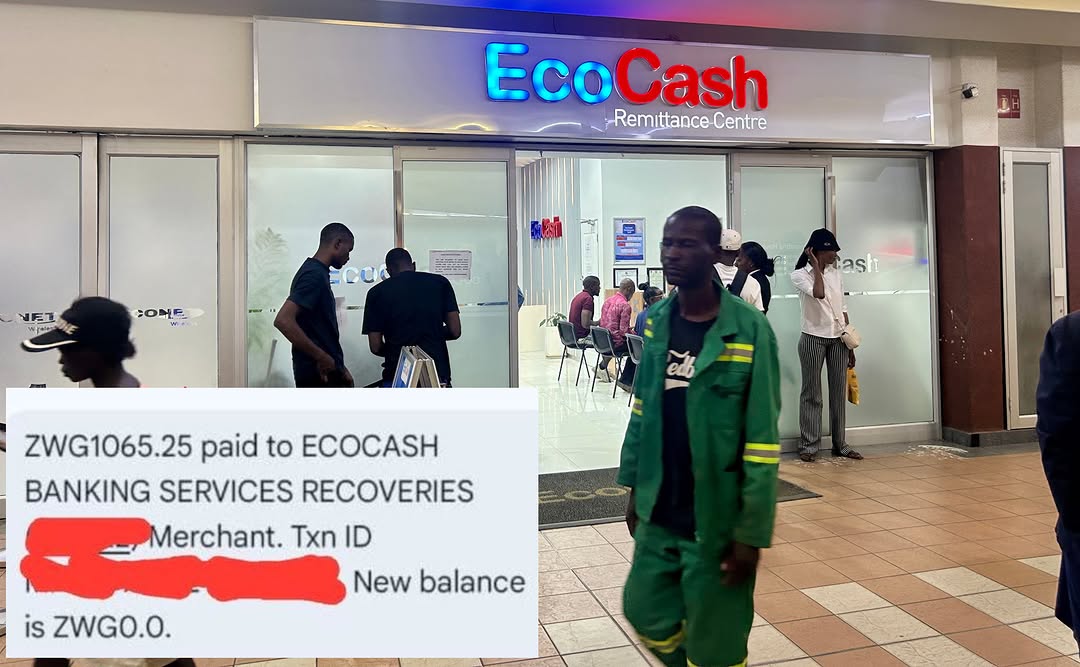
A defiant Harare woman has been sentenced to prison after pleading guilty to a sophisticated string of fraud and theft offences involving more than US$11,000. The scheme, which targeted both corporate entities and individual vendors, involved the use of manipulated EcoCash transaction messages and the brazen theft of EcoCash agent SIM cards to withdraw large sums of cash.
Nyasha Charumbira, a 29-year-old resident of Tynwald South in Harare, appeared before Rusape provincial magistrate Mr Tendai Mahwe. She faced multiple charges of fraud and theft committed over a ten-month period between February and December 2025. Her arrest in April 2026 in Ngundu, Masvingo, while allegedly attempting to commit a similar offence, brought an end to her cross-country crime spree.
The court heard that Charumbira’s modus operandi was both calculated and audacious. She initially defrauded TelOne Rusape of US$800 using a manipulated EcoCash cash-out message. Not content with this initial success, she escalated her activities, stealing an EcoCash agent line from the very same parastatal and withdrawing a further US$501.
She later employed the same method at an EcoCash outlet, stealing another agent line and withdrawing a staggering US$10,175. Charumbira pleaded guilty to all charges, leading to a swift sentencing by Magistrate Mahwe.
Mr Mahwe sentenced her to 24 months in prison. However, six months of the sentence were suspended for five years on the condition of good behaviour. A further six months were set aside on the condition that she restitutes TelOne US$1,301. An additional eight months were suspended on the condition that she repays US$10,175 to EcoCash agent Ms Ruvarashe Jemina Munangu.
Crucially, Mr Mahwe did not grant Charumbira an extended period to pay the restitution. He ordered her to repay the money forthwith. As she did not have the funds available, she was immediately committed to prison to begin serving her sentence.
Prosecutor Ms Faith Mutukwa provided the court with a detailed account of Charumbira’s methods. The first offence occurred on February 24, 2025, when Charumbira visited TelOne’s Rusape office. She approached the parastatal’s billing and receiving clerk, Idaivamwe Mawondo, and conducted six small cash-in transactions, each with a maximum of US$10, using two different Econet lines.
This initial interaction was a carefully orchestrated ruse. During these transactions, Charumbira managed to observe the agent line PIN number. Furthermore, when Mawondo handed Charumbira the transacting cellphone to verify that the deposits had been successful, Charumbira seized the opportunity. She secretly sent a “please call me” message to her own cellphone, thereby obtaining the agent line number.
Charumbira then told Mawondo that she intended to do a cash-out once her mother sent her money, and she left the premises.
“After a while, Charumbira returned to Mawondo, and edited an Ecocash transaction message with an amount of US$800, which she sent into the agent line,” Ms Mutukwa told the court. “Mawondo did not notice that the message did not have an Ecocash code +23164, and gave Charumbira the cash.”
The deception was only uncovered later when Mawondo noticed that the transacting phone was declining to process any further transactions, citing network problems. Mawondo visited Econet to investigate, and on March 10, 2025, the offence was discovered after the transaction history was obtained. A police report was subsequently made, but the US$800 was never recovered.
The court further heard that Charumbira’s audacity extended to stealing the physical agent SIM card. She was given the TelOne transacting cellphone after claiming she wanted to verify if the transactions were successful.
“During the transactions, Mawondo gave Charumbira the transacting cellphone since she had claimed that she wanted to see if the transactions were successful,” Ms Mutukwa explained. “Charumbira took advantage of Mawondo being busy, and stole the agent line from the transacting cellphone and went away.”
With the stolen agent line in her possession, Charumbira proceeded to the Rusape Central Business District. There, she approached Irene Shundure, a vendor, and spun a web of lies. She claimed she wanted to receive cash through EcoCash from her mother but lacked a national identity card, asking for Shundure’s help to get the money. Using the stolen line, she withdrew US$501.
In a third incident, prosecutors detailed how Charumbira visited an EcoCash shop in Rusape on December 8, 2025. Employing her established tactic, she allegedly requested the transaction phone before secretly removing the agent SIM card.
Using this stolen line, she allegedly withdrew US$5,000 and US$2,000 through separate EcoCash accounts. She then transferred a further US$3,000 through another vendor’s mobile wallet and moved US$400 into her InnBucks account before returning the phone and leaving the premises.
The theft was discovered the following day when the EcoCash agent realised the transaction phone was no longer functioning and obtained transaction records from Econet. Police investigations eventually linked these transactions to Charumbira, culminating in her arrest in Masvingo months later. The court noted that none of the stolen money was recovered.
The case of Nyasha Charumbira highlights a growing and concerning trend of mobile money fraud in Zimbabwe. As platforms like EcoCash become increasingly integral to the daily financial lives of millions, they also become lucrative targets for sophisticated criminals.
Recent reports indicate a surge in various forms of mobile money scams. Fraudsters are constantly evolving their techniques, exploiting vulnerabilities in both technology and human behaviour. A common tactic involves targeting unsuspecting users via WhatsApp groups, where scammers promote fake deals, quick loans, and “too-good-to-be-true” online investments . In early 2026, EcoCash itself issued warnings about scammers targeting customers with fake promotions .
Furthermore, the threat extends beyond individual scammers to organised groups. In February 2026, eleven alleged hackers, aged between 20 and 26, were accused of defrauding EcoCash users of over US$61,000 . This highlights the increasing technical sophistication of these criminal enterprises.
Academic research also underscores the darker side of mobile money transfers. Studies have shown that cybercriminals use techniques such as phishing, social engineering, and malware to gain unauthorised access to users’ accounts and steal their funds . If not properly regulated, mobile money platforms can inadvertently facilitate fraud and financial irregularities .
The Charumbira case specifically exposes vulnerabilities at the agent level. Agents, who serve as the primary interface between the mobile money platform and the public, are often targeted. The ease with which Charumbira was able to manipulate a clerk, obtain a PIN, and physically steal SIM cards suggests a need for more stringent security protocols and training for agents.
To combat this rising tide of fraud, a multi-pronged approach is necessary. Users must remain vigilant, treating unsolicited messages and requests for personal information with extreme caution. It is crucial to verify the authenticity of any transaction message, paying close attention to details such as official codes and sender IDs. Furthermore, users should never hand over their mobile devices to strangers for verification purposes, as this can be a tactic to steal agent lines or gain access to accounts.
Mobile money operators, on their part, must continue to invest in robust security measures, implement stricter verification protocols for agents, and conduct regular audits. Public awareness campaigns are also vital to educate users about the latest fraud trends and how to protect themselves. The case of Nyasha Charumbira serves as a potent reminder that while mobile money offers unparalleled convenience, it also demands heightened awareness and caution from all stakeholders.