


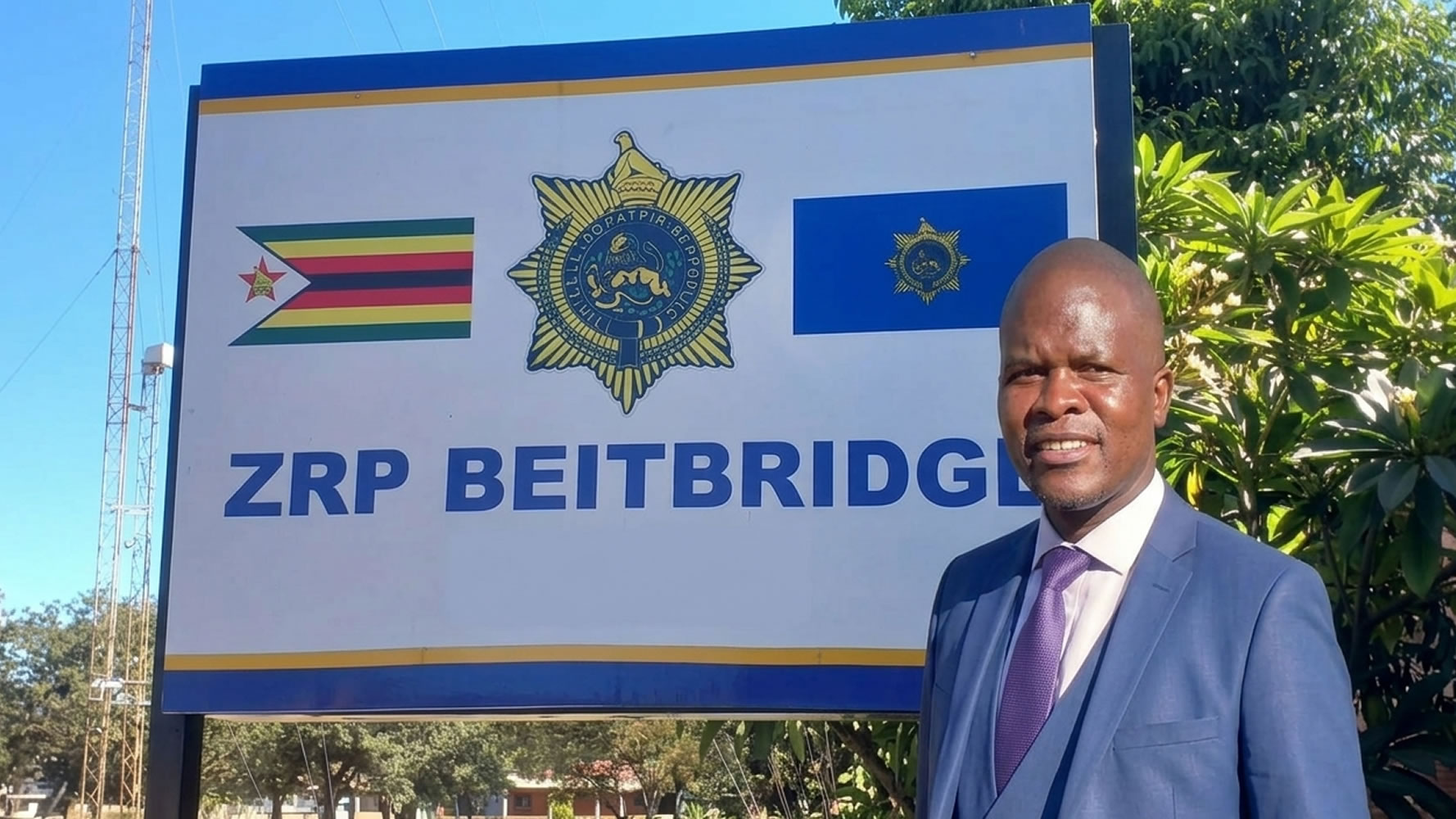
Harare – The Zimbabwe Republic Police (ZRP) has launched a comprehensive investigation into the untimely death of Detective Sergeant Milika Laison, a 43-year-old CID officer, who reportedly perished in a road traffic accident on the Masvingo-Beitbridge Road shortly after tendering his resignation. The incident, which occurred on Friday, 25th June 2026, at approximately 10 PM, has ignited a flurry of speculation on social media, prompting the police high command to address what they term ‘misleading and incorrect facts’ circulating online.
Commissioner Paul Nyathi, the national police spokesperson, confirmed the accident, stating that Detective Sergeant Laison was driving a Honda Fit towards Masvingo from Beitbridge when the fatal crash occurred at the 203-kilometre peg. This official account directly contradicts widespread social media claims suggesting that Laison died during a training drill at the ZRP Ntabazinduna Police Academy.
The Official Narrative vs. Social Media Speculation
According to Commissioner Nyathi, police records indicate that Detective Sergeant Laison was not officially registered for the Sergeants’ Developmental Course at Ntabazinduna Academy. A roll-call conducted on 20th June by the training coordinator revealed Laison was among those who had not reported for training. Subsequently, the CID Headquarters training section informed officers at Ntabazinduna that Laison had tendered his resignation notice and would therefore not be attending the course. His name was then removed from the list of absent trainees.
However, the ZRP’s statement also acknowledged the possibility of Laison having entered the academy without authorisation. Commissioner Nyathi stated, “If the late Detective Sergeant Milika sneaked into the training academy on 19th June 2026 using unorthodox means or without being accounted for and later sneaked out on 20th June 2026, action will certainly be taken against the concerned instructors who did not observe and follow set standards and protocol for Zimbabwe Republic Police training programmes.” This admission, while conditional, adds a layer of complexity to the official narrative and fuels the public’s questions.
Further complicating matters are social media posts allegedly made by Detective Sergeant Laison himself, detailing ‘inhuman treatment’ by instructors at the depot. The Commissioner-General of Police, Stephen Mutamba, has since ordered a thorough investigation to ascertain the veracity of these grave allegations. “The Commissioner-General of Police has directed that full facts be established to find out the veracity of the allegations,” Commissioner Nyathi affirmed. The probe will also look into whether Laison used his personal vehicle to enter the academy, a practice strictly forbidden for trainees.

Official records, however, place Detective Sergeant Laison at his station, CID Beitbridge, on 20th June, where he reportedly engaged his Officer-in-Charge. This detail further challenges the social media narrative of his presence and death at the academy.
A Pattern of Unanswered Questions: Other Incidents of Police Deaths
Detective Sergeant Laison’s death, shrouded in conflicting accounts and social media uproar, is not an isolated incident within the Zimbabwe Republic Police. The force has, in recent years, faced scrutiny over the deaths of its members under various circumstances, some of which have also led to public speculation and demands for transparency.
Subsequent investigations and a post-mortem examination revealed that Detective Constable Hove was shot once in her left breast, with the bullet remaining lodged in her body. Police chiefs later confirmed to the family that her death was a result of ‘friendly fire’. Constable Nomore Muradzikwa, 37, stationed at Hillside Police Station, was subsequently arrested and appeared in court on 18th March 2025, facing a murder charge. The prosecution detailed how Muradzikwa, armed with a CZ pistol, fired at a robbery suspect, Fikile Ncube, hitting him in the left elbow. The bullet then ricocheted, striking Detective Constable Hove in the chest and killing her.
Muradzikwa later admitted to firing the fatal shot. Detective Constable Hove was laid to rest on 10th March at her rural home in Mberengwa. Her family, through spokesman Ryan Gambinga, demanded a thorough and transparent investigation, a call echoed by Police Commissioner General Stephen Mutamba, who ordered comprehensive inquiries into the incident. This case highlights the critical issues of operational safety, internal accountability, and the often-conflicting narratives surrounding police fatalities.
In February 2026, reports also emerged of a ZRP officer and two others being found dead under mysterious circumstances, prompting further questions about the safety and well-being of police personnel.
The issue of road accidents claiming the lives of ZRP officers is also a recurring concern. While specific names of officers who died in road accidents in 2025 and 2026, beyond those in mass casualty events, are not always publicly detailed, the ZRP frequently issues statements regarding fatal road traffic accidents. For example, in August 2025, the ZRP released names of victims who died in fatal road traffic accidents in Mutare, Juru, and Masvingo, underscoring the pervasive risk of road fatalities in the country. The Masvingo-Beitbridge Road, where Detective Sergeant Laison met his end, is particularly notorious for its high accident rate, with numerous reports of fatal crashes claiming multiple lives.
These incidents, while varied in their specifics, collectively contribute to a broader narrative of a police force grappling with internal and external challenges, including the safety of its members and the management of public perception in the age of social media.
The Call for Transparency and Due Process
The ZRP command has expressed its condolences to the Milika family, while simultaneously condemning what it describes as the ‘misrepresentation of facts’ on social media. Commissioner Nyathi urged the Milika family to engage directly with the ZRP for accurate information, rather than being swayed by social media activists. This plea underscores the tension between official communication channels and the rapid, often unverified, dissemination of information online.
However, the public’s reliance on social media for information, particularly in cases involving state institutions, often stems from a perceived lack of transparency or timely communication from official sources. The allegations of ‘inhuman treatment’ at the Ntabazinduna Academy, whether substantiated or not, resonate with broader concerns about training conditions and welfare within the police force.
The investigation ordered by Commissioner-General Mutamba is therefore crucial, not only for establishing the truth behind Detective Sergeant Laison’s death and the circumstances surrounding his alleged presence at the academy but also for rebuilding public trust. The findings of this probe will be keenly awaited, as they could shed light on systemic issues within the ZRP and influence future policies regarding officer welfare, training protocols, and internal accountability.
In conclusion, the tragic death of Detective Sergeant Milika Laison has opened a Pandora’s Box of questions, ranging from the immediate cause of his demise to the broader implications of social media’s influence on public discourse and the internal dynamics of the Zimbabwe Republic Police.