


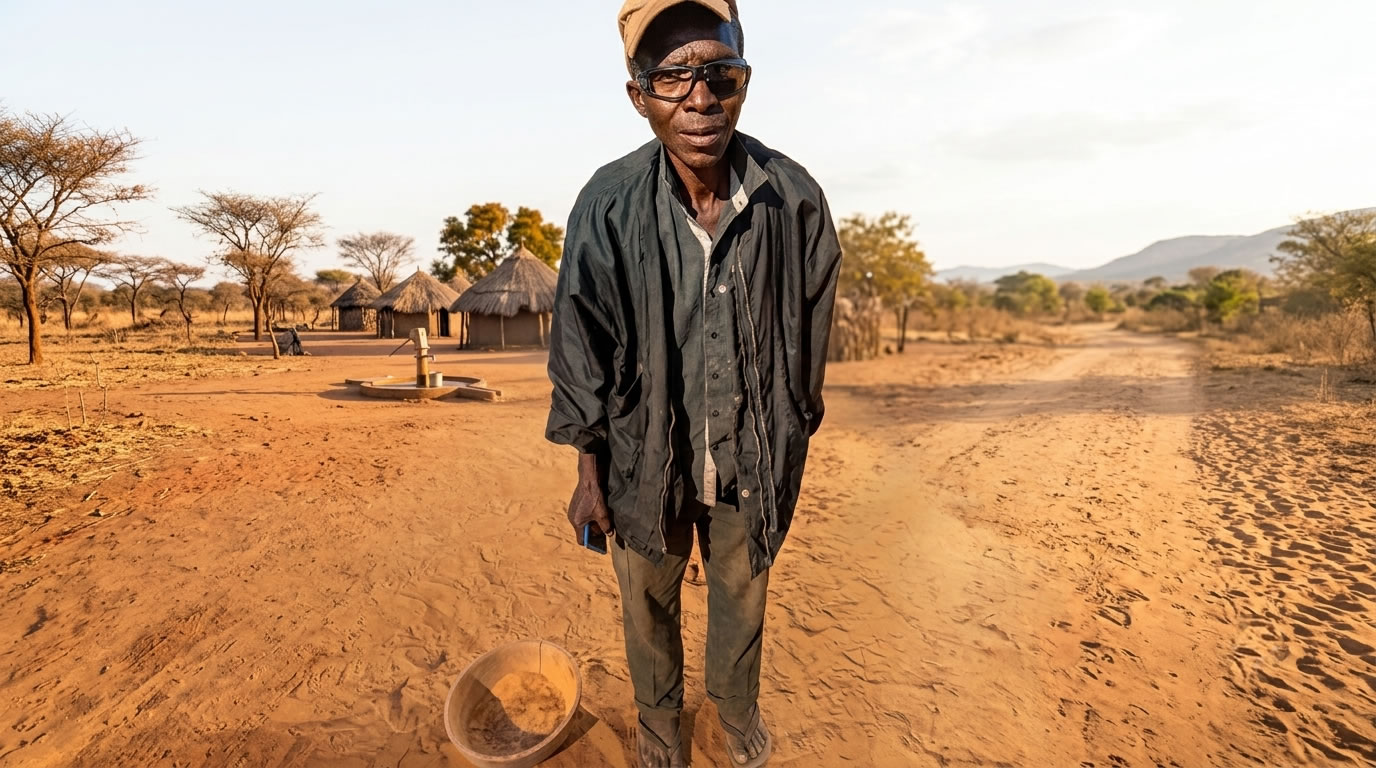
A Life Undone: The Agony of Remigio Tom and Zimbabwe’s Battle with Belief and Disease
Karoi – The story of Remigio Tom, a 47-year-old man from Karoi, is a harrowing tale that intertwines personal tragedy with deeply entrenched cultural beliefs and the stark realities of a devastating illness. His ordeal, which began with a mysterious affliction and culminated in the loss of his manhood, has left him abandoned by his family and grappling with unimaginable pain. Initially, Tom believed he was a victim of ‘runyoka,’ a traditional charm used to punish infidelity, a common fear in many Zimbabwean communities. However, medical intervention revealed a far more insidious foe: cancer.
Tom’s plight underscores a broader narrative in Zimbabwe, where traditional explanations often precede or overshadow medical diagnoses, particularly for conditions affecting sensitive aspects of life. His story is not an isolated incident but resonates with other cases across the nation, highlighting the complex interplay between superstition, stigma, and access to healthcare.
Remigio’s Desperate Plea
For four years, Remigio Tom has endured a living hell. His condition, which he describes as unbearable, led to the loss of his manhood and, subsequently, the abandonment by his wife and their four children. Speaking to H-Metro, Tom made a desperate plea for assistance, stating, “My life has become miserable. If I slept with a married woman, which has caused all this, may the husband forgive me. I am experiencing hell day and night.”
His initial conviction that his suffering was a consequence of infidelity, a punishment known as ‘runyoka’, speaks volumes about the pervasive influence of traditional beliefs in Zimbabwean society. It was only after a prolonged period of relying on traditional herbs that he sought professional medical help. The diagnosis was grim: cancer. This revelation, however, came too late to save his physical integrity and, tragically, his family life. Now, he lives with his younger brother, sharing his challenges, which he reiterates are “unbearable.”
The Shadow of ‘Runyoka’: A Cultural Phenomenon
Remigio Tom’s initial belief in ‘runyoka’ is not unique. This traditional charm, often associated with punishing adultery, is a deeply ingrained concept in many parts of Zimbabwe and beyond. The fear of ‘runyoka’ can manifest in various ways, from physical ailments to social ostracisation. The concept suggests that a man who engages in extramarital affairs may suffer severe consequences, including the mysterious disappearance or shrinking of his private parts. This belief often leads individuals to seek traditional healers before, or sometimes instead of, conventional medical treatment.
One notable incident that echoes the cultural anxieties surrounding ‘runyoka’ involved Jacob Mwecha, a 40-year-old man from Kuwadzana, Harare, in November 2018. Mwecha claimed his manhood mysteriously disappeared whenever he attempted intimacy with his wife, Shupikai Shana. He openly admitted to having multiple affairs, leading his wife to suspect he had been afflicted with ‘runyoka’ by the husbands of the women he was involved with. Mwecha himself suspected his wife had used traditional medicine on him after she was seen seeking help from a prophet. Shana, however, vehemently denied any involvement, attributing his predicament to his promiscuity.
She stated, “This man is a womanizer; we were evicted from five rented houses because he was caught with girls there or having affairs with the wives of the landlords. Am I lying, answer me?” She further added, “My husband was once caught in the toilet with the daughter-in-law of the house where we lived, and also with the mother of the house, then gave her $10. I am tired of his promiscuity; he has been ‘central locked’ (bewitched) by his prostitutes or by the husbands of the women he is having affairs with.”
Mr. George Kandiyero, head of the Zinatha organisation, commented on Mwecha’s case, suggesting he might indeed have been afflicted with ‘runyoka rwekamba,’ a type of ‘runyoka’ that causes the manhood to shrink. He implied that Mwecha knew the cause of his suffering, stating, “He knows what he did.” This incident, like Remigio’s, highlights the powerful hold of such beliefs and the societal interpretations of such misfortunes.
More recently, in August 2024, a young man from Bikita also made headlines for allegedly suffering from ‘runyoka’ after engaging in an adulterous relationship. He reportedly experienced severe stomach pains and sought cleansing, further illustrating the continued relevance of these traditional beliefs in contemporary Zimbabwean society. In March 2026, a peculiar case emerged from the Copperbelt region, where thirteen men were arrested for falsely claiming their reproductive organs had disappeared after physical contact. While this incident was later debunked as false claims, it underscores the widespread fear and cultural narratives surrounding the mysterious disappearance of private parts.
The Terrifying Grip of ‘Ngozi’: Avenging Spirits
Beyond ‘runyoka,’ another powerful traditional belief that profoundly impacts communities in Zimbabwe is ‘ngozi,’ the concept of an avenging spirit. This belief often arises from unresolved injustices, particularly murder, and is believed to inflict suffering upon the perpetrator’s family until compensation is made. The Marange community, in March 2021, became the epicentre of a chilling ‘ngozi’ narrative that saw men’s private parts reportedly being cut off by an unseen force, leading to instant death.
This horrifying phenomenon was attributed to the avenging spirit of Ruwizhi Makondo Mashato, who was murdered 29 years prior. The spirit demanded 50 cattle as compensation from the Mukanjari, Denga, Ndova, and Mauchaza families, who were implicated in Mashato’s death. Men from these families reportedly developed rashes similar to burns before their private parts were severed, resulting in their immediate demise.
Veresy Mutungwazi, a daughter-in-law in the Mukanjari family, shared a heart-wrenching account of losing five children to this avenging spirit. Her sons, she recounted, died after developing rashes and weakness, with their private parts reportedly falling off. “When my first child died, we all thought it was some unknown disease that killed him. But we started to suspect when the second child died in the same way a few months later. After the death of my second child, Mashato’s avenging spirit began to emerge, revealing everything that happened,” she stated. Mercy Nyaude, also married into the Mukanjari family, reported the death of her two children in a similar manner, with some family members bleeding from their private parts before their sudden severance.
Chief Marange, Bernard Murwira, acknowledged the gravity of the situation, stating that both traditional and criminal courts should be involved. He emphasised that perpetrators must compensate for the avenging spirit and face legal consequences. This case vividly illustrates the profound impact of ‘ngozi’ on families, leading to immense suffering and a desperate search for resolution, often involving both traditional and modern justice systems.
The Silent Epidemic: Penile Cancer in Zimbabwe
While traditional beliefs offer explanations for such devastating conditions, Remigio Tom’s medical diagnosis of cancer brings to light a critical public health issue. Penile cancer, though relatively rare globally, can have severe consequences, including disfigurement and death, if not detected and treated early. The stigma associated with cancers of the reproductive organs, coupled with cultural beliefs, can often lead to delayed presentation and poorer outcomes.
Research indicates that the incidence of penile cancer in Harare, Zimbabwe, has been on the rise, increasing significantly by 3.8% per year between 1990 and 2019. This trend underscores the need for increased awareness and improved access to screening and treatment services. However, in many rural areas of Zimbabwe, access to specialised medical care is limited, and traditional healers are often the first point of contact for health concerns. This delay in seeking conventional medical attention can be fatal, as early diagnosis is crucial for effective cancer treatment.
Studies on cancer in Zimbabwe highlight several barriers to timely diagnosis and treatment, including a lack of awareness, cultural beliefs, and socioeconomic factors. Many individuals, like Remigio Tom, may initially attribute their symptoms to supernatural causes, leading to a delay in seeking medical help. The stigma surrounding penile cancer can also deter men from discussing their symptoms or seeking care, further exacerbating the problem.
The consequences of delayed cancer treatment are dire. Research suggests that even a one-month delay in cancer treatment can increase the risk of death by 6 to 13%, with the risk escalating further with longer delays. This grim reality underscores the urgent need for public health campaigns that educate communities about cancer symptoms, encourage early medical consultation, and address the cultural barriers that prevent timely access to care.
A Call for Compassion and Comprehensive Care
Remigio Tom’s story is a poignant reminder of the multifaceted challenges faced by individuals in communities where traditional beliefs intersect with modern medicine. His suffering, compounded by the loss of his family and the financial burden of his illness, is a testament to the urgent need for a more integrated approach to healthcare.
Addressing cases like Remigio’s requires not only medical intervention but also a sensitive understanding of cultural contexts. Public health initiatives must work in tandem with community leaders and traditional healers to bridge the gap between traditional beliefs and scientific understanding. Education campaigns should aim to demystify diseases like cancer, encourage early detection, and provide clear pathways to accessible and affordable medical care.
Furthermore, social support systems are crucial for individuals battling severe illnesses, especially when they face abandonment and isolation. Remigio Tom’s desperate plea for a “helping hand” is a call to action for society to extend compassion and practical assistance to those who are most vulnerable. His story, while tragic, serves as a powerful catalyst for dialogue and action, urging a re-evaluation of how communities respond to illness, belief, and the profound human need for care and support.