


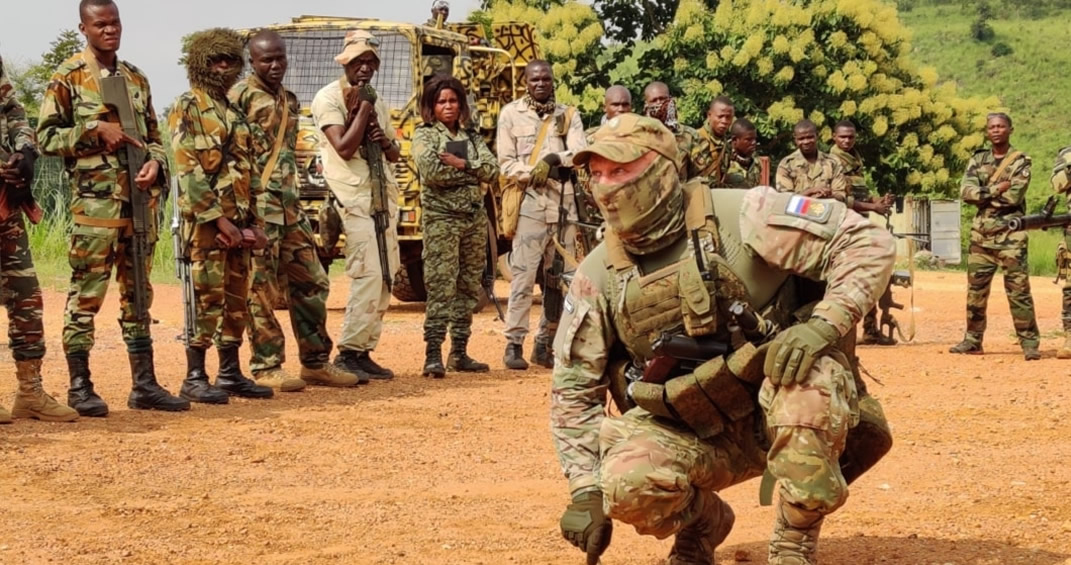
HWANGE — In a chilling investigation that reads like a thriller, Oscar Sifelani Mtshiya, a 48-year-old man from Hwange, recently appeared in court facing human trafficking charges. He didn’t just lie to job seekers; he allegedly sold them into a war zone. Lured with the promise of high-paying firefighting jobs in Moscow, five Zimbabweans found themselves stripped of their passports and handed rifles instead of hoses.
This article will peel back the layers of this “Russian Recruitment” ring. We will expose how the syndicate uses local EcoCash agents to move money and “Denis and Victor”—shadowy Russian handlers—to facilitate the transition from civilian to mercenary. The story will simplify the labour exploitation jargon to show the human cost: one Zimbabwean has already returned in a coffin, and others remain trapped in the Ukraine conflict. We will investigate why the Ministry of Foreign Affairs is struggling to repatriate the survivors and what this means for the thousands of desperate Zimbabweans looking for work abroad. Is this a one-off scam, or has Zimbabwe become a hunting ground for private military companies looking for cheap cannon fodder?
The Illusion of Opportunity
The recruitment appears to take two main forms, both preying on the economic vulnerability of young men. The first targets civilians with no military background. They are not interviewed; instead, they are added to WhatsApp groups and issued with invitation letters from Russia under the false pretext of visiting to experience Russian culture, often receiving a 30-day visa. Usually, this group is lured with civilian jobs or attracted by opportunities.
The second form targets those with military backgrounds, who undergo a more formal process that includes interviews and medical examinations. The process often begins with posters advertising an “official state programme” inviting men aged 18 to 55 to participate in the Russian armed forces with “strong financial and social support.”
Court papers allege that between January and June 2026, Mtshiya worked with four Russian accomplices to recruit five Zimbabwean men, whose identities have been withheld, by promising them lucrative jobs as firefighters or employment with the Russian Defence Ministry.
Mtshiya reportedly received funds from his partners via an EcoCash agent, Senia Muusha, which were then forwarded to the victims for transport logistics to Robert Gabriel Mugabe International Airport in Harare and Joshua Mqabuko Nkomo International Airport in Bulawayo, where they boarded flights to Russia.
From Job Promises to the Battlefield
Upon arrival in Russia, however, prosecutors say the promised jobs never existed. The victims were met by Mtshiya’s accomplices, who confiscated their travel documents. They were then forced to join a private military organisation as mercenaries—a role that was not part of the Russian government employment they had been promised, the state alleges.
The victims were subjected to labour exploitation, denied freedom of movement, and forced to undergo seven days of firearm familiarisation training before being deployed to the Ukraine war zone.
What is particularly worrying about this recruitment is that many African recruits reportedly have no military background, yet are deployed into active conflict zones. According to some accounts, they receive as little as seven to 14 days of training before they are sent into combat.
Once deployed in the combat zone, the reality of war descends. The recruits are inexperienced, unprepared, and are expected to fight the Ukrainian army or die. In addition to combat roles, some recruits are assigned logistical support duties, which still place them in significant danger.
Some Zimbabweans currently there in the front described their roles as “suppliers,” transporting provisions to the front lines on foot.
“We are not soldiers. We were trained how to carry supplies and heavy duty things while climbing mountains. Our job is dangerous because we carry stuff like benzines, bombs, and equipment that is needed in the front on foot. Vehicles don’t move because they will be shot by drones, so it is easier to send suppliers on foot,” one recruit said.
However, evading drones is not easy, as one Zimbabwean explained: “We were taught how to shoot at drones for just one hour before being sent to the front. Unlike our White counterparts who already know how to shoot, we can fire at a drone until we empty an entire magazine and still miss.”
The risks are severe because “the drones are killing people,” said another soldier who spoke from the front. “I don’t want to go back to the front.”
The Human Cost
The alleged operation only came to light after one of the recruits was killed. “One of the victims lost his life in the war deployment,” prosecutors said.
The victim’s spouse is reportedly working with the Ministry of Foreign Affairs and International Trade to have the deceased’s body repatriated to Zimbabwe. The remaining victims are still in Russia, where government departments are working to bring them home.
Distress messages from Zimbabweans currently deployed in Donbas paint a grim picture. “We need help urgently to come back home,” one group said. “The way we went to come here (to Russia) and what we found was not what we were told.”
Another Zimbabwean recruit admitted considering self-injury to avoid redeployment. “I am going to shoot myself in the leg,” he said.
Veteran journalist Ezra Sibanda, whose investigation into recruitment networks gained traction in early March, noted that the network’s activities are contributing to the continuing casualties among Zimbabweans deployed abroad.
“Upon arrival in Russia, recruits are reportedly met by men in military uniform. They are placed on buses and taken to army barracks, where the process quickly turns dangerous,” explained Sibanda. “At the barracks, they are processed, fingerprinted, and pressured into signing military contracts. Their passports and phones are confiscated, and they undergo brief training lasting 10 days to a month.”
Sibanda noted that Zimbabweans, particularly those living in South Africa, are being enticed by life-altering sums, a reported sign-on bonus of up to $37,000, followed by monthly wages of approximately $4,000.
However, the job advertisement is often a deadly bait-and-switch. Some believe they are joining the military; others are misled into thinking they will work as truck drivers or in construction, only to discover the truth once it is too late.
“Most of the promises made to them are not fulfilled. In some cases, a small amount, around $2,000, is reportedly sent to their families back home via South Africa, but thereafter, many receive nothing further,” Sibanda added.
A Broader African Scheme
Zimbabwe is not the only country affected by this deceptive recruitment scheme. African countries such as South Africa, Kenya, and Nigeria have reported similar cases of their nationals being tricked to Russia with false promises of work but ending up on the front lines of the war.
In South Africa, police questioned 11 men who returned home in February after allegedly being recruited to Russia under the pretence of security training. Authorities later confirmed that two South Africans were killed in the conflict, while several others were injured or stranded.
An intelligence report in Kenya stated that as many as 1,000 Kenyans were recruited with promises of jobs before being sent to the front line in Ukraine. The report said dozens were injured, missing or still fighting, and at least one Kenyan had died.
Ukrainian officials have estimated that more than 1,700 Africans may have been fraudulently recruited to fight for Russia, while cases involving citizens of Nigeria and other countries have also been reported.
Information Minister Zhemu Soda told reporters in Harare that the government is ramping up diplomatic efforts to get 66 other Zimbabweans back home who are said to still be alive in the war zone.
Soda said victims from Zimbabwe had received deceptive and lucrative job offers by “fraudulent” employment agencies “leveraging social media platforms as their primary hunting ground.”
He said the “pattern” includes victims being promised attractive salaries and safe working conditions, but they ended up being stripped of travel documents and “coerced into active combat.”
“They receive little to no training and are placed in life-threatening situations. When they are injured, killed or captured, the recruiters vanish, leaving families in Zimbabwe with no information, no support and no one to hold accountable. In many cases, the promised remuneration is never paid,” said Soda.
The Struggle for Repatriation
The southern African country, which enjoys close relations with Russia, is now working to secure the return of survivors and repatriate the bodies of those killed, the minister said.
However, the process is fraught with difficulties. Government spokesperson Nick Mangwana said Harare is working to repatriate four citizens killed in Ukraine.
“Zimbabweans have been trafficked as foreign fighters. Eighteen have died abroad, yet the government can repatriate only four; the others are held up by documentation problems,” Mangwana said on X.
One parent from Plumtree confirmed his son died shortly after deployment. “I blessed my son when we were in Kempton Park and five of them left together. Last week (some weeks ago), we received information that he had died. It seems he and his comrades were killed by a drone.”
The repatriation of this deceased son remains uncertain, said the parent after visiting the Russian embassy in Pretoria. “The process will take months to complete,” the father said.
As the war in Ukraine grinds on, the desperate search for employment abroad continues to lead vulnerable Zimbabweans into a deadly trap. The case of Oscar Mtshiya is a stark reminder that the promise of a better life can sometimes be a one-way ticket to the frontlines of a foreign war.
“I have seen dead bodies rotting in the war zone and we just leave them there,” one Zimbabwean soldier reported. “How can you carry a dead person when you are also trying to stay alive?”