


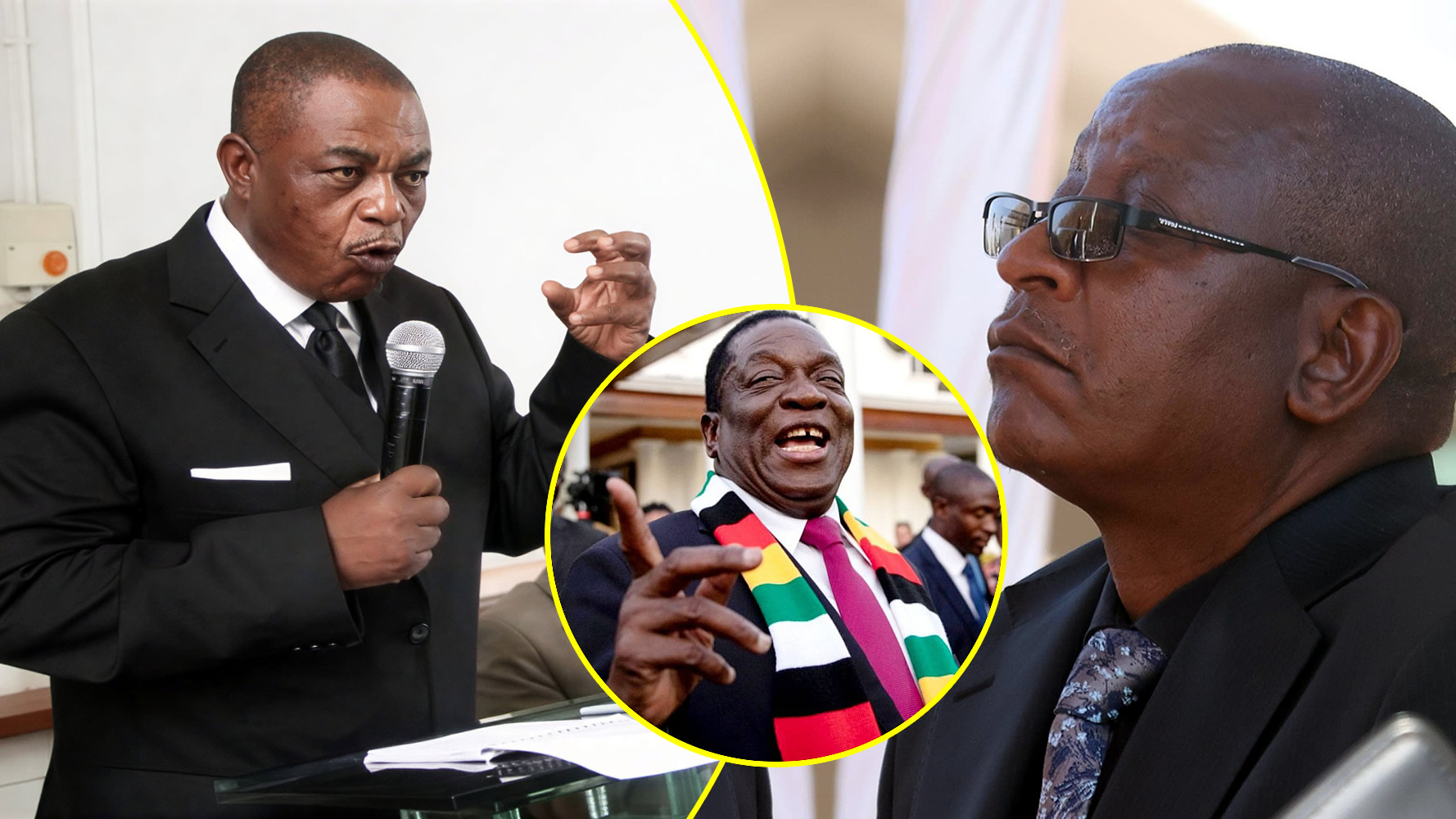
President Mnangagwa signs CAB3 into law, radically reshaping Zimbabwe’s volatile political landscape
HARARE — On the evening of 6 July 2026, Zimbabwe was plunged into a profound and literal darkness. A massive technical fault on the Warren-Alaska 330kV transmission line triggered a nationwide grid collapse, silencing the hum of the cities and leaving millions in the shadows. But as citizens scrambled for candles and generators, a far more permanent eclipse was being engineered in the corridors of power. By the time the lights flickered back to life the following day, the country’s political landscape had been radically and perhaps irrevocably reshaped.
On 7 July 2026, President Emmerson Mnangagwa officially signed the Constitution of Zimbabwe Amendment (No. 3) Bill — colloquially known as CAB3 — into law. With a stroke of a pen, the 83-year-old leader, who once promised a “new democracy” following the 2017 ousting of Robert Mugabe, dismantled the very foundations of the direct franchise. The legislation, now gazetted as part of the country’s supreme law, extends Mnangagwa’s tenure by two years and expands both presidential and parliamentary terms from five to seven years. Most critically, it abolishes the right of the Zimbabwean people to directly elect their head of state, transferring that power to a Parliament dominated by the ruling ZANU-PF.
Government spokesperson Nick Mangwana was quick to announce the fait accompli on social media. “Signed, sealed and delivered – it is now law,” he posted, attaching a copy of the legislation that critics have already branded a “constitutional coup” executed in plain sight.
The Mechanics of Entrenchment
The enactment of CAB3 represents a monumental shift in Zimbabwe’s governance framework. By shifting the timeline of the next presidential election, Mnangagwa has effectively extended his rule from 2028 until 2030. However, the investigative “sting” lies not just in the duration of his stay, but in the method of his potential succession. Future Presidents will no longer be chosen by the electorate through a direct ballot. Instead, they will be elected by Parliament.
To the casual observer, this might seem a mere technicality of parliamentary democracy. But in the context of Zimbabwe’s volatile political climate, it is a masterstroke of elite consolidation. By moving the election to the legislative house, ZANU-PF ensures that as long as they maintain a majority — a majority often secured through controversial rural voting blocs and the strategic use of traditional leaders — they can appoint the Head of State without ever facing a popular, and potentially unpredictable, national ballot again.
“The legislation radically alters and rewrites the rules of engagement for Zimbabwe’s political landscape,” noted one legal analyst in Harare. While the administration frames the changes as vital for “stability and policy consistency,” the reality is that it closes off the traditional democratic avenues for leadership transition. The “one man, one vote” era, for which so much blood was spilt during the liberation struggle, appears to be at its end.
The Shadow of Succession: The “Auxillia Scenario”
Beyond the legal jargon lies a labyrinth of political intrigue involving the highest offices in the land. Rumours have been circulating within the capital regarding a specific, calculated sequence of events that CAB3 now makes possible. While these remain speculative, they provide a chilling example of how the new law could be manipulated to ensure a dynastic or factional succession.
Under the new provisions, if a President resigns, the last Vice President to have served as Acting President assumes the role of interim leader for up to 30 days. During this window, a meeting of Members of Parliament is convened to vote for a new President.
Insiders suggest a scenario that would sideline Mnangagwa’s long-term rival, Vice President Constantino Chiwenga. The theory posits that Mnangagwa could retire after Vice President Kembo Mohadi — who has reportedly expressed a desire to retire and has no ambitions for the top job — has been the most recent to act as President. This would bypass Chiwenga, the former military general who has long been seen as the natural, if uneasy, successor to the 2017 transition.
The ultimate goal of such a manoeuvre? The installation of First Lady Auxillia Mnangagwa as the new President. Since Emmerson Mnangagwa would not immediately resign as the leader of ZANU-PF, he would retain the power to “recall” any MP who dared to vote against his wife in the parliamentary ballot. It would create a unique power structure: Auxillia heading the government while her husband continues to pull the strings of the party.
A Fractured Resistance
The response from the opposition has been a mixture of outrage and desperation. Nelson Chamisa, the former leader of the Citizens Coalition for Change (CCC), broke a long silence to call for a “transitional government.”
“Everywhere I go, I meet Zimbabweans who are worried about the country’s direction and future,” Chamisa wrote. “Regardless of age, profession, or location, many share a deep concern about the path the nation is taking and the dangers the country faces in the context of the unilateral, unpopular and anti-people constitutional amendment. The wisest thing is to withdraw this #CAB3 from parliament and constitute a transitional government that will address all the challenges our country faces. It’s doable.”
However, Chamisa’s call has been met with skepticism even from within the pro-democracy camp. Political analyst Tadini Masaya argued that such proposals might be “too little, too late” given the speed of ZANU-PF’s legislative engine. “Preaching such a gospel at this hour completely confuses the resistance,” Masaya said. “When the enemy is actively breaching the outer wall, you do not send a delegation to discuss sharing the living room.”
Meanwhile, firebrand activist Job Sikhala has urged citizens to “be prepared,” as his National Democratic Working Group (NDWG) seeks to unite various factions against what they term the “assault on the 2013 Constitution.”
Historical Parallels and the Rollback of Rights
The 2013 Constitution was the result of years of painstaking negotiation, designed specifically to curb the excessive executive powers that defined the Mugabe era. CAB3 effectively guts those protections. Investigative research into “parliamentary presidencies” in other failing democracies across the continent reveals a recurring pattern: when leaders fear the popular vote, they retreat into the controlled environment of the legislature.
Supporters of the amendment, however, remain steadfast. They assert that the extended terms will eliminate the “perpetual election mode toxicity” that they claim hampers national development. They argue that reducing frequent election-driven disruptions provides the political stability and continuity necessary to finish long-term national programmes.
Justice Minister Ziyambi Ziyambi, while justifying the move, acknowledged that the cancellation of the 2028 elections was designed to avoid the disputes of a contested outcome. It is a candid, if startling, admission: the solution to electoral disputes is to simply remove the election.
The Internal War: Mnangagwa vs. Chiwenga
The signing of CAB3 must also be viewed through the lens of the existential battle for power within ZANU-PF. The relationship between Mnangagwa and Chiwenga, the architects of the 2017 move against Mugabe, has reportedly evaporated into a cloud of suspicion and purges.
In October 2025, a leaked memo allegedly written by Chiwenga accused the President of repeating Mugabe’s mistakes and protecting corrupt business interests. While the government dismissed the memo as “treasonous nonsense,” the rift is undeniable. Mnangagwa’s move to extend his term to 2030 is seen by many as a direct strike against Chiwenga’s ambitions, as the Vice President was widely expected to take the reins in 2028. While Mnangagwa controls the party and the intelligence networks, Chiwenga retains significant support within the military and among war veterans.
Conclusion: A Nation at the Crossroads
As the dust settles over the gazetting of the Constitution of Zimbabwe Amendment No. 3 Act, the nation’s trajectory is more uncertain than ever. The 2028 elections, once a beacon of hope for a democratic transition, have essentially been rendered moot.
The investigative reality is that Zimbabwe has entered a new constitutional era — one where the “revolving door” for the elite is now protected by the supreme law of the land. Whether the electorate, the fractured opposition, or the increasingly sidelined judiciary can navigate this new reality remains to be seen.
For now, the people of Zimbabwe are left to ponder the irony of their situation. On the night CAB3 was prepared for its final signature, the country was in the dark. Now that the law is signed, many fear that the light of democracy may not return for a very long time.