


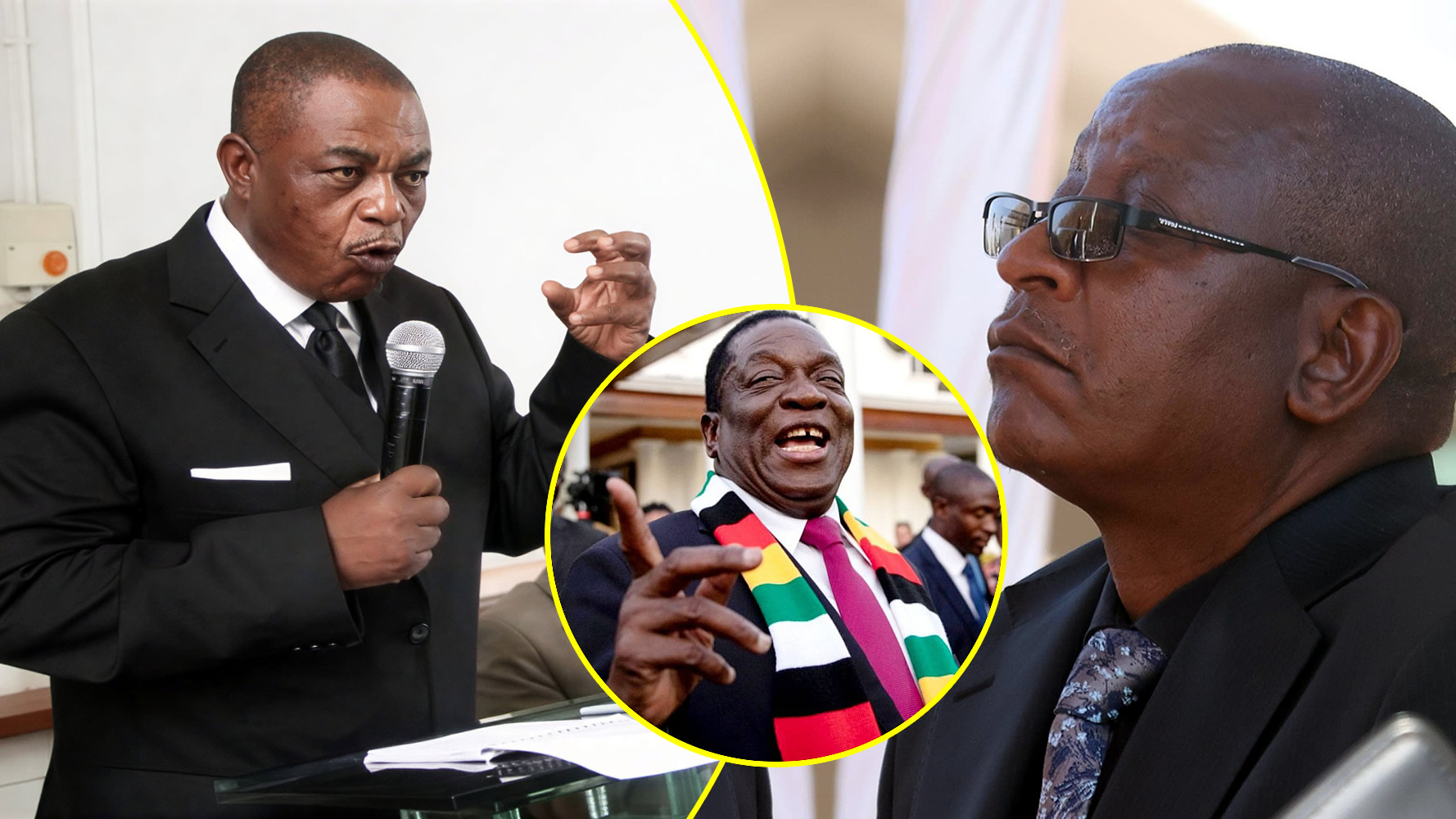
ZANU-PF’s Silent War: Is Chiwenga’s Presidential Dream Crushed by Mnangagwa’s CAB3 Gambit?
HARARE – The political chess game within Zimbabwe’s ruling ZANU-PF party has intensified, with Constitutional Amendment Bill No. 3 (CAB3) emerging as a pivotal move that could redefine the country’s succession dynamics. This investigative report explores the deep-seated factionalism and power struggles between President Emmerson Mnangagwa and his Vice-President, Constantino Chiwenga, a rivalry that has been simmering since the 2017 ‘soft coup’ that brought Mnangagwa to power.
A nation must think before it acts. The November 2017 military move in Zimbabwe that marked the end of Robert Mugabe’s 37-year rule opened a completely new phase in the southern African country’s troubled politics. Although the military leadership insisted that its intervention was not a coup, the events were clearly a military-led transfer of power. At its core, it reflected a collision between competing factions, longstanding economic failure, and the growing political power of the security establishment.
Whispers from within ZANU-PF suggest that CAB3 is not merely about constitutional reform but is a calculated strategy by Mnangagwa’s camp to solidify his grip on power and, crucially, to block Chiwenga’s path to the presidency. The amendment’s provisions, particularly those related to extending presidential term limits from five to seven years and replacing the direct popular election of the President with an election by a joint sitting of Parliament, are seen by analysts as tools to weaken Chiwenga’s influence and bolster Mnangagwa’s control over key state institutions. In mid-June 2026, the National Assembly passed the controversial bill, clearing a major legislative hurdle and bringing Mnangagwa’s “2030 agenda” closer to reality.
Even though Mnangagwa and Chiwenga appeared to be allies in the ousting of Mugabe, there were immediate signs of tension in their relationship. Chiwenga took control of key state institutions, including the Zimbabwe Broadcasting Corporation, and positioned himself as the dominant figure in government, while Mnangagwa was sidelined. While publicly they presented a united front, it was thought from the outset that Chiwenga intended for Mnangagwa to serve only one term, with him taking over in 2023. But astute political moves by Mnangagwa, a serious illness that sidelined Chiwenga for several months, and the removal of several of his allies from key positions thwarted that goal.
Fissures in the Mnangagwa-Chiwenga relationship began to appear in the 2018 election campaign. On June 23, 2018, a grenade explosion in Bulawayo, at the end of a Mnangagwa campaign rally, was officially blamed on remnants of the G40 movement. But later, ZANU-PF officials publicly claimed that the attack came from “inside” the military, interpreted as a jab at Chiwenga and his supporters. No action was taken against them, though. In August of 2018, soldiers opened fire on civilian demonstrators, killing six, which embarrassed Mnangagwa and created the perception that Chiwenga and the military were acting without regard to political fallout.
It was in January 2019 that the relationship between these two political rivals became clear to all. Mnangagwa, just before leaving on a foreign trip, announced steep fuel price hikes, leading to countrywide protests. The chaos, with Chiwenga as acting president, fed rumours of an attempted coup against Mnangagwa and of Chiwenga doing nothing to quell it, in hopes of making Mnangagwa look weak and incompetent. If the regime were to be toppled, the rumours said, the military could once again step in and “restore order,” positioning Chiwenga as the natural choice to lead the country.
Upon his return to Zimbabwe, Mnangagwa reacted forcefully. He called the behaviour of the security forces “unacceptable,” a direct rebuke of Chiwenga, and days later the army issued an internal order banning soldiers from wearing their uniforms in public for fear of civilian reprisals. On February 18, 2019, while Chiwenga was out of the country being treated for a serious and mysterious illness, Mnangagwa retired and reassigned four senior generals, including the commander of the Presidential Guard. These four, not coincidentally, were the core architects of the 2017 coup. When Chiwenga returned to Zimbabwe in late 2019, he found that the political landscape had shifted dramatically in Mnangagwa’s favour.
In 2020, Chiwenga was appointed minister of health, a move many saw as an attempt to politically sideline him. While the two men publicly projected unity during the COVID-19 pandemic, it was clear to those in the know that this was merely political theatre and that their détente was as fragile as tissue paper. In 2021, Mnangagwa engineered constitutional amendments regarding the presidential running mate, meaning that Chiwenga would not be his automatic successor in 2023. In 2023, Mnangagwa was reelected with Chiwenga campaigning alongside him. When Mnangagwa supporters began chanting “2030!” at victory parties, signalling a push to extend his rule beyond the constitutional two-term limit, the uneasy détente turned into open hostility.
In October 2025, a leaked memo — allegedly written by Chiwenga — went public online. The memo accused Mnangagwa of repeating Mugabe’s mistakes and protecting corrupt businessmen. The government dismissed the memo as “treasonous nonsense,” but the rift between the two men was now public and, despite the government’s efforts to deny it, undeniable.
Whatever trust might have existed between the two men in 2017, when they allied to bring an end to Mugabe’s long rule, has now evaporated. All that is left is suspicion, purges, and leaked accusations. Mnangagwa controls the party and the intelligence networks, but Chiwenga still has significant support within the military and war veteran groups. According to sources within the Zimbabwean diaspora, who wish to remain anonymous to avoid possible retribution, Chiwenga also has the support of many traditional leaders in rural areas. Because Zimbabwe’s constitution gives the president the authority to appoint or remove traditional chiefs, this sets up another potential point of contention between Mnangagwa and Chiwenga.
To consolidate his power and preempt any military resistance, Mnangagwa embarked on a sweeping and calculated purge of the country’s top security echelon between late 2024 and early 2025. This began with the retirement of Police Commissioner-General Godwin Matanga in December 2024, followed by the dismissal of the Director-General of the Central Intelligence Organisation (CIO), Ambassador Isaac Moyo, in January 2025. The purge culminated in March 2025 with the sudden removal of Lieutenant General Anselem Sanyatwe, the Commander of the Zimbabwe National Army (ZNA). These moves signalled a significant recalibration of Zimbabwe’s security and intelligence architecture, strategically weakening Chiwenga’s traditional power base.
According to the current constitution, Mnangagwa is due to step down in 2028 after serving two five-year terms, but the cabinet drafted legislation to change the constitution. The change extends presidential terms from five to seven years, allowing Mnangagwa to remain in office until 2030. The proposed changes also have the president elected by parliament rather than through a direct popular vote.
This move sparked protests within ZANU-PF, from opposition politicians, and from citizens’ groups. In 2023, over 25,000 Zimbabweans, including some in the diaspora, signed a petition that was submitted to the Southern African Development Community calling for the establishment of an inclusive transitional government. According to some activists, whose names are being withheld to protect against any reprisals, the situation in Zimbabwe is “tense and dangerous.” “Mnangagwa’s actions are fuelling the crisis,” one said. “He doesn’t trust the army”.
Within ZANU-PF, a dissenting faction was previously led by Blessed “Bombshell” Geza, a liberation war veteran and senior party member who became a vocal critic of Mnangagwa’s administration. Geza accused the government of being corrupt and called on people to protest. In one video published on social media, he regretted supporting the president’s rise to power.
Geza’s activism culminated in early 2025 when he called for mass demonstrations against the President, leading to a heavy crackdown by security forces. Wanted by the police on charges of treason, Geza fled to South Africa. Tragically, Geza passed away on February 6, 2026, after a battle with cancer. In his final farewell to Zimbabweans, Geza wrote on Twitter (now called X) that he would “fight from the grave” to stop the plan to extend Mnangagwa’s term beyond 2028. His death marked the loss of a prominent internal critic, but the sentiments he championed continue to resonate among disaffected party members.
Some think the crisis could reach its boiling point in a matter of days, while others are worried, but less sure. Predicting Zimbabwe’s future is difficult, but this is not just a quarrel over policy. It is an existential struggle over who will rule the country. There are a number of possible outcomes:
Mnangagwa might move to expel, suspend, or sideline Chiwenga by stripping him of key party and/or state roles, charging him with breach of party discipline or constitutional violations, or even indicting him for treason. Chiwenga supporters could leave ZANU-PF and align with the opposition, or establish “reform” factions to resist Mnangagwa’s dominance. Mnangagwa might replace military, intelligence, police, and security officials loyal to Chiwenga. This could provoke backlash or “silent” resistance within the security ranks, leading to greater chaos. Like the citizens of Zimbabwe, the world can only wait and see at this point. The coming weeks will tell.