


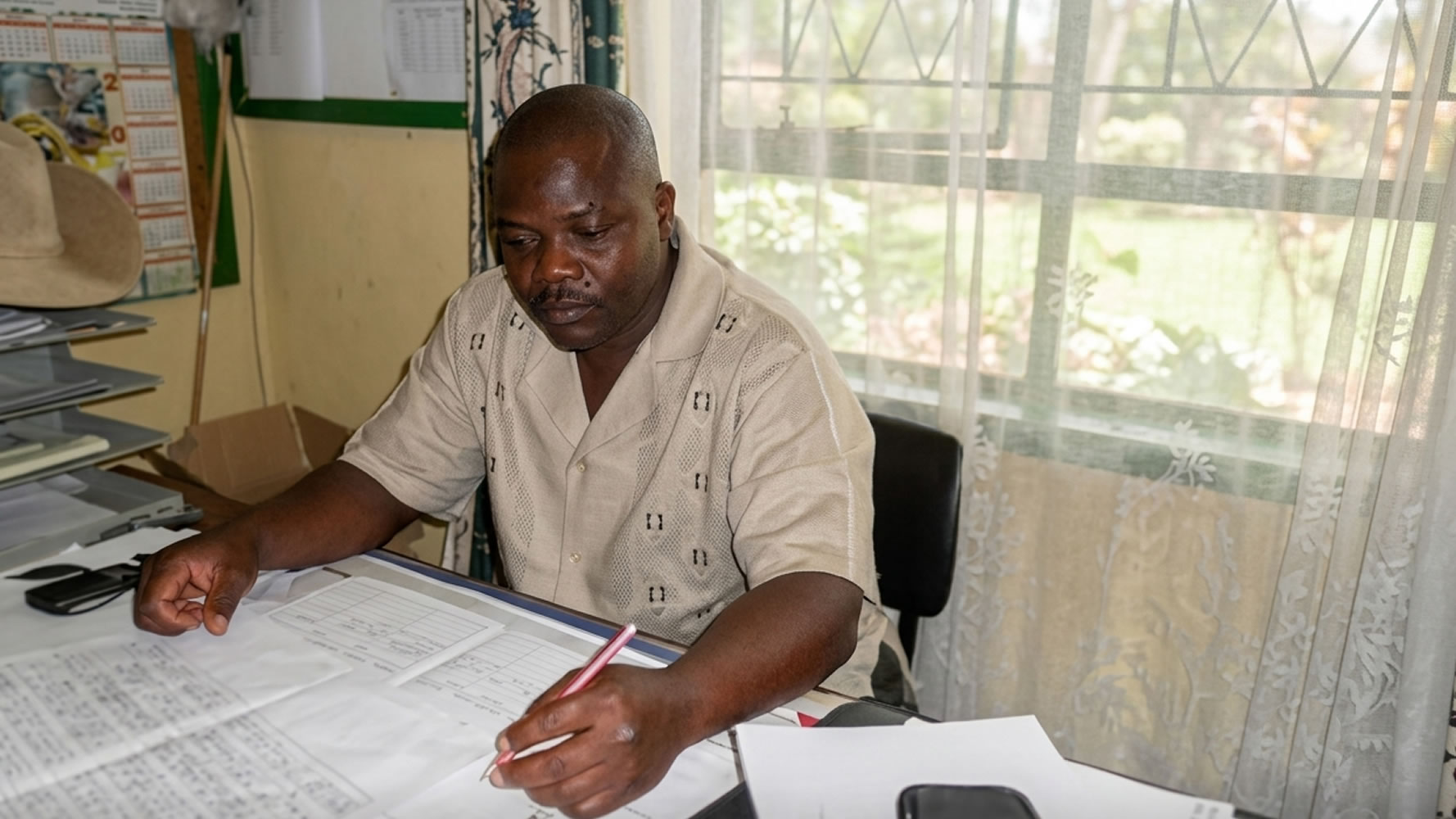
GWERU – The morning sun had barely reached its peak over Nashville High School in Gweru this past Friday when a routine administrative day transformed into a scene of absolute terror. For the staff and students of this prominent Midlands institution, the sight of their leader, Given Manenje, was usually one of authority and stability. However, at approximately 10:00 am, that image was shattered in a manner that few who witnessed it will ever be able to forget.
Given Manenje, the respected head of Nashville High, reported for duty as he always did, seemingly ready to tackle the challenges of the day. But within hours of his arrival, his health took a sudden and violent turn. According to witnesses and official reports, Manenje began to vomit blood profusely while still on the school premises. The sight of the headmaster in such a state of physical distress caused immediate panic among those nearby. Shortly after the onset of the haemorrhaging, he collapsed, losing consciousness before his colleagues could fully comprehend the gravity of the situation.
The school administration acted with desperate haste, arranging for him to be rushed to Claybank Hospital. Despite the rapid response and the efforts of medical professionals at the private facility, the battle for his life was short-lived. Given Manenje was pronounced dead shortly after his arrival, leaving a void at the helm of the school and a community searching for answers.
Jameson Matimbira, the Midlands Provincial Education Director (PED), confirmed the tragic event to the press. “Manenje began vomiting blood around 10am. He collapsed and was rushed to Claybank Hospital, where he died,” Matimbira stated, as his words carried the weight of a sudden loss that has left the provincial education department reeling. He further noted that the authorities are now “awaiting a post-mortem report that will detail Manenje’s cause of death.”
Currently, the atmosphere in the Woodlands suburb of Gweru is one of sombre reflection. Mourners have gathered at the late headmaster’s residence, where the silence is broken only by the quiet sobs of relatives and colleagues. The suddenness of his departure has raised many questions about the physical toll that the modern education system in Zimbabwe places on its senior officials.
A Pattern of Sudden Loss
The tragedy at Nashville High School is not an isolated incident. Across Zimbabwe, the phenomenon of educators—both teachers and headmasters—collapsing and dying within the very walls where they dedicate their lives has become a recurring nightmare. These incidents highlight a disturbing trend that points towards a deeper crisis in the health and well-being of the nation’s teaching fraternity.
To understand the gravity of Manenje’s death, one must look back at similar tragedies that have occurred in recent years. In February 2020, a similar scene of horror unfolded at Mtshede Primary School in Bulawayo’s Njube suburb. Freddy Murimirajaoba, a 53-year-old Grade 3 teacher, was conducting a Physical Education lesson on the school grounds when he suddenly complained of a severe headache.
The situation escalated with terrifying speed. Murimirajaoba was forced to abandon his lesson and was assisted to the headmistress’s office. There, in front of stunned colleagues who were trying to offer him water and comfort, he clutched his head and collapsed. He died on the spot, before an ambulance could even be summoned. At the time, fellow teachers described him as a dedicated professional who rarely complained about his health, making his sudden demise in the presence of his pupils all the more traumatic.
“We had to rush to the school grounds and we took him to the office,” one of his colleagues recalled during the aftermath of that incident. The trauma of seeing a mentor fall in such a manner remains a vivid scar for the Grade 3 pupils who were under his care that morning.
The Pressure of the Podium
The physical demands of school leadership often manifest in the most public of arenas. In March 2025, the education sector was again plunged into mourning when a primary school headmaster from Harare province collapsed and died at Hwange Colliery Stadium. The irony of the situation was particularly painful; the headmaster was in the middle of celebrating his province’s triumph during a national athletics event.
Witnesses described how the educator was cheering and jubilant one moment, and on the ground the next. Despite the presence of first aid teams and medical personnel at the sporting event, he could not be revived. Such incidents suggest that even moments of joy and professional pride can become triggers for underlying health issues that many educators carry silently.
The case of Bernard Maphosa, the Acting Headmaster of Mpalawini Primary School in Insiza North, offers another grim parallel. In January 2018, Maphosa allegedly clutched his chest and began gasping for air while at work. Like Manenje, his collapse was sudden and final. These deaths are often attributed by medical experts to cardiac issues, including fatal arrhythmias or acute myocardial infarction, frequently exacerbated by the high-stress environment of the Zimbabwean classroom.
The Invisible Burden
Investigating these deaths requires a look at the systemic pressures facing Zimbabwean educators. The economic climate in the country has placed an unprecedented burden on teachers. With salaries often failing to keep pace with inflation, many educators find themselves working multiple jobs or engaging in “side hustles” just to survive. This constant state of financial anxiety, combined with the administrative pressures of managing overcrowded classrooms and dwindling resources, creates a “pressure cooker” environment.
Medical professionals have noted that chronic stress is a leading contributor to hypertension and cardiovascular disease. In a profession where one is expected to be a pillar of strength for hundreds of children, many teachers neglect their own health. The lack of regular medical check-ups, often due to the high cost of private healthcare and the overstretched nature of public facilities, means that conditions like high blood pressure or early-stage organ failure go undiagnosed until it is too late.
The incident involving Kwanele Moyo, a 36-year-old student teacher at Hillside Teachers’ College in Bulawayo, further illustrates the vulnerability of those in the profession. In March 2017, Moyo, who was pregnant at the time, collapsed and died at the college’s clinic. While her situation involved specific maternal health complications, the fact that she was under the rigorous pressure of final-year teaching practice at the time of her collapse cannot be ignored.
Environmental and Health Risks
Beyond the internal pressures of stress and undiagnosed illness, schools in Zimbabwe have also faced external health threats that have claimed the lives of their leaders. In September 2018, during a severe cholera outbreak that hit the Glen View suburb of Harare, a school headmaster was among the victims. He succumbed to the disease within hours of falling ill, a victim of the very environment he was trying to protect for his students.
Even accidental deaths at school sites paint a picture of the risks educators face. In June 2019, Cephas Kanyai, the headmaster of St Ludger Primary School in Marondera, died after falling from an avocado tree on the school premises. While this was an accident rather than a sudden illness, it underscores the fact that school heads are often involved in every aspect of school life, sometimes taking on physical risks that lead to tragedy.
A Call for Change
The death of Given Manenje at Nashville High School must serve as more than just a tragic headline. It is a stark reminder of the mortality of those we entrust with the future of our children. When a headmaster vomits blood and dies in front of his staff, it is a signal that the support systems for educators are failing.
The teaching fraternity is calling for better health insurance, mandatory regular medical screenings, and a genuine effort to reduce the administrative and economic stress that is clearly taking a physical toll. As the post-mortem results for Manenje are awaited, the community remains in a state of watchful grief.
The hallways of Nashville High School are quiet for now, but the memory of Friday morning will linger. The image of a headmaster, once full of life and authority, collapsing in the throes of a sudden medical crisis is a haunting testament to the silent struggles of Zimbabwe’s educators. It is a story not just of one man’s death, but of a profession that is bleeding, sometimes quite literally, under the weight of its responsibilities.