


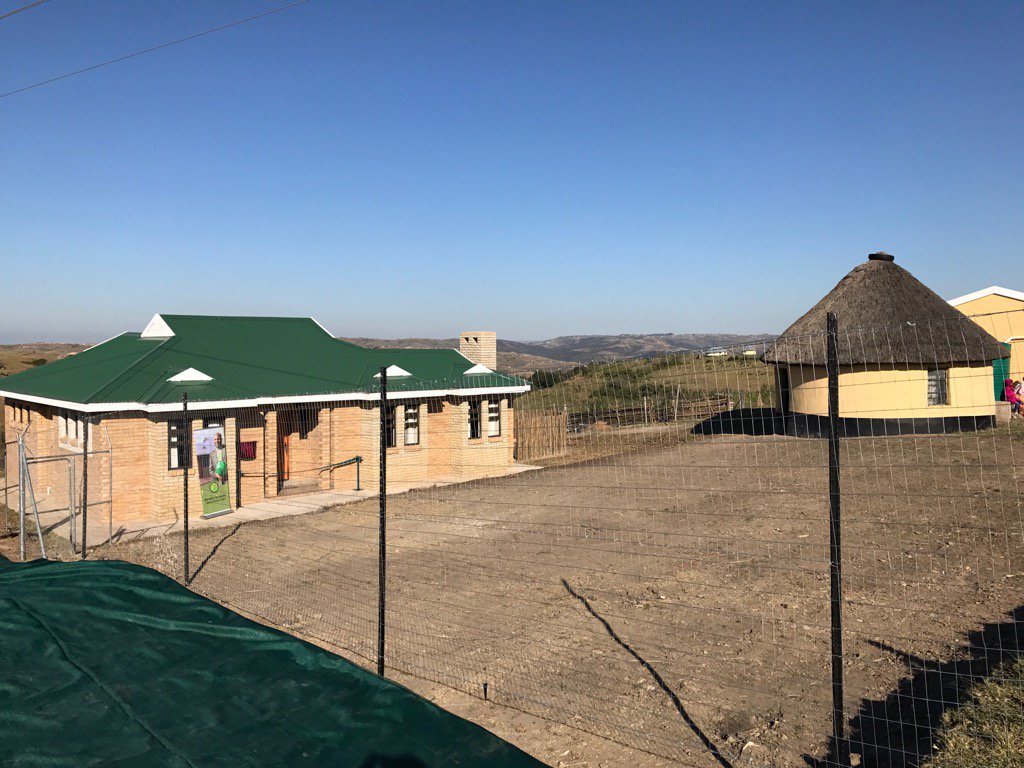
In the heart of Zimbabwe’s rural landscape, a silent but devastating crisis has been unfolding for years, culminating in a dramatic nationwide crackdown. The National Council of Chiefs has recently demanded an urgent and massive intervention against what it terms “illegal sabhuku deals” – a clandestine market where communal land, traditionally held in trust for communities, is illicitly sold off by village heads, known as sabhukus, to desperate urbanites and opportunistic businesses. This illicit trade has not only subverted the traditional leadership hierarchy but has also transformed Zimbabwe’s rural heartland into a real estate free-for-all, prompting the government to launch “Operation Restore Sabhuku.”
The scale of this issue is staggering. Thousands of families now face the grim prospect of eviction, having invested their life savings into plots of land that, in the eyes of the law, were never legitimately theirs to acquire. The crackdown, which has seen authorities move with unprecedented resolve, aims to dismantle a parallel land administration system that officials contend has fostered “widespread disorder” across provinces like Manicaland.
The Genesis of the ‘Sabhuku Mafia’
For decades, the communal land system in Zimbabwe has been governed by the Communal Land Act (Chapter 20:04), which explicitly states that all communal land is vested in the State and administered through Rural District Councils (RDCs). Traditional leaders, including sabhukus and chiefs, are designated as custodians of this land and cultural heritage, not its owners. They possess no legal authority to sell or permanently allocate it. Yet, this legal framework has been systematically undermined.
“Traditional leaders are custodians of land and cultural heritage – they are not owners and possess no legal authority to sell or permanently allocate communal, State, A1/A2 farm land. Violations will attract disciplinary action through the Provincial Chiefs’ Council,” emphasised Minister Misheck Mugadza, the Minister of State for Manicaland Provincial Affairs and Devolution, during a high-level stakeholders’ meeting.
The allure of quick money, coupled with the growing demand for land from a rapidly urbanising population, created fertile ground for the emergence of what many now refer to as the “Sabhuku Mafia.” This network often involves not just village heads, but also politically connected intermediaries and self-styled land barons who exploit legal ambiguities and the desperation of home seekers. These illicit transactions bypass formal channels, leaving buyers vulnerable and the land administration system in disarray.
A Province Under Siege: Manicaland’s Plight
Manicaland province has emerged as a major epicentre of these illegal land deals. Data compiled by the provincial government reveals that 130 out of Manicaland’s 3,125 villages are heavily affected. Buhera leads with 44 affected villages, followed by Makoni with 26, and Mutare with 20. Other hard-hit areas include Nyanga, Chipinge, and Chimanimani.
Mr John Misi, the Provincial Director for Local Government Services and Administration, highlighted the pervasive nature of the problem, noting that illegal settlements have mushroomed around rapidly growing business centres such as Murambinda, Birchenough Bridge, Chitakatira, DC Mutasa, Watsomba, Ruwangwe, Nhedziwa, and Chimanimani. In Chimanimani, the encroachment has even reached timber plantations, threatening a vital industry. In Makoni, boundary disputes among chiefs created a vacuum, allowing “de-facto headmen” to illegally sell land.
Beyond Manicaland, the problem is widespread. Matabeleland North, particularly Bubi, uMguza, Tsholotsho, and Lupane, has also seen a proliferation of these deals. Peri-urban areas surrounding Harare, such as Domboshava, Goromonzi, and Seke, have been similarly affected, with Epworth gaining notoriety for its “title deed schemes”.
The Political Undercurrents: Land as a Patronage Tool
The timing of “Operation Restore Sabhuku” raises pertinent questions about its underlying motivations. While the government asserts a genuine commitment to restoring order, some observers suggest a political dimension, particularly in light of Zimbabwe’s evolving political landscape. President Emmerson Mnangagwa recently signed constitutional amendments in July 2026, extending his term in office to 2030. This development has led to speculation that the crackdown could be a strategic move to re-centralise control over rural voters, who form a significant political constituency, ahead of the new political timeline.
Historically, land has been a powerful patronage tool in Zimbabwean politics, used to secure loyalty and votes. The “title deed schemes” that emerged in areas like Epworth are a stark illustration of this. In April 2023, President Mnangagwa reportedly issued title deeds to 265 families in Epworth, a move widely seen as a campaign promise. However, reports indicate that many residents were “misled,” with the promised deeds lacking full legal weight or failing to materialise for the broader community.
Richard Moyo, the Matabeleland North Minister of State, revealed the extent of political manipulation, stating, “Some of those giving out land falsely represent that they are doing so on behalf of the Zanu PF party, while others say they would be representing war veterans”. This highlights how the ruling party’s name is sometimes invoked to legitimise illegal land sales, further entangling the issue with political patronage.
The Human and Environmental Cost
The consequences of these unregulated land deals extend far beyond legal and political complexities. The haphazard development has led to severe environmental degradation. Settlements have sprung up in ecologically sensitive areas such as mountains, vleis, waterways, and river valleys, blocking natural drainage systems and threatening ecosystems. The Environmental Management Agency (EMA) has been tasked with enforcing Environmental Impact Assessment (EIA) requirements, a clear indication of the ecological damage already inflicted.
For the thousands of families who purchased these plots, the human cost is immense. They face eviction without compensation, losing their homes and life savings. Moreover, these illegal settlements typically lack basic infrastructure: no proper roads, no sewer reticulation, no clean water supplies, and no access to schools or clinics. The cost of regularising these areas and installing necessary infrastructure is often prohibitive, creating a long-term burden for taxpayers.
Legitimate landowners, particularly those in communal areas, have also suffered, witnessing their grazing lands and fields swallowed by these unplanned housing developments. The National Council of Chiefs Vice President, Chief Fortune Charumbira, underscored the urgency of the situation, stating, “Those found guilty must face the law because communal land is not for sale… We need a nationwide investigation involving the Ministries of Local Government and Lands to deal with this problem”.
The Hammer Falls: Government’s Uncompromising Stance
The government’s response, spearheaded by “Operation Restore Sabhuku,” is uncompromising. Minister Mugadza declared, “The era of the illegal land baron is over… For the families who saved their life earnings to buy a small plot from a local headman, the reality is stark. There will be no refunds, no alternative land, and no sympathy from the State”.
President Emmerson Mnangagwa has personally denounced the practice, ordering all provinces to submit detailed audits of illegal settlements by mid-May 2026. Engineer Tafadzwa Muguti, Permanent Secretary for Presidential Affairs and Devolution, issued a directive to all Provincial Secretaries for Provincial Affairs and Devolution, instructing them to compile and submit detailed information on illegal land allocations. This directive signals a coordinated and high-level commitment to addressing the crisis.
Legal precedents are already being set. In January 2026, several village heads in Dema were convicted of illegal land sales. More recently, a 51-year-old man from Nyadongo Village was sentenced to six months in prison for selling communal land. These cases serve as a stern warning to those involved in the illicit trade.
Towards Orderly Development
The goal of “Operation Restore Sabhuku” is not merely to punish offenders but to restore order and ensure planned, sustainable development. Urban authorities like Mutare City Council, Chipinge Town Council, and Rusape Town Council have been commended for their resilience in preventing illegal allocations within their jurisdictions. The challenge now is to replicate this discipline in rural areas.
Minister Mugadza has directed all local and rural district councils to “immediately activate” their master plans, which are the blueprints for orderly development. The neglect of these plans, he noted, is precisely what allowed the sabhuku deals to flourish.
As police patrols intensify and EMA inspections begin, a profound unease has settled over the illegal settlements. For the legitimate landowners, this intervention is a long-overdue relief. But for the thousands who bought into the sabhuku dream, the future is uncertain, marked by legal battles and the potential loss of their homes. The message is clear: a signature from a village head holds no legal weight compared to an official offer letter from the Ministry of Lands. Zimbabwe stands at a critical juncture, striving to reclaim its land from the shadows of corruption and steer it towards lawful, planned development.