


UK Triple Murder Suspect Flees: Shock as Zimbabwe man kills his wife and two daughters in UK then flees back home
Bedford, UK – An international manhunt is currently underway for Ndodana Mkhanyisi Tshuma, a 45-year-old man suspected of the brutal murder of his wife and two daughters in Bedfordshire, United Kingdom. The alleged flight of Tshuma, also known as Mark, to Zimbabwe has ignited a complex international manhunt and raised critical questions about cross-border justice and the mechanisms of international law enforcement. British authorities are actively pursuing Tshuma, who reportedly left the UK via Heathrow Airport on a British passport, with strong beliefs that he is now in Zimbabwe.
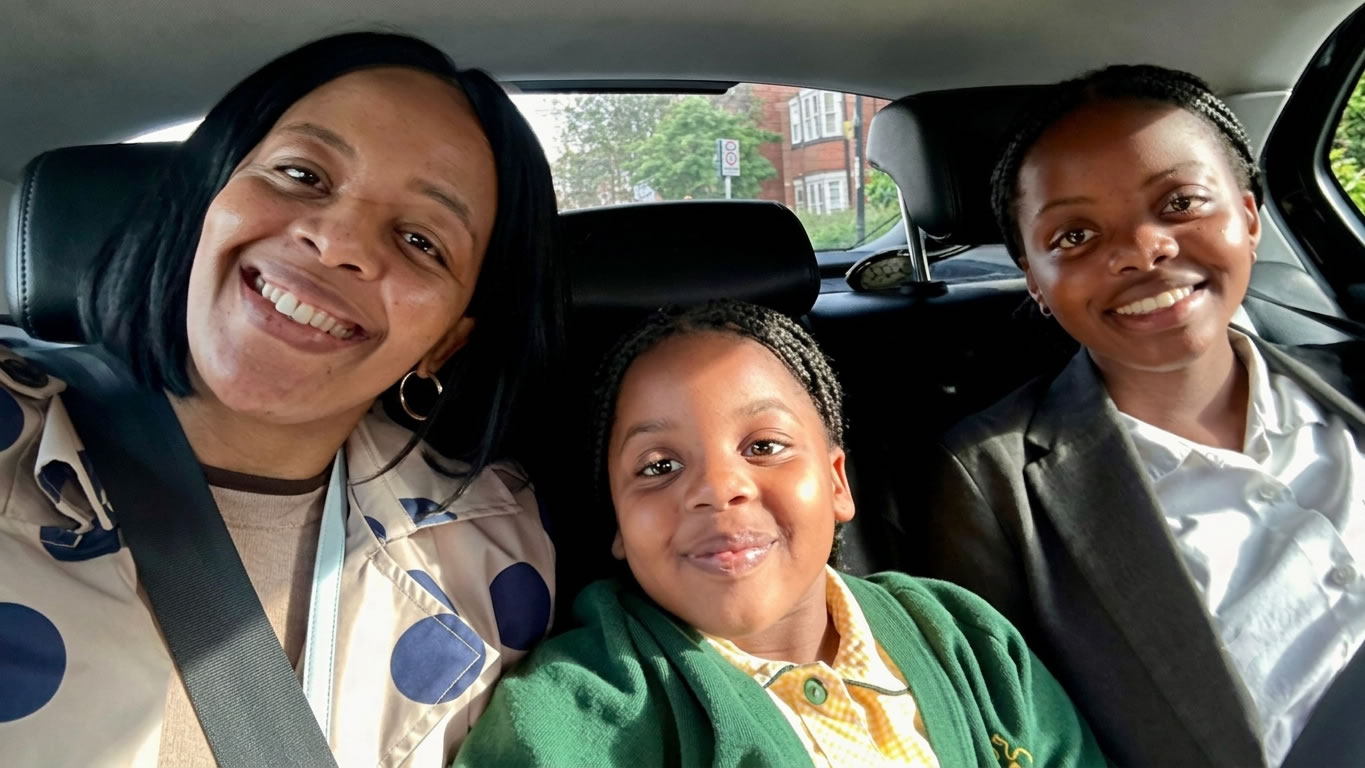
The tragic discovery unfolded on Monday when Bedfordshire Police were called to a large detached house in Carnoustie Drive, Great Denham. Officers were prompted to force entry after receiving distressing reports that the family had not been seen for several days. Inside, they made the grim discovery of three bodies: Nothabo Zandile Tshuma, 42, and her two young daughters, Natalie, aged 15, and Nala, a mere five years old. Although formal identification is yet to be completed, police believe the victims to be Tshuma’s wife and children.
Detective Inspector Lee Martin, the senior investigating officer, confirmed that Ndodana Mkhanyisi Tshuma is believed to have left the country on Saturday, two days before the bodies were found. “We know that Mark Tshuma left the country on Saturday and is now believed to be in Zimbabwe,” Det Insp Martin stated. “We are urgently working to find and apprehend him, and would appeal to him directly to hand himself in.” He further emphasised the gravity of the situation, saying, “Mark, unthinkable harm has been caused to those around you, and this has left your relatives and friends utterly devastated. Criminal investigation knows no borders. We are actively working with national and international agencies to pursue every available line of enquiry to track you down. Please do the right thing, come forward and hand yourself in to local authorities.”
The victims, Nothabo Zandile Tshuma, a 42-year-old mother, and her daughters Natalie, 15, and Nala, five, have left a community in profound grief. Tributes have poured in from their respective schools, painting a picture of vibrant lives tragically cut short. Jo Webster, head of Pilgrims Pre-Prep School, described Nala as a “ray of sunshine” with an inquisitive nature and a “wonderful sense of humour,” noting that many staff had known her since she was an infant. Gemma Gibson, headmistress of Bedford Girls’ School, remembered Natalie, a Year 10 pupil, as “bright and accomplished,” highlighting her talents as a dancer, musician, and sportswoman. “She was fun-loving, full of life and had a positive impact on everyone she came into contact with. She will be remembered with great warmth and affection,” Gibson added.
The house in Carnoustie Drive, Great Denham, where the bodies were found, has been cordoned off, becoming a sombre focal point for the community’s sorrow. Bunches of flowers have been laid on a hedge outside, with one tearful woman expressing, “We’re really sorry to lose her. She was such a gracious mother.” Neighbours, speaking to the BBC, conveyed their shock that such a horrific incident could occur in “such a nice and safe area.” Assistant Chief Constable John Murphy previously described it as “a deeply distressing incident in which a mother and her two children are believed to have been murdered,” assuring the public there was no wider risk but increasing patrols in the area.
Ndodana Mkhanyisi Tshuma, also known by his alias Mark, is a British citizen of Zimbabwean heritage. Investigations have revealed that he owns and operates a property business named Nexus Trove Holdings, registered at his Great Denham address. Companies House records indicate that the business held over £1 million in assets at the close of 2024, generating a profit of £48,277 that year. The property itself, a large detached house with a swimming pool, four bedrooms, and four bathrooms, was reportedly purchased for £1.27 million in May 2024. CCTV footage captured Tshuma at Heathrow Airport on Saturday, the day he is believed to have fled the country, further solidifying the timeline of events leading to the international manhunt.
The pursuit of Tshuma has quickly highlighted the intricate challenges of international law enforcement, particularly when suspects cross national borders. A significant hurdle in this case is the absence of a formal extradition treaty between the United Kingdom and Zimbabwe. While the UK has bilateral extradition agreements with many countries, Zimbabwe is not currently on that list . This legal vacuum complicates efforts to swiftly apprehend and return Tshuma to face justice in Britain.
Zimbabwean police have publicly stated that they are aware of the case through media reports and have put structures in place to monitor for any sightings of Tshuma. However, police spokesman Paul Nyathi confirmed that as of now, they have not received a formal Interpol notice regarding Tshuma’s possible presence in the country . This delay in official communication could significantly impede efforts to bring the suspect to justice, as a formal notice is often a prerequisite for international cooperation in such matters. The situation underscores the complexities of national sovereignty and the diplomatic intricacies involved in high-profile international criminal cases.
Legal experts suggest that while a formal extradition treaty simplifies the process, its absence does not entirely preclude the possibility of a suspect’s return. Other avenues, such as mutual legal assistance agreements or direct diplomatic negotiations, might be explored. However, these often involve lengthier processes and depend heavily on the political will and cooperation between the two nations. The London Scheme for Extradition within the Commonwealth, which Zimbabwe is a part of, provides a framework for extradition between Commonwealth countries, but its application can be nuanced and may not always override the need for specific bilateral agreements or formal requests . The question remains: how long will it take for justice to be served, and what role will Zimbabwe play in ensuring that a suspected perpetrator of such heinous crimes does not evade the law?
The tragic events have ignited a wave of outrage across social media platforms, sparking crucial discussions about the pervasive issue of violence against black women. Many commentators have taken to online forums to express their grief and demand accountability, highlighting the urgent need for societal introspection and action. Instagram user @eteyenjr articulated this sentiment, stating, “As black men, we need to come together and resolve this deadly and systemic issue of violence towards our women. I’m aware it’s part of a wider discussion and I’m open to platforming such talks.”
Television presenter Antoine Allen further underscored the severity of the problem, citing alarming statistics: “RIP. Fellow Men, before you make excuses or deny the facts, read these heartbreaking comments from women who survived abuse, know someone who survived, or knew someone murdered by a man. The statistics are clear. In England and Wales, around 90% of people killed by a current or former partner are women. More than half of all women killed are murdered in a domestic homicide, almost always by a man.” These powerful statements reflect a growing awareness and a collective call for an end to gender-based violence, particularly within vulnerable communities.
User @iamkwameasamoah_1 called for immediate action, saying, “I had to read this three times, and tears filled my eyes for the wife and two children who were murdered. The Home Office and the police must act swiftly to apprehend this Zimbabwe man. So my condolences to the affected family.” Another user, @sweetlykechoclate, shared a poignant reflection on the fear many women experience: “RIP, it’s so terrifying being a woman. I’ve had men shout and hurl abuse at me in my face, because l’ve refused their advances. Some men don’t surprise me anymore.”
This case, while shocking in its brutality, is not an isolated incident. Research indicates that domestic violence remains a significant concern within the UK Zimbabwean diaspora. Political instability in Zimbabwe in previous decades led to a substantial influx of Zimbabwean asylum seekers and migrants to the UK, many of whom faced challenges including racism in the workplace and economic hardship. These factors, combined with cultural nuances and potential isolation, can exacerbate vulnerabilities to domestic abuse. The Herald, a Zimbabwean newspaper, has previously reported on the harrowing trend of murders by Zimbabweans in the diaspora, noting that domestic violence in the UK sometimes culminates in tragic fatalities.
While specific recent statistics on domestic violence within the UK Zimbabwean diaspora are challenging to isolate, broader UK data reveals a disturbing picture. In the year ending March 2025, there were 111 domestic homicides in the UK, with 75 of the victims being women. Of these, 67 were killed by a current or ex-partner. These figures highlight the urgent need for comprehensive support systems and preventative measures to protect individuals from domestic abuse, irrespective of their background.
The ongoing manhunt for Ndodana Mkhanyisi Tshuma serves as a stark reminder of the global nature of crime and the complexities involved in achieving justice across international borders. The absence of a direct extradition treaty between the UK and Zimbabwe, coupled with the need for formal Interpol notification, presents significant challenges. However, the determination of British authorities to pursue every available line of enquiry, alongside the growing public outcry, underscores the unwavering commitment to ensuring that perpetrators of such heinous crimes are held accountable.
The emotional and social impact of this case resonates deeply, both in the UK, where a community mourns an unimaginable loss, and in Zimbabwe, where the news of a suspected triple murderer seeking refuge could stir public sentiment and prompt further discussions on justice and safety. The world watches, awaiting the resolution of this profound case, and the answers it may bring regarding international cooperation in combating transnational crime. The pursuit of justice, though arduous, continues across continents, driven by the memory of Nothabo, Natalie, and Nala Tshuma.