


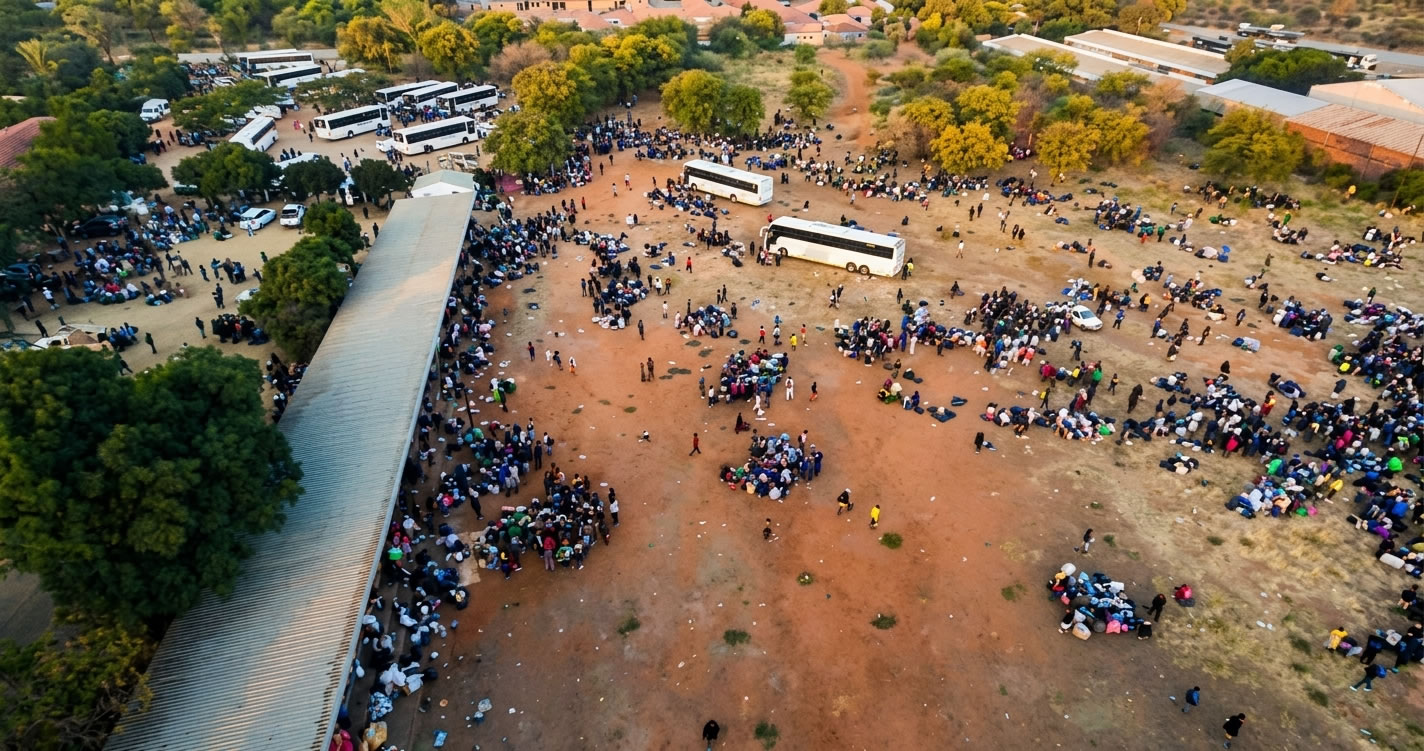
Harare – A looming public health crisis threatens Zimbabwe as an unprecedented exodus of its citizens from South Africa, estimated at 100,000 in a single month, strains an already fragile healthcare system. Many of these returnees, fleeing xenophobic attacks and a tightening bureaucratic squeeze, are living with HIV, raising grave concerns among lawmakers and health officials about potential interruptions to their life-saving antiretroviral therapy (ART) and the broader implications for the nation’s fight against the pandemic.
The scale of the returnee influx is staggering. While the headline speaks of 100,000, the reality on the ground suggests a far more complex and distressing situation than a voluntary homecoming. This mass movement is largely a consequence of escalating anti-migrant sentiment and a coordinated, albeit silent, crackdown by South African authorities. Reports indicate that Zimbabwean nationals in South African townships have been targeted not only by vigilante groups but also by a bureaucratic squeeze, including sudden “technical glitches” in the Zimbabwean Exemption Permit (ZEP) renewal systems and the freezing of bank accounts belonging to foreign nationals.
The Zimbabwean Exemption Permit (ZEP) programme, which allowed eligible Zimbabwean nationals to reside and work legally in South Africa, has been a source of significant uncertainty. Although extensions have been granted, with the latest extending validity until 28 May 2027, previous deadlines, such as November 2025, caused immense anxiety and prompted many to return. The freezing of bank accounts for some ZEP holders, despite being attributed to “system errors” by financial institutions, has further exacerbated the precarious situation for Zimbabweans in South Africa, pushing many to seek refuge back home.
Members of Parliament in Zimbabwe have voiced profound concern over the potential for treatment interruptions among HIV-positive returnees. They warn that inadequate management of these cases could not only endanger individual lives but also reverse the significant progress Zimbabwe has made in combating the HIV pandemic. The government reports that over 99,000 returning citizens have been screened at various ports of entry to date.
Appearing before Parliament recently, Health and Child Care Minister Douglas Mombeshora addressed these concerns, confirming that health workers have been deployed at border posts to screen all returnees, from adults to children, and identify those in need of urgent medical assistance. “We have put in place our health workers at the ports of entry to make sure that every returnee is being screened, from adults to children,” Mombeshora stated. He added, “So far, we have screened over 99,000 Zimbabweans, but we are also screening returnees to Malawi and Zambia to make sure that no communicable disease passes through”.
The Minister acknowledged that among the growing number of returnees are individuals living with HIV, diabetes, hypertension, and other chronic illnesses, many of whom arrive without sufficient supplies of their prescribed medication. “We are also interrogating every returnee on whether they have any chronic illnesses, specifically HIV, diabetes and hypertension,” he explained. “Some of the returnees will tell you that they have been on treatment, but when they left, they also left some of their medications”.
To mitigate the risk of treatment interruptions, Minister Mombeshora confirmed the establishment of a clinic at the border where returnees can access emergency medication before being referred to health facilities in their respective home districts. However, he clarified that long-term treatment cannot be initiated immediately at these entry points. This is due to the necessity of conducting baseline assessments, such as viral load tests, before patients can be formally enrolled into Zimbabwe’s treatment programmes. “We are not able to institute long-term treatment on their arrival because we need to first take baseline tests, like viral load and things like that, which cannot be done at the port of entry at the moment,” Mombeshora explained. He reassured lawmakers, “We have put in place those mechanisms to ensure that no one who has been on any treatment will have their treatment interrupted”.
The compatibility of HIV treatment protocols between South Africa and Zimbabwe has also emerged as a critical issue. Another lawmaker, Leslie Mhangwa, highlighted that while many of the medicines used in both countries are similar, the specific treatment regimes can differ. “Each country has its own treatment regimes, but in most cases we see that the medicines that have been developed are the same,” Mhangwa observed. “Countries may decide on which ones to put on first-line treatment, second-line treatment and third-line treatment”. This necessitates careful assessment to ensure a smooth transition for patients. Minister Mombeshora concurred, stating that health authorities must first establish the precise medication each patient was taking before integrating them into Zimbabwe’s treatment programme. “When we start them on our own regimes, we really have to monitor and do a series of tests to make sure that they are now compatible with those treatments,” he added.
Alarmingly, the Minister admitted that Zimbabwe currently lacks the specialised technological models required to rapidly assess treatment compatibility for the large numbers of returnees arriving from various countries. When questioned by MP Darlington Dzikamai Chigumbu about the existence of pre-trained technological systems for quick decision-making in such situations, Mombeshora’s response was stark: “The short answer is no, we do not have those models.” He reflected on the challenge, stating, “Then certain things happen, when you are not prepared for them, it is up to us now to think and say how do we deal with such cases if they arise in the future”.
This unfolding crisis is compounded by broader concerns regarding the funding of HIV and tuberculosis programmes in Zimbabwe. The debate comes amidst fears that Zimbabwe’s earlier gains in fighting these diseases could be jeopardised following the United States’ decision to freeze aid to countries supported by the United States Agency for International Development (USAID), including funding channelled through the World Health Organisation (WHO). Zimbabwe’s health sector remains heavily reliant on foreign assistance, particularly from the United States, with the Treasury repeatedly failing to allocate adequate domestic funding, falling short of the Abuja Declaration’s commitment of 15% of annual national budgets to health.
Early last year, former US President Donald Trump instructed organisations in recipient countries to cease distributing HIV medication purchased with US aid. This decision, coupled with broader foreign aid freezes, has already led to declines in PEPFAR-supported HIV treatment in several countries, with reports indicating approximately 2 million fewer people receiving treatment in 2025. The Global Fund, a significant contributor, has invested $1.8 billion into Zimbabwe’s HIV response and approved an additional $437 million for the 2024–2026 period, yet the overall funding landscape remains precarious. Media reports from January to June 2025 indicated 5,932 AIDS-related deaths in Zimbabwe, an increase from 5,712 during the same period in 2024, underscoring the severe impact of any disruptions.
Approximately 1.2 million people in Zimbabwe are currently receiving HIV treatment, and around 90% of HIV-positive pregnant women receive antiretroviral therapy. Any interruption in this treatment could dramatically increase the risk of mother-to-child HIV transmission and undermine decades of concerted effort to control the epidemic. The implications extend beyond health, touching upon the socio-economic fabric of the nation.
The Zimbabwean government’s narrative of a robust economy capable of absorbing these returnees appears to diverge from reality. At border posts, thousands are reportedly stranded with their belongings, facing extortion from both sides. Some analysts suggest that the government’s eagerness to welcome returnees might be driven by a desperate need for cheap labour to fuel a burgeoning construction boom and a desire to dilute opposition strongholds in urban centres with repatriated citizens dependent on state aid. This paints a picture of ordinary people caught as pawns in a high-stakes game of regional migration politics, facing the trauma of displacement and terrifying uncertainty as their “home” proves less ready for them than state-controlled media claims.