


A Breath Away from Despair: The Cost of Non-Adherence in Zimbabwe’s Health Crisis
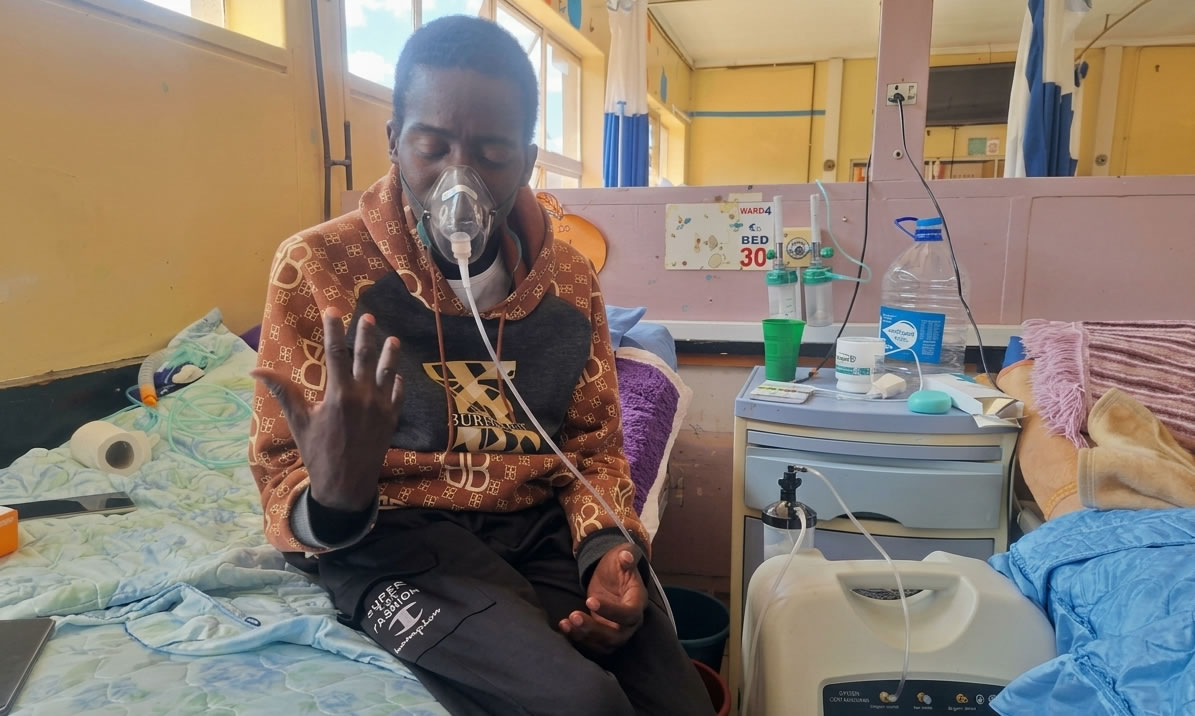
Chitungwiza – In a stark and heart-wrenching tale that underscores the critical importance of medical adherence and the devastating impact of a failing infrastructure, Mr. David Mandiwenga, a 41-year-old resident of Chitungwiza, finds himself tethered to an oxygen machine, fighting for every breath. His plight, a direct consequence of abandoning his antiretroviral drugs (ARVs) for traditional medicine, has left him with irreparable lung damage and a future hanging precariously on the availability of electricity.
For seven arduous months, Mr. Mandiwenga has been confined to Chitungwiza Central Hospital, his existence dictated by the rhythmic hiss of an oxygen concentrator. His journey to this critical state began when he made the fateful decision to stop taking his ARVs for eight months, opting instead for traditional remedies. This choice, driven by what he describes as
“treatment fatigue” and the allure of alternative cures, led to a cascade of severe health complications.
“I am a person living with HIV, and there was a time I chose to stop taking my ARVs because I was tired of them and thought I would try traditional medicine and other things I heard from people that they help. That’s when I made a mistake because I started feeling chest and rib congestion,” Mr. Mandiwenga recounted from his hospital bed. His condition rapidly deteriorated, leading to a diagnosis of a blood clot in his lungs. Despite initial medical interventions, he developed drug-resistant tuberculosis (MDR-TB), a formidable adversary that ultimately led to the failure of both his lungs. He now requires continuous oxygen support, a lifeline powered by electricity, making his discharge from the hospital a near impossibility in a country plagued by chronic power outages.
The Perilous Path of Non-Adherence
Mr. Mandiwenga’s case is a poignant illustration of the severe consequences of non-adherence to antiretroviral therapy. When individuals living with HIV discontinue their ARVs, the viral load in their bodies can rebound, leading to a weakened immune system. This compromised immunity makes them highly susceptible to opportunistic infections, with tuberculosis being one of the most common and deadliest co-infections. The development of drug-resistant strains, as seen in Mr. Mandiwenga, further complicates treatment and significantly increases mortality rates, particularly in regions with high HIV prevalence like Zimbabwe.
Zimbabwe’s battle against TB is largely HIV-driven, with a co-infection rate of approximately 50% in 2023. The estimated TB incidence stands at 211 per 100,000 people, highlighting the persistent challenge the nation faces. The emergence of MDR-TB, often a result of inconsistent treatment, places an immense burden on an already strained healthcare system. Patients like Mr. Mandiwenga require prolonged and more complex treatment regimens, which are not always readily available or affordable.
The Shadow of Power Cuts: A National Health Crisis
Mr. Mandiwenga’s desperate plea for a home breathing machine and solar equipment – a total of US$1,600 – underscores another critical layer of Zimbabwe’s health crisis: the crippling impact of unreliable electricity. “The illness I now have means I must remain in this hospital because this is where there is constant electricity. If I go home, I know I will die because this oxygen machine is powered by electricity, or the electricity has solar power,” he explained. His fear is not unfounded. Zimbabwe has been grappling with severe power cuts, known as ZESA load shedding, which can leave areas without electricity for up to 18 hours a day. Those who want to help Mr. Mandiwenga, can contact him on his Ecocash number which is 0786 272 491.
For patients reliant on life-sustaining medical equipment such as oxygen concentrators, these power outages are not merely an inconvenience; they are a matter of life and death. Reports from various sources indicate that power cuts endanger patients with life-saving medical equipment, with some experiencing oxygen interruptions for significant durations. The lack of consistent power at home forces many, like Mr. Mandiwenga, to remain hospitalised indefinitely, further straining hospital resources and denying them the comfort of their own homes. The broader implications of this energy crisis on healthcare are profound, affecting everything from emergency care to the storage of temperature-sensitive medications and even contributing to increased maternal mortality rates.
The Unseen Scars: Social and Economic Fallout
Beyond the physical toll, Mr. Mandiwenga’s illness has inflicted deep social and economic wounds. “My wife left me after seeing the severity of my illness, so I was left with my six children who are now failing to go to school due to lack of money,” he revealed, his voice heavy with despair. This tragic outcome is a harsh reality for many families grappling with chronic illness, where the financial burden of medical care, coupled with the loss of income, can shatter lives and futures. Before his illness, Mr. Mandiwenga was a healthy, working man, earning a living through tailoring jobs in Harare. His story is a stark reminder of how quickly life can unravel when health, and the systems supporting it, fail.
The Double-Edged Sword: ARVs and Their Side Effects
While Mr. Mandiwenga’s current predicament stems from discontinuing his ARVs, it is also important to acknowledge that antiretroviral therapy, while life-saving, can come with its own set of challenges, including side effects. One such side effect, though less common, is gynecomastia, the enlargement of male breast tissue. This condition gained public attention in Southern Africa through the widely reported case of Sabelo Maepa (a pseudonym), a man from Mpumalanga, South Africa.
In 2007, at the age of 42, Mr. Maepa developed “female-like breasts” just a month after commencing ARV treatment. His experience, which caused him immense shame and embarrassment, forcing him to remain indoors, highlighted the psychological and social impact of such side effects. Doctors attributed his condition, medically termed gynecomastia or “man boobs,” to hormonal imbalances, potentially exacerbated by certain ARVs, particularly Efavirenz (EFV). While Mr. Maepa’s case was severe, leading to surgical removal of the breast tissue in 2011, medical experts confirm that gynecomastia is a known, albeit uncommon, side effect of some ARV regimens, with prevalence rates ranging from 6% to 8.1% in some cohorts, typically manifesting within two years of starting EFV-based therapy.
A Call for Awareness and Support
Mr. Mandiwenga’s story serves as a powerful cautionary tale. “The problem is that I wanted to try other things for my health without being advised by doctors, so I brought trouble upon myself,” he admitted. He now passionately urges the public to adhere strictly to their doctors’ advice and not to discontinue medication indiscriminately. His message is clear: “All I want is to breathe; I don’t care about anything else because that’s where my life is.”
His plea for assistance – a breathing machine and solar power – is not just for himself but for countless others in similar situations across Zimbabwe. It is a call to action for individuals, communities, and organisations to support those battling chronic illnesses, particularly in environments where basic infrastructure, like consistent electricity, cannot be guaranteed. Those who want to help Mr. Mandiwenga, can contact him on his Ecocash number which is 0786 272 491.