


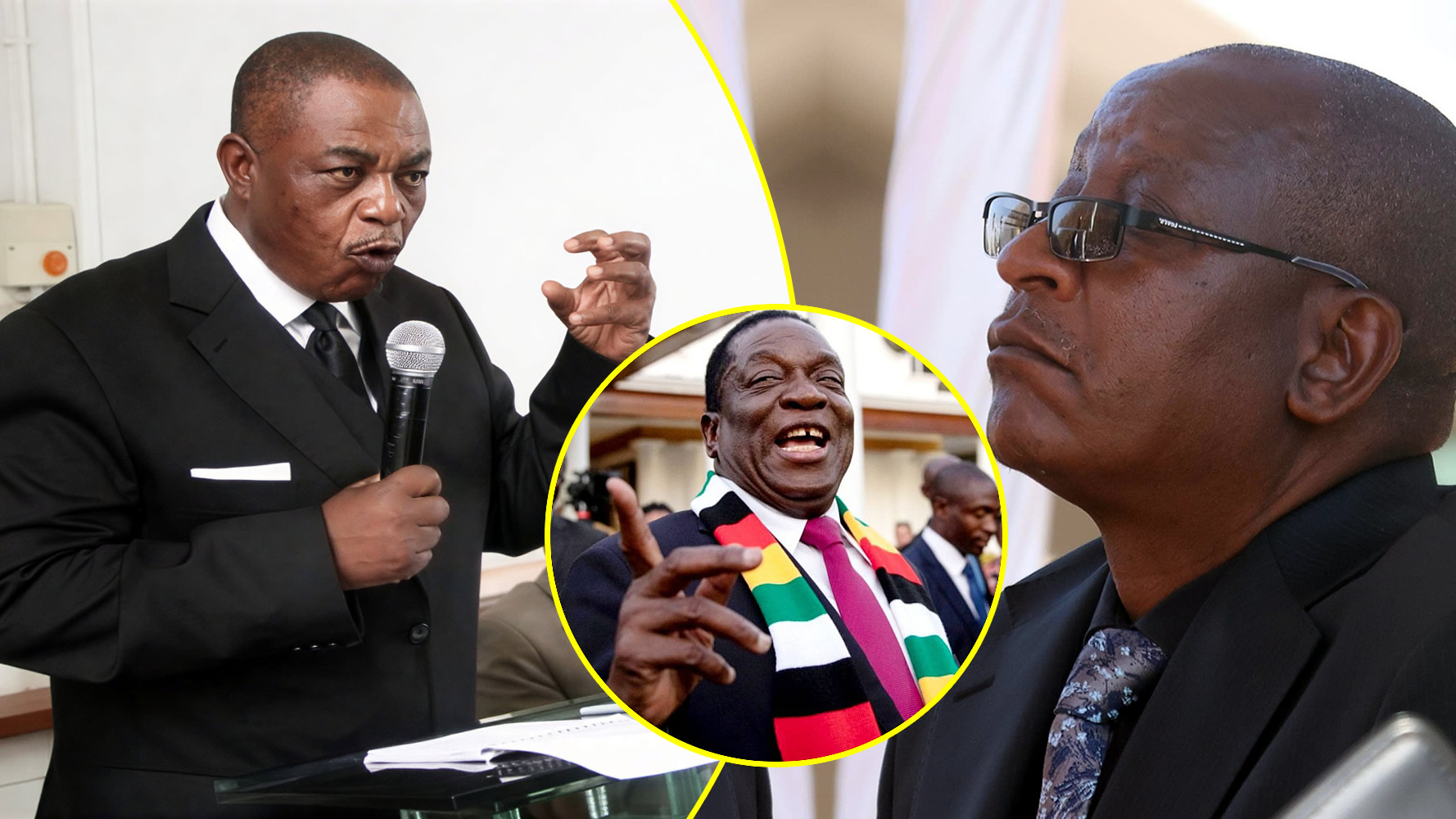
The dusty plains of Epworth, a settlement on the periphery of Harare, recently became the stage for a political proclamation that has fundamentally altered the discourse of Zimbabwean succession politics. At a “Thank You” rally organised to celebrate the enactment of the Constitution of Zimbabwe Amendment (No. 3) Act, 2026, the ruling Zanu PF party made it clear that its ambitions for President Emmerson Mnangagwa stretch far beyond the current decade. Godwills Masimirembwa, the Zanu PF Harare Provincial chairperson, stood before a crowd of supporters and declared that the province is now pushing for the President to remain at the helm until 2037. This move, coming only days after the signing of a law that already extended the current presidential term to 2030, has ignited a fierce debate about the future of democracy in the Southern African nation.
“We still want him for an additional seven years, from 2030 to 2037. He must lead the party, that is what the party is saying,” Masimirembwa told the gathered journalists and party faithful. His words were not merely a local sentiment but a calculated signal of a broader provincial resolution that will be tabled at the party’s next conference in Bindura. The shift from the previous slogan of “ED 2030” to the burgeoning “ED 2037” narrative suggests a systematic dismantling of constitutional term limits. While Masimirembwa was careful to distinguish between party leadership and state presidency, the political reality in Zimbabwe is that the two are inextricably linked. Historically, the individual who holds the position of Zanu PF President and First Secretary is the party’s automatic candidate for the national presidency.
The timing of this announcement is particularly significant, following the controversial assent to Constitutional Amendment No. 3. This new law has effectively postponed the harmonised elections, originally scheduled for 2028, to 2030. By doing so, it has granted an additional two years to the terms of the President, Members of Parliament, and local councillors. The government has defended this move as a technical necessity to align electoral cycles and allow for the uninterrupted implementation of “Vision 2030,” a development programme aimed at transforming Zimbabwe into an upper-middle-income economy. However, seasoned observers and legal experts view these amendments as the first stages of a “constitutional coup” designed to consolidate power within a specific faction of the ruling party.
Amidst this atmosphere of political engineering, a sensational document began circulating on social media, further complicating the succession narrative. A letter dated 14 July 2026, purportedly from the Office of the President and Cabinet, claimed that First Lady Auxillia Mnangagwa was being prepared for an imminent inauguration as President. The document instructed Printflow (Private) Limited to urgently produce 1,000 copies of an official portrait with the caption: “THE PRESIDENT OF THE REPUBLIC OF ZIMBABWE, HER EXCELLENCY, DR AUXILLIA MNANGAGWA.” The letter, attributed to Martin Rushwaya, the Chief Secretary to the President and Cabinet, stressed that the assignment was “strictly confidential.”
The government was quick to dismiss the letter as a sophisticated fabrication. Ndavaningi “Nick” Mangwana, the Permanent Secretary for Information, Publicity and Broadcasting Services, took to social media to debunk the claims. “There is a clear and misguided effort to thrust the First Lady, Dr. Mnangagwa, into the political spotlight through baseless allegations,” Mangwana wrote on X. He further asserted that the document was “clearly generated using artificial intelligence (AI)” and maintained that the First Lady has never pursued a partisan agenda. “While the First Lady is indeed a member of ZANU PF, she has never pursued a partisan agenda. Her initiatives and programmes remain distinctly nationalistic in character, treating all Zimbabweans equally, with particular attention to the less fortunate members of society and other causes close to her heart,” he added.
Despite the official denials, the viral nature of the letter highlights the deep-seated anxieties regarding a potential Mnangagwa dynasty. The prospect of “CAB4″—a hypothetical Constitution Amendment Bill 4—is now being discussed in hushed tones across Harare. If such a bill were to materialise, it would likely seek to remove the two-term limit entirely or reset the presidential clock, allowing Emmerson Mnangagwa to serve as State President until 2037. This strategy appears aimed at more than just longevity; it is widely seen as a tactical manoeuvre to elbow Vice President Constantino Chiwenga out of the succession battle.
Chiwenga, the former military general who played a pivotal role in the 2017 transition that saw the late Robert Mugabe ousted, has long been regarded as the natural successor to Mnangagwa. However, the relationship between the two men has reportedly grown increasingly strained. Factionalism within Zanu PF has intensified, with rival camps aligning themselves behind the President and his deputy. By extending Mnangagwa’s tenure through successive constitutional amendments like CAB3 and the anticipated CAB4, the President’s loyalists are effectively closing the door on Chiwenga’s presidential ambitions. Each extension pushes the Vice President further from the seat of power, potentially rendering his influence obsolete by the time a vacancy finally occurs.
Masimirembwa’s justification for the 2037 extension relied heavily on Mnangagwa’s liberation war credentials. “Remember also that he is still the senior surviving member of Chimurenga, the revolution that brought this country to Independence, so we still want him for an additional seven years. He must lead the party – that is what Harare is saying,” he remarked. This appeal to the “surviving member” narrative is a classic Zanu PF trope, used to bestow a sense of historical legitimacy on current leaders. By framing Mnangagwa as a visionary and strategist whose wisdom is sought by regional leaders, the party seeks to insulate him from the criticisms of a younger, more restless electorate.
The provincial chairperson cited Zimbabwe’s recent diplomatic milestones as evidence of this leadership. He pointed to the country’s election to the United Nations Security Council as a non-permanent member, as well as Mnangagwa’s roles as SADC Chairperson and incoming COMESA Chairperson. “The people are saying, ‘What happens to him beyond 2030?’ So the people of Harare, as we go into resolutions for the next conference, are saying His Excellency should remain the party President and First Secretary of ZANU PF at the 2030 congress,” Masimirembwa stated. He also mentioned recent visits by the Vice President of Uganda and King Misuzulu kaZwelithini of the Zulu nation as proof that the region still values Mnangagwa’s guidance.
However, the opposition and civil society organisations are not convinced. Applications have already been filed at the Constitutional Court seeking to have Amendment No. 3 declared invalid. Critics argue that both the content of the law and the process by which it was enacted violate the spirit and letter of the 2013 Constitution. The core of their argument is that a sitting president should not benefit from a constitutional amendment that extends their own term of office. By signing the bill into law, Mnangagwa has directly benefited from a change he authorised, a move that many legal experts describe as a fundamental breach of democratic principles.
The economic context of these political manoeuvres cannot be ignored. While the government touts its “Vision 2030” and the mantra that “a country is built by its owners,” many Zimbabweans continue to struggle with high inflation and limited economic opportunities. The focus on constitutional amendments and succession battles often appears disconnected from the daily realities of the populace. The push for “ED 2037” suggests a prioritisation of power retention over genuine structural reform.
As the Zanu PF conference in Bindura approaches, the resolution from Harare Province is expected to set the tone for the party’s future direction. If the resolution is adopted, it will formalise the push for a 2037 presidency, likely triggering a new wave of constitutional changes. The shadow of CAB4 looms large, threatening to dismantle the term limits that were a hard-won feature of the 2013 Constitution. For Constantino Chiwenga and his supporters, the window for a peaceful and orderly succession appears to be narrowing.
The saga of the viral letter and the 2037 proclamation reveals a ruling party deeply preoccupied with its own survival and internal hierarchy. Whether the letter was an AI-generated hoax or a deliberate leak from a disgruntled faction, it has served to highlight the murky waters of Zimbabwean politics. In this environment, the truth is often obscured by propaganda and strategic misinformation. What remains clear, however, is that the battle for the soul of Zanu PF—and the future of Zimbabwe—is far from over. The move to keep Mnangagwa in power until 2037 is not just about one man’s legacy; it is a high-stakes gamble that could redefine the nation’s political landscape for decades to come.
In the corridors of power, the debate continues. Is this the necessary continuity required for national development, or is it a calculated effort to ensure that the “military factor” represented by Chiwenga never reaches the highest office? As the legal challenges move through the courts and the party structures prepare for their next congress, the eyes of the region remain fixed on Zimbabwe. The transition from Mugabe was supposed to herald a “New Dispensation,” but for many, the current trajectory feels like a familiar return to the politics of life presidency. The road to 2037 is paved with constitutional amendments, and each one takes the country further from the democratic ideals it once sought to embrace.