


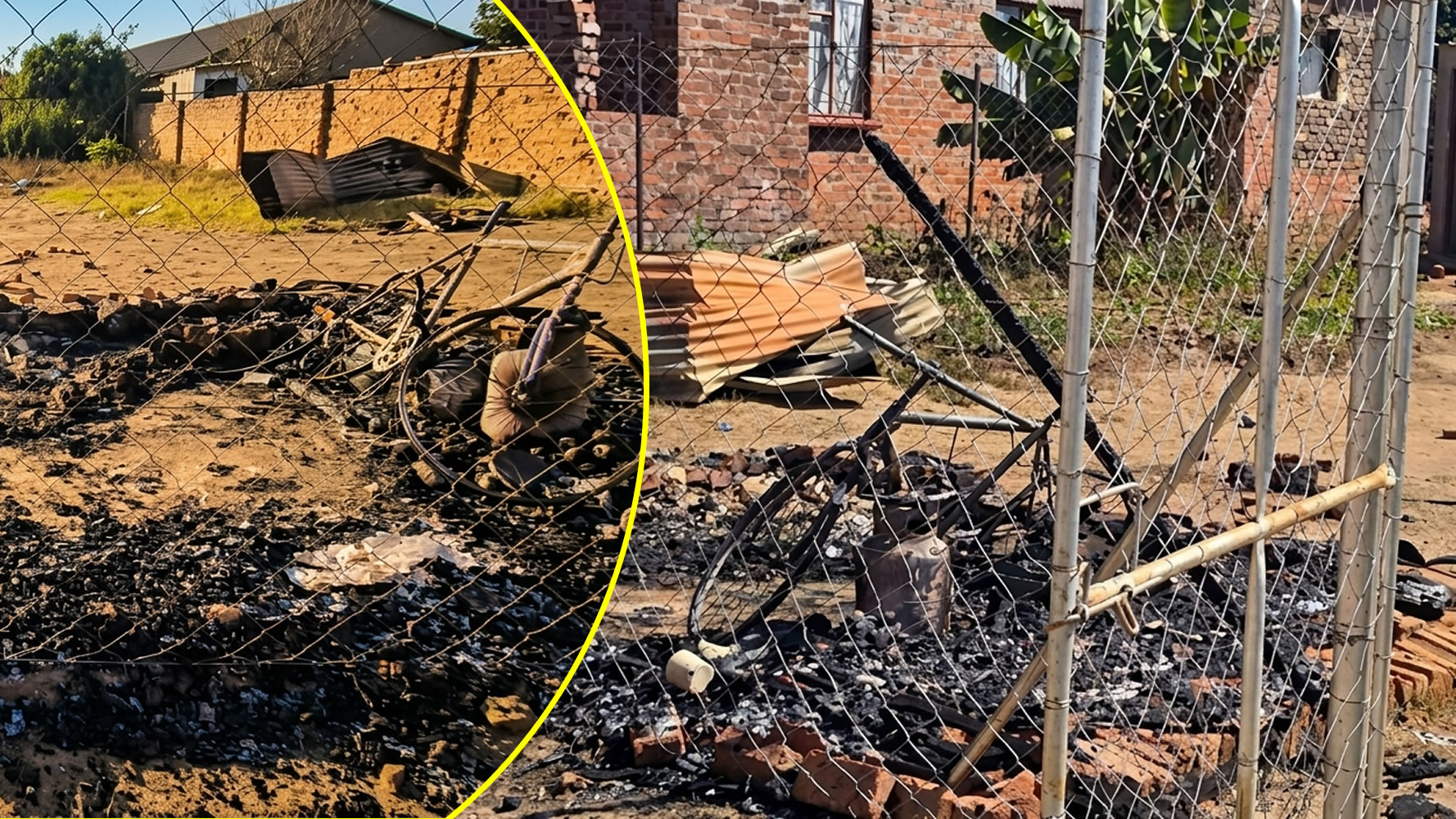
THE ASHES OF INNOCENCE: Inside the Horrific Harare Cabin Fire and the Scourge of Family Arson
HARARE – The early morning silence of Eastview Phase 10, a burgeoning suburb on the eastern edge of Harare, was shattered this past Sunday by screams that will haunt the community for generations. What began as a domestic dispute between a young couple ended in an act of such calculated cruelty that it has left Zimbabwe reeling. Gift Muyengwa, a 24-year-old father, allegedly turned a knife on his wife before transforming their modest one-roomed cabin into a funeral pyre for his two young children.
The victims, five-year-old Aldine Muyengwa and two-year-old Ropafadzo Muyengwa, never stood a chance. As the flames engulfed the wooden structure, the infants were trapped inside, eventually being burnt beyond recognition. Their mother, 22-year-old Tsitsi Zuze, managed to escape the initial onslaught, fleeing naked and bleeding into the darkness to seek refuge at a neighbour’s house.
“Tsitsi said she woke up being stabbed on the head and neck by her husband,” recalled her father, Mr Farai Zuze, 46, his voice heavy with the weight of the tragedy. “She wrestled with him and fled, jumping into the neighbour’s yard naked. After wrapping herself, she ran to my house and informed us about the incident. Gift stabbed the kids to death before turning to Tsitsi.”
When the family and neighbours finally arrived at the scene, the cabin was already a roaring inferno. The horror was absolute. Investigators later discovered a trail of blood leading from the charred remains of the home to a nearby vegetable garden. There, they found Gift Muyengwa lying with severe injuries, the architect of a tragedy that had claimed the lives of his own children.
A Haunting Pattern of Domestic Arson
While the Eastview incident has shocked the nation, it is part of a disturbing and growing trend where fire is used as the ultimate weapon in Zimbabwean domestic disputes. Across the country, from the high-density suburbs of Harare to the rural heartlands of Mberengwa, the domestic space—once a sanctuary—is increasingly being turned into a death trap.
Only a few years prior, the town of Chivhu witnessed a similarly harrowing scene that remains etched in the national memory. Emelda Marazani, then 29, became a name synonymous with maternal filicide after she slit the throats of her four children—aged nine, five, three, and one—before setting the family home ablaze. Much like the Harare incident, the tragedy was rooted in a marital dispute. Marazani’s husband, Lameck Brande, returned from work to find his house in flames and his children dead. Marazani had tied the two elder children with rope before killing them, a detail that highlighted the premeditated nature of the attack.
In July 2025, just a year before the Eastview tragedy, another horrific incident was reported in the H-Metro. A 29-year-old woman, Dorcas Mutengwa, and her two children, aged three and seven, miraculously escaped with their lives after her estranged husband doused their house with petrol and set it on fire. The motive, reportedly, was a rejection of his advances. While they survived, the physical and psychological scars of being hunted with fire in their own home remain a stark reminder of the vulnerability of women and children in the face of domestic rage.
From Mberengwa to Gweru: The Scorched Earth of Family Conflict
The reach of this violence extends far beyond the capital. In January 2018, tragedy struck an Mberengwa family when three infants were burnt to death inside a bedroom hut where they were sleeping. While the causes of such fires are sometimes disputed, the frequency with which children are the primary victims in domestic infernos points to a systemic failure in conflict resolution within the family unit.
Even more recently, the nation mourned the loss of seven school children in Gweru’s Senga suburb. While that incident involved a commuter omnibus, the underlying cause—a petrol jerrycan being carried in a passenger vehicle—highlighted the dangerous prevalence of volatile substances in everyday Zimbabwean life, substances that are increasingly being weaponised in domestic settings.
In the Eastview case, the tragedy is compounded by reports that the children were innocent bystanders to a conflict they could not understand. Mr Silver Mushonga, a brother of the alleged perpetrator, recalled his final encounter with the children just hours before the fire. “I saw him outside with the kids as I passed by. The way he was behaving towards them was disturbing. The children ran towards me as I called out to their father,” he said. By dawn, those children were dead.
The Anatomy of a Crisis
According to police spokesperson Commissioner Paul Nyathi, the suspect in the Eastview case allegedly attacked his seven-month-pregnant wife, inflicting a deep wound to her neck before turning the knife on himself and setting the room on fire.
“The Zimbabwe Republic Police is investigating a case of murder in which two infants died after the room in which they were sleeping was allegedly set on fire by their father,” Comm Nyathi stated. “Preliminary investigations indicate that the suspect allegedly attacked his wife with a knife while the victims were asleep. The wife managed to escape and sought help from neighbours before reporting the incident.”
The use of fire in these attacks serves a dual, dark purpose: it ensures the absolute destruction of the victims and erases the physical environment of the shared family life. For investigators, these scenes are among the most difficult to process, as the evidence is often reduced to ash.
The Search for a Way Forward
The recurring nature of these tragedies has led to urgent calls for better community intervention. Commissioner Nyathi encouraged the public to resolve domestic disputes peacefully, urging people to seek assistance from relatives, community leaders, or counsellors “before conflicts escalate into tragic loss of life”.
However, for many victims, the path to safety is non-existent. Tsitsi Zuze’s survival was a matter of sheer will and a desperate struggle. The fact that she had to flee naked and bleeding to a neighbour’s house highlights the total vulnerability of victims during such attacks.
As the bodies of Aldine and Ropafadzo Muyengwa were taken to Parirenyatwa Group of Hospitals for post-mortem, the Eastview community was left to grapple with the blackened walls of a house that once echoed with children’s laughter. The house now stands in silence, a stark reminder of how domestic violence can destroy an entire family in a matter of moments.
The charred remains of the Eastview cabin stand as a silent testament to the lives of two children who were robbed of their future. Until the root causes of domestic violence in Zimbabwe—coercive control, economic stress, and the lack of accessible support systems—are addressed, the ashes of innocence will continue to pile up in suburbs across the nation.
“Upon her return, she found the cabin engulfed in flames and the bodies of the two children burnt beyond recognition.” — Commissioner Paul Nyathi, ZRP.
Timeline of Related Zimbabwean Incidents:
|
Date
|
Location
|
Perpetrator
|
Victims
|
Method
|
|
July 2026
|
Eastview, Harare
|
Gift Muyengwa
|
2 children killed, wife injured
|
Stabbing and cabin fire
|
|
July 2025
|
Harare
|
Estranged husband
|
Wife and 2 kids injured
|
Petrol and house fire
|
|
Nov 2020
|
Chivhu
|
Emelda Marazani
|
4 children killed
|
Slit throats and house fire
|
|
Jan 2018
|
Mberengwa
|
Disputed
|
3 infants killed
|
Bedroom hut fire
|
|
Sep 2015
|
Harare
|
Various
|
2 women killed
|
Domestic violence
|