


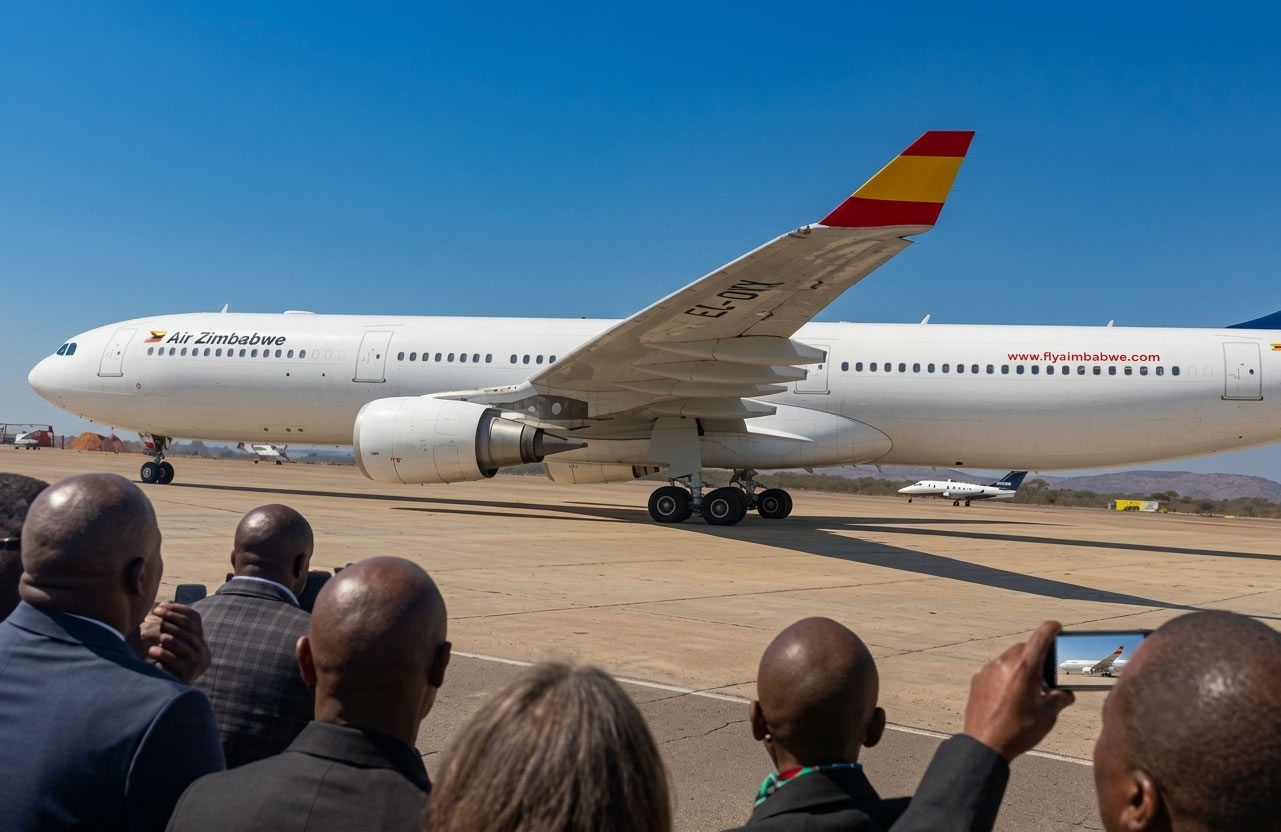
Harare – After a hiatus spanning more than 14 years, Air Zimbabwe is poised to re-establish direct flight connections between Harare and London, a development that has already seen nearly 1,500 passengers secure bookings for the eagerly anticipated route. This significant milestone, heralded by government officials as a new dawn for the national carrier, promises to bridge the geographical divide between the ‘Sunshine City’ and one of the world’s foremost commercial and financial hubs, a link particularly vital for the large and vibrant Zimbabwean diaspora residing in the United Kingdom.
The announcement has generated considerable excitement, with Transport and Infrastructural Development Minister Advocate Felix Mhona revealing that 1,479 passengers have already confirmed their seats. Beyond passenger traffic, the cargo market has also responded positively, with over 30 tonnes of cargo confirmed, underscoring the substantial commercial opportunities that direct connectivity is expected to unlock.
A Return to the Skies: The Launch and Expectations
The resumption of direct flights, scheduled to commence on Wednesday, marks a pivotal moment for Air Zimbabwe. The airline’s last direct service to London ceased in December 2011, a withdrawal necessitated by mounting debts and the looming threat of aircraft seizures by creditors. The intervening years saw the national carrier placed on the European Union Aviation Safety Agency’s (EASA) blacklist in 2017, effectively barring its own aircraft from operating in EU or UK airspace due to safety concerns.
To circumvent this ban and facilitate the route’s revival, Air Zimbabwe has entered into a long-term wet lease agreement with Spanish carrier Plus Ultra Líneas Aéreas. Under this arrangement, Plus Ultra provides the Airbus A330-300 aircraft, flight crew, maintenance, and insurance, while Air Zimbabwe manages ticket sales, passenger services, and the overall commercial operation of the route. The 302-seater Airbus, configured with 30 business class and 272 economy seats, touched down in Harare to a ceremonial water cannon salute, marking its official reception ahead of the inaugural flight.
Promotional fares for the direct route are set to begin from £490 or US$495 for a one-way ticket, with return tickets priced at £675 or US$900, subject to availability. Flights will depart Harare on Sundays, Wednesdays, and Fridays, with return services from London Gatwick operating on Mondays, Thursdays, and Saturdays.
Minister Mhona, speaking at the launch event at Robert Gabriel Mugabe International Airport, expressed profound optimism. He stated, “Occasions of this nature provide us with a wonderful opportunity to brush shoulders with colleagues from every walk of the aviation, tourism and hospitality sectors.” He further attributed the success to the “enabling working environment inspired by our iconic leader, His Excellency, the President of the Republic of Zimbabwe Cde, Dr ED Mnangagwa, whose strategic leadership since 2017 has catapulted our national fortunes and growth to levels never witnessed before.” He added, “It is our hope, therefore, that as this connectivity will facilitate tourism, hospitality, cultural and business exchanges, economic opportunities will boom and people to people relations between and amongst our global citizens will improve.”
A Troubled Past: Air Zimbabwe’s History of Debt and Sanctions
The excitement surrounding the new London route is tempered by Air Zimbabwe’s tumultuous history, marked by significant financial woes and operational challenges. The airline’s previous direct flights to London were suspended in December 2011 after one of its Boeing 767-200 aircraft was impounded at London Gatwick over an unpaid debt. This incident was not isolated; in 2016, two Air Zimbabwe jets were impounded over debts exceeding $1.2 million, with one seizure by American General Supplies. The airline has been plagued by mounting debts, at one point estimated at $40 million, and has faced suspensions from the International Air Transport Association for failing to pay its dues.
The European Union’s decision to place Air Zimbabwe on its Air Safety List in May 2017 further compounded its difficulties. The ban, which prohibited the airline from operating its own aircraft within EU airspace, was a direct consequence of
“inadequate safety oversight by the aviation authorities”. This historical context highlights the precarious financial and operational position from which Air Zimbabwe is attempting its resurgence.
The Wet Lease Arrangement: Plus Ultra and its Controversies
The choice of Plus Ultra Líneas Aéreas as the wet lease partner has not been without scrutiny. While the arrangement allows Air Zimbabwe to bypass the EU ban, Plus Ultra itself has been embroiled in significant controversy. In 2021, the Spanish government approved a controversial €53 million bailout for the airline, a decision that sparked widespread criticism and allegations of political favouritism.
More recently, in December 2025, Spanish prosecutors launched an investigation into Plus Ultra over alleged misuse of these public funds. The probe centres on accusations that the airline used COVID bailout money to launder funds from Venezuela, with investigations extending to France, Switzerland, and Spain. This criminal investigation involves alleged money-laundering networks and has even implicated Spain’s former prime minister. Customer complaints against Plus Ultra also cite poor service, difficulties in obtaining refunds, and misleading booking practices, further raising questions about the reliability and reputation of Air Zimbabwe’s chosen partner.
The Mutapa Investment Fund: A New Chapter or Continued Concerns?
The revival of Air Zimbabwe is closely linked to the Mutapa Investment Fund (MIF), which has been instrumental in pouring investment into the national airline. MIF, a sovereign wealth fund established by the Zimbabwean government, aims to mobilise resources and drive economic growth. However, the fund itself has attracted controversy, particularly concerning its exemption from public procurement laws.
In September 2023, President Mnangagwa issued General Notice 1546, exempting the Mutapa Investment Fund from open public procurement procedures. This exemption has raised concerns among transparency advocates and economic analysts, who argue that it could expose entities controlled by the fund to abuse through corrupt contracts. While the government maintains that the exemption applies only to the fund as an investor and not to the entities under its management, critics fear a lack of transparency could undermine efforts to revitalise state-owned enterprises like Air Zimbabwe.
The Ghost of Zimbabwe Airways: A Precedent of Mismanagement?
The current efforts to revive Air Zimbabwe also bring to mind the ill-fated Zimbabwe Airways project. In a controversial move in 2016, the Zimbabwean government acquired two Boeing 777-200ER aircraft from Malaysia Airlines, ostensibly to launch a new national carrier, Zimbabwe Airways. These planes, nearly 15 years old at the time, were meant to herald a new era for Zimbabwean aviation. However, the project was marred by allegations of corruption and mismanagement, particularly involving former President Robert Mugabe’s son-in-law, Simba Chikore, who was then the chief operating officer of Air Zimbabwe.
Reports indicated that Chikore used his family ties to manipulate processes and enter into questionable deals. The ownership of these aircraft remained unclear, with Air Zimbabwe’s board and management reportedly admitting they did not know who owned the planes during a parliamentary portfolio committee meeting. The Boeing 777s eventually sat idle for extended periods, incurring significant parking fees and maintenance costs, before one was eventually transferred to Air Zimbabwe. This historical precedent of opaque dealings and financial mismanagement casts a long shadow over the current attempts to restore Air Zimbabwe’s international standing.
Passenger Experience and Future Outlook
Despite the historical baggage and ongoing controversies, the immediate response from the travelling public has been overwhelmingly positive. The nearly 1,500 confirmed passenger bookings and over 30 tonnes of cargo signify a strong demand for direct connectivity between Harare and London. However, some passengers have already voiced concerns regarding the in-flight experience on the wet-leased Airbus A330-300. Online comments on platforms like X (formerly Twitter) have highlighted the absence of TV screens or in-flight entertainment in the economy class of the 20-year-old aircraft.
One passenger reportedly wrote, “They ought to do something — can’t sit for 10 hours with no entertainment like I am flying a 2-hour flight with a budget airline.” While others, like Rex Mhene, prioritised the convenience of a direct flight over entertainment, stating, “I wouldn’t mind about the TV. My main motivation is once I’m searched and remove my shoes in Harare, that’s it until Gatwick in 10 hours.” These sentiments underscore the complex balance between the desire for direct travel and expectations of modern airline amenities.
The re-establishment of the Harare-London route is undoubtedly a significant step for Air Zimbabwe and for the country’s efforts to boost tourism, trade, and investment. However, the long-term success of this venture will depend not only on passenger demand but also on the airline’s ability to navigate its historical challenges, ensure transparency in its operations, and maintain a reliable and competitive service. The journey ahead for Air Zimbabwe, much like its newly resumed direct flight, promises to be long and will require careful stewardship to avoid the turbulence of its past.