


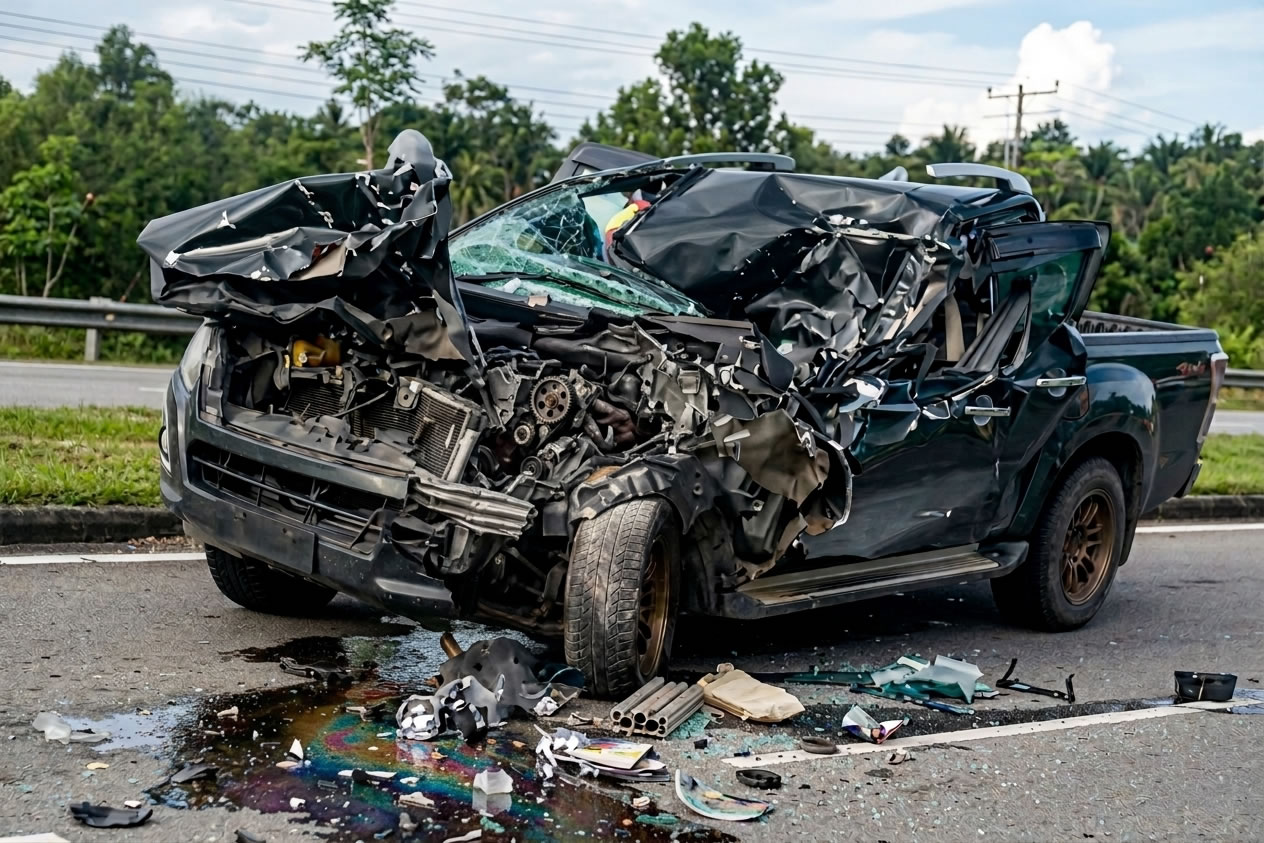
The High Price of the Highway: Five Perish in Latest Nyamapanda Head-On Horror
The 101-kilometre peg along the Harare-Nyamapanda highway is a nondescript stretch of tarmac, yet for five families, it has become a place of eternal sorrow. On a clear Monday afternoon, at approximately 2:40 pm, the silence of the countryside was shattered by the sickening crunch of metal on metal. Two Isuzu D-Max vehicles, machines built for rugged endurance, met in a violent head-on collision that has once again turned the spotlight on Zimbabwe’s increasingly lethal road network.
The statistics released by the authorities tell a grim story of imbalance and tragedy. One Isuzu was carrying just a driver and a single passenger. The other, in a stark illustration of the country’s desperate transport situation, was packed with 14 people. When the dust settled, five lay dead and nine others were left battling for their lives in various hospitals.
National police spokesperson Commissioner Paul Nyathi, a man whose voice has become a regular fixture on the evening news following such tragedies, confirmed the details of the carnage. “The ZRP confirms a fatal road traffic accident which occurred on July 27, 2026 at around 1440 hours at the 101 km peg along the Harare–Nyamapanda Road,” he stated, his words carrying the weary weight of a professional who has seen this scene too many times. “Five people were killed, while nine others sustained injuries when an Isuzu D-Max vehicle with one passenger on board was involved in a head-on collision with another Isuzu D-Max vehicle with 14 passengers on board.”
The sheer physics of the crash are difficult to comprehend. The Isuzu D-Max is a robust vehicle, often favoured by NGOs, government departments, and successful farmers for its safety ratings and durability. However, no amount of engineering can protect 14 occupants crammed into a space designed for five or six. It is a common sight on Zimbabwean roads: the ‘mushikashika’ or pirate taxi, where the load bed of a pick-up truck becomes a makeshift passenger cabin, with commuters clinging to the rails and each other as the vehicle hurtles toward its destination.
This latest incident is not an isolated tragedy but a symptom of a broader, more systemic failure. The Harare-Nyamapanda highway, a vital artery connecting Zimbabwe to Malawi and Mozambique, has earned a reputation as a ‘highway of death’. Just two months ago, in May 2026, the same road claimed 17 lives when a Malawi-bound luxury coach met with disaster. The frequency of these accidents has turned the 101-kilometre peg and similar stretches into ‘black spots’—geographic markers of recurring fatality that the government seems unable to erase.
Witnesses and early reports from the scene suggest that driver fatigue may have played a significant role. Unverified information circulating among the first responders and local transport operators indicates that one of the drivers had been behind the wheel for an excessive number of hours. Passengers who survived the initial impact reportedly claimed that the vehicle had been swerving in the minutes leading up to the crash. In a country where the transport sector is largely informal, the pressure on drivers to complete as many trips as possible to maximise profit often comes at the cost of basic safety protocols.
The tragedy on the Nyamapanda road was mirrored elsewhere on the same day, highlighting a national crisis. At around 9:00 am, just hours before the Isuzu collision, three people were killed at the 80-kilometre peg along the Gweru-Zvishavane Road. In that instance, a heavy Shacman truck collided head-on with a Nissan AD Van. The coincidence of two fatal head-on collisions on separate major highways within hours of each other underscores a terrifying reality: on Zimbabwe’s roads, death is a constant passenger.
Road safety experts point to a variety of factors that contribute to this carnage. The infrastructure itself is often to blame; while sections of the Nyamapanda highway have seen improvements, others remain narrow, poorly marked, and plagued by potholes that force drivers into the path of oncoming traffic. The ongoing construction of a new toll plaza on a section of the highway has also led to redirected traffic and bottlenecks, adding to the frustration and risk for long-distance travellers.
However, the human element remains the most significant variable. The ‘mushikashika’ phenomenon is driven by necessity. With the formal public transport system in a state of decay, many Zimbabweans have no choice but to board overloaded private vehicles. These pirate taxis operate outside the law, often bypassing police checkpoints or paying ‘fines’ to continue their journey. The Isuzu D-Max involved in the crash, carrying 14 passengers, was almost certainly operating in this capacity. When a vehicle is overloaded by nearly 300 per cent of its intended capacity, its braking distance is compromised, its centre of gravity shifts, and its tyres are pushed beyond their bursting point.
The government has set ambitious targets to address this. In line with global goals, Zimbabwe has committed to reducing road accident deaths and injuries by 50 per cent by the year 2030. Currently, the country loses an average of five people every single day to road traffic accidents. Meeting the 2030 target would require a radical overhaul of enforcement, infrastructure, and public education. Yet, as the bodies are ferried away from the 101-kilometre peg, those targets feel less like a plan and more like a distant dream.
The impact on the families left behind is immeasurable. In a country where many households rely on a single breadwinner, the loss of a life in a road accident often plunges the survivors into immediate poverty. The nine injured survivors of the Isuzu crash now face not only physical recovery but also the daunting prospect of medical bills in a healthcare system that is already stretched to its limits.
For the investigative journalist, the question is not just ‘how’ this happened, but ‘why’ it continues to happen with such predictable regularity. Is it the lack of stringent vehicle inspections? Is it the corruption that allows overloaded ‘mushikashikas’ to ply national highways? Or is it a fundamental lack of value placed on human life by those who prioritise profit over safety?
As evening fell over the Harare-Nyamapanda highway on Monday, the wreckage was cleared, and the blood was washed from the tarmac. The road was reopened, and the flow of trucks and buses resumed. But for those who passed the 101-kilometre peg, the memory of the two crumpled Isuzus remained—a stark reminder that until systemic changes are made, the highway will continue to demand its heavy toll in human lives.
The Zimbabwe Republic Police have once again appealed to drivers to exercise caution, to avoid speeding, and to refrain from overloading. But until the economic and logistical pressures that force 14 people into the back of a pick-up truck are addressed, such appeals are likely to fall on deaf ears. The Harare-Nyamapanda highway remains a gauntlet of risk, where a simple journey home can end in a violent, metal-shredding conclusion.
The story of the 101-kilometre peg is a story of a nation in transit, caught between the desire for progress and the reality of a crumbling safety net. It is a story that will, unfortunately, likely be written again before the year is out. For now, five more names are added to the list of those lost to the tarmac, and a nation waits for the next headline, the next crash, and the next empty promise of safer roads.
The investigation into the specific cause of the Monday afternoon crash continues. Forensic teams have examined the wreckage, looking for signs of mechanical failure or tyre bursts that might have preceded the impact. Yet, the most telling piece of evidence remains the simplest: two vehicles, one road, and a head-on collision that should never have happened. In the silence that follows such a catastrophe, the only thing that remains is the question of who will be next.
The Gweru-Zvishavane accident, occurring on the same day, serves as a grim companion piece to the Nyamapanda horror. There, the Shacman truck—a behemoth of the road—simply overwhelmed the smaller Nissan AD Van. It is a recurring theme in Zimbabwean road fatalities: the mismatch between heavy haulage and passenger vehicles, often exacerbated by the high speeds maintained on the open road. The 80-kilometre peg on that route is now as infamous as the 101-kilometre peg on the Nyamapanda road.
In the corridors of power in Harare, the talk is of policy and ‘integrated logistics’, of ‘railway overhauls’ that might take the pressure off the roads. But for the commuters standing on the roadside today, waving down the next passing Isuzu or Toyota Hilux, those policies offer no protection. They need a seat, they need to get home, and they are willing to gamble their lives to do so. On Monday, five people lost that gamble, and the highway, as always, kept the winnings.