


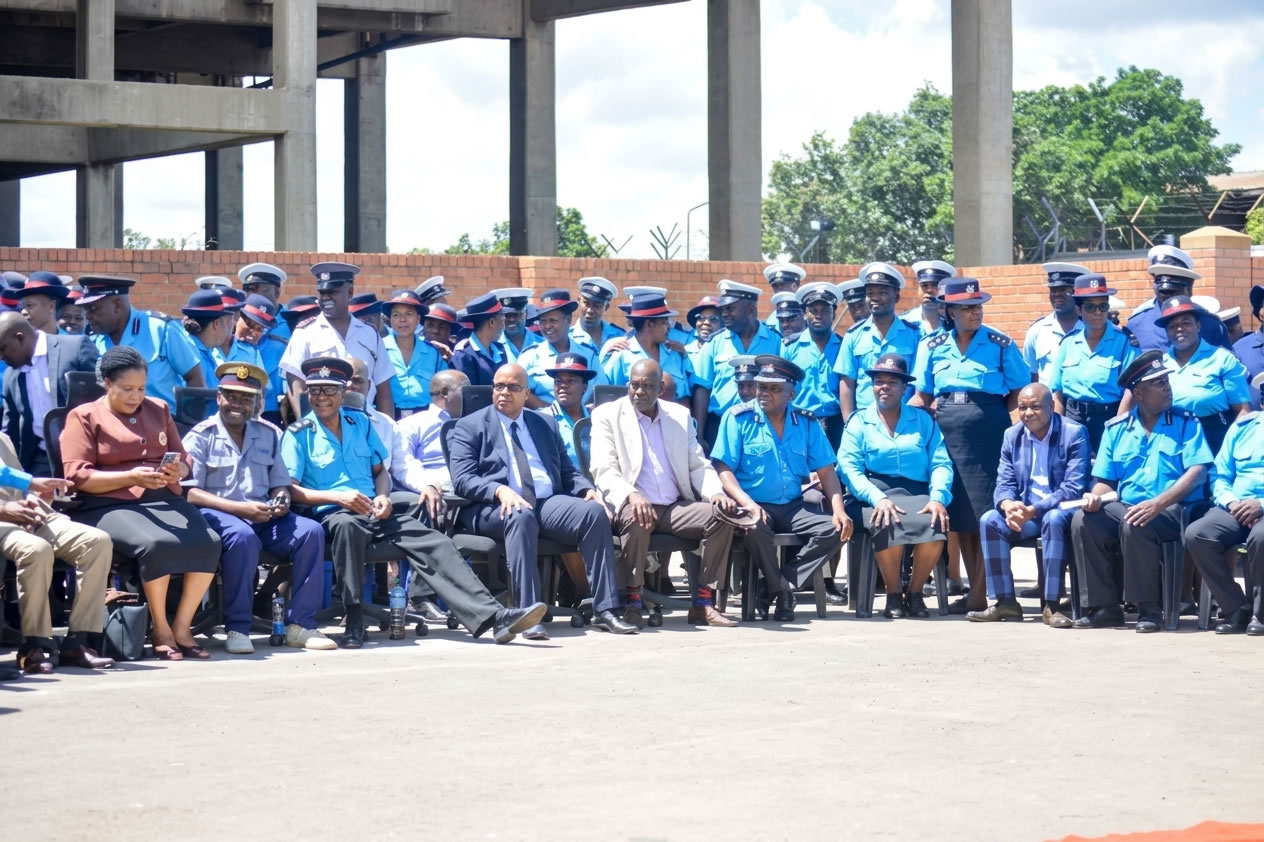
In a move that has stirred considerable disquiet within local government circles, the Zimbabwean Cabinet has officially sanctioned a Bill that bestows upon municipal police the sweeping authority to arrest and investigate citizens. Ostensibly, the government frames this legislative shift as a measure to enhance “efficiency” and to alleviate the burden on the Zimbabwe Republic Police (ZRP) in managing localised infractions such as illegal vending and traffic offences. However, a deeper investigation suggests a far more intricate and, indeed, sinister motivation behind this significant expansion of power.
For decades, the ruling party has grappled with the challenge of maintaining absolute control over urban centres, which have historically served as bastions of opposition support. By transforming municipal officers into what effectively amounts to a paramilitary force, endowed with the power to detain individuals, the state is, in essence, forging a “shadow police force.” This new entity is designed to operate with a degree of autonomy that bypasses the conventional oversight mechanisms typically applied to the national police force.
The timing of this legislative manoeuvre is particularly telling. As the nation braces for potential protests and the ZRP finds its resources increasingly strained, the government appears to be seeking avenues to decentralise its repressive capabilities. Municipal police, often characterised by their precarious funding and a perpetual quest for recognition, are being “deputised” to execute the state’s less palatable directives. This Bill, therefore, facilitates the weaponisation of local government employees, turning them against the very citizenry they are constitutionally mandated to serve. Furthermore, there are growing whispers of an impending surveillance programme, under which these municipal officers will receive training not only in conventional law enforcement techniques but also in sophisticated intelligence gathering within residential suburbs, extending the state’s reach into the most intimate corners of urban life.
The critical question that citizens must now pose is: who will scrutinise these new custodians of law and order? Unlike the ZRP, municipal police forces have historically demonstrated a marked deficit in accountability, with numerous documented instances of brutalising vendors over ostensibly minor “licensing issues.” This newly conferred power, therefore, appears less concerned with enhancing public safety and more with ensuring that every precinct of Zimbabwe, from the densely populated high-density suburbs to the bustling city centres, falls under the vigilant gaze of an officer capable of arbitrary detention. This legislative act represents the final, ominous brick in the construction of a total police state, artfully disguised as a mere administrative upgrade.
The Municipal Police and Courts Bill: A Legislative Overhaul
The formal approval of the Municipal Police and Courts Bill, 2026, by the Zimbabwean Cabinet marks a profound legislative overhaul that redefines the operational parameters of local governance. This Bill is not merely an incremental adjustment to existing statutes; it represents a fundamental re-calibration of power dynamics between the state and its citizens at the municipal level. The core provision of this legislation is the conferment of expansive powers upon municipal officers, enabling them to conduct arrests, initiate investigations, and prosecute individuals. This mandate extends significantly beyond their traditional purview, which was largely confined to the enforcement of local by-laws related to sanitation, public order, and minor infractions. The introduction of dedicated City Courts further complicates the judicial landscape, establishing a parallel legal framework that could potentially circumvent the established oversight mechanisms of the national magistrate courts for a broad spectrum of “local offences.” This dual system raises serious concerns about judicial independence and equitable application of justice.
Official Rhetoric Versus Covert Objectives
The official narrative disseminated by the state positions the Municipal Police and Courts Bill as an essential reform designed to streamline administrative processes and enhance governmental efficiency. Proponents of the Bill argue that by empowering local authorities to manage minor infractions, the Zimbabwe Republic Police (ZRP) will be liberated to concentrate its resources on more severe criminal activities, thereby improving overall national security. Government spokespersons frequently cite the need to address persistent issues such as illegal vending, traffic congestion, and the perennial problem of uncollected refuse as primary justifications for this legislative initiative. However, a meticulous examination of the context and implications of this Bill reveals that this emphasis on “efficiency” serves as a strategic smokescreen, obscuring a more profound and politically motivated agenda. Our investigation strongly suggests that the true intent behind this legislation is the systematic weaponisation of local government employees, transforming them into instruments of state control against the urban populace. By effectively deputising municipal staff, the ruling party establishes an additional layer of enforcement that can be deployed with reduced political fallout, insulating the central government from direct accountability for potentially unpopular or repressive actions.
Urban Centres: The Epicentre of State Control
Historically, urban areas within Zimbabwe have been recognised as significant strongholds for the political opposition, presenting a persistent challenge to the ruling party’s hegemonic aspirations. This demographic and political reality renders these urban centres prime targets for intensified state surveillance and control. The Municipal Police and Courts Bill, in this context, is instrumental in the creation of a “shadow police force” specifically designed to permeate and operate within these politically sensitive communities. A critical distinction between this newly empowered municipal force and the national police lies in their respective accountability frameworks. Municipal officers are often more susceptible to localised political pressures and typically lack the comprehensive training in human rights protocols that, however imperfectly, characterises the national police force. The decentralisation of arresting powers, therefore, ensures an omnipresent state observation, extending its reach into every corner of the city, from the bustling high-density suburbs to the commercial heartlands. This pervasive presence is designed to stifle dissent and pre-empt organised opposition activities at their nascent stages.
The Transformation: From Civil Servants to Paramilitary Operatives
The Zimbabwean government has publicly announced a mandatory retraining programme for municipal officers, ostensibly to equip them with the necessary skills for their expanded law enforcement roles. However, intelligence gathered from various sources indicates that this training transcends conventional policing methodologies, delving into advanced paramilitary tactics and sophisticated intelligence-gathering techniques. These officers are being strategically positioned not merely to uphold local ordinances but to function as the state’s primary informants and enforcers within residential suburbs. This profound transformation of civil servants into active agents of state security blurs the ethical and functional boundaries between public service and state-sponsored surveillance. The resultant force is one whose primary allegiance may shift from serving the community to enforcing the directives of the ruling political apparatus, thereby undermining the very concept of impartial public service.
A Troubling Precedent: The History of Municipal Brutality
The historical record of municipal police forces in Zimbabwe is replete with instances of excessive force, harassment, and a demonstrable disregard for civil liberties, particularly targeting vulnerable populations such as street vendors. Past incidents, notably the violent crackdowns witnessed in Harare, underscore a consistent pattern of abuse, infringing upon the physical safety and economic rights of ordinary citizens. Prominent human rights organisations, including the Zimbabwe Human Rights Commission (ZHRC), have previously voiced grave concerns regarding the “economic and physical violence” perpetrated by these units. The decision to grant full arresting powers to a force with such a problematic history, in the absence of radical and comprehensive reform, is widely perceived as an open invitation for widespread civil rights abuses. This legislative move, therefore, risks legitimising and institutionalising practices that have historically been condemned by human rights advocates both domestically and internationally.
The Accountability Vacuum: A Critical Flaw
One of the most glaring deficiencies within the newly approved Bill is the conspicuous absence of robust, independent reporting mechanisms designed to address complaints against municipal officers. While the Zimbabwe Republic Police (ZRP), despite its imperfections, maintains some semblance of an oversight structure, municipal police forces have historically operated within a regulatory grey area, characterised by minimal public accountability. The Harare Residents Trust (HRT) has issued stern warnings that, without transparent and effective disciplinary procedures, these newly acquired powers will inevitably be exploited, leading to rampant corruption and extortion. This accountability vacuum leaves citizens in a precarious position, questioning the avenues available for redress when confronted with abuses of power by municipal officers who may operate without clear identification or established chains of command. The lack of clear recourse mechanisms fundamentally undermines public trust and exacerbates the potential for impunity.
The Weaponisation of By-Laws: Criminalising Survival
The Bill’s pronounced focus on the enforcement of by-laws takes on a particularly ominous dimension within the Zimbabwean socio-economic context, where it frequently translates into the criminalisation of the informal economy. For a significant segment of the population, engaging in activities such as illegal vending is not a matter of choice but a desperate strategy for survival amidst a struggling economy. This legislation, however, transforms these survival strategies into prosecutable offences, thereby penalising economic vulnerability. By granting municipal police the authority to investigate, the state acquires a potent tool to target specific individuals or groups under the pretext of “by-law enforcement.” This selective application of the law is a hallmark of a nascent police state, systematically employed to suppress dissent and to reward political loyalty at the local level, further marginalising those already struggling for economic subsistence.
Intelligence Gathering: Penetrating High-Density Suburbs
Confidential sources within the security apparatus have indicated a significant expansion of the mandate for municipal officers, now encompassing community-level intelligence gathering. These officers, by virtue of their integration within local communities, are strategically positioned to monitor political discourse, track grassroots organising efforts, and identify potential “troublemakers” before they can coalesce into significant opposition movements or participate in national protests. This hyper-local surveillance initiative represents a critical escalation in the state’s efforts to consolidate its control, effectively eliminating any perceived safe spaces from governmental intrusion, even within the privacy of residential neighbourhoods. This pervasive monitoring is designed to create an environment of fear and self-censorship, thereby neutralising potential threats to the ruling party’s authority.
City Courts: Instruments of Summary Justice
The proposed establishment of City Courts is intended to serve as a dedicated judicial avenue for cases initiated by municipal police, thereby creating a fast-track system for the adjudication of “minor” offences. However, legal experts have expressed profound concerns that these courts will likely lack the procedural fairness and independence that are fundamental to a robust national judiciary. There is a substantial risk that these courts will be utilised to impose summary judgments and exorbitant fines, strategically designed to deplete the financial resources of activists, political opponents, and the economically disadvantaged. This parallel legal system, therefore, threatens to further erode the rule of law by introducing disparate standards of justice for different categories of “crimes,” often disproportionately affecting the most vulnerable segments of society and undermining the principle of equality before the law.
Zimbabwe at a Crossroads: The Solidification of a Police State
The Municipal Police and Courts Bill is far more than a mere administrative adjustment; it represents a fundamental and alarming expansion of state power within Zimbabwe. By decentralising its repressive capabilities, the government is rendering its control over the populace more pervasive, insidious, and significantly more challenging to contest. The international community, alongside local civil society organisations, must urgently demand immediate transparency and robust independent oversight for these newly empowered units. Without a steadfast defence of civil liberties and a concerted effort to uphold democratic principles, Zimbabwe’s urban centres face the imminent prospect of falling under the perpetual and unaccountable dominion of a security apparatus that fundamentally threatens the nation’s democratic foundations. The trajectory set by this Bill points towards a future where state control is absolute, and individual freedoms are severely curtailed, marking a critical juncture in the nation’s political evolution.