


Tragedy Strikes N1: Twelve Lives Lost in Munenzva Bus Horror
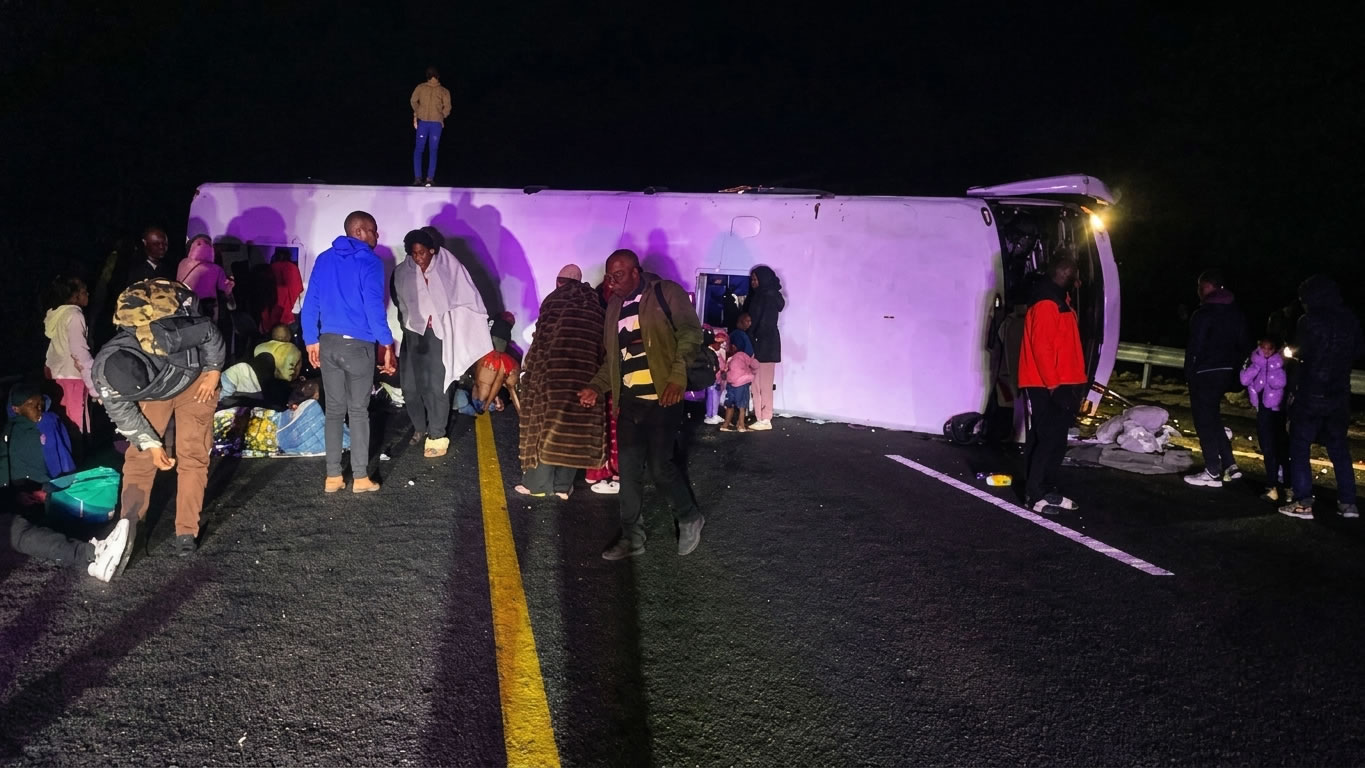
BLOEMFONTEIN – A devastating bus accident on the N1 highway in the Free State has claimed the lives of twelve individuals and left sixty-six others injured, plunging families into grief and reigniting urgent calls for enhanced road safety measures on one of Southern Africa’s busiest and most perilous routes. The Munenzva bus, en route from Cape Town to Zimbabwe, overturned late on Thursday evening, marking another dark chapter in the history of cross-border travel.
The horrific incident occurred at approximately 21:30 hrs when the bus, which was reportedly towing a trailer, lost control and overturned. Of the seventy-eight passengers on board, four sustained minor injuries, while a staggering sixty-two were left seriously injured, requiring immediate and extensive medical attention. Emergency services, including paramedics and police, rushed to the scene to provide assistance, working tirelessly through the night to extract victims from the wreckage and transport the injured to various hospitals across the Free State.
A Route Plagued by Peril: The N1 Highway’s Deadly Reputation
The N1 highway, particularly the stretch through the Free State, has long been dubbed the “Highway of Death” by many, a grim moniker earned through a relentless series of fatal accidents. This latest tragedy involving the Munenzva bus underscores the persistent dangers faced by commuters, especially those undertaking long-distance cross-border journeys. The route is a critical artery connecting South Africa with its northern neighbours, including Zimbabwe, and is heavily utilised by buses transporting migrant workers and families.
Road safety advocates and transport experts have consistently highlighted concerns regarding driver fatigue, vehicle maintenance, and adherence to traffic regulations, particularly for cross-border operations. The sheer volume of traffic, combined with long distances and varying road conditions, creates a challenging environment for even the most experienced drivers. The addition of a trailer, as reported in this incident, can further complicate vehicle handling, especially at night or under adverse conditions.
The Human Cost: Families Await Answers
For the families of the twelve deceased, the news has brought unimaginable sorrow. Many were eagerly awaiting the return of their loved ones, only to be met with the devastating reality of their loss. The sixty-six injured, some critically, face a long and arduous road to recovery, both physically and emotionally. The accident has left a profound impact, not only on those directly involved but also on the wider Zimbabwean and South African communities who rely on these bus services.
Authorities have launched a full investigation into the cause of the accident. While details are still emerging, preliminary inquiries will likely focus on factors such as driver conduct, the mechanical condition of the bus and trailer, and potential environmental elements that may have contributed to the loss of control. The South African Police Service (SAPS) and relevant transport authorities are expected to release further information as their investigation progresses.
Mr. Monyatso Mahlatsi, the Free State MEC for Health, is anticipated to provide an update on the condition of the injured and the support being offered to the affected families. Such incidents invariably place immense strain on provincial healthcare facilities, which must rapidly mobilise resources to cope with mass casualty events.
A Pattern of Incidents: Munenzva Buses Under Scrutiny
This is not the first time a Munenzva bus has been involved in a serious accident. Previous reports and social media discussions indicate a history of incidents involving the company’s fleet, ranging from other crashes with fatalities and injuries to instances of buses catching fire. While each incident has its unique circumstances, a recurring pattern raises questions about operational safety standards and regulatory oversight within the cross-border transport sector.
One previous incident, widely reported on social media, involved a Munenzva bus catching fire on the N2 highway in South Africa. Another account mentioned a bus overturning near Rutenga on its way to South Africa, claiming lives and injuring others. In another Munenzva bus accident that took place last year, 4 people were killed, while 13 were injured along Masvingo road. These past events, alongside the latest tragedy, underscore the critical need for rigorous inspections and enforcement of safety protocols for all commercial passenger vehicles, especially those undertaking long international journeys.
The use of trailers by passenger buses is also a point of contention among safety experts. While permitted under certain regulations, the practice can introduce additional risks, particularly concerning stability and braking efficiency, especially when navigating challenging terrains or during emergency manoeuvres. Investigators will undoubtedly examine whether the trailer played a role in the bus losing control in this specific instance.
Calls for Action: Ensuring Passenger Safety
In the wake of this tragedy, there is an urgent call for all stakeholders – bus operators, regulatory bodies, and governments – to collaborate on comprehensive solutions to enhance passenger safety. This includes stricter enforcement of driver rest periods to combat fatigue, mandatory and frequent vehicle inspections, and public awareness campaigns to educate passengers on their rights and how to report unsafe practices.
Cross-border bus services are a lifeline for many, facilitating economic activity and family connections across Southern Africa. However, this vital service must not come at the cost of human lives. The collective grief and outrage following the N1 accident must serve as a catalyst for meaningful change, ensuring that such horrors are not repeated.
The Zimbabwean consulate in South Africa is expected to work closely with South African authorities to assist with the identification of the deceased, repatriation efforts, and support for the injured passengers and their families. This collaborative effort is crucial in providing solace and practical assistance during this incredibly difficult time.
As the investigation unfolds, the focus will remain on understanding precisely what led to this catastrophic event and, more importantly, what preventative measures can be implemented to safeguard the lives of countless travellers who traverse the N1 highway and other similar routes. The memory of the twelve lives lost demands nothing less than a resolute commitment to road safety.