


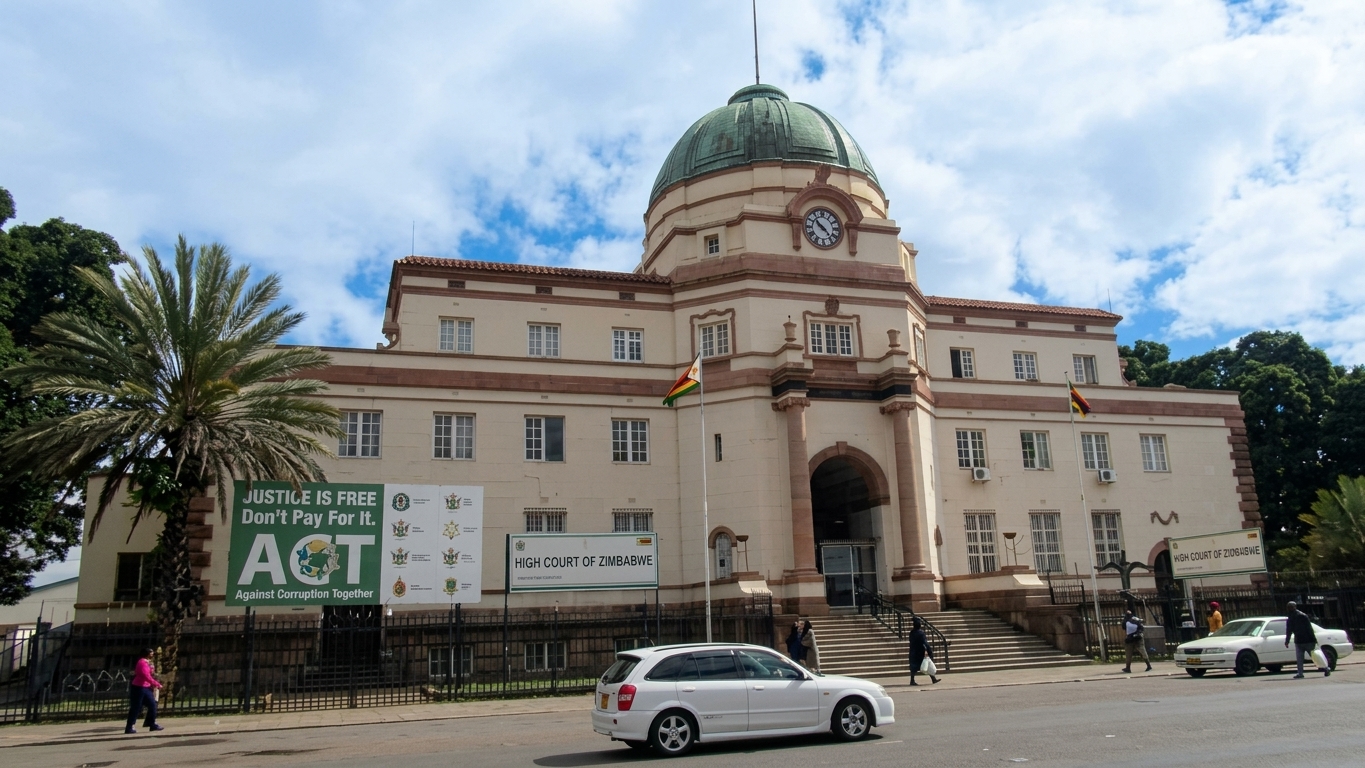
A Gweru man has asked the High Court in Bulawayo to end his marriage after DNA tests allegedly showed that the eldest child he had raised for nearly two decades was not his biological son.
Aaron Makore says the boy’s biological father is his wife’s sister’s husband, following an affair his wife is alleged to have acknowledged. The child is now 20, while Makore says he believed for 19 years that he was the boy’s father.
Makore filed divorce summons against Kumbirai Makore, née Muchena, on 30 September. He is seeking a decree of divorce, custody of the younger children, maintenance and an order dividing the couple’s property. The allegations and requests are set out in his court papers.
The couple began their relationship under an unregistered customary marriage in 2006 and formalised their union in a civil marriage on 14 November 2014. They have four children, aged 20, 16, 12 and three, according to the court papers.
Makore says the DNA results brought to light a truth that had been hidden throughout the marriage. He alleges that his wife accepted the test findings and told him that the eldest child had been conceived during an affair with her sister’s husband.
The discovery, he says, left no prospect of reconciliation. In his summons, he describes the marriage as having irretrievably broken down. The couple have also not had conjugal relations for more than a year, which Makore cites as another sign that their relationship has ended.
The paternity dispute is not the only issue raised in the divorce action. Makore accuses his wife of changing the original agreement of sale for Stand Number 1559 in Raylands, Gweru, without his knowledge or consent. The property forms part of the couple’s dispute over how their assets should be divided.
The house is registered in the names of Makore, his wife and their children. He is asking for 80 per cent of the proceeds if it is sold, with the remaining 20 per cent going to his wife. He has also asked to care for the minor children, while proposing that their mother see them on alternate weekends and during school holidays.
Makore further wants his wife to contribute US$30 a month towards each child’s upkeep until the child turns 18 or becomes self-supporting, whichever comes first. The summons therefore places questions about the marriage, the children’s care and the family’s property before the court at the same time.
Kumbirai Makore has entered an appearance to defend the action through lawyers from the Legal Aid Directorate. The case is contested.
The dispute echoes another paternity case heard in Dete, where DNA results led to an order for a woman to repay US$2,500 in maintenance paid by her former partner. Clean Nyathi said he had supported the child for seven years, with payments rising from US$40 to US$60 a month, before a test showed he was not the biological father.
Nyathi said he had sought a test after doubts about paternity and pursued it after his former partner threatened action over missed payments. He said he paid about US$450 for the testing. The court ordered the child’s mother, Cynthia Dube, to reimburse him US$2,500 within seven days. Dube said she could not afford the amount and maintained that she had agreed to testing, although the process took years to complete.
The Dete case shows one possible outcome when a paternity dispute arises during a maintenance matter: the test result was followed by a repayment order. In Makore’s case, the DNA claim is part of a divorce action involving a long marriage, four children and a jointly registered home. He is asking the court to decide not only the marriage but also custody, access, maintenance and the division of the property.
Figures released by a Zimbabwean DNA testing agency also show how often people seeking paternity answers have received results excluding the presumed father. The agency reported that 59 per cent of the paternity tests it conducted in 2024 did not confirm the presumed father as the biological parent. The figure relates to people who sought tests, rather than all fathers or families in the country.
A separate set of figures from Harare Civil Courts recorded a similar pattern among men who challenged maintenance claims. Of 11 men referred for DNA tests during the first six months of 2015, eight were found not to be the biological fathers. During that period, they had been required to pay interim maintenance while testing was completed. The reported court procedure allowed maintenance to be cancelled after a negative result, with the man able to apply to recover money already paid.
Those figures provide context for the disputes that can follow a test, but each case has its own facts and consequences. In Makore’s summons, the immediate demands are for divorce, arrangements for the younger children and a proposed division of the Gweru home. His account of the DNA results and his wife’s alleged admission sits at the centre of the request to dissolve a union that began two decades ago.