


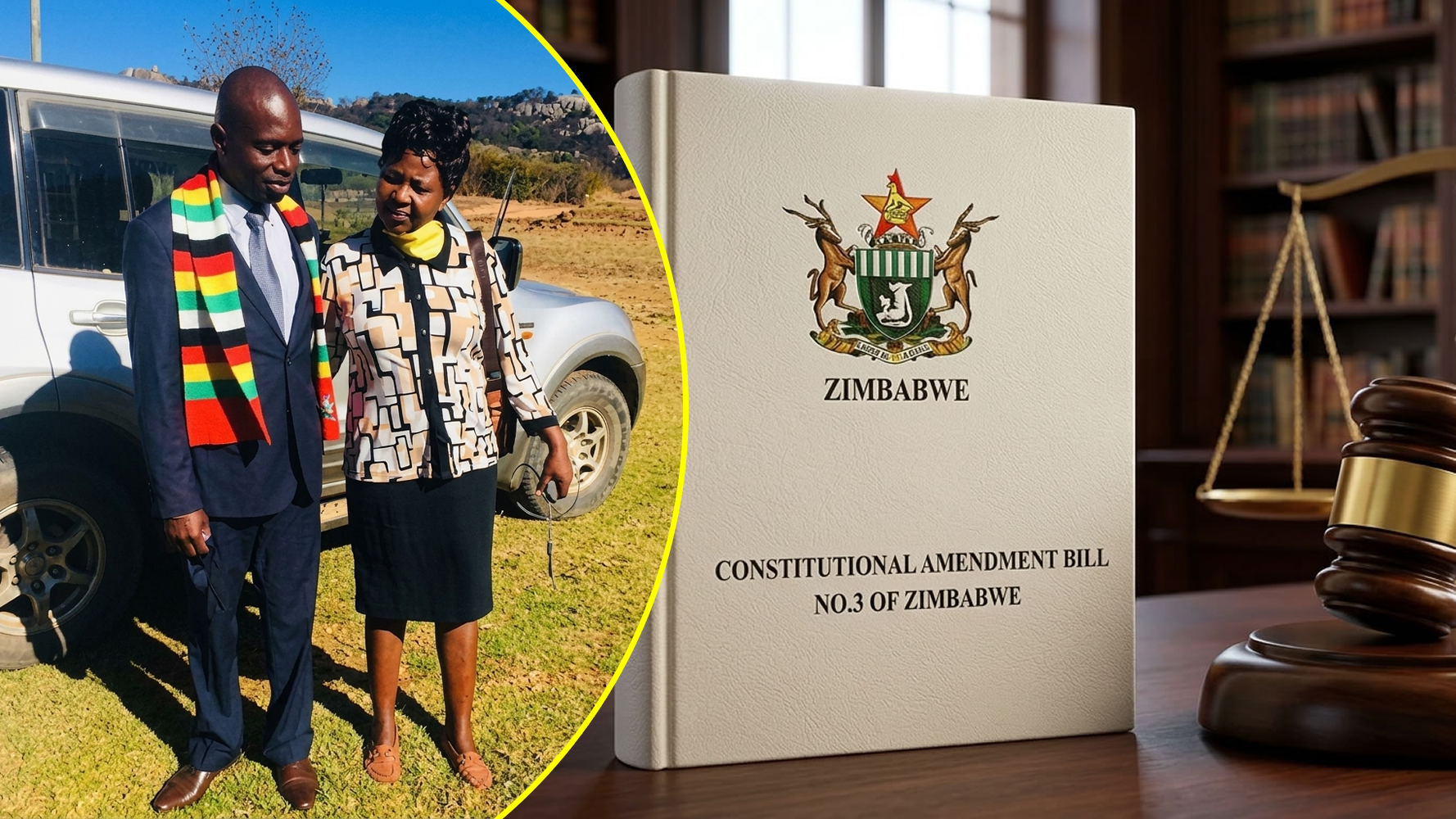
Zanu PF Manicaland party officials have taken back a vehicle issued to the Nyanga Central Committee member and recommended his suspension after accusing him of campaigning against the constitutional changes that would keep President Emmerson Mnangagwa in office until 2030.
ZANU PF has withdrawn a party-issued Ford Ranger from senior Manicaland cadre Moses Gutu after he publicly opposed Constitutional Amendment Bill No. 3, the measure that has extended the presidential and parliamentary terms and shifted the next national election to 2030.
Gutu, a Nyanga Central Committee member, returned the vehicle to the party’s provincial offices in Mutare on Tuesday, 27 October. The handover followed a Provincial Executive Committee meeting held a day earlier, where members recommended that he be suspended and referred the matter to the party’s national commissariat.
The province accuses Gutu of misconduct and insubordination under Article 27 of the ZANU PF constitution. Its case is that he mobilised party structures against CAB3 and spoke out against Resolution One, the party position supporting Mnangagwa’s continued leadership beyond 2028. Videos of Gutu criticising the amendment have circulated online, drawing the attention of provincial leaders.
Provincial transport secretary Stanley Mbawa said Gutu brought the Ford Ranger to the party’s offices and signed an affidavit confirming its return.
“He brought the vehicle to the provincial offices on Tuesday. It’s in good condition, due for service. He even signed an affidavit confirming he surrendered it to me on behalf of the party,” he said.
The party has framed the vehicle’s return as part of its response to a breach of discipline, not as a separate dispute over its condition or use. Gutu’s suspension, however, has not yet been confirmed as final: the provincial executive has sent its recommendation to the national commissariat for consideration.
Manicaland provincial commissar Albert Nyakuedzwa said the party expected members to support decisions taken at its conferences and deal with disagreements through internal channels. He described ZANU PF as a disciplined organisation guided by democratic centralism.
“Dissent is dealt with internally, not on social media. Members who rebel against conference resolutions risk suspension, expulsion, and losing party benefits — including vehicles,” he said.
The dispute follows a series of party decisions tying ZANU PF’s political programme to Mnangagwa’s extended tenure. At its 23rd National People’s Conference in Chinhoyi in October, delegates reaffirmed the president’s position and called for disciplinary action against members who opposed or failed to support key party decisions on the amendment.
The conference resolutions name Mnangagwa as the party’s sole presidential candidate at its next congress, which has been moved from 2027 to 2029. They also direct the party to align its constitution with the national constitution as amended and instruct the Government to make related legislative changes. Another resolution calls for disciplinary measures against ZANU PF MPs who absented themselves from Parliament and failed to vote in the crucial CAB3 division.
That decision follows weeks of scrutiny of ruling-party lawmakers who did not take part in parliamentary votes on the amendment. Fourteen ZANU PF MPs were identified as absent from the voting process, and some faced demands for internal action. The conference resolution formalised the party’s intention to pursue discipline over the missed votes, extending the pressure from Parliament to provincial party structures.
Gutu’s case is distinct: he is accused of actively mobilising against CAB3, rather than simply missing a vote. But the vehicle’s withdrawal and the pending suspension recommendation come as the party is signalling that public opposition to its chosen direction can bring consequences beyond a private reprimand.
CAB3 was passed by Parliament and signed into law by Mnangagwa on 7 July 2026 as the Constitution of Zimbabwe Amendment (No. 3) Act. It lengthens presidential and parliamentary terms from 5 years to 7 years, moving the next elections from 2028 to 2030. It also replaces the direct popular election of the president with a vote by members of the Senate and National Assembly sitting together.
The changes reshape the route to the presidency and the timing of national elections. Under the amended system, Parliament will choose the head of state after a general election. The party conference’s decision to retain Mnangagwa as its leader and sole presidential candidate until its 2029 congress therefore sits alongside a constitutional framework that places greater weight on parliamentary numbers.
Manicaland’s position is that the amendment is necessary for “stability, development and continuity” under Mnangagwa. Gutu’s public opposition has put him at odds with that position at a time when the conference has called for members to fall in line and the party leadership is aligning its internal timetable with the constitutional changes.
The disciplinary action against Gutu is also unfolding amid a wider debate within ZANU PF about succession and the future of the party after 2028. At the Chinhoyi conference, Vice-President Constantino Chiwenga warned against repeating the mistakes that led to Robert Mugabe’s removal in 2017. Chiwenga, then commander of the Zimbabwe Defence Forces, played a leading role in the military intervention that ended Mugabe’s presidency.
Chiwenga’s remarks and the adoption of resolutions extending Mnangagwa’s political horizon have brought the question of succession into sharper focus. The party’s published decisions confirmed the 2029 congress date and Mnangagwa’s selection as its sole candidate. Those moves left little space in the party’s formal programme for an alternative presidential succession timetable.
A Central Committee report presented at the conference described a politically sensitive environment shaped by constitutional reform, opposition activity and concerns over civic space. It also set out a range of risks, including politically motivated violence, protests, misinformation and disruption of public gatherings. The report said the party’s security department monitored developments, prepared early-warning briefings and assessed risks around meetings linked to the constitutional process.
According to the report, the security department worked with the party commissariat on implementing earlier conference resolutions, including those connected to CAA3. Its stated duties included tracking online threats, impersonation, incitement, manipulated media, leaked documents and disclosure of sensitive information. It said the department also co-operated with the Department of National Security and shared intelligence and situational assessments.
“The national security environment during the period remained generally manageable but exposed to political, economic , social, cyber and transactional risks,” the report stated.
The party characterised those operations as preventive measures to protect its work and maintain continuity during a politically sensitive period. The account places the Gutu case in a broader environment where the party has given particular attention to public messaging and the implementation of its constitutional resolutions.
The amendment is also facing challenges in the Constitutional Court. Hearings are scheduled for 11 November in cases brought by Vhurande Mahlupeko and former Binga MP Prince Dubeko Sibanda. Mahlupeko challenges the validity of the Act, arguing that provisions were included that were not part of the public consultation process. Sibanda challenges the extension of presidential and parliamentary terms and their application to current officeholders. A separate challenge brought by the Movement for Democratic Change is scheduled for 25 November and concerns the change from direct election of the president to parliamentary selection.
Those hearings are due to take place as the party’s structures continue to enforce their position on the amendment. The Manicaland PEC has referred Gutu’s case to the national commissariat, while the vehicle is back in party hands. The provincial leadership has made clear that it regards his opposition to CAB3 as a disciplinary matter and has restated its support for the constitutional changes.
Gutu has faced party disciplinary proceedings before. He was subjected to action between 2015 and 2016 while serving as chairperson of the Nyanga Rural District Council. The current case is centred on his campaign against CAB3 and his challenge to the party’s resolution on Mnangagwa’s tenure.
For now, the provincial recommendation is the next step in the party process. The Ford Ranger has been surrendered, and the decision on Gutu’s status has been sent upwards. In the meantime, ZANU PF’s conference resolutions remain in force: Mnangagwa is its chosen candidate, the next congress is scheduled for 2029, and members who defied the party line face disciplinary action.