


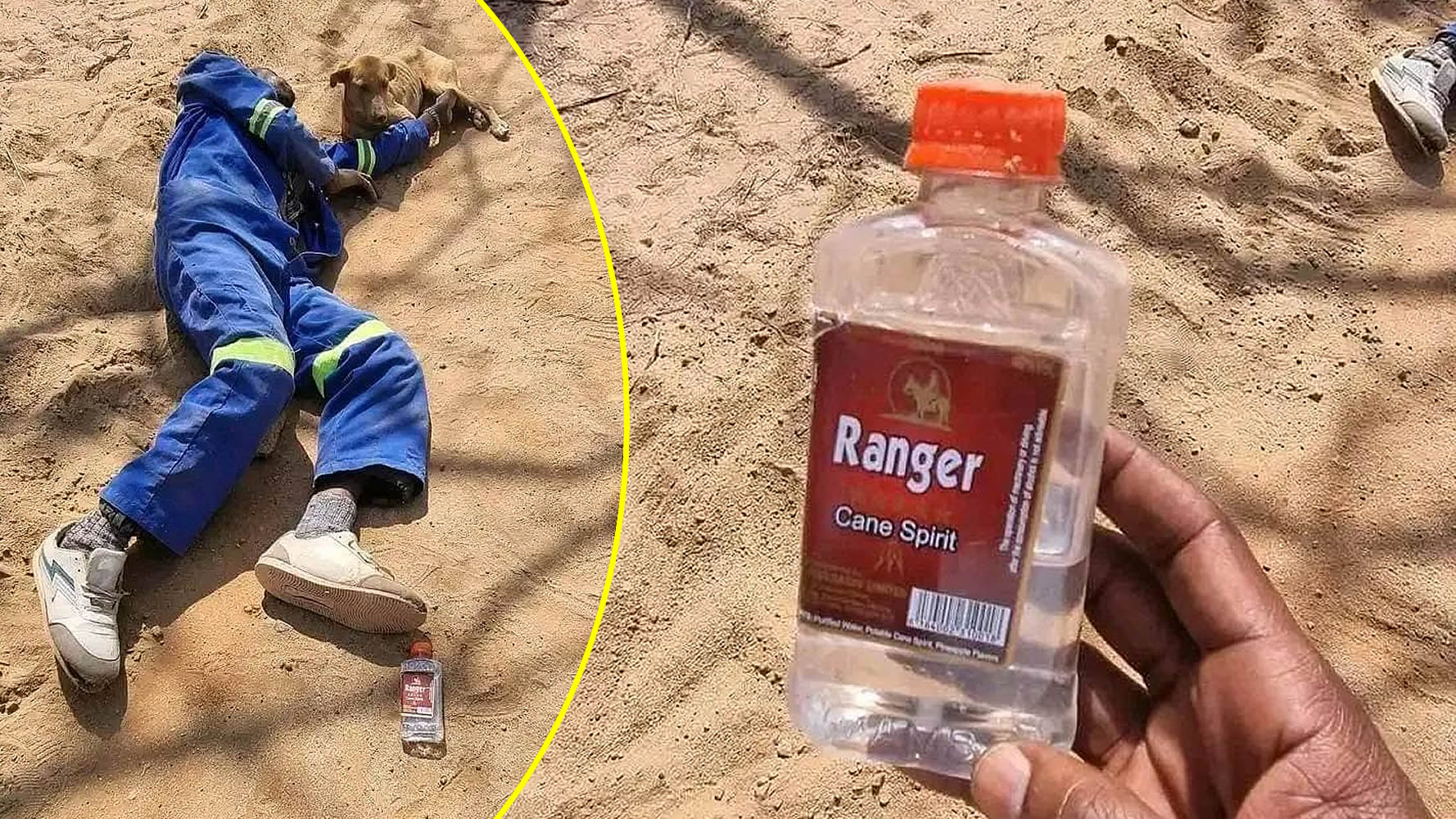
A 42-year-old man from Headlands was found dead near a bus stop, with two bottles of Ranger Cane spirits lying close to his body, as police investigate the circumstances surrounding his death.
Elijah Chombe, of Headlands, was last seen alive on 26 October at about 5pm. He was reportedly in a drunken state near the bus stop by Juliana Dupwa of Maturi Village 17, according to police.
The following day, at about 4pm, Ishmael Wecha, who was herding cattle in the area, discovered Chombe’s body. Police attended the scene and found two bottles of Ranger Cane spirits near the deceased.
Acting Manicaland provincial police spokesperson Assistant Inspector Wiseman Chinyoka confirmed the incident and said the body had been taken to Rusape District Hospital mortuary for a post-mortem examination.
“On October 26, at around 1700 hours, the now deceased was last seen in a drunken state near the bus stop by Juliana Dupwa of Maturi Village 17 in Headlands,” Ass Insp Chinyoka said.
“Police attended the scene and inspected the body. During the inspection, two bottles of Ranger Cane spirits were found near the deceased,” he said.
“The body was taken to Rusape District Hospital mortuary for a post-mortem examination to establish the cause of death.”
The examination is expected to provide further information as police continue investigating. The discovery has once again drawn attention to cheap and highly potent alcoholic drinks that are widely sold in small bottles in rural areas and high-density suburbs.
Ranger Cane spirits are commonly associated with the wider street trade in low-cost alcohol known by names such as tumbwa, musombodhiya, kambwa and kachasu. The products are often sold in 200ml bottles and can be bought for around US$0.50 or US$1 for 2, making them accessible to people who cannot afford conventional beer or branded spirits.
The drinks are frequently sold with labels claiming an alcohol content of about 40 per cent. However, illegal and unregulated products can vary greatly in strength because they are not manufactured under proper quality controls. Some are made by mixing ethanol or methanol with water and colouring before being poured into bottles carrying imitation labels.
In Harare, the trade has previously been linked to backyard stills and unlicensed drinking places. Sellers have described strong demand for the bottles because customers can buy several at a time for less than the price of a single bottle of regulated spirits. Drinkers often consume the contents quickly, increasing the risk of severe intoxication and sudden collapse. The danger has been reflected in a number of deaths reported across Zimbabwe.
In March 2019, 33-year-old Walter Masasire of Mazowe died after drinking musombodhiya at Hidden Valley farm. Masasire was found dead in his bedroom the morning after he and his brother had spent the night drinking the illicit brew in the farm compound.
Mashonaland Central provincial police spokesperson Inspector Milton Mundembe confirmed the case at the time.
“I can confirm a case of sudden death in Mazowe where a male adult died due to excessive alcohol content in his body, the man was drinking an illicit beer called musombodhiya and was discovered the following morning that he had died after retiring to bed,” Mundembe said.
Masasire’s brother, Sauro Mapfumo, said he had warned him not to drink too much.
“My brother was a heavy drinker and on the date in question I warned him not to take too much musombo, but he did not listen to me. We went to bed around 10pm and on Friday morning around 11am we thought he was still asleep. I went to check on him and I found him dead. I then filed a police report at Mazowe police base,” he said.
In August 2021, Stanley Gomo, a 41-year-old man from Zindoga village in Mount Darwin, also died after drinking musombodhiya at a local shop. His health deteriorated and he died while being taken to a local hospital, police said.
Another death was reported in Harare that year after a drinking binge. A neighbour of an illicit alcohol seller died, and a post-mortem examination reportedly showed a damaged liver. The case added to growing concern over the effects of prolonged heavy drinking and the contents of unregulated spirits.
The products have also been linked to people collapsing or sleeping on roadsides after drinking. In some cases, drinkers become so intoxicated that they are unable to protect themselves from traffic, exposure, assault or other dangers.
The government moved to strengthen the legal response in 2025 through Statutory Instrument 62 of 2025, issued under the Harmful Liquids Act. The amendment added unregulated, unauthorised or illegally produced alcoholic beverages containing ethanol to the list of harmful liquids, including drinks known by names such as kambwa and musombodhiya.
Under the amended law, the manufacture, supply, possession, storage, drinking or use of a harmful liquid is prohibited without lawful excuse. The law also gives police powers to enter premises where they have reasonable grounds to believe that a breach is taking place.
The measure followed public concern over the spread of illicit alcohol and other substances, particularly among young people and in poorer communities. Police and local authorities have continued to face difficulties in stopping the trade because production can be moved quickly between homes, informal workshops, markets and unlicensed bars.
In Headlands, Chombe’s death has placed the focus on the danger of consuming cheap spirits without knowing their true strength or contents. The two bottles found beside his body may form part of the evidence police are examining as they await the post-mortem findings.
“As the police, we urge members of the public to drink responsibly and avoid excessive alcohol consumption, as this may expose them to dangerous situations,” Ass Insp Chinyoka said.
“People should always be mindful of their safety and avoid putting themselves in circumstances that could put their lives at risk. We also encourage members of the public to report any suspicious circumstances to the police and provide information that may assist in investigations.”
For families in rural communities, the latest death is a reminder of how quickly a cheap bottle of alcohol can turn into a medical emergency. For police, it is another case requiring answers about what was consumed, how much was taken and what happened during the hours before a man was found dead beside a bus stop.