


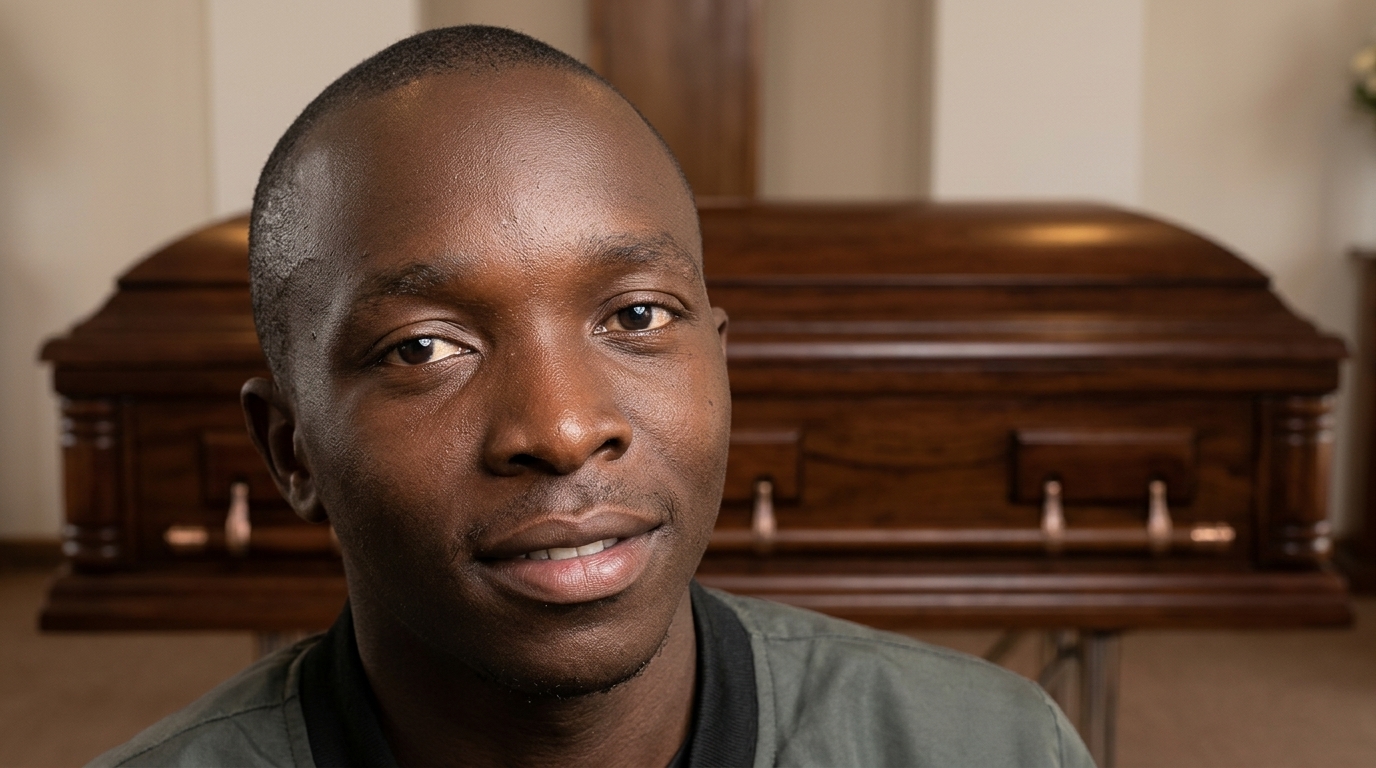
A family in Hauna, Manicaland, is seeking answers after mourners said they saw tears streaming from the eyes of 26-year-old Walter Kupemba Jnr as he lay in his coffin. The following morning, relatives returning to his grave found marks on the fresh earth, footprints leading away and a stone shifted from its position at the head of the grave.
Kupemba was buried last Friday after his health deteriorated rapidly. He died at Victoria Chitepo Provincial Hospital on Wednesday, leaving relatives struggling to understand both his sudden death and what they say happened during and after the funeral.
His mother, Gladys Tangwena, said staff at the funeral parlour first alerted the family to what appeared to be tears on her son’s face. She later saw the liquid herself when the coffin was opened. Family members wiped it away, she said, but it appeared again while she and her sisters carried out traditional rites observed by a deceased person’s mother.
“They wiped the tears away, but when my sisters and I later performed some traditional rituals observed by a deceased person’s mother, the tears started flowing again. It was not just a few drops. It appeared as if he was weeping, especially from the right eye. It was as though he was alive and crying. I was devastated and could not bring myself to view the body again,” she said.
Tangwena said other mourners who viewed the body also noticed what appeared to be tears. The family eventually went ahead with the burial, although she said the unusual sight had left them distressed.
The next morning, relatives returned for rumuko, a traditional ritual performed after burial. Tangwena said they found marks at the upper end of the newly covered grave, including what looked like footprints going away from it. A stone placed at the head of the grave also appeared to have moved.
“There were marks on the upper end of the grave that looked as if someone had sat there. We also noticed footprints leading away from the grave. Some appeared human, while others resembled those of a four-legged animal,” she said.
Her son’s death followed a swift decline that began after he came home from Sagambe complaining of a toothache. Tangwena said his neck later became swollen and he lost the ability to speak. When he was admitted to Victoria Chitepo Provincial Hospital, he could communicate only through sign language.
Walter had been working in Sagambe and was building a seven-roomed house, his mother said. She described him as hardworking and ambitious, and said the family had not expected to lose him so suddenly.
Tangwena said she was frightened by the circumstances and had considered leaving the family home with her two daughters. She also alleged that her son had previously been involved in a dispute with one of his uncles, whom she said had threatened him. She did not say that the uncle was responsible for his illness or for the events at the grave.
“I do not know what happened to my son or why these strange things are happening after his death. Sometimes I even think of leaving our home with my daughters because I am afraid,” she said.
Walter Kupemba Snr, the deceased man’s uncle and namesake, said relatives and community members had also seen what appeared to be tears at the funeral. He said the family wanted to understand what had happened and had begun consulting traditional healers. One was expected to visit their homestead. The relatives also planned to go to Sagambe to ask whether Walter Jnr had faced disputes or difficulties before he became ill.
“It was the first time I had ever seen such a thing. We were all shocked. As a family, we want to understand what happened and what caused his death,” Kupemba Snr said.
He said he had also seen the marks on the grave during rumuko. “It was shocking to find marks that looked as if someone had sat on a fresh grave. We also saw footprints leading away from it. We want to establish exactly what happened there,” he said.
The Hauna family’s account recalls other Zimbabwean funeral reports in which relatives and mourners described seeing tears on a deceased person’s face. The cases have been reported in different communities over several years, each with its own circumstances and family response.
In July 2020, relatives in Chigodora, near Mutare, said the body of 42-year-old Chandapiwa Makaza, also known as Chandapiwa Bushu, appeared to weep after being placed in a mortuary. The report said she had died following an incident in which she was attacked by a rooster. Her body was said to have appeared to weep 2 days after it was taken to the mortuary, as relatives and friends gathered for the funeral. The unusual sight added to the distress around a death that had already unsettled people in the area.
A later account of the rooster incident said the bird’s owner, Zvikomborero Takarinda, was expected to appear before a traditional leader’s court to explain what had happened. Acting Chief Zimunya said the matter had drawn attention because of the circumstances surrounding Makaza’s death. The funeral account and the subsequent traditional-court proceedings were separate developments, but both kept the case in public discussion in the months that followed.
Another reported case came from Mateta Village in Gokwe South in February 2014. Mourners viewing Alexander Zigara’s body said fresh tears appeared to be flowing from his eyes, briefly halting burial proceedings. Reports at the time said the 40-something man had been found dead in his bedroom hut the previous day and had not been known to complain of illness. Relatives consulted traditional healers, and some villagers took the apparent tears as support for claims that he had been bewitched. The next day, his grave was also said to have been disturbed. Those details were part of the reported family and village response; they were not described as findings from a medical examination.
A 2012 case involving 33-year-old Tsitsi Tekere was reported in Epworth. Mourners said tears rolled down her cheeks while her body was being transported from Chivhu to Harare. Her burial was already troubled by a dispute over where she should be laid to rest: people close to her said she had wanted to be buried in Chivhu, while she was ultimately buried in Epworth. On the morning of the burial, relatives also said the grave had filled with soil after it had been dug. Her father rejected the idea that the filled grave was mysterious and suspected a nearby resident following a confrontation over the site.
The earlier accounts show how a sight described as tears can become part of a family’s wider effort to make sense of a death, particularly when other upsetting events are said to have taken place around the funeral or grave. In Hauna, the family is now focused on finding out what happened to Walter Jnr before his death and what caused the marks they found at his burial place.
For Tangwena, the memories are inseparable: her son’s sudden illness, the apparent tears in his coffin and the signs on the grave the morning after the burial. Her relatives say they will continue asking questions in Sagambe and at their homestead as they seek answers about the young man they had expected to see complete the house he was building.