


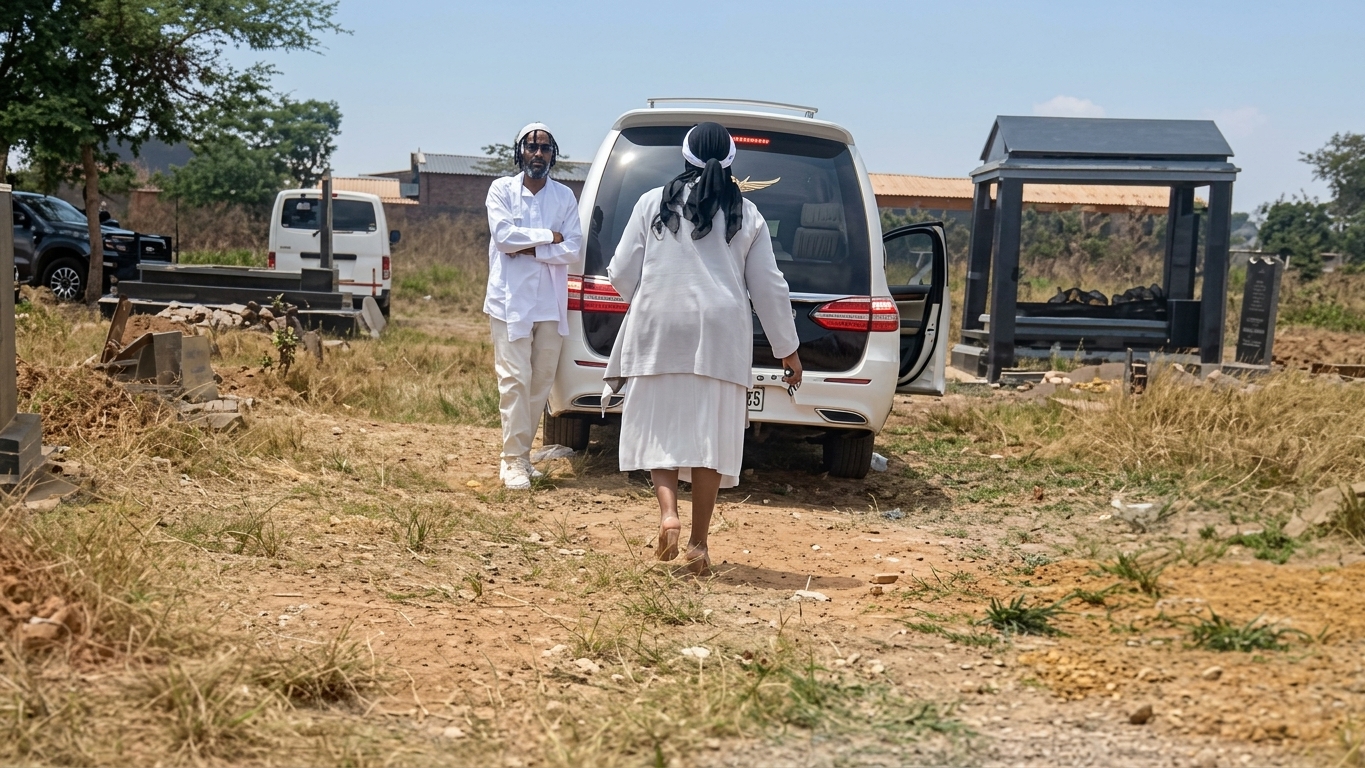
A dispute over where Dorothy Celani Mutabeni should rest has divided her family after her daughter Josephine Rudo Mutabeni travelled from the UK and arranged for her mother’s remains to be exhumed and reburied at another Harare cemetery, four years after her death.
Dorothy died in September 2022 and was buried at Restland Cemetery in Reinham. Josephine said the move was intended to fulfil her mother’s wish to be laid to rest at Warren Hills Cemetery. She also said she believed Dorothy had not received a proper burial the first time.
“My mother was not accorded a proper burial. She deserves one and that is why I saw it better to rebury her remains,” she said.
The exhumation took place on Friday, with police officers from ZRP Mabelreign present. Also there were Josephine and her daughter, a representative of Chief Zvimba, a pathologist from Parirenyatwa Hospital and a City of Harare environmental health officer.
After the remains were exhumed, they were taken to Parirenyatwa Hospital and later reburied at Warren Hills Cemetery on the same day. Police remained on guard as relatives argued over the decision and the process.
Dorothy had four daughters. Two, including Josephine, live in the UK, while the other two live in Zimbabwe. The disagreement now pits Josephine against six members of the Mutabeni family, exposing a sharp divide over whether the reburial honoured Dorothy’s wishes or came too late to be accepted by her other relatives.
Josephine’s sister Olive, who had lived with their mother before her death, was reported to have sought a court interdict to stop the exhumation. It was not clear whether the application succeeded or, if it did, whether it had been served before work at the grave began.
Josephine said she would not discuss the matter further, describing it as private and questioning how information about it had reached the media.
“I cannot say more than that since I am not sure of the person who informed the media on a matter I believe is private.”
One relative challenged the timing of the move, saying the family had not heard Josephine raise the issue during the four years after Dorothy’s death. The family member said relatives had held a memorial service and placed a tombstone at the grave, and asked why the claim about Dorothy’s wishes had surfaced only now.
“This is so disturbing and questionable for one family member to travel from UK to open the grave claiming to fulfil the late woman’s wish, which was never mentioned in the past four years,” the family member said.
“We conducted a memorial service and laid a tombstone but she never came forward with her claims.
“Is this traditional or what is she trying to portray?”
The family dispute comes amid separate concerns about graves and memorial stones at Granville Cemetery, also known as Mbudzi, where families have found tombstones bearing the names of people who were not buried in the graves beneath them.
In the latest case, relatives found an unfamiliar stone on the grave of Cathrine Murumbi, who was buried at Mbudzi in 2010. The grave is in Section A, Y area, number 507. The marker carries the name Edia Sengudzai Sanangurai, who was reportedly born in 1949 and died on 14 July 2010.
Life Murumbi, 42, Cathrine’s brother, said he was living abroad when relatives called to tell him that a different person’s tombstone had appeared on his sister’s grave. Cathrine was born on 28 February 1978 and died on 19 July 2010. Her family buried her on 22 July, three days after her death. She died shortly after giving birth, leaving a baby girl who has since grown up.
“My sister was born on February 28, 1978, and passed away on July 19, 2010. We buried her on July 22. She died shortly after giving birth, leaving behind a baby girl who has now grown up. My brother-in-law and family elders were the ones who called to inform us of this strange occurrence,” said Mr. Murumbi.
The family said it did not know who had placed the marker there and appealed for those responsible to come forward. They want the stone removed so they can put up one bearing Cathrine’s name.
“We do not know the people who placed this tombstone. We appeal to identify them so they can come and remove it, as we also wish to erect ours to honor my sister properly. Wherever they are, we ask them to reach out so we can discuss the mistake,” added Mr. Murumbi.
Cathrine’s husband, Malvin Mufaro, 50, said the family was distressed by finding a stranger’s memorial at her grave. He also criticised the council workers responsible for directing mourners to burial plots, arguing that the placement of a tombstone should be checked.
“It was a shock for us as a family to find a tombstone placed on my wife’s grave by people we don’t know. We don’t know what traditional rituals they performed… They should come and remove their stone,” said Mr. Mufaro.
“We hear about these grave mix-up incidents often, which means among the council workers who direct people to grave sites, someone is sleeping on the job because when tombstones are erected, council workers are present,” said Mr. Mufaro.
Mabel Mufaro, 74, Malvin’s mother, said the family first saw the unfamiliar stone when her daughter, who lives abroad, visited in February 2025 and went with them to visit relatives’ graves at Mbudzi. She said they went to the council offices with staff, who accompanied them to the site and promised to investigate. The family said it was still waiting for the promised follow-up.
“When we arrived at the daughter-in-law’s grave, we were shocked to see a tombstone bearing an unfamiliar name. We were shocked and went straight to the council offices, taking council staff with us to the site.
“They witnessed the situation themselves and promised to investigate where the family that placed the stone came from. To this day, we are still waiting; we haven’t traced them. The council had promised to call us back, but they never did,” said Gogo Mufaro.
She said the unidentified name on the grave was especially painful for the daughter Cathrine left behind, who was a baby when her mother died and is now grown up.
“The child left behind as an infant is now grown up; she wants to see her mother’s grave. How can we bring her to a grave with a tombstone bearing a completely different name from her mother’s?
“This is a serious disruption of traditional customs,” said Gogo Mufaro.
Harare City Council spokesperson Stanley Gama said families affected by such mistakes should go to the council’s headquarters, where the issue could be resolved.
“The family whose relative’s grave had a tombstone placed on it by strangers should visit the council offices at our headquarters in Harare. The matter can be resolved,” said Mr. Gama.
The Murumbi family’s experience follows another mix-up at Mbudzi involving the Zamuchiya family from Chipinge. They found a tombstone for Mercy Chogugudza Mubobo, who also died in 2000, on the grave of Laiza Dhliwayo, who died in the same year. The two families later found one another. Council workers had already removed the misplaced stone and moved it to the correct grave, and the families were discussing traditional rites, known as chivanhu, following the mistake.
The cases are separate from the Mutabeni reburial, but they have brought attention to the importance families attach to the correct identification and care of burial places. At Mbudzi, Gogo Mamoyo, also known as Mbuya Vimbai Karima, said placing a marker on another person’s grave carries serious meaning in traditional custom.
“A deceased person’s resting place is sacred. Strangers cannot simply place a tombstone on it. The family needs to consult traditional remedies/guidelines,” said Mbuya Mamoyo.
For the Mutabenis, the remains have now been moved to Warren Hills, but the disagreement over Dorothy’s final resting place remains unresolved within the family. At Mbudzi, the Murumbi family is still seeking the people behind the unfamiliar tombstone, while its relatives wait for the council’s promised follow-up and hope to mark Cathrine’s grave with her own name.