


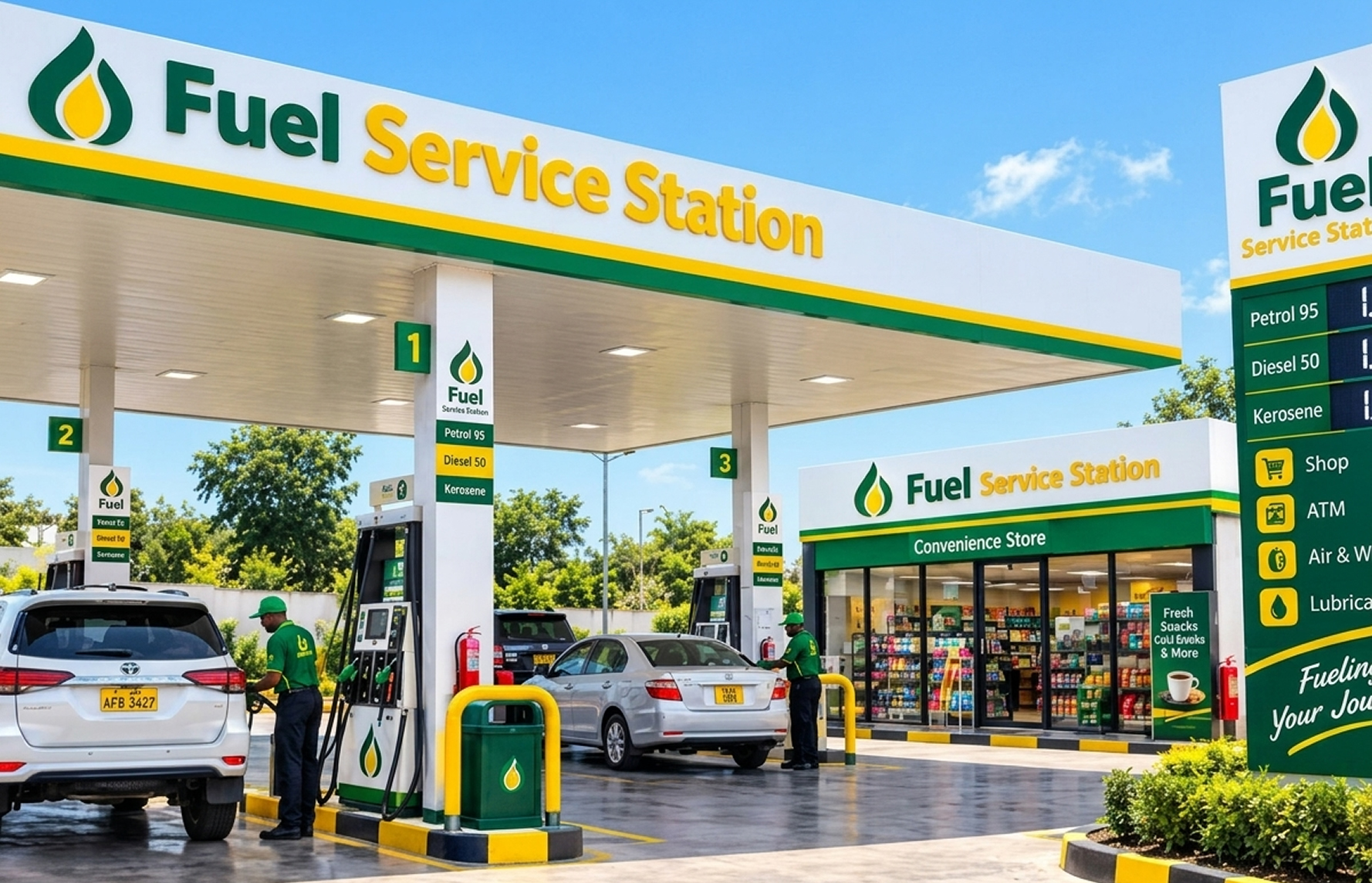
BULAWAYO — Fuel companies in Zimbabwe have begun selling petroleum products in Zimbabwe Gold (ZiG) to wholesale customers, as distributors seek local currency to meet statutory tax payments. The transactions remain largely confined to bulk purchases and have not brought ZiG payments to most service-station pumps.
Reserve Bank of Zimbabwe Deputy Governor Dr Innocent Matshe disclosed the development during the 2027 Pre-Budget Seminar in Bulawayo. He said companies that receive much of their income in United States dollars needed another way to obtain ZiG for their Quarterly Payment Date (QPD) obligations.
“You will realise that there are some fuel companies today that are selling fuel in ZiG. Unfortunately, they are only selling it in bulk,” he said.
“Why, you may ask? It’s because these companies, they do not want to put this fuel in the pump, but they also need this ZiG for their QPD payments.”
Matshe said distributors were using wholesale sales to generate the local currency they needed, while keeping retail transactions separate.
“If they are receiving payments in US dollars and they are required to pay QPD in ZiG, they need to find a way of generating that ZiG,” Dr Matshe said.
“So what they have opted to do in the interim is to sell it in wholesale in ZiG.”
The remarks point to a practical reason for the change: fuel companies need ZiG to meet tax payments even though they earn much of their revenue in US dollars. They do not indicate that the companies are using ZiG to evade tax. Nor do they signal that ordinary motorists can now routinely pay for fuel in ZiG at the pump.
That distinction matters because ZERA lists official retail fuel prices in both currencies, but a price stated in ZiG does not by itself mean that every service station accepts it. The regulator’s price page, marked as updated on 9 October 2026, listed blend petrol at US$2.05 or ZiG54.70 per litre, and diesel at US$2.04 or ZiG54.55 per litre.
Those figures provide the regulated prices in both currencies. The wholesale transactions described by Matshe are a separate matter: companies are accepting ZiG in bulk, while retail sales remain largely denominated in foreign currency.
Fuel costs have been a central issue in the run-up to the 2027 National Budget. At the same seminar, Parliament’s Budget, Finance and Investment Promotion Committee chairperson Lincoln Dhliwayo said stakeholders had proposed that the Government continue subsidising fuel to keep prices below US$2 per litre.
“There was a proposal to ensure that the Government continues to subsidise our fuel so that it is made below two dollars, so that at least the cost of production and also the cost to consumers is somehow reduced,” Dhliwayo said.
The proposal is not a final decision. No announcement has been made on whether a subsidy will continue, how it would be structured or how it would be funded. ZERA’s October price listing placed both petrol and diesel slightly above the proposed US$2 threshold.
A small price reduction had taken effect in October. ZERA’s updated ceilings showed diesel at US$2.04 per litre, down from US$2.08, and blend petrol at US$2.05, down from US$2.06. The cuts were modest, leaving fuel bills high for businesses that buy in volume and for motorists who rely on daily travel.
Fuel prices affect costs across farming, mining, manufacturing, transport and logistics. Farmers use diesel for land preparation, irrigation and moving produce. Mining companies rely on fuel for machinery and mineral transport, while manufacturers and freight operators need it to run equipment and deliver goods.
When operating costs rise, businesses may pass some of the increase on through prices for food, building materials and other goods. Lower fuel costs could ease that pressure, although the proposed subsidy would require public funds at a time when the Government is considering a range of competing budget demands.
Other ideas raised during the pre-budget consultations also focused on easing costs. These included raising the monthly tax-free income threshold from US$100 to US$150 and reducing the Intermediated Money Transfer Tax on electronic payments in both ZiG and US dollars. They remain proposals for the 2027 Budget, not enacted changes.
The search for ways to contain fuel costs has also involved measures outside the budget debate. Earlier in 2026, the Government temporarily removed several taxes and levies on diesel during a period of rising international prices. At the time, the suspended charges were put at US$0.54 per litre. The Government also approved road imports of diesel in addition to supply by pipeline and rail. Those measures were described as a response to that price pressure; they do not establish what taxes or levies apply under the current fuel-price regime.
Zimbabwe has also begun trials into blending diesel with ethanol. The trials are intended to assess fuel mixtures and their compatibility with vehicle engines, while the Government has expanded domestic ethanol production plans. No timetable for introducing blended diesel has been set. The work forms part of a broader effort to manage fuel costs and reliance on imported petroleum products, but it is separate from the ZiG wholesale sales.
For the local currency, the new transactions create demand from businesses that need ZiG for statutory payments. The Reserve Bank’s published average interbank exchange rate was ZiG26.5714 to the US dollar on 30 October. The development does not, on its own, show that ZiG has become a widely used retail payment option in the fuel market.
The next question for motorists is whether suppliers will extend local-currency sales beyond bulk customers. Matshe said companies had opted to sell wholesale in ZiG “in the interim”. For now, the arrangement gives fuel distributors a route to obtain the currency needed for QPD payments, while leaving most retail customers facing the existing choice of payment at the pump.